
If you’re located in an area with a strong Native American presence, consider partnering to create programs, products, fundraisers, or other offerings to honor local Native people.
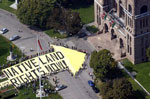


If you’re located in an area with a strong Native American presence, consider partnering to create programs, products, fundraisers, or other offerings to honor local Native people.

On this day in 1954, Ellis Island, the gateway to America, shuts it doors after processing more than 12 million immigrants since opening in 1892. Today, an estimated 40% of all Americans can trace their roots through Ellis Island, located in New York Harbor off the New Jersey coast and named… read more »
 1477 – William Caxton produced “Dictes or Sayengis of the Philosophres,” which was the first book to be printed in England.
1820 – Captain Nathaniel Palmer became the first American to sight the continent of Antarctica.
1865 – Samuel L. Clemens published “The Celebrated Jumping Frog of Calaveras County” under the pen name “Mark Twain” in the New York “Saturday Press.”
1883 – The U.S. and Canada adopted a system of standard time zones.
1903 – The U.S. and Panama signed a treaty that granted the U.S. rights to build the Panama Canal.
1916 – Douglas Haig, commander of the British Expeditionary Force in World War I, called off the Battle of the Somme in France. The offensive began on July 1, 1916.
1928 – The first successful sound-synchronized animated cartoon premiered in New York. It was Walt Disney’s “Steamboat Willie,” starring Mickey Mouse.
Disney movies, music and books
1936 – Germany and Italy recognized the Spanish government of Francisco Franco.
1942 – “The Skin of Our Teeth,” by Thornton Wilder opened on Broadway.
1959 – William Wyler’s “Ben-Hur” premiered at Loew’s Theater in New York City’s Times Square.
1966 – Sandy Koufax (Los Angeles Dodgers) announced his retirement from major league baseball.
1966 – U.S. Roman Catholic bishops did away with the rule against eating meat on Fridays.
1969 – Apollo 12 astronauts Charles “Pete” Conrad Jr. and Alan L. Bean landed on the lunar surface during the second manned mission to the moon.
1976 – The parliament of Spain approved a bill that established a democracy after 37 years of dictatorship.
1983 – Argentina announced its ability to produce enriched uranium for use in nuclear weapons.
1985 – Joe Theismann (Washington Redskins) broke his leg after being hit by Lawrence Taylor (New York Giants). The injury ended Theismann’s 12 year National Football League (NFL) career.
1987 – The U.S. Congress issued the Iran-Contra Affair report. The report said that President Ronald Reagan bore “ultimate responsibility” for wrongdoing by his aides.
1987 – CBS Inc. announced it had agreed to sell its record division to Sony Corp. for about $2 billion.
1988 – U.S. President Reagan signed major legislation provided the death penalty for drug traffickers who kill.
1993 – The U.S. House of Representatives joined the U.S. Senate in approving legislation aimed at protecting abortion facilities, staff and patients.
1993 – American Airlines flight attendants went on strike. They ended their strike only 4 days later.
1993 – Representatives from 21 South African political parties approved a new constitution.
1997 – First Union Corp. announced its purchase of CoreStates Financial Corp. for $16.1 billion. To date it was the largest banking deal in U.S. history.
2001 – Nintendo released the GameCube home video game console in the United States.
At exactly noon on this day, American and Canadian railroads begin using four continental time zones to end the confusion of dealing with thousands of local times. The bold move was emblematic of the power shared by the railroad companies. The need for continental time zones …read more


 Be a Seed for Change
You must be logged in to post a comment.