What: Southwest winds 20 to 30 mph with gusts up to 40 mph expected. Where: Seattle and the greater Seattle area. When: From 8 PM this evening to 10 PM PST Wednesday. Impacts: Gusty winds could blow around unsecured objects. Tree limbs could be blown down, and a few power outages may result. Summary: Use extra caution when driving, especially if operating high-profile Vehicles. Secure outdoor objects. Secure outdoor objects. Issued By: NWS Seattle, WA
Palm oil is literally everywhere – in our foods, cosmetics, cleaning products and fuels. It’s a source of huge profits for multinational corporations, while at the same time destroying the livelihoods of smallholders. Displacement of indigenous peoples, deforestation and loss of biodiversity are all consequences of our palm oil consumption. How could it come to this? And what can we do in everyday life to protect people and nature?
The issue – rainforest on our dinner tables and in our fuel tanks
At 66 million tons annually, palm oil is the most commonly produced vegetable oil. Its low world market price and properties that lend themselves to processed foods have led the food industry to use it in half of all supermarket products. Palm oil can be found in frozen pizzas, biscuits and margarine, as well as body creams, soaps, makeup, candles and detergents.
Few people realize that almost half of the palm oil imported into the EU is used as biofuel. Since 2009, the mandatory blending of biofuels into motor vehicle fuels has been a major cause of deforestation.
Oil palm plantations currently cover more than 27 million hectares of the Earth’s surface. Forests and human settlements have been destroyed and replaced by “green deserts” containing virtually no biodiversity on an area the size of New Zealand.
The impact – suffering and death in producer countries, climate havoc
The warm, humid climate of the tropics offers perfect growth conditions for oil palms. Day after day, huge tracts of rainforest in Southeast Asia, Latin America and Africa are being bulldozed or torched to make room for more plantations, releasing vast amounts of carbon into the atmosphere. As a consequence, Indonesia – the world’s largest producer of palm oil – temporarily surpassed the United States in terms of greenhouse gas emissions in 2015. With their CO2 and methane emissions, palm oil-based biofuels actually have three times the climate impact of traditional fossil fuels.
Palm oil is not only bad for the climate: As their forest habitat is cleared, endangered species such as the orangutan, Borneo elephant and Sumatran tiger are being pushed closer to extinction. Smallholders and indigenous people who have inhabited and protected the forest for generations are often brutally driven from their land. In Indonesia, more than 700 land conflicts are related to the palm oil industry. Human rights violations are everyday occurrences, even on supposedly “sustainable” and “organic” plantations.
As consumers, we are largely unaware of these broader issues, yet our daily palm oil consumption also impacts our health: refined palm oil contains large amounts of harmful fatty acid esters that are known to damage DNA and cause cancer.
The solution – a revolution on our dinner tables and in our fuel tanks
Only 70,000 orangutans still roam the forests of Southeast Asia, yet the EU’s biofuels policy is pushing them to the brink of extinction. Every new plantation on Borneo is destroying a further piece of their habitat. Stepping up the pressure on policymakers is a must if we want to save our tree-dwelling kin. Apart from that, however, there is still a lot we can do in day-to-day life.
Follow these simple tips to recognize, avoid and combat palm oil:
Enjoy a home-cooked meal: Use your imagination: why not try almond-coconut-pear biscuits? Or pizza with potato and rosemary? A meal cooked from fresh ingredients beats processed foods containing palm oil every time. Oils such as sunflower, olive, rapeseed or flaxseed are ideal for cooking and baking.
Read labels: As of December 2014, labeling regulations in the EU require food products to clearly indicate that they contain palm oil. However, in the case of non-food items such as cosmetics and cleaning products, a wide range of chemical names may still be used to hide the use of palm oil. A quick check of your favorite search engine will turn up palm oil-free alternatives, however.
Remember that the customer is king: Ask your retailers for palm oil-free products. Write product manufacturers and ask them why they aren’t using domestic oils. Companies can be quite sensitive to issues that give their products a bad name, so inquiring with sales staff and contacting manufacturers can make a real difference. Public pressure and increased awareness of the problem have already prompted some producers to stop using palm oil.
Sign petitions and write your elected representatives: Online campaigns put pressure on policymakers responsible for biofuels and palm oil imports. Have you already signed all of Rainforest Rescue’s petitions?
Speak out: Protest marches and creative action on the street raise public and media awareness of the issue, which in turn steps up the pressure on policymakers.
Leave your car at home: Whenever you can, walk, ride a bicycle or use public transport.
Be informed and inform others: Big Business and governments would like us to believe that biofuels are good for the climate and that oil palm plantations are sustainable. Spread the word – share this information with your family and friends and encourage them to rethink their consumption habits. It’s in our hands!
On December 9, 1869, Uriah Smith Stephens, a descendant of Quaker settlers and a former indentured servant, founds a secret order of tailors in Philadelphia called the Noble and Holy Order of the Knights of Labor (or KOL). It would become the first major national labor organization in the United States.
Earlier that decade, Stephens had tried to organize Philadelphia’s garment cutters, using work stoppages as leverage. When that failed to pressure employers into providing better pay and working conditions, he had an epiphany: Their strength would only come in numbers. In response, he launched the Knights of Labor as a national organization. Stephens served as its first grand master workman. To foster solidarity and shield members from employer retaliation, the KOL fostered a culture of secrecy modeled partly on Masonic lodges, which had their origin in medieval craft guilds. KOL members swore oaths of silence, used entry passwords and followed initiation rituals. Organizers called meetings surreptitiously by chalking symbols onto sidewalks and the sides of buildings.
Over the 1870s, the Knights expanded nationwide, attracting skilled laborers such as blacksmiths and bricklayers. The organization gradually opened its doors to all wage laborers, while excluding professionals such as bankers, lawyers, doctors and alcohol manufacturers.
In 1879, when Stephens left the organization, leadership passed to Terence V. Powderly, an Irish Catholic machinist, who broadened the order’s reach by insisting that women be accepted as equal members—a radical decision for the era.
By the 1880s, the KOL had swelled to more than 700,000 members. In 1884, when the Union Pacific Railroad cut worker wages by 10 percent, the organization helped orchestrate a massive strike that halted rail service across the Midwest. Within days, the railroad restored its workers’ original pay.



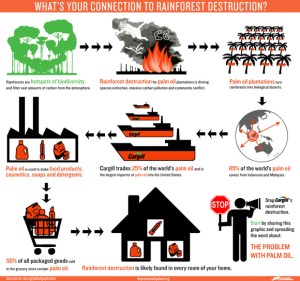 Palm oil is literally everywhere – in our foods, cosmetics, cleaning products and fuels. It’s a source of huge profits for multinational corporations, while at the same time destroying the livelihoods of smallholders. Displacement of indigenous peoples, deforestation and loss of biodiversity are all consequences of our palm oil consumption. How could it come to this? And what can we do in everyday life to protect people and nature?


 Be a Seed for Change
You must be logged in to post a comment.