
Black Panthers Fred Hampton, 21, and Mark Clark, 22, are gunned down by 14 police officers as they lie sleeping in their Chicago, Illinois, apartment. About a hundred bullets had been fired in what police described as a fierce gun battle with members of the Black Panther Party. …read more
Monthly Archives: December 2025

1933 – 21st amendment is ratified; Prohibition ends
The 21st Amendment to the U.S. Constitution is ratified, repealing the 18th Amendment and bringing an end to the era of national prohibition of alcohol in America. At 5:32 p.m. EST, Utah became the 36th state to ratify the amendment, achieving the requisite three-fourths majority …read more
Source
READ MORE: How the Prohibition Era Spurred Organized Crime
Citation Information
Article Title
21st amendment is ratified; Prohibition ends
AuthorHistory.com Editors
Website Name
HISTORY
URL
https://www.history.com/this-day-in-history/prohibition-ends
Access Date
December 5, 2022
Publisher
A&E Television Networks
Last Updated
December 4, 2020
Original Published Date
March 4, 2010
Share this:

on this day …. 12/5
|

| 1776 |
| Phi Beta Kappa is founded while army flounders » |
| 1970 |
| Last segment of the Dan Ryan Expressway opens in Chicago » |
| 1978 |
| USSR and Afghanistan sign “friendship treaty” » |
| 1873 |
| The Boston Belfry Murderer kills his first victim » |
| DISASTER |
| 1876 |
| Hundreds die in Brooklyn theater fire » |
| 1933 |
| Prohibition ends » |
| 1941 |
| Steinbeck’s Sea of Cortez is published » |
| 2000 |
| O Brother, Where Art Thou? soundtrack released » |
| 1871 |
| Rodeo star Bill Pickett born in Texas » |
| 1782 |
| Van Buren is born » |
| SPORTS |
| 2002 |
| Roone Arledge dies » |
| 1964 |
| Army Captain awarded first Medal of Honor for action in Vietnam » |
| 1970 |
| North Vietnam announces it will not be intimidated by U.S. bombing » |
| 1915 |
| Siege of British-occupied Kut, Mesopotamia begins » |
| 1941 |
| American carrier Lexington heads to Midway » |
Share this:

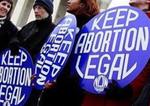
1930 Vatican approves rhythm method for birth control

Until the 1930s, the Catholic Church was not alone in its opposition to contraceptives. In the Christian tradition, birth control had long been associated with promiscuity and adultery and resolutely condemned. However, after the Anglican Church passed a resolution in favor of birth control at its 1930 Lambeth Conference, other Protestant denominations began to relax their prohibitions as well. Nevertheless, the Catholic Church held fast to its opposition.
The Vatican’s stand against contraception was centuries old. For much of that time, however, birth control had remained a dormant issue. Since most birth control consisted of folk remedies and homemade cervical caps, there was little cause for the Church to respond. It was the mass production and availability of rubber condoms and diaphragms in the 1920s and 1930s, made possible by the 1839 invention of vulcanized rubber, which eventually forced the Church to take a public position on specific contraceptives.
For the complete article .. pbs.org

Share this:

Dec 4, 1942: Polish Christians come to the aid of Polish Jews
In Warsaw, a group of Polish Christians put their own lives at risk when they set up the Council for the Assistance of the Jews. The group was led by two women, Zofia Kossak and Wanda Filipowicz.
Since the German invasion of Poland in 1939, the Jewish population had been either thrust into ghettos, transported to concentration and labor camps, or murdered. Jewish homes and shops were confiscated and synagogues were burned to the ground. Word about the Jews’ fate finally leaked out in June of 1942, when a Warsaw underground newspaper, the Liberty Brigade, made public the news that tens of thousands of Jews were being gassed at Chelmno, a death camp in Poland—almost seven months after the extermination of prisoners began.
Despite the growing public knowledge of the “Final Solution,” the mass extermination of European Jewry and the growing network of extermination camps in Poland, little was done to stop it. Outside Poland, there were only angry speeches from politicians and promises of postwar reprisals. Within Poland, non-Jewish Poles were themselves often the objects of persecution and forced labor at the hands of their Nazi occupiers; being Slavs, they too were considered “inferior” to the Aryan Germans
For the complete article … history.com

 Be a Seed for Change
You must be logged in to post a comment.