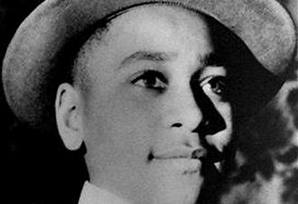
In memory of Claudette Colvin


Black History Unsung Heroes: Claudette Colvin

Women’s History Month

Image result for claudette colvin

Black History Unsung Heroes: Claudette Colvin

click on link above to read her amazing story

As a teenager, she made history, but it took decades for her to become recognized for her courage and achievements.

source: biography.com

first posted 2015

A full nine months before Rosa Parks‘s famous act of civil disobedience, 15-year-old Claudette Colvin is arrested on March 2, 1955 for refusing to give up her seat on a segregated Montgomery, Alabama bus. 

Colvin was traveling home from school when the bus’ driver ordered her, along with three fellow Black students, to give up their row of seats to a white passenger. Colvin’s friends obliged, but she refused to move. At school, she had recently learned about abolitionists, and later recalled that “it felt like Sojourner Truth was on one side pushing me down, and Harriet Tubman was on the other side of me pushing me down. I couldn’t get up.”

Women’s History Month!

1784, the Continental Congress ratifies the Treaty of Paris, ending the War for Independence.


On January 14, 1784, the Continental Congress ratifies the Treaty of Paris, ending the War for Independence.

In the document, which was known as the Second Treaty of Paris because the Treaty of Paris was also the name of the agreement that had ended the Seven Years’ War in 1763, Britain officially agreed to recognize the independence of its 13 former colonies as the new United States of America.

In addition, the treaty settled the boundaries between the United States and what remained of British North America. U.S. fishermen won the right to fish in the Grand Banks, off the Newfoundland coast, and in the Gulf of Saint Lawrence. Both sides agreed to ensure payment to creditors in the other nation of debts incurred during the war and to release all prisoners of war. The United States promised to return land confiscated during the war to its British owners, to stop any further confiscation of British property and to honor the property left by the British army on U.S. shores, including Negroes or slaves. Both countries assumed perpetual rights to access the Mississippi River.

for the complete article, history.com

On January 14, 1784, the Treaty of Paris was ratified by the Congress of the United States, while they met in the Senate Chamber of the Maryland State House. The Treaty formally ended the Revolutionary War and established the United States as a free and independent nation.

The Treaty had been signed by delegates from the Unites States and Great Britain, as well as France and Spain, in Paris on September 3, 1783. Congress� assent was required for the Treaty to take effect, and delegates were called to convene at Annapolis, then serving as the nation’s capital, in November, 1783. The Treaty stipulated that Congress approve and return the document to England within six months of being signed. However, representatives from nine of the thirteen states were required to be present in order for Congress to proceed, and it was nearly six weeks until enough members assembled to hold a vote. Mindful of the nearly two months required to cross the Atlantic, Congress grew concerned that a sufficient number of delegates would not arrive in time, and in early January, 1784, began to consider voting on ratification with the delegates already present.

However, upon the arrival of Richard Beresford of South Carolina in Annapolis just a few days later, a quorum was reached, and Congress voted unanimously to ratify the Treaty. Congress then ordered �That a proclamation be immediately issued, notifying�the states of the union� that the Treaty had been signed.

Dunlap Broadside

John Dunlap, Congress� official printer, printed the broadside seen here, which was �to notify� all the good citizens of these United States� that the Treaty had been ratified, and that American independence was assured. The proclamation was also to serve as official notice of the Treaty, a task of particular importance in an era when communication was limited. Of the thirteen copies Dunlap printed�one for each state�only a handful are known to survive today. This copy, held at the Maryland State Archives, bears the embossed seal of Congress and the signatures of Thomas Mifflin, president of Congress, and Charles Thompson, secretary. Several others are in the collections of the Library of Congress. Another copy in private hands sold at auction for over $300,000 in December, 2007.
 
Congress also directed that each state inform its people that the Treaty had been ratified, and that peace was at hand. Thus, six days later, Governor William Paca gave a proclamation informing the people of Maryland that the Treaty had been ratified, seen on the right. Paca asked that “all the good citizens of this state…observe, and carry into effect” the Treaty’s requirements to properly live as citizens of the new republic.
 
 For the complete article:
 
 Additional Resources:

National Archives and Records Administration
Treaty of Paris

Maryland State Archives Special Collections (Maryland Gazette Collection) MSA SC 2731
Special edition of the Maryland Gazette announcing the ratification of the treaty, 16 January 1784

Maryland State Archives Special Collections (Maryland Gazette Collection) MSA SC 2731
Gov. Paca’s proclamation of the treaty, printed in the Maryland Gazette, 22 January 1784

Library of Congress: A Century of Lawmaking for the New Nation
Journal of the Continental Congress, 14 January 1784

Library of Congress: Documents from the Continental Congress
Proclamation printed by Dunlap, announcing ratification of the Treaty


This web site is presented for reference purposes under the doctrine of fair use. When this material is used, in whole or in part, proper citation and credit must be attributed to the Maryland State Archives. PLEASE NOTE: The site may contain material from other sources which may be under copyright. Rights assessment, and full originating source citation, is the responsibility of the user.

Source: maryland.gov

history… January 14


1639 – Connecticut’s first constitution, the “Fundamental Orders,” was adopted.

1784 – The United States ratified a peace treaty with England ending the Revolutionary War.

1858 – French emperor Napoleon III escaped an attempt on his life.

1873 – John Hyatt’s 1869 invention ‘Celluloid’ was registered as a trademark.

1878 – Alexander Graham Bell demonstrated the telephone for Britain’s Queen Victoria.

1882 – The Myopia Hunt Club, in Winchester, MA, became the first country club in the United States.

1907 – An earthquake killed over 1,000 people in Kingston, Jamaica.

1939 – “Honolulu Bound” was heard on CBS radio for the first time.

1943 – U.S. President Franklin D. Roosevelt became the first U.S. President to fly in an airplane while in office. He flew from Miami, FL, to French Morocco where he met with British Prime Minister Winston Churchill to discuss World War II.

1951 – The first National Football League Pro Bowl All-Star Game was played in Los Angeles, CA.

1952 – NBC’s “Today” show premiered.

1953 – Josip Broz Tito was elected president of Yugoslavia by the country’s Parliament.

1954 – Marilyn Monroe and Joe DiMaggio were married. The marriage only lasted nine months.

1954 – The Hudson Motor Car Company merged with Nash-Kelvinator. The new company was called the American Motors Corporation.

1963 – George C. Wallace was sworn in as governor of Alabama.

1969 – An explosion aboard the U.S. aircraft carrier Enterprise off Hawaii killed 25 crew members.

1972 – NBC-TV debuted “Sanford & Son.”

1973 – The Miami Dolphins defeated the Washington Redskins in Super Bowl VII and became the first NFL team to go undefeated in a season.

1985 – Martina Navratilova won her 100th tournament. She joined Jimmy Connors and Chris Evert Lloyd as the only professional tennis players to win 100 tournaments.

1985 – Former Miss America, Phyllis George, joined Bill Kurtis as host of “The CBS Morning News”.

1986 – “Rambo: First Blood, Part II” arrived at video stores. It broke the record set by “Ghostbusters”, for first day orders. 435,000 copies of the video were sold.

1993 – Television talk show host David Letterman announced he was moving from NBC to CBS.

1993 – The British government pledged to introduce legislation to criminalize invasions of privacy by the press.

1994 – U.S. President Clinton and Russian President Boris Yeltsin signed Kremlin accords to stop aiming missiles at any nation and to dismantle the nuclear arsenal of Ukraine.

1996 – Jorge Sampaio was elected president of Portugal.

1996 – Juan Garcia Abrego was arrested by Mexican agents. The alleged drug lord was handed over to the FBI the next day.

1998 – Whitewater prosecutors questioned Hillary Rodham Clinton at the White House for 10 minutes about the gathering of FBI background files on past Republican political appointees.

1998 – In Dallas, researchers report an enzyme that slows the aging process and cell death.

1999 – The impeachment trial of U.S. President Clinton began in Washington, DC.

1999 – The U.S. proposed the lifting of the U.N. ceilings on the sale of oil in Iraq. The restriction being that the money be used to buy medicine and food for the Iraqi people.

2000 – A U.N. tribunal sentenced five Bosnian Croats to up to 25 years for the 1993 massacre of over 100 Muslims in a Bosnian village.

2000 – The Dow Jones industrial average hit a new high when it closed at 11,722.98. Earlier in the session, the Dow had risen to 11,750.98. Both records stood until October 3, 2006.

2002 – NBC’s “Today” celebrated its 50th anniversary on television.

2004 – In St. Louis, a Lewis and Clark Exhibition opened at the Missouri History Museum. The exhibit featured 500 rare and priceless objects used by the Corps of Discovery.

2005 – A probe, from the Cassini-Huygens mission, sent back pictures during and after landing on Saturn’s moon Titan. The mission was launched on October 15, 1997

on-this-day.com

Narcissistic ~ The 13 Traits of a Narcissist


Key points

  • The DSM-V lists nine clinically significant symptoms of Narcissistic Personality Disorder.
  • An alternative model of assessing personality disorders incorporates identity, self-direction, empathy, and intimacy.
  • Not everyone with narcissistic traits suffers from Narcissistic Personality Disorder.

While we may have ideas of what narcissism looks like, the Diagnostic and Statistical Manual of Mental Disorders (DSM-V) lists nine traits and characteristics that are clinically significant in determining if someone’s super-sized ego may be something more than just self-confidence. At least five of the following traits must be exhibited to meet the diagnostic criteria for Narcissistic Personality Disorder.

  1. Grandiose sense of self-importance. This is the belief that your contribution and presence are essential to the happiness, success, or equilibrium of other people and any enterprises or relationships. “The project would have tanked if I hadn’t been on the team.” “If it weren’t for me, who knows where my spouse would have ended up!”
  2. Preoccupation with fantasies of unlimited success, power, brilliance, beauty, or ideal love. This describes the belief that you are capable of exceptionally high levels of achievement even when your skills or abilities provide no evidence of this being possible. “If I get this job, I’ll soon be writing my own paycheck and running the company.” “I’ll ace the LSAT and get a free ride to Yale law school. Wait and see!”
  3. Belief that he or she is special and unique and can only be understood by, or should associate with, other special or high-status people or institutions. This resembles the “I want to talk to the manager” mindset in that narcissists firmly believe that they should only have to deal with the top-level person in any institution. They try to insert themselves in high-status cliques, meetings, or social groups even if they’re unwanted. “Yes, the director and I go way back; we’re good friends and I know she’ll be eager to hear my perspectives.” “I’ll be speaking with the CEO to set up a meeting to talk about these new directives and let them know what my thoughts are on the matter.”
  4. Need for excessive admiration. The narcissist isn’t satisfied with a compliment or pat on the back when others offer them as a part of natural conversation. They demand that others admire their appearance, accomplishments, skills, or existence. The admiration of others is what feeds the narcissist. “Isn’t it amazing how the color of this shirt sets off my eyes?” Boasting is second nature to narcissists, and compliments are typically recounted innumerable times to others as proof of their superiority.
  5. Sense of entitlement. Narcissists may believe that success takes hard work – but only for others, not for them. They totally believe that they deserve the best tickets, the top score, the nicest room, or the best seat in the house. They don’t even have to verbalize this belief as their behavior and actions clearly communicate their sense of entitlement.
  6. Interpersonally exploitive behavior. Narcissists see other people as tools. Their lack of self-awareness is paralleled by a lack of awareness that others exist as individuals with feelings, needs, and desires. “Get out of my way.” “Do me a favor and give up your place in line for me.” Whatever they ask for, it’s in their own selfish interest and they suffer no guilt for expecting others to sacrifice for them.
  7. Lack of empathy. This is the cold inability to accurately recognize how other people feel. This speaks to the narcissist’s lack of emotional awareness or depth. It is not always that narcissists don’t “care” about another’s feelings, it is just that they are unaware that others might even have those feelings.
  8. Envy of others or belief that others are envious of him or her. This describes the narcissist’s constant comparison of themselves to others, wishing for themselves the success others experience, and the false belief that everyone else is envious of them. That’s how they keep their egos intact. Being perceived as “normal” or “subpar” would represent an ego wound they could not handle. A narcissist might say, “Everyone notices me when I enter the room. They know that they’ll never be as successful as me.”
  9. Demonstration of arrogant and haughty behaviors or attitudes. Arrogance and conceit are traits that are often noticed first in narcissists. This is evidenced by disrespect for the positions or rights of others and the narcissist’s willingness to demand and expect that others will bend to their will. Like exploitative behavior, this behavior can be easily noticed without the narcissist having to say a word. They’ll break in lines, use patronizing tones, and act as if they have every right to take away what is rightfully someone else’s.

In addition to the currently referenced nine symptoms, an alternative model of diagnosing personality disorders, such as NPD, was proposed in the DSM-V. This model is characterized by four specific areas of functioning in which personal disorders are most likely to be located. Among these four, an individual who has moderate or greater impairment in these areas would be considered to be evidencing a personality disorder:

  • Identity. For narcissists, this is excessive focus on others to support their own self-definition and excessive reference on others as means to maintain their own self-esteem, as well as overly estimated self-appraisal and a tendency to be overly pleased or inordinately displeased with oneself. For narcissists, it’s not what’s inside that matters, it’s what outsiders perceive when they gaze on the narcissist that shapes their identity.
  • Self-direction. Narcissists tend to keep their eyes on the prize that they feel others would prize. They are driven by a desire to prove they are superior to others. This drive is often coupled with a sense of entitlement that leaves them feeling that they should be above having to work for any goal.
  • Empathy. This area of functioning is what allows humans to connect with and understand the plights of others. Unfortunately, narcissists only reference the reactions or actions of others as they relate to the narcissist’s own behavior. Even these “readings” of others are out of focus, as narcissists aren’t able to accurately assess their effects on others. They may attend to someone’s expressed feelings in order to leverage the person to the narcissist’s own benefit, but there’s no awareness that goes beyond the practical.
  • Intimacy. This is where the narcissist’s true nature and shortcomings often hurt others the most. Narcissists are unable to forge or maintain more than superficial relationships. They don’t have the emotional capacity to relate in authentic, intimate ways. Every relationship is seen as a tool to feed the narcissist’s ego.

Conclusion

If you’re concerned that someone you care about has less interest in you than they do in themselves, but won’t let go, step back and look objectively at the traits that serve as markers of NPD. Not everyone who focuses on their own success or struggles developing authentic intimate relationships is a narcissist. It’s up to clinical professionals to diagnose the disorder, but if concerns about your relationship get in the way of your own healthy functioning, you may want to seek help from a counselor on your own. They have the skills to help you help yourself as you figure out what you need most from a partner for a satisfying relationship.

Suzanne Degges-White, Ph.D., is a licensed counselor and professor at Northern Illinois University.

on this day … 1/13


World
49 BC – Julius Caesar crossed the Rubicon River signaling a war between Rome and Gaul.

1519 – Holy Roman Emperor Maximilian I died.

1773 – The first public museum in America was established in Charleston, SC.

1866 – The Royal Aeronautical Society was founded in London.

1875 – Kwang-su was made emperor of China.

1879 – The British-Zulu War began when the British invaded Zululand.

1882 – Thomas Edison’s central station on Holborn Viaduct in London began operation.

1895 – The first performance of King Arthur took place at the Lyceum Theatre.

1896 – At Davidson College, several students took x-ray photographs. They created the first X-ray photographs to be made in America.

1904 – Henry Ford set a new land speed record when he reached 91.37 miles per hour.

1908 – A wireless message was sent long-distance for the first time from the Eiffel Tower in Paris.

1915 – The U.S. House of Representatives rejected a proposal to give women the right to vote.

1915 – The U.S. Congress established the Rocky Mountain National Park.

1926 – “Sam ‘n’ Henry” debuted on WGN Radio in Chicago, IL.

1932 – Hattie W. Caraway became the first woman elected to the U.S. Senate.

1938 – Austria recognized the Franco government in Spain.

1940 – Soviet bombers raided cities in Finland.

1942 – U.S. President Roosevelt created the National War Labor Board.

1943 – The Office of Price Administration announced that standard frankfurters/hot dogs/wieners would be replaced by ‘Victory Sausages.’

1945 – During World War II, Soviet forces began a huge offensive against the Germans in Eastern Europe.

1948 – The U.S. Supreme Court ruled that states could not discriminate against law-school applicants because of race.

1949 – “Arthur Godfrey and His Friends” was debuted on CBS-TV. The show stayed on the network for seven years.

1949 – “Kukla, Fran and Ollie”, the Chicago-based children’s show, made its national debut on NBC-TV.

1955 – Rod Serling’s career began with the TV production of “Patterns.”

1960 – Dolph Schayes of the Syracuse Nationals became the first pro basketball player in the NBA to score more than 15,000 points in his career.

1964 – Leftist rebels in Zanzibar began their successful revolt against the government and a republic was proclaimed.

1966 – U.S. President Johnson said in his State of the Union address that the United States should stay in South Vietnam until Communist aggression there was ended.

1966 – “Batman” debuted on ABC-TV.

1967 – “Dragnet” returned to NBC-TV after being off the network schedule for eight years.

1970 – The breakaway state of Biafra capitulated and the Nigerian civil war came to an end.

1970 – Nigeria’s civil war ended.

1971 – “All In the Family” debuted on CBS-TV.

1973 – Yassar Arafat was re-elected as head of the Palestinian Liberation Organization.

1986 – Space shuttle Columbia blasted off with a crew that included the first Hispanic-American in space, Dr. Franklin R. Chang-Diaz.

1991 – The U.S. Congress passed a resolution authorizing President Bush to use military power to force Iraq out of Kuwait.

1995 – Northern Ireland Secretary Patrick Mayhew announced that as of January 16 British troops would no longer carry out daylight street patrols in Belfast.

1998 – Tyson Foods Inc. pled guilty to giving $12,000 to former Agriculture Secretary Mike Espy. Tyson was fined $6 million.

1998 – 19 European nations agreed to prohibit human cloning.

1998 – Linda Tripp provided Independent Counsel Kenneth Starr’s office with taped conversations between herself and former White House intern Monica Lewinsky.

1999 – Mark McGwire’s 70th home run ball was sold at auction in New York for $3 million to an anonymous bidder.

2000 – The U.S. Supreme Court, in a 5-4 ruling, gave police broad authority to stop and question people who run at the sight of an officer.

2000 – Charlotte Hornets guard Bobby Phills was killed in a crash during a drag race.

2005 – NASA launched “Deep Impact”. The spacecraft was planned to impact on Comet Tempel 1 after a six-month, 268 million-mile journey.

2006 – The U.S. Mint began shipping new 5-cent coins to the 12 regional Federal Reserve Banks. The coin has an image of Thomas Jefferson taken from a 1800 Rembrandt Peale portrait in which the president is looking forward. Since 1909, when presidents were first depicted on circulating coins, all presidents had been shown in profile.