James Forten
A Philadelphia sailmaker, Forten invented a sailmaking device that enabled him to create a highly profitable business.
By the 1830s, he was worth an estimated $100,000 (or approximately $2.5 million today, when adjusted for inflation). Using his acquired wealth, Forten invested in many abolitionist initiatives, even having served as the vice-president of the American Anti-Slavery Society.
Samuel T. Wilcox
In the 1850s, Wilcox became a wholesale and retail grocer in Cincinnati (on top of establishing a pickling and preserving business). He was also one of the first to establish high-quality grocery stores, offering only the fanciest and best brands of hams, dried fruit, soaps, and other articles. Because of this, most of his customers were people of wealth – likely contributing to his eventual annual sales of $140,000 per year (approximately $4.2 million, adjusted for inflation).
Paul Cuffee/Paul Cuffe
Cuffee, the son of an Aquinnah Wampanoag woman and Ghanaian Ashanti man, was a successful 18th century sea captain and businessman. His all-black crews served the Atlantic Coast and sailed to Europe and Africa. After the American Revolution, he helped the British effort to resettle freed slaves.
Stephen Smith
Smith grew up as an indentured servant in Pennsylvania. From a young age, he was assigned to work in the lumberyards by Thomas Boude, whose wealth stemmed from his extensive lumber business. After buying his freedom for $50 at the age of 21, he continued to work in the lumberyards until establishing his own lumber business in 1822, as well as dealing coal. By the 1850s, Smith was grossing $100,000 in annual sales. By 1857, Smith was worth $500,000 (approximately $13.5 million today). On top of being a businessman, Smith was a minister and served as chairman of the black abolitionist organization in Columbia, PA.
William Alexander Leidesdorff, Jr.
Leidesdorff was one of America’s earliest and most successful mixed-race businessmen. He was a prominent figure in trade (establishing a successful ship yard, lumber yard, and ship chandlery shop) and real estate around the early- to mid- 1800s, having built San Francisco’s very first hotel, as well as having served as the city’s first treasurer. He’s noted as America’s first millionaire of black descent; in 1856, his estate was worth more than $1.4 million (which would be equivalent to more than $20 million today, adjusted for inflation).
Robert Gordon
Born a slave, Gordon eventually purchased his freedom in 1846. In 1847, he invested $15,000 in a Cincinnati coal yard and employed bookkeepers and laborers. White coal dealers in Cincinnati – in their attempt to price Gordon out of the market – sold their coal below market rates; Gordon employed mulattoes to purchase the cheaper coal, eventually selling the supply at a high price after the white coal dealers had little left in their reserves. At the time of this death (1884), he left an estate worth $200,000 (nearly $5 million by today’s standards).
“Free Frank” (Frank McWorter)
An American slave who eventually bought his freedom, Free Frank became a saltpeter manufacturer and businessman. He saw particularly high success during the War of 1812 when saltpeter was in high demand. Because of his success, he was able to buy the freedom of 16 members of his family – with many more even after his death (his heirs used his inheritance to free more relatives). Free Frank is also known to be the first African-American to found a town in the United States; in 1836, he founded the town of New Philadelphia in Illinois.
Clara Brown
An ex-slave, Brown moved to Colorado in the late 1850s during the gold rush, and managed to establish a successful laundry business (on top of serving as a mid-wife, cook, and nurse maid). She used that money to invest in various real estate, eventually owning 16 lots in Denver, 7 houses in Central City, and some other property and mines around Colorado.
Isaac Myers
While not necessarily an entrepreneur, Myers was an influential figure in creating one of the first trade unions made up of African-Americans. After 1,000 black ship caulkers lost employment in Baltimore after the Civil War, Myers organized the workers into a union, creating the Colored Caulkers Trade Union Society. Despite interest from the National Labor Union (a predecessor to the American Federation of Labor that, at the time, was made of all-white members), black members persistently faced opposition to membership. The Colored National Labor Union was established as a result, with Myers at the helm. His role as president with the trade union was succeeded by Frederick Douglass.
Annie Malone
One of America’s first and most prominent African-American businesswomen, Malone founded and developed Poro College, a commercial and educational business focused on cosmetics for black women. Born to former slaves, Malone would later develop a chemical that could straighten black women’s hair without causing damage to the hair or scalp. Poro College as an institution of learning was established as a way to teach people about black cosmetology. Through the school and the business, Malone created jobs for 75,000 women around the world. She’s recorded as the first black female millionaire in the United States, with a reported $14 million in assets in 1920 (a whopping $167 million by today’s standards).
Frederick Patterson & Charles Richard Patterson
Frederick Patterson was the first African-American to manufacture cars. His father, Charles Richard Patterson, cofounded the carriage business C.R. Patterson & Son Company and eventually bought out his 20-year partner, J.P. Lowe (who was a white man). After his father’s death, Frederick Patterson developed the Patterson-Greenfield car and was in direct competition with Henry Ford’s Model T. He later converted his business to the Greenfield Bus Body Company.
Charles Clinton Spaulding, Aaron McDuffie Moore, John Merrick
The three cofounded the North Carolina Mutual Life Insurance Company in 1898 – the now-oldest and largest African-American life insurance company in the United States. At the time, all three men were members of the Durham community: Spaulding, the general manager of a grocery company; Moore, a practicing physician; and Merrick, an entrepreneur with barbershops across Durham. At the time, Durham was referred to as “Black Wall Street”, notably for the economic successes blacks were seeing through business. The company still stands today – with assets estimated at $162 million.
Booker T. Washington
One of the most significant figures in post-Reconstruction America. While he was never technically an entrepreneur, his life work was committed to advancing the educational and economic position of blacks in the United States. He authored 14 books – Up From Slavery continuing to be widely read today. Through his work, he established deep relationships with renowned entrepreneurs and philanthropists, including Andrew Carnegie, John D. Rockefeller, George Eastman, and William Howard Taft; these connections allowed him to funnel huge donations to several initiatives and programs aimed at educating African-Americans. He also founded the National Negro Business League.
Maggie Lena Walker
Walker was the first black woman in the United States to charter a bank. By pooling her community’s money, she formed the St. Luke Penny Savings Bank, of which she served as the first president. Later, when the bank merged with two other Richmond, VA banks to form The Consolidated Bank and Trust Company, she served as the chairman of its board of directors.
Madam C.J. Walker
Born under the name “Sarah Breedlove”, Madam C.J. Walker developed a special line of beauty and hair product for black women under her company, Madame C.J Walker Manufacturing. Much like Annie Malone, she was one of the first American women to become a self-made millionaire; in fact, it was through Malone’s Poro College that she first learned about the science of black cosmetology. Many of her philanthropy efforts went towards anti-lynching campaigns.
Arthur G. Gaston
Gaston was a serial entrepreneur who established a set of different businesses across Birmingham, AL. Beginning with a funeral home, as well as a burial insurance company (the Booker T. Washington Insurance Company), Gaston later established the Citizens Savings and Loan Association, the A.G. Gaston Construction Company, and a financial institution (CFS Bancshares). Throughout the 1960s, Gaston was one of the richest black men in America, and was the leading employer of blacks in Alabama.
John H. Johnson
Renowned businessman and publisher, Johnson was the founder of Johnson Publishing Company, which publishes both Ebony and Jet magazines. The Negro Digest, the predecessor to Johnson’s Ebony, was his attempt to create a publication for the black community that mimicked the style of the Reader’s Digest. In order to fund that initial venture, Johnson used a $500 loan that was borrowed against his mother’s furniture. In 1982, Johnson became the first African-American to appear on Forbes 400. Currently, the Johnson Publishing Company employs more than 2,600 people and has sales of nearly $400 million.
Reginald F. Lewis
Listed on the For best 400 in 1992, Lewis was considered the richest African-American man in the 1980s. A graduate of Harvard Law School, he founded the TLC Group L.P., a venture capital firm, in 1983. Through the firm, he bought the home sewing pattern business McCall Pattern Company for $22.5 million, and then sold it three years later for $65 million. In 1987, he bought Beatrice International Foods for $985 million and renamed it TLC Beatrice International; the snack food, beverage, and grocery store conglomerate became the largest, black-owned and -managed business in the country. In that same year, the company reported a revenue of $1.8 billion, making it the first black-owned company to have more than $1 billion annual sales.

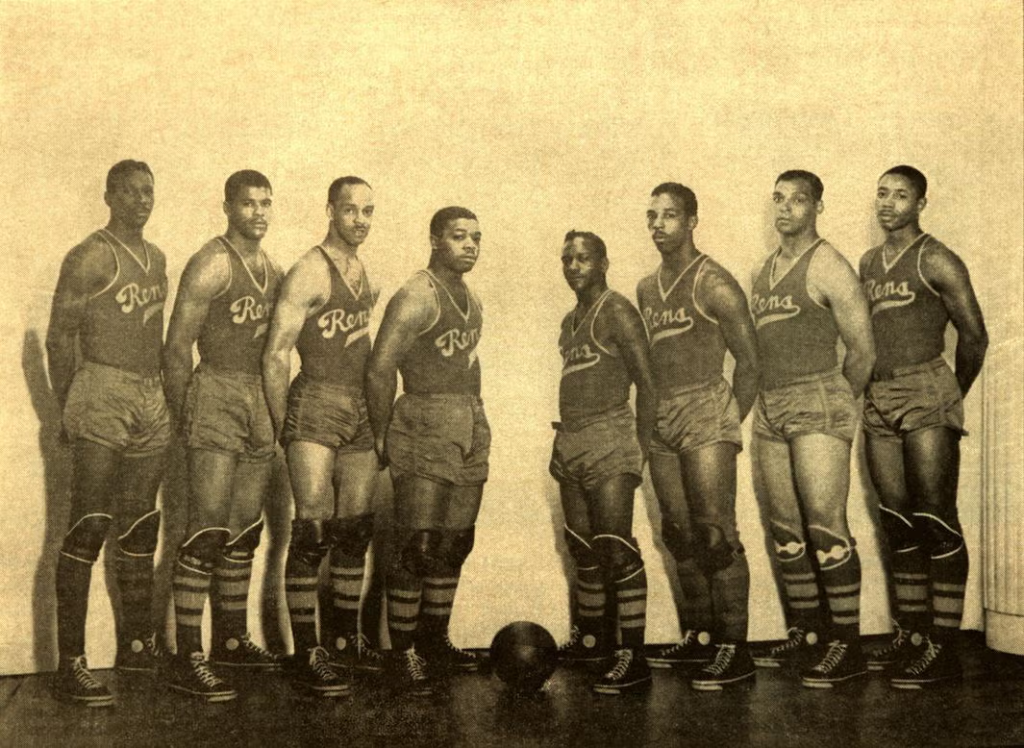

 Here are 21 of the most successful black entrepreneurs throughout history:


 Be a Seed for Change
You must be logged in to post a comment.