Women’s History Month


March is celebrated as Women’s History Month in the US, honoring the contributions and achievements of women throughout history.

Origins and History

Women’s History Month began as a local, week-long celebration in Santa Rosa, California, in 1978, organized by educators to address the lack of women represented in school curricula and to coincide with International Women’s Day on March 8. The movement gained national recognition in the 1980s, and in 1980, President Jimmy Carter issued the first presidential proclamation declaring National Women’s History Week. 

By 1987, Congress expanded the observance to the entire

“Leading the Change: Women Shaping a Sustainable Future” expands our understanding of sustainability beyond just environmental concerns. It encompasses financial sustainability, community resilience, leadership succession, and intergenerational equity. Whether developing green technologies, advancing economic justice, strengthening education systems, or building civic power – women are designing blueprints for sustainable transformation. This theme affirms that shaping a sustainable future means fostering systems that support both people and the planet.

GOALS & OBJECTIVES

  • Honor: Celebrate the diverse contributions of women who are leading sustainability efforts across environmental, economic, educational, and social justice movements.
  • Educate: Raise awareness about the important historical and contemporary roles of women in shaping sustainable change.
  • Inspire: Empower individuals and institutions on how to take action toward sustainability, equity, and justice in their own spheres of influence.
  • Connect: Build bridges across generations, geographies, and disciplines to foster collaboration, mentorship, and shared learning.
  • Envision: Encourage a long-term vision for our future where women’s leadership is central to thriving communities and a healthy planet.

Source: Today show, NWHA

Lena Horne, Women’s History Month


Lena Horne’s contributions to women’s history and her impact on the entertainment industry are significant. She was a pioneering Black-American performer who broke racial barriers and challenged the status quo in Hollywood. Horne’s career spanned over seventy years, covering film, television, and theater, and she was a civil rights activist who took part in the March on Washington in 1963. Her advocacy for civil rights and her role in the entertainment industry have left a lasting legacy

Source: wiki

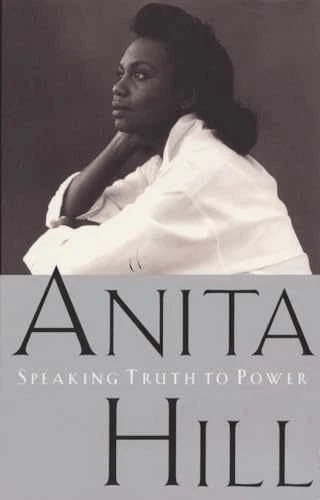
Anita Hill ~ Women’s History Month


Favorite Quote

“I Was, I Am, and I Will Always Be a Catalyst for Change.”

Anita Faye Hill is an American lawyer, educator, and author who became nationally known in 1991 for testifying that U.S. Supreme Court nominee Clarence Thomas sexually harassed her when he was her supervisor.

Her testimony brought workplace sexual harassment into public focus, influencing laws, corporate policies, and inspiring the “Year of the Woman” in politics.

A professor at Brandeis University, she continues to advocate for gender and racial equality through teaching, writing, and public engagement.

Source: wiki , thehistorymakers.org

In memory … Albert Einstein March 14, 1879 – April 18, 1955


TumblrAlbertEnsteina0630a335c22bfc39dac14f5bdde1dfd

Albert Einstein famously said that “politics is more difficult than physics.”

  • Did You Know?: Einstein was asked to be the president of Israel, but he declined: After Chaim Weizmann, Israel’s first president, died in 1952, the country’s prime minister offered the job to Einstein.
  • Did You Know?: Einstein died after refusing surgery, saying, “I want to go when I want. It is tasteless to prolong life artificially. I have done my share, it is time to go. I will do it elegantly.”
  • EDUCATION: Luitpold Gymnasium, Eidgenössische Polytechnische Schule (Swiss Federal Polytechnic School)
  • PLACE OF BIRTH: Ulm, Württemberg, Germany BIRTH DATE: March 14, 1879
  • PLACE OF DEATH: Princeton, New Jersey

Resources: bio.com   history.com