1965 LBJ sends federal troops to Alabama to protect a civil rights march


On March 20, 1965, President Lyndon B. Johnson notifies Alabama’s Governor George Wallace that he will use federal authority to call up the Alabama National Guard in order to supervise a planned civil rights march from Selma to Montgomery.

Intimidation and discrimination had earlier prevented Selma’s Black population—over half the city—from registering and voting. On Sunday, March 7, 1965, a group of 600 demonstrators marched on the capital city of Montgomery to protest this disenfranchisement and the earlier killing of a Black man, Jimmie Lee Jackson, by a state trooper.

In brutal scenes that were later broadcast on television, state and local police attacked the marchers with billy clubs and tear gas. TV viewers far and wide were outraged by the images, and a protest march was organized just two days after “Bloody Sunday” by Martin Luther King Jr., head of the Southern Christian Leadership Conference (SCLC). King turned the marchers around, however, rather than carry out the march without federal judicial approval.

READ MORE: Civil Rights Movement Timeline

Citation Information

Article Title

LBJ sends federal troops to Alabama to protect a civil rights march

AuthorHistory.com Editors

Website Name

HISTORY

URL

https://www.history.com/this-day-in-history/lbj-sends-federal-troops-to-alabama

Access Date

March 19, 2023

Publisher

A&E Television Networks

Last Updated

January 11, 2023

Original Published Date

1965 ~ LBJ sends Federal Troops to Alabama to protect a Civil Rights March


On March 20, 1965, President Lyndon B. Johnson notifies Alabama’s Governor George Wallace that he will use federal authority to call up the Alabama National Guard in order to supervise a planned civil rights march from Selma to Montgomery.

Intimidation and discrimination had earlier prevented Selma’s Black population—over half the city—from registering and voting.

On Sunday, March 7, 1965, a group of 600 demonstrators marched on the capital city of Montgomery to protest this disenfranchisement and the earlier killing of a Black man, Jimmie Lee Jackson, by a state trooper.

For the complete article … history.com

Black&Women’s History Month …Madam C.J. Walker


Madam C.J. Walker’s Secrets to Success

Madam C. J. Walker—entrepreneur, philanthropist, activist, patron of the arts—was born Sarah Breedlove in 1867 on the same Delta, Louisiana plantation where her parents had been enslaved. Orphaned at seven, married at 14 and widowed at 20 with a two-year-old daughter, she moved to St. Louis where three older brothers owned a barbershop. Throughout the 1890s—in the neighborhood where ragtime music was born—she worked as a laundress, sang in her church choir and began to aspire to a better life as she observed the educated, civic-minded women at St. Paul African Methodist Episcopal Church.

BLACK HISTORY MONTH

history… march 20


0141 – The 6th recorded perihelion passage of Halley’s Comet took place.

1413 – Henry V took the throne of England upon the death of his father Henry IV.

1525 – Paris’ parliament began its pursuit of Protestants.

1602 – The United Dutch East Indian Company (VOC) was formed.

1616 – Walter Raleigh was released from Tower of London to seek gold in Guyana.

1627 – France & Spain signed an accord for fighting Protestantism.

1739 – In India, Nadir Shah of Persia occupied Delhi and took possession of the Peacock throne.

1760 – The great fire of Boston destroyed 349 buildings.

1792 – In Paris, the Legislative Assembly approved the use of the guillotine.

1800 – French army defeated the Turks at Helipolis, Turkey, and advanced into Cairo.

1814 – Prince Willem Frederik became the monarch of Netherlands.

1815 – Napoleon Bonaparte entered Paris after his escape from Elba and began his “Hundred Days” rule.

1816 – The U.S. Supreme Court affirmed its right to review state court decisions.

1833 – The U.S. and Siam signed a commercial treaty.

1852 – Harriet Beecher Stowe’s book “Uncle Tom’s Cabin,” subtitled “Life Among the Lowly,” was first published.

1854 – The Republican Party was organized in Ripon, WI. About 50 slavery opponents began the new political group.

1865 – A plan by John Wilkes Booth to abduct U.S. President Abraham Lincoln was ruined when Lincoln changed his plans and did not appear at the Soldier’s Home near Washington, DC.

1868 – Jesse James Gang robbed a bank in Russelville, KY, of $14,000.

1883 – The Unity treaty of Paris was signed to protect industrial property.

1885 – John Matzeliger of Suriname patented the shoe lacing machine.

1886 – The first AC power plant in the U.S. began commercial operation

888 – The Sherlock Holmes Adventure, “A Scandal in Bohemia,” began.

1890 – The General Federation of Womans’ Clubs was founded.

1891 – The first computing scale company was incorporated in Dayton, OH.

1896 – U.S. Marines landed in Nicaragua to protect U.S. citizens in the wake of a revolution.

1897 – The first U.S. orthodox Jewish Rabbinical seminary was incorporated in New York.

1897 – The first intercollegiate basketball game that used five players per team was held. The contest was Yale versus Pennsylvania. Yale won by a score of 32-10.

1899 – At Sing Sing prison, Martha M. Place became the first woman to be executed in the electric chair. She was put to death for the murder of her stepdaughter.

1900 – It was announced that European powers had agreed to keep China’s doors open to trade.

1902 – France and Russia acknowledged the Anglo-Japanese alliance. They also asserted their right to protect their interests in China and Korea.

1903 – In Paris, paintings by Henri Matisse were shown at the “Salon des Independants”.

1906 – In Russia, army officers mutiny at Sevastopol.

1911 – The National Squash Tennis Association was formed in New York City.

1914 – The first international figure skating championship was held in New Haven, CT.

1915 – The French called off the Champagne offensive on the Western Front.

1918 – The Bolsheviks of the Soviet Union asked for American aid to rebuild their army.

1922 – U.S. President Warren G. Harding ordered U.S. troops back from the Rhineland.

1922 – The USS Langley was commissioned. It was the first aircraft carrier for the U.S. Navy.

1932 – The German dirigible, Graf Zepplin, made the first flight to South America on regular schedule.

1933 – The first German concentration camp was completed at Dachau.

1934 – Rudolf Kuhnold gave a demonstration of radar in Kiel Germany.

1940 – The British Royal Air Force conducted an all-night air raid on the Nazi airbase at Sylt, Germany.

1943 – The Allies attacked Field Marshall Erwin Rommel’s forces on the Mareth Line in North Africa.

1947 – A blue whale weighing 180-metric tons was caught in the South Atlantic.

1952 – The U.S. Senate ratified a peace treaty with Japan.

1956 – Mount Bezymianny on Kamchatka Peninsula (USSR) exploded.

1956 – Tunisia gained independence from France.

1963 – The first “Pop Art” exhibit began in New York City.

1964 – The ESRO (European Space Research Organization) was established.

1965 – U.S. President Lyndon B. Johnson ordered 4,000 troops to protect the Selma-Montgomery civil rights marchers.

1967 – Twiggy arrived in the U.S. for a one-week stay.

1969 – U.S. Senator Edward Kennedy called on the U.S. to close all bases in Taiwan.

1972 – 19 mountain climbers were killed on Japan’s Mount Fuji during an avalanche.

1976 – Patricia Hearst was convicted of armed robbery for her role in the hold up of a San Francisco Bank.

1980 – The U.S. made an appeal to the International Court concerning the American Hostages in Iran.

1981 – Argentine ex-president Isabel Peron was sentenced to eight years in a convent.

1982 – U.S. scientists’ returned from Antarctica with the first land mammal fossils found there.

1984 – The U.S. Senate rejected an amendment to permit spoken prayer in public schools.

1985 – For the first time in its 99-year history, Avon representatives received a salary. Up to that time they had been paid solely on commissions.

1985 – CBS-TV presented “The Romance of Betty Boop.”

1985 – Libby Riddles won the 1,135-mile Anchorage-to-Nome dog race becoming the first woman to win the Iditarod.

1986 – Fallon Carrington and Jeff Colby were wed on the TV drama “The Colby’s”. “The Colby’s” was an offshoot of “Dynasty”.

1987 – The U.S. Food and Drug Administration approved AZT. The drug was proven to slow the progress of AIDS (Acquired Immune Deficiency Syndrome).

1989 – A Washington, DC, district court judge blocked a curfew imposed by Mayor Barry and the City Council.

1989 – In Belfast, two policemen were killed. The IRA claimed responsibility.

1989 – It was announced that Cincinnati Reds manager Pete Rose was under investigation.

1990 – The Los Angeles Lakers retired Kareem Abdul-Jabbar’s #33.

1990 – Namibia became an independent nation ending 75 years of South African rule.

1990 – Imelda Marcos, widow of ex-Philippines dictator Ferdinand Marcos, went on trial for racketeering, embezzlement and bribery.

1990 – In Rumania, tanks were sent to the town of Tirgu Mures to quell ethnic riots.

1991 – The U.S. Supreme Court ruled unanimously that employers could not exclude women from jobs where exposure to toxic chemicals could potentially damage a fetus.

1991 – The U.S. forgave $2 billion in loans to Poland.

1992 – Janice Pennington was awarded $1.3 million for accident on the set of the “Price is Right” TV show.

1993 – Russian President Boris Yeltsin declared emergency rule. He set a referendum on whether the people trusted him or the hard-line Congress to govern.

1993 – An Irish Republican Army bomb was detonated in Warrington, England. A 3-year-old boy and a 12-year-old boy were killed.

1995 – About 35,000 Turkish troops crossed the northern border of Iraq in pursuit of the separatist rebels of the Kurdistan Workers Party (PKK).

1995 – In Tokyo, 12 people were killed and more than 5,500 others were sickened when packages containing the nerve gas Sarin was released on five separate subway trains. The terrorists belonged to a doomsday cult in Japan.

1996 – In Los Angeles, Erik and Lyle Menendez were found guilty of first-degree murder in the killing of their parents.

1996 – The U.K. announced that humans could catch CJD (Mad Cow Disease).

1997 – Brian Grazer received a star on the Hollywood Walk of Fame.

1997 – Liggett Group, the maker of Chesterfield cigarettes, settled 22 state lawsuits by admitting the industry marketed cigarettes to teenagers and agreed to warn on every pack that smoking is addictive.

1998 – India’s new Hindu nationalist-led government pledges to “exercise the option to induct nuclear weapons.”

1999 – Bertrand Piccard and Brian Jones became the first men to circumnavigate the Earth in a hot air balloon. The non-stop trip began on March 3 and covered 26,500 miles.

1999 – Legoland California opened Carlsbad, California.

2000 – Former Black Panther Jamil Abdullah Al-Amin, once known as H. Rap Brown, was captured following a shootout that left a sherriff’s deputy dead.

2002 – Actress Pamela Anderson disclosed that she had hepatitis C.

2002 – Arthur Andersen pled innocent to charges that it had shredded documents and deleted computer files related to the energy company Enron.

2003 – Cisco Systems Inc. announced it was buying The Linksys Group INc. for $500 million in stock.

2003 – U.S. and British forces invaded Iraq from Kuwait.

2019 – Europe’s antitrust regulators fined Google $1.7 billion for freezing out rivals in the online advertising business.

2019 – Disney acquired the rights to 21st Century Fox. Fox Corporation was formed with the remaining assets.

on-this-day.com

Jo Ann Robinson ~ Lonnie G. Bunch III, Founding Director of the NMAAHC – Women’s History Month


Lonnie G. Bunch III, museum director, historian, lecturer, and author, is proud to present a page from Our American Story, a regular online series for Museum supporters. It showcases individuals and events in the African American experience, placing these stories in the context of a larger story—our American story.

Jo Ann Robinson: A heroine of the Montgomery Bus Boycott

March is Women’s History Month. The National Museum of African American History and Culture is celebrating the lives of remarkable African American women, both the well-known and those whose stories have been largely forgotten—including Jo Ann Robinson, an unsung civil rights heroine who played a key role in the historic 1955 Montgomery Bus Boycott.

Born on April 17, 1912, in Culloden, Georgia, Robinson distinguished herself early as the valedictorian of her high school class, went on to become the first person in her family to graduate from college, and then fulfilled her dream of becoming a teacher.

She taught in the Macon, Georgia, public schools for five years while earning a master’s degree from Atlanta University. She also pursued English studies at Columbia University in New York City. She moved to Montgomery in 1949 to teach at Alabama State College.

In Montgomery, she became active in the Women’s Political Council (WPC), a local civic organization for African American professional women that was dedicated to fostering women’s involvement in civic affairs, increasing voter registration in the city’s black community, and aiding women who were victims of rape or assault.

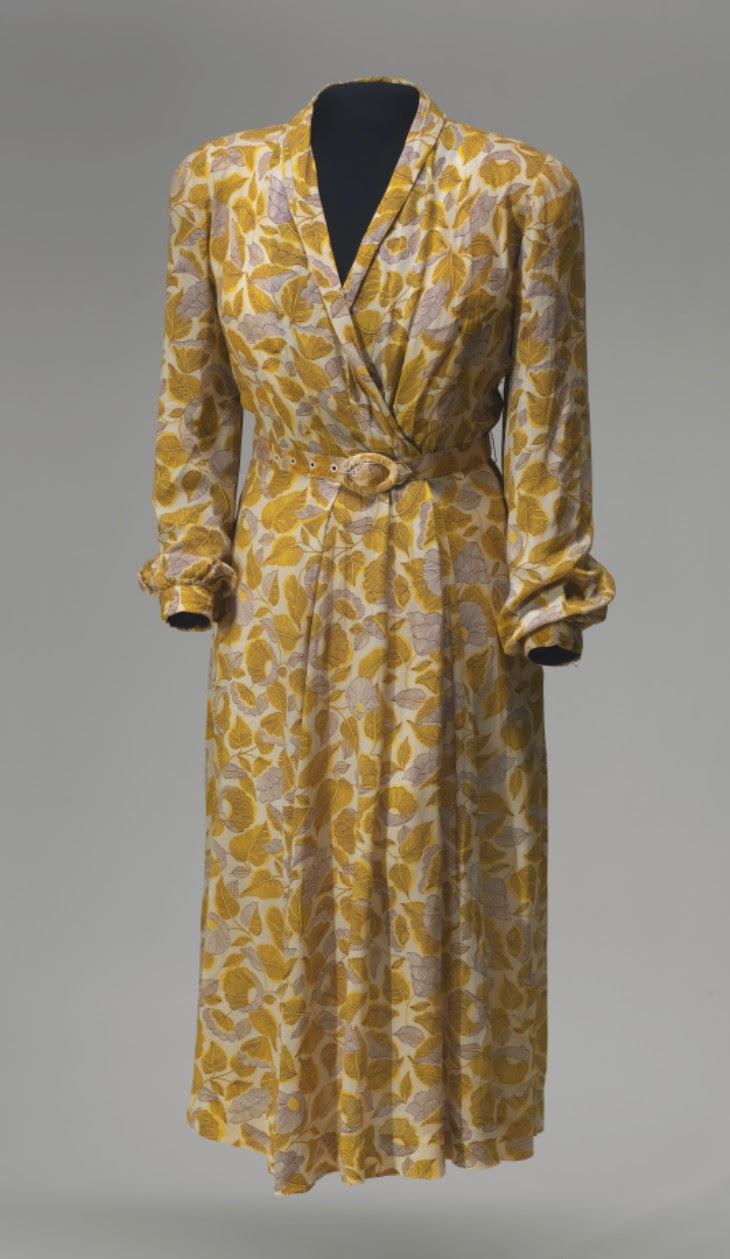
Dress sewn by Rosa Parks

Dress sewn by Rosa Parks. Collection of the Smithsonian National Museum of African American History and Culture. Gift of the Black Fashion Museum founded by Lois K. Alexander-Lane.

Soon after arriving in Montgomery, Robinson was verbally attacked by a public bus driver for sitting in the “whites only” section of the bus. When she became the WPC’s president the following year, she made desegregating the city’s buses one of the organization’s top priorities.

The WPC repeatedly complained to Montgomery city leaders about unfair seating practices and abusive driver conduct. But the group’s concerns were dismissed, leading Robinson to begin laying plans for a bus boycott by the city’s African American community. Following Rosa Parks’ arrest in December 1955 for refusing to give up her bus seat to a white person, Robinson and a few associates jumped into action. They copied tens of thousands of leaflets and distributed them across the city, calling for a one-day boycott.

Following the overwhelming success of the one-day boycott, Montgomery’s black citizens decided to continue the campaign, establishing the Montgomery Improvement Association (MIA) to organize the effort and electing Dr. Martin Luther King Jr. as the MIA’s president.

Robinson chose not to accept an official MIA position for fear of jeopardizing her job at Alabama State, but she worked behind the scenes as a member of the MIA’s executive board, wrote and edited the MIA weekly newsletter, and volunteered in the carpool system that helped African Americans get to and from work. In his memoir of the boycott, Stride Toward Freedom, Dr. King said of Robinson,“Apparently indefatigable, she, perhaps more than any other person, was active on every level of the protest.”

Despite Robinson’s efforts to stay out of the limelight, she was among a group of boycott leaders arrested but never tried. She was also targeted with several acts of intimidation. One local police officer threw a stone through her window, and another poured acid on her car. Eventually, Alabama’s governor ordered the state police to guard the homes of Robinson and other boycott leaders.

The boycott continued until December 20, 1956, when the U.S. Supreme Court declared segregated seating on buses unconstitutional.

The Montgomery Bus Boycott was one of the first successful protests of segregation in the Deep South, inspiring other nonviolent civil rights protests. It also established Dr. King as a prominent national figure. Robinson was especially proud of the role that women played in the boycott’s success, saying:

“Women’s leadership was no less important to the development of the Montgomery Bus Boycott than was the male and minister-dominated leadership.”

—Jo Ann Robinson

In a 1976 interview, Robinson pointed out, “That boycott was not supported by a few people; it was supported by 52,000 people.”

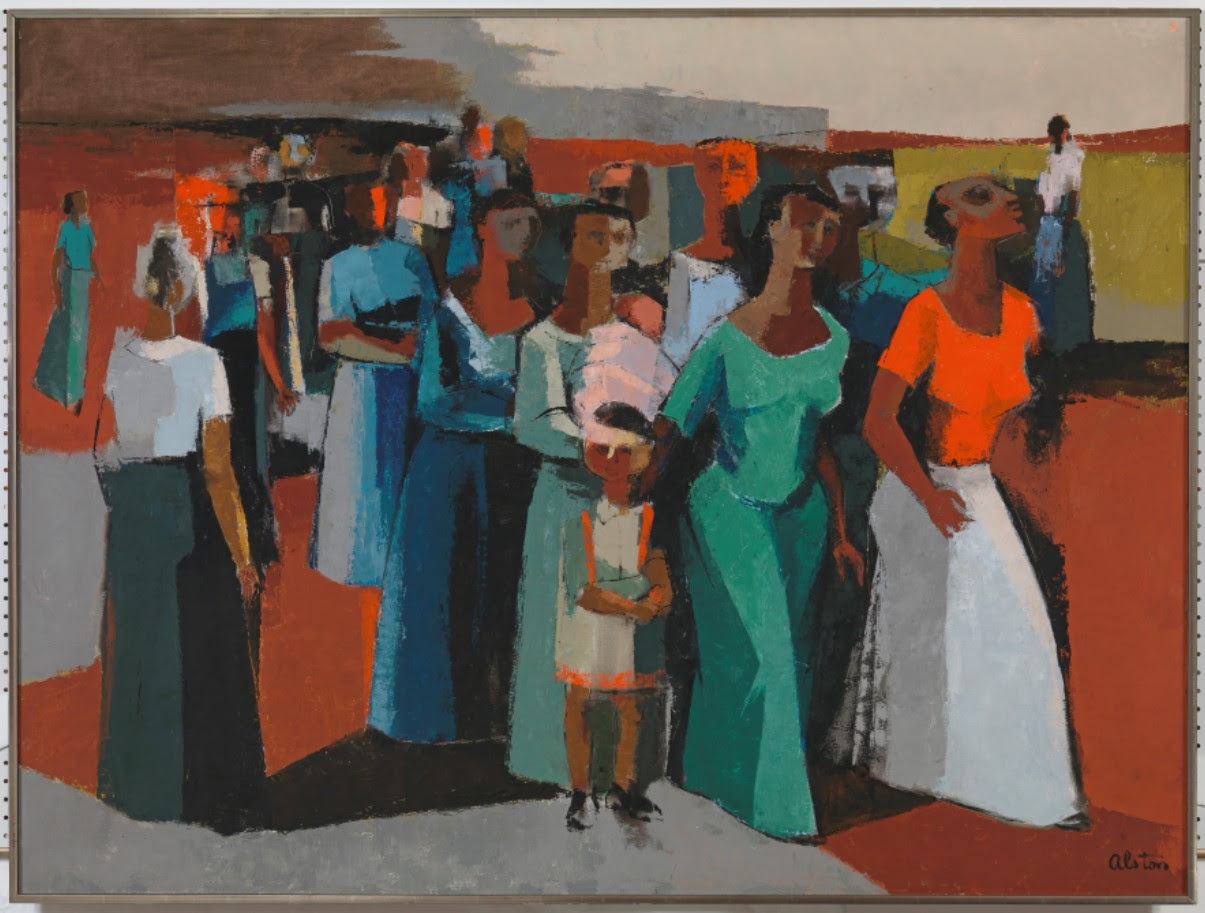
<em>Walking</em>

Walking by Charles Henry Alston. Walking recalls the bus boycotts in the 1950s and anticipated the civil rights marches of the 1960s. The work not only depicts the spirit and conviction of the civil rights protests, it also references the significant role of women and youth in the movement. National Museum of African American History and Culture. Gift of Sydney Smith Gordon, © Charles Alston Estate.

After the boycott victory, Robinson continued to teach at Alabama State until 1960, when she and other faculty supporters of student sit-ins at the college resigned. She went on to teach at Grambling College in Louisiana, then moved to Los Angeles, where she taught in the public school system until her retirement in 1976.

Her memoir, The Montgomery Bus Boycott and the Women Who Started It, was published in 1987. In it, she expressed her great pride in the boycott’s success. She remained actively involved in her community and in local politics until her death in Los Angeles on August 29, 1992.

With the opening of the National Museum of African American History and Culture, courageous African American women like Jo Ann Robinson are finally receiving the recognition they so richly deserve. As a supporter, I hope you take pride in helping bring the forgotten stories of unheralded African American heroes into the spotlight, elevating the African American experience to its rightful place at the center of our nation’s history!

All the best,
DD YE year end 1 signature
Lonnie G. Bunch III
Founding Director

P.S. Our nation has been shaped by many brave African American women visionaries and leaders—including those whose stories have not been told until now. Their stories remind us that history never stands still, but keeps marching forward. Thank you for your support. I hope you will consider joining as a Member or making a donation today.

JoinShare this American Story

Facebook Share Twitter Email share button.jpg

Mug shot of Jo Ann Robinson in the wake of the Montgomery Bus Boycott. Montgomery County Archives.

Rosa Parks, Martin Luther King Jr., and Ralph Abernathy, Ebenezer Baptist Church During Bus Boycott 1955; printed 1987. Collection of the Smithsonian National Museum of African American History and Culture, © Charles Moore.