All posts by Nativegrl77

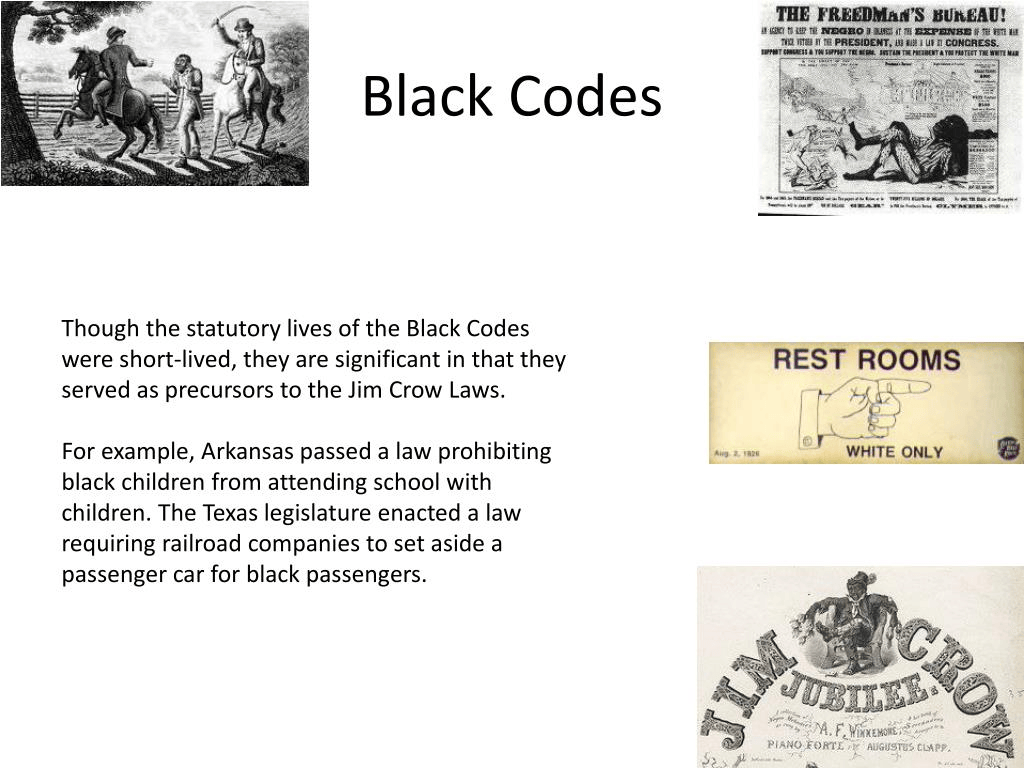
(1866) TEXAS BLACK CODES


On October 26, 1866, the Texas Legislature passed two key statutes that were part of the state’s post‑Civil War Black Codes, designed to maintain racial hierarchy and control over African Americans

1. Restriction on Black Testimony in Court
The law amended the state’s Code of Criminal Procedure to state that “persons of color shall not testify” except in two limited situations:

  • When the prosecution is against a person of color, or
  • When the offense is alleged to have been committed against a person or property of a person of color BlackpastBlackpast+1.

This meant that in civil cases between white parties, and in criminal cases involving white defendants not accused of crimes against Black people, Black individuals were legally barred from testifying. Even when allowed to testify, their words were often given little weight by white judges and juries A History of Racial InjusticeA History of Racial Injustice. This continued the antebellum practice of excluding Black testimony in most cases, despite the new constitutional guarantees of citizenship.

2. Regulation of Labor Contracts
The same day, Texas enacted an Act regulating contracts for labor BlackpastBlackpast+1:

  • Labor contracts over one month had to be in writing, witnessed by a Justice of the Peace, County Judge, County Clerk, Notary Public, or two disinterested witnesses, and read aloud to the laborer before signing.
  • Workers could choose their employer but could not leave before the contract ended without consent, unless for “harsh treatment” or “breach of contract” — otherwise, they forfeited all wages earned.
  • One copy of each contract had to be filed with the County Court Clerk, creating a public record.
  • Contracts were to be made with the head of a family and covered all able‑working members, including minors.
  • Wages were to be a lien on half the crops, second only to rent claims.

These provisions effectively tied Black laborers to long‑term, controlled employment arrangements, limiting their mobility and reinforcing economic dependence U.S. History SceneU.S. History Scene.

Historical Context
The 1866 Texas Black Codes were part of a broader Southern effort to codify racial subjugation after the Civil War. While the state’s 1866 “Act to define and declare the rights of persons lately known as slaves, and free persons of color” granted some civil rights, it also retained restrictions such as bans on voting, jury service, intermarriage with whites, and testimony against whites TSHATSHA+1. The October 26 laws reinforced these inequalities by legally limiting Black legal standing and controlling Black labor.

Impact
These statutes entrenched racial discrimination in Texas law, restricting Black participation in the justice system and binding freedpeople to exploitative labor arrangements. They reflected the legislature’s refusal to recognize full equality for African Americans in the immediate post‑war period A History of Racial InjusticeA History of Racial Injustice+1.

blackpast.org for the complete article

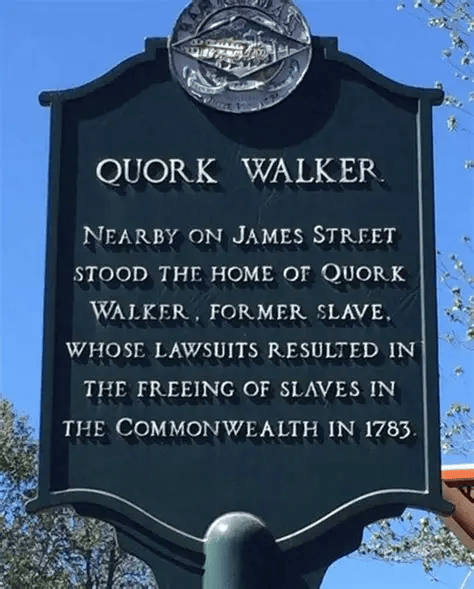
Q. WALKER LEWIS (1798-1856)


Quork Walker Lewis died in October 1856

BY CONTRIBUTED BY: MICHAEL AGUIRRE

Quack Walker Lewis, black abolitionist, barber, AND elder (priest) in the Church of Jesus Christ of Latter-day Saints, was born in Barre, Worcester County, Massachusetts, on August 3, 1798. His father, Peter P. Lewis, was a free black yeoman farmer in Middlesex County, Massachusetts, and his mother, Minor Walker Lewis, was born a slave in Worcester County. Peter and Minor had a total of eleven children, all of whom were born free and part of the black middle class in Massachusetts.

Walker Lewis’s involvement with abolitionism was a central component of his family’s history. He was named after his maternal uncle, Quacko (Kwaku) Walker. Quacko’s parents maintained Ghanaian naming practices (Kwaku means “boy born on Saturday”). Quacko and his parents were slaves in Worcester County, Massachusetts. In two legal cases in 1781 and 1783, Quacko obtained his freedom from Nathaniel Jennison. Quacko v. Jennison (1781) and Jennison v. Caldwell et al (1783) are cited as legal precedents for ending slavery in Massachusetts. With this genealogy of slavery and emancipation, Walker Lewis assisted in the formation of the Massachusetts General Colored Association (MGCA) in 1826.

That year, Lewis and other prominent black abolitionists, including David Walker (no relation), formed the MGCA, the first all-black abolitionist organization in the United States, and in 1829, it released David Walker’s Appeal to the Coloured Citizens of the World. This treatise called for complete emancipation of slaves, armed insurrection (if necessary), and disfavor of African colonization. The MGCA later merged with William Lloyd Garrison’s New England Anti-Slavery Society, which was then renamed the Boston Anti-Slavery Society.

blackfacts.com for complete article

The Balfour Declaration letter was written


On November 2, 1917, Foreign Secretary Arthur James Balfour writes an important letter to Britain’s most illustrious Jewish citizen, Baron Lionel Walter Rothschild, expressing the British government’s support for a Jewish homeland in Palestine. The letter would eventually become known as the Balfour Declaration.

Britain’s support for the Zionist movement came from its concerns regarding the direction of the First World War. Aside from a genuine belief in the righteousness of Zionism, held by Lloyd George among others, Britain’s leaders hoped that a statement supporting Zionism would help gain Jewish support for the Allies.

The influence of the Balfour Declaration on the course of post-war events was immediate: According to the “mandate” system created by the Versailles Treaty of 1919, Britain was entrusted with the administration of Palestine, with the understanding that it would work on behalf of both its Jewish and Arab inhabitants.

Source: history.com

I would say the idea that anyone thought giving Britain or Zionist control in the first place wasn’t offensive seems odd to me, not only because they decided without the Palestinians at the table or ahead of the table since the land, was theirs, but also because all the outliers assumed Britain would be entrusted with the administration of Palestine, with the understanding that it would work on behalf of both its Jewish and Arab inhabitants. Of course, that didn’t happen, and what could go wrong did go wrong, and decades later, genocide is taking place, and the question remains: Why did they think this mission could stay quiet? That is sarcasm … some always knew, and a whole lot of people stayed quiet.

How could Americans and NATO look the other way, and why weren’t the Brits held liable or accountable, btw they all could have done the right thing by correcting it all, but it seems as if supremacy and elitism are beyond humanity. We know every issue can have several sides, but facts should never, ever be ignored, especially when they are documented.

An Idaho Mural Depicting a Lynching of a Native American


So, this picture popped. I have no idea if the mural was modified, dragged away or standing straight and tall like others in our country depicting the lynching of the first Americans ~ Indian and those who were shackled, African- so correct me if needed

Child Brides … the history is long!


See the source image
Source of image: internet #cbn

So, did you know there are three different ways states define “child marriage,” and that’s why sources disagree:

States with NO minimum age at all.

States with a full ban (18, no exceptions)

States with a minimum age + exceptions

It is now 2026, and child marriage is still legal in 33–34 U.S. states. Only 17 states and D.C. have fully banned it with no exceptions. Three states — California, Mississippi, and New Mexico — still have no minimum age at all, meaning a child of any age can legally be married with the right combination of parental or judicial approval. Between 2000 and 2021, over 315,000 minors were legally married in the U.S., and 86% of those marriages were between a minor girl and an adult man. Despite public assumptions, the U.S. still has one of the weakest child‑marriage protections in the developed world.

States that have fully banned child marriage (18, no exceptions)

17 states + D.C.

  • Delaware
  • New Jersey
  • Pennsylvania
  • Minnesota
  • Rhode Island
  • New York
  • Massachusetts
  • Vermont
  • Connecticut
  • Michigan
  • Washington
  • Virginia
  • New Hampshire
  • Maine
  • Oregon
  • Missouri
  • Oklahoma
  • District of Columbia

These are the only places where child marriage is truly abolished.

It’s time for America to evolve from the misogynistic values of the 1600s to a future where no child’s life is shaped by outdated laws that were never meant to protect them. ~ Nativergrl77

(Sources: World Population Review, LegalClarity, FreedomUnited, Wikipedia)

So, as of June 2020, in the 40 states that have set a marriage age by statute, the lower minimum marriage age when all exceptions are taken into account, are:

  • 2 states have a minimum age of 14: Alaska and North Carolina
  • 3 states have a minimum age of 15.
  • 21 states have a minimum age of 16.
  • 10 states have a minimum age of 17.
  • 4 states have a minimum age of 18.

The Koski/Heymann study found prevalence of child marriage varied from more than 10 per 1,000 in West Virginia, Hawaii and North Dakota to less than four per 1,000 in Maine, Rhode Island and Wyoming.[29]

  • In Texas from 2000 to 2014, almost 40,000 children were married.[30][31]
  • In Florida, 16,400 children, some as young as 13, were married from 2000–2017, which is the second highest incidence of child marriage after Texas.[15]
  • In Alabama there were over 8,600 child marriages from 2000 to 2015, the fourth highest amount of any state. However, child marriage in Alabama showed a large decline in that time. In 2000, almost 1,200 children married, but by 2014 it dropped to 190.[31]
  • In Virginia between 2004 and 2013, nearly 4,500 children were married according to the Tahirih Justice Center.[32]
  • In Ohio from 2000 to 2015 there were 4,443 girls married aged 17 and younger, including 43 aged 15 and under.[33]
  • In New York, more than 3,800 children were married between 2000 and 2010.[34]

The Koski/Heymann also found that only 20% of married children were living with their spouses; the majority of the rest were living with their parents.[29]

Source: wiki … please, definitely correct wiki if the information is false