Category Archives: ~ Culture & History

Henrietta Lacks … a story kept quiet until Rebecca Skloot


The Immortal Life of Henrietta Lacks by, Rebecca Skloot

In April 2011, I watched a C-SPAN show interviewing the author of a book about Henrietta Lacks, her name: Rebecca Skloot.

Henrietta’s story starts August 1, 1920, and her birth and life ended sometime in the early fifties, 1951. This story has just come into the light of day and while I cried again because it’s sad, and unacceptable by some, it reminds us of how life is treated when you have no or less power than the “average Joe” which is code for being white.

After having several children and years and years of reports by “the Media”, publicity, and whatnot, Henrietta’s family seems to be the only ones who didn’t benefit from the story of this woman whose cells were used to create a cell line for medical research but got nothing in return. I don’t know when everyone else heard of this story, but Oprah and some associates decided to make a movie…hopefully, some or ALL of the revenue will be given to the family. It is a story that makes you gasp, gets you upset, or mad, it will make you cry and wonder how the science community got away with not paying Henrietta Lacks and or her family for her contribution. If I understood the interviewer, Henrietta’s family has recently gotten more PR about their Mother’s story, but it’s unclear if anyone paid money for all the stories, books, and or TV programs about her. It is a story that appears to be on the surface, one of unintentional theft, that became just that, and if you are willing to dig deeper you realize it is theft and a secret kept quiet for years.

It becomes apparent her cells are used by an immoral scientist who did not tell her or her family even after it was evident that the cells were rare, viable, unusual, and priceless…worth an astronomical amount in my opinion.  The fact that they were used and what effects they all would eventually have on science today, in 2011, was not evident then, but those scientists probably had some idea. I understand that back then technology may not have been as advanced, but it did advance and still is and if the reports are correct, the science community gave Henrietta nothing to her or her family for the wonderful things those rare cells she had that changed the lives of so many. It happened in a time when minorities were treated very poorly and again, even if the reports state that standard procedure was this that, and or the other, the ’70s gave way to new ways to handle science technologies; it’s time to pay Henrietta Lacks and her family back.

First posted 4/13/11

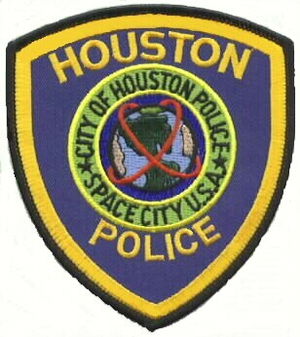
VIDEO: Houston police beat helpless 15-year old … Black History


A shocking video released last week shows four Houston police officers mercilessly beating a 15-year old burglary suspect while at least eight other officers looked on. Some kicked him repeatedly in the head and legs, others punched his torso — all while young Chad Holley was lying face down with his hands behind his head in surrender.

The officers who beat Holley have only been charged with misdemeanors, and many of the officers on the scene that day are still working as police officers in Houston.

It’s time to demand real accountability for the Houston Police Department — and when we do, it’ll send a clear message to other departments with a similar problem. It starts with the four officers who brutalized Holley, but it can’t stop there. What happened to Chad Holley isn’t merely an isolated incident — it’s the result of a police culture in Houston (and in police departments across the nation) that places little value on Black lives.

Your voice can help change that. Please join us in calling on Attorney General Eric Holder to investigate Chad Holley’s brutal beating, and the culture that led to it. And please ask your friends and family to do the same — it’s the first step for reform in Houston and can help shine a light on police brutality in other parts of the country:

Chad Holley ran from Houston police following a burglary — but as soon as he was captured, he immediately stretched out on the ground and put his hands behind his head. But before arresting him, a pack of officers descended on him, stomping, kicking and punching the young man until he blacked out, and leaving him with a broken nose.1,2

Despite this, the officers who beat Holley have only been charged with misdemeanors. All four were charged with “official oppression,” while two of them face an additional misdemeanor charge of violating Holley’s civil rights.3 Each charge carries a maximum of a year in prison — a light penalty for such a clear abuse of power and violation of the public’s trust.

But this is bigger than just the actions of these four officers — Houston Police Department (HPD) has a problem. Misbehavior is rampant among Houston police, with more than 14,000 complaints against HPD officers over the last six years — half of which were upheld. But the real amount of misconduct is likely to be much greater, with much of it not being investigated. Because Black residents distrust the process — and even fear retaliation due to holes in the process — many don’t ever file complaints against police officers.4,5

HPD has painted Holley’s beating as an isolated incident of misconduct, but that’s hard to believe if you watch the video of the incident. Officers attacked Holley simultaneously and without hesitation, as if this kind of violence is routine. There were no fewer than a dozen officers on the scene during the beating, yet HPD leaders didn’t learn of the assault until the security video was mailed to the chief of police and District Attorney — all the officers on the scene were silent until then, willing participants in a cover-up.

This speaks to an important reality: Chad Holley’s beating appears to be the product of a problematic culture within the Houston Police Department — one where officers don’t fear punishment, and where they stick together to hide serious incidents of misconduct. Most recently, this led Houston activist Quanell X, who released the Chad Holley tapes to the public, to announce the release of several more videos of unwarranted police violence.6

The Department of Justice’s Civil Rights Division can help. They have the power to bring charges with penalties that accurately reflect the heinousness of the Holley incident. This is not just important for justice in Holley’s case or for reform in Houston — but for helping to send a signal to other departments across the country. The Department of Justice can also investigate the entire police force, and force changes to the culture that allowed this happen.

If there’s enough public outcry, we can push the DOJ to take a hard look at Chad Holley’s case. That’s why it’s important that as many of us speak up as possible. And after you do, please, urge your friends and family to do the same. It takes just a moment:

Thanks and Peace

— James, Gabriel, William, Dani, Natasha, and the rest of the ColorOfChange.org team

February 16th, 2011

Help support our work. ColorOfChange.org is powered by YOU — your energy and dollars. We take no money from lobbyists or large corporations that don’t share our values, and our tiny staff ensures your contributions go a long way. You can contribute here:

http://www.colorofchange.org/donate

Black History Month: The Need Remains … a repost


Lonnie Bunch, museum director, historian, lecturer, and author, is proud to present A Page from Our American Story, a regular on-line series for Museum supporters. It will showcase individuals and events in the African American experience, placing these stories in the context of a larger story — our American story.A Page From Our American StoryEditor’s Note: This edition of A Page from Our American Story was originally a speech made by Lonnie Bunch. It is reprinted here in its entirety.Knowing the Past Opens the Door to the Future
The Continuing Importance of Black History Month

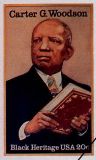
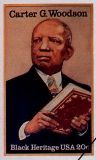
Carter Woodson,
father of Black
History Month,
was commemorated
by the United States
Postal Service with
a stamp in his
image on
February 1, 1984.

No one has played a greater role in helping all Americans know the black past than Carter G. Woodson, the individual who created Negro History Week in Washington, D.C., in February 1926.

Woodson was the second black American to receive a PhD in history from Harvard — following W.E.B. DuBois by a few years. To Woodson, the black experience was too important simply to be left to a small group of academics. Woodson believed that his role was to use black history and culture as a weapon in the struggle for racial uplift. By 1916, Woodson had moved to DC and established the “Association for the Study of Negro Life and Culture,” an organization whose goal was to make black history accessible to a wider audience. Woodson was a strange and driven man whose only passion was history, and he expected everyone to share his passion.

This impatience led Woodson to create Negro History Week in 1926, to ensure that school children be exposed to black history. Woodson chose the second week of February in order to celebrate the birthday of Lincoln and Frederick Douglass. It is important to realize that Negro History Week was not born in a vacuum. The 1920s saw the rise in interest in African American culture that was represented by the Harlem Renaissance where writers like Langston Hughes, Georgia Douglass Johnson, Claude McKay — wrote about the joys and sorrows of blackness, and musicians like Louie Armstrong, Duke Ellington, and Jimmy Lunceford captured the new rhythms of the cities created in part by the thousands of southern blacks who migrated to urban centers like Chicago. And artists like Aaron Douglass, Richard Barthe, and Lois Jones created images that celebrated blackness and provided more positive images of the African American experience.

Woodson hoped to build upon this creativity and further stimulate interest through Negro History Week. Woodson had two goals. One was to use history to prove to white America that blacks had played important roles in the creation of America and thereby deserve to be treated equally as citizens. In essence, Woodson — by celebrating heroic black figures — be they inventors, entertainers, or soldiers — hoped to prove our worth, and by proving our worth — he believed that equality would soon follow. His other goal was to increase the visibility of black life and history, at a time when few newspapers, books, and universities took notice of the black community, except to dwell upon the negative. Ultimately Woodson believed Negro History Week — which became Black History Month in 1976 — would be a vehicle for racial transformation forever.  Read the full speech now…

All the best,
Lonnie Bunch
Director


On this Day … Moby Dick Published


On this day in 1851, Moby-Dick, a novel by Herman Melville about the voyage of the whaling ship Pequod, is published by Harper & Brothers in New York. Moby-Dick is now considered a great classic of American literature and contains one of the most famous opening lines in fiction: “Call me Ishmael.” Initially, though, the book about Captain Ahab and his quest for a giant white whale was a flop.

Herman Melville was born in New York City in 1819 and as a young man spent time in the merchant marines, the U.S. Navy and on a whaling ship in the South Seas. In 1846, he published his first novel, Typee, a romantic adventure based on his experiences in Polynesia. The book was a success and a sequel, Omoo, was published in 1847. Three more novels followed, with mixed critical and commercial results. Melville’s sixth book, Moby-Dick, was first published in October 1851 in London, in three volumes titled The Whale, and then in the U.S. a month later. Melville had promised his publisher an adventure story similar to his popular earlier works, but instead, Moby-Dick was a tragic epic, influenced in part by Melville’s friend and Pittsfield, Massachusetts, neighbor, Nathaniel Hawthorne, whose novels include The Scarlet Letter.

After Moby-Dick‘s disappointing reception, Melville continued to produce novels, short stories (Bartleby) and poetry, but writing wasn’t paying the bills so in 1865 he returned to New York to work as a customs inspector, a job he held for 20 years.

Melville died in 1891, largely forgotten by the literary world. By the 1920s, scholars had rediscovered his work, particularly Moby-Dick, which would eventually become a staple of high school reading lists across the United States. Billy Budd, Melville’s final novel, was published in 1924, 33 years after his death.

history.com

A Century later & 40 failed attempts,Congress passed a measure and was signed into law


9 Things You May Not Know About “The Star-Spangled Banner”

September 12, 2014
By the dawn’s early light on September 14, 1814, Francis Scott Key peered through a spyglass and spotted an American flag still waving over Baltimore’s Fort McHenry after a fierce night of British bombardment. In a patriotic fervor, the man called “Frank” Key by family and friends penned the words to “The Star-Spangled Banner.” Two hundred years later, learn nine surprising facts about the national anthem of the United States and the man who wrote its lyrics.

1. Francis Scott Key intended his verses to be song lyrics, not poetry.
“The Star Spangled-Banner” was not a poem set to a melody years later. Although Key was an amateur poet and not a songwriter, when he composed his verses, he intended them to accompany a popular song of the day. “We know he had the tune in mind because the rhyme and meter exactly fit it,” says Marc Leepson, author of the new Key biography “What So Proudly We Hailed.” The first broadside of the verses, printed just days after the battle, noted that the words should be sung to the melody of “To Anacreon in Heaven.” Key was quite familiar with the tune, having used it to accompany an 1805 poem, which included a reference to a “star-spangled flag,” he had written to honor Barbary War naval heroes Stephen Decatur and Charles Stewart.

Although Key composed the patriotic lyrics amid a burst of anti-British euphoria, “To Anacreon in Heaven” was ironically an English song composed in 1775 that served as the theme song of the upper-crust Anacreontic Society of London and a popular pub staple.

2. Key was not imprisoned on a British warship when he penned his verses.
In his capacity as a Washington, D.C., lawyer, Key had been dispatched by President James Madison on a mission to Baltimore to negotiate for the release of Dr. William Beanes, a prominent surgeon captured at the Battle of Bladensburg. Accompanied by John Stuart Skinner, a fellow lawyer working for the State Department, Key set sail on an American sloop in Baltimore Harbor, and on September 7 the pair boarded the British ship Tonnant, where they dined and secured the prisoner’s release under one condition—they could not go ashore until after the British attacked Baltimore. Accompanied by British guards on September 10, Key returned to the American sloop from which he witnessed the bombardment behind the 50-ship British fleet.

The garrison flag that was raised over Fort McHenry, on display at the Smithsonian's National Museum of American History.
The garrison flag that was raised over Fort McHenry, on display at the Smithsonian’s National Museum of American History.

3. The flag Key “hailed at the twilight’s last gleaming” did not fly “through the perilous fight.”
In addition to a thunderstorm of bombs, a torrent of rain fell on Fort McHenry throughout the night of the Battle of Baltimore. The fort’s 30-by-42-foot garrison flag was so massive that it required 11 men to hoist when dry, and if waterlogged the woolen banner could have weighed upwards of 500 pounds and snapped the flagpole. So as the rain poured down, a smaller storm flag that measured 17-by-25 feet flew in its place. “In the morning they most likely took down the rain-soaked storm flag and hoisted the bigger one,” Leepson says, “and that’s the flag Key saw in the morning.”

4. The song was not originally entitled “The Star-Spangled Banner.”
When Key scrawled his lyrics on the back of a letter he pulled from his pocket on the morning of September 14, he did not give them any title. Within a week, Key’s verses were printed on broadsides and in Baltimore newspapers under the title “Defence of Fort M’Henry.” In November, a Baltimore music store printed the patriotic song with sheet music for the first time under the more lyrical title “The Star-Spangled Banner.”

Key's handwritten draft
Key’s handwritten draft

5. It did not become the national anthem until more than a century after it was written.
Along with “Hail Columbia” and “Yankee Doodle,” “The Star-Spangled Banner” was among the prevalent patriotic airs in the aftermath of the War of 1812. During the Civil War, “The Star-Spangled Banner” was an anthem for Union troops, and the song increased in popularity in the ensuing decades, which led to President Woodrow Wilson signing an executive order in 1916 designating it as “the national anthem of the United States” for all military ceremonies. On March 3, 1931, after 40 previous attempts failed, a measure passed Congress and was signed into law that formally designated “The Star-Spangled Banner” as the national anthem of the United States.

6. The national anthem has four verses.
The version of “The Star-Spangled Banner” traditionally sung on patriotic occasions and at sporting events is only the song’s first verse. All four verses conclude with the same line: “O’er the land of the free and the home of the brave.” (In 1861, poet Oliver Wendell Holmes wrote a fifth verse to support the Union cause in the Civil War and denounce “the traitor that dares to defile the flag of her stars.”)

7. Key opposed American entry into the War of 1812.
Ironically, the man who created one of the lasting patriotic legacies of the War of 1812 adamantly opposed the conflict at its outset. Key referred to the war as “abominable” and “a lump of wickedness.” However, his opposition to the war softened after the British began to raid nearby Chesapeake Bay communities in 1813 and 1814, and he briefly served in a Georgetown wartime militia.

Francis Scott Key
Francis Scott Key

8. Key was a consummate Washington insider.
Although Key loathed politics, he was a prominent figure in Washington, D.C. “He was an important player in the early republic,” Leepson says. “He was a very successful and influential lawyer at the highest levels in Washington.” Key ran a thriving law practice, served as a trusted advisor in Andrew Jackson’s “Kitchen Cabinet” and was appointed a United States Attorney in 1833. He prosecuted hundreds of cases, including that of Richard Lawrence for the attempted assassination of Jackson, and argued over 100 cases before the United States Supreme Court.

9. Key was a one-hit wonder who might have been tone deaf.
Key was much more adept in his legal day job than he was as an amateur poet. Most of the odes he composed were never meant to be seen beyond family and friends, and none came remotely close to realizing the popular fame of “The Star-Spangled Banner.” In addition to being a middling poet, Key also had a hard time carrying a tune. “Key’s family said he was not musical,” Leepson says, “which means he likely was tone deaf.”