Category Archives: ~ politics petitions pollution and pop culture

Hatch Act


RM/Getty Images

By Kathy Gill

Updated on September 23, 2021

The Hatch Act is a federal law that restricts the political activity of executive branch employees of the federal government, District of Columbia government, and some state and local employees whose salaries are paid for partially or entirely with federal money.

The Hatch Act was passed in 1939 to ensure that federal programs “are administered in a nonpartisan fashion, to protect federal employees from political coercion in the workplace, and to ensure that federal employees are advanced based on merit and not based on political affiliation,” according to the U.S. Office of Special Counsel.

Examples of Violations

In passing the Hatch Act, Congress affirmed that partisan activity government employees must be limited for public institutions to function fairly and effectively.

The courts have held that the Hatch Act is not an unconstitutional infringement on employees’ First Amendment right to freedom of speech because it specifically provides that employees retain the right to speak out on political subjects and candidates.

All civilian employees in the executive branch of the federal government, except the president and the vice president, are covered by the provisions of the Hatch Act.

These employees may not:

  • use official authority or influence to interfere with an election
  • solicit or discourage political activity of anyone with business before their agency
  • solicit or receive political contributions (may be done in certain limited situations by federal labor or other employee organizations)
  • be candidates for public office in partisan elections
  • engage in political activity while: on duty
  • in a government office
  • wearing an official uniform
  • using a government vehicle
  • wear partisan political buttons on duty

While the Hatch Act has been described as an “obscure” law, it is taken seriously and enforced.

Gill, Kathy. “Hatch Act: Definition and Examples of Violations.” ThoughtCo, Sep. 23, 2021, thoughtco.com/the-hatch-act-3368321.

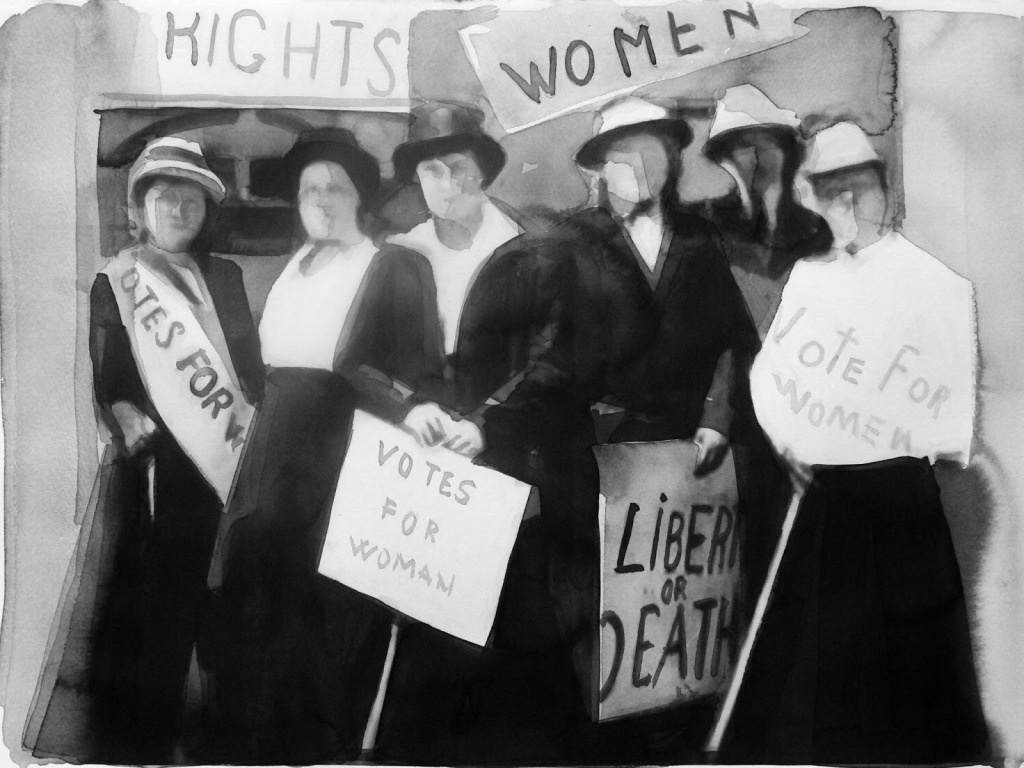
They fought for our right to vote and suffered… We must Vote!


This post had to be reposted as we count down to the 2022 midterms


Over 50 years ago, African-Americans made up 45% of Mississippi’s population, but fewer than 7% of  Mississippians were registered to vote.

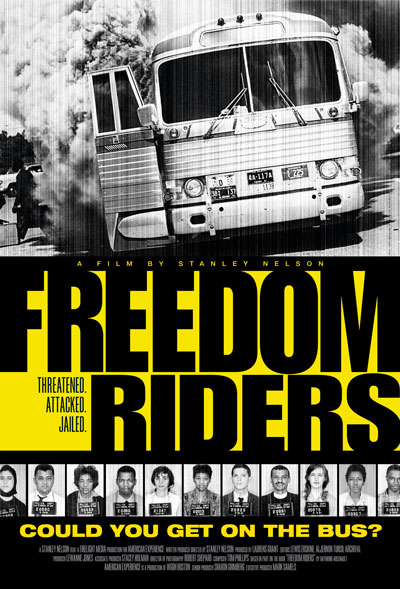
In June of 1964, civil rights groups came together to kick off Freedom Summer, a 10-week campaign to dramatically increase the number of registered black voters in the state.

More than 1,000 volunteers of all races and colors, from all over the nation, traveled to Mississippi to do this important work. While there, youth volunteers and their black Mississippian supporters suffered unimaginable levels of vitriol and violence, but they did not stop fighting for what was right.

In the end, Freedom Summer emerged as a defining moment in the civil rights movement, pushing our country one step closer to the passage of the Voting Rights Act of 1965.


The best way we can honor the work, bravery, and sacrifice of the Freedom Summer volunteers is to exercise the right they fought for so diligently.

Honor the mission of Freedom Summer by pledging to vote in this year’s midterm election.

The extremely low levels of black voter registration in the South were fueled by generations of discriminatory elections practices. States were legally able to hold whites-only primaries, collect poll taxes, and administer literacy tests. When legal barriers weren’t enough, lynchings and bombings—threats and fulfilled promises—kept even more African-Americans away from the polls.

Fifty years later, legislators are attempting to take us backward to 1964, weakening the VRA, making it ever harder for the poor and people of color to have their voices heard at the polls.

Don’t allow these lawmakers to roll back history. They can only win and keep their seats in office when people like you and I stay home during midterm elections.

Raise your voice against those who seek to violate civil rights and human rights. Make a pledge to vote this November:

http://action.naacp.org/My-Vote-2014

In solidarity,

Lorraine C. Miller
Interim President and CEO
NAACP

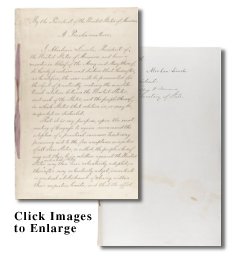
Preliminary Emancipation Proclamation, September 22, 1862 ~ signed on 1863


“. . . on the first day of January . . . all persons held as slaves within any State, or designated part of a State, the people whereof shall then be in rebellion against the United States shall be then, thenceforward, and forever free.” President Abraham Lincoln, preliminary Emancipation Proclamation, September 22, 1862

President Lincoln issued the preliminary Emancipation Proclamation in the midst of the Civil War, announcing on September 22, 1862, that if the rebels did not end the fighting and rejoin the Union by January 1, 1863, all slaves in the rebellious states would be free.

Read more…


1862 US President Abraham Lincoln says he will free slaves in all states on Jan 1


The Civil War began in 1861 as a struggle over whether states had the right to leave the Union. President Abraham Lincoln firmly believed that a state did not have that right. And he declared war on the southern states that tried to leave.

But the fight to preserve the nation was going badly. By summer of 1862, Union troops had not won a decisive victory in Virginia, the heart of the Confederacy. And the war was losing support with politicians and the public in the north. President Lincoln had to do something to guarantee their continued support.

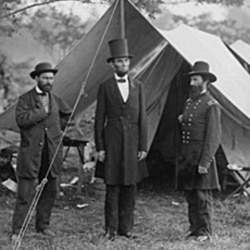
President Abraham Lincoln, center, in Maryland after the Battle of Antietam in 1862

Finally, in September 1862, the Union successfully stopped the Confederate invasion of Maryland. The armies of Union general George McClellan and Confederate general Robert E. Lee battled near Antietam Creek. Almost 100,000 men fought. More than 23,000 were killed, wounded or missing.

Antietam was a violent, savage battle — the bloodiest one-day battle in American history. But the North’s victory there made it easier for Abraham Lincoln to make an important announcement.

Lincoln decided to recognize that slavery was, in fact, a major issue in the war. On September 22, 1862, he announced a new policy on slavery in the rebel southern states. His announcement became known as the Emancipation Proclamation.

learningenglish.voanews.com