Category Archives: ~ politics petitions pollution and pop culture

U.S. Congress passes Espionage Act


On June 15, 1917, some two months after America’s formal entrance into World War I against Germany, the United States Congress passes the Espionage Act.

Enforced largely by A. Mitchell Palmer, the United States attorney general under President Woodrow Wilson, the Espionage Act essentially made it a crime for any person to convey information intended to interfere with the U.S. armed forces prosecution of the war effort or to promote the success of the country’s enemies. Anyone found guilty of such acts would be subject to a fine of $10,000 and a prison sentence of 20 years.

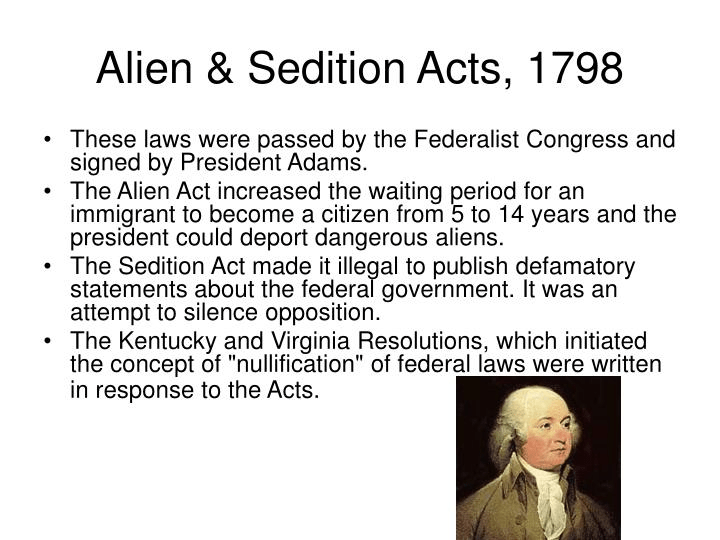
The Espionage Act was reinforced by the Sedition Act of the following year, which imposed similarly harsh penalties on anyone found guilty of making false statements that interfered with the prosecution of the war; insulting or abusing the U.S. government, the flag, the Constitution or the military; agitating against the production of necessary war materials; or advocating, teaching or defending any of these acts.

Both pieces of legislation were aimed at socialists, pacifists and other anti-war activists during World War I and were used to punishing effect in the years immediately following the war, during a period characterized by the fear of communist influence and communist infiltration into American society that became known as the first Red Scare (a second would occur later, during the 1940s and 1950s, associated largely with Senator Joseph McCarthy). Palmer—a former pacifist whose views on civil rights radically changed once he assumed the attorney general’s office during the Red Scare—and his right-hand man, J. Edgar Hoover, liberally employed the Espionage and Sedition Acts to persecute left-wing political figures.

Source: history.com for the complete article

**************************************

reinforced by the Sedition Act

on this day … 6/14 1943 – The U.S. Supreme Court ruled that schoolchildren could not be made to salute the U.S. flag if doing so conflicted with their religious beliefs.


1775 – The Continental Army was founded by the Second Continental Congress for purposes of common defense. This event is considered to be the birth of the United States Army. On June 15, George Washington was appointed commander-in-chief.

1777 – The Continental Congress in Philadelphia adopted the “Stars and Stripes” as the national flag of the United States. The Flag Resolution stated “Resolved: that the flag of the United States be made of thirteen stripes, alternate red and white; that the union be thirteen stars, white in a blue field, representing a new Constellation.” On May 20, 1916, President Woodrow Wilson officially proclaimed June 14 “Flag Day” as a commemoration of the “Stars and Stripes.”

1789 – Captain William Bligh of the HMS Bounty arrived in Timor in a small boat.

1834 – Cyrus Hall McCormick received a patent for his reaping machine.

1834 – Isaac Fischer Jr. patented sandpaper.

1841 – The first Canadian parliament opened in Kingston.

1846 – A group of U.S. settlers in Sonoma proclaimed the Republic of California.

1893 – Philadelphia observed the first Flag Day.

1900 – Hawaii became a U.S. territory.

1907 – Women in Norway won the right to vote.

1917 – General John Pershing arrived in Paris during World War I.

1919 – The first non-stop trans-Atlantic flight began. Captain John Alcot and Lt. Arthur Brown flew from Newfoundland to Ireland.

1922 – Warren G. Harding became the first U.S. president to be heard on radio. The event was the dedication of the Francis Scott Key memorial at Fort McHenry.

1927 – Nicaraguan President Adolfo Diaz signed a treaty with the U.S. allowing American intervention in his country.

1940 – The Nazis opened their concentration camp at Auschwitz in German-occupied Poland.

1940 – German troops entered Paris. As Paris became occupied loud speakers announced the implementation of a curfew being imposed for 8 p.m.

1943 – The U.S. Supreme Court ruled that schoolchildren could not be made to salute the U.S. flag if doing so conflicted with their religious beliefs.

1944 – Sixty U.S. B-29 Superfortress’ attacked an iron and steel works factory on Honshu Island.

1945 – Burma was liberated by Britain.

1949 – The state of Vietnam was formed.

1951 – “Univac I” was unveiled. It was a computer designed for the U.S. Census Bureau and billed as the world’s first commercial computer.

1952 – The Nautilus was dedicated. It was the first nuclear powered submarine.

1954 – U.S. President Dwight D. Eisenhower signed an order adding the words “under God” to the Pledge of Allegiance.

1954 – Americans took part in the first nation-wide civil defense test against atomic attack.

1965 – A military triumvirate took control in Saigon, South Vietnam.

1967 – Mariner 5 was launched from Cape Kennedy, FL. The space probe’s flight took it past Venus.

1982 – Argentine forces surrendered to British troops on the Falkland Islands.

1987 – The Los Angeles Lakers won the NBA title by defeating the defending Boston Celtics.

1989 – Former U.S. President Reagan received an honorary knighthood from Britain’s Queen Elizabeth II.

1990 – The U.S. Supreme Court upheld police checkpoints that are used to examine drivers for signs of intoxication.

1994 – The New York Rangers won the Stanley Cup by defeating the Vancouver Canucks. It was the first time the Rangers had won the cup in 54 years.

2002 – Actor Kirk Douglas received the UCLA Medal. The award is presented to people for cultural, political and humanitarian achievements.

1866 – 14th Amendment


1866 – The 14th Amendment to the U.S. Constitution was passed by the U.S. Congress. It was ratified on July 9, 1868. The amendment was designed to grant citizenship to and protect the civil liberties of recently freed slaves. It did this by prohibiting states from denying or abridging the privileges or immunities of citizens of the United States, depriving any person of his life, liberty, or property without due process of law, or denying to any person within their jurisdiction the equal protection of the laws.

Happy Dad’s Day – Began on June 19, 1910, and a history of the Art of Manliness


Father’s Day is coming up, so in honor of dear old Dad, the Art of Manliness is presenting a series of father-themed posts. Today we look into the history of Father’s Day. Sadly, retailers and marketers, in an effort to make a quick buck, have bastardized the original meaning of Father’s Day. A holiday that was supposed to honor Dad and enumerate his special qualities now is used to sell chili pepper ties and shop vacs. Hopefully, by understanding why the concept of Father’s Day was created, we can better celebrate and honor the fathers who raised us into men.

The History of Father’s Day in the United States

There are two stories of when the first Father’s Day was celebrated.

According to some accounts, the first Father’s Day was celebrated in Washington State on June 19, 1910.

A woman by the name of Sonora Smart Dodd came up with the idea of honoring and celebrating her father while listening to a Mother’s Day sermon at church in 1909. She felt as though mothers were getting all the acclaim, while fathers were equally deserving of a day of praise (She would probably be displeased that Mother’s Day still gets the lion’s share of attention).

Sonora’s dad was quite a man. William Smart, a veteran of the Civil War, was left a widower when his wife died while giving birth to their sixth child. He went on to raise the six children by himself on their small farm in Washington. To show her appreciation for all the hard work and love William gave to her and her siblings, Sonora thought there should be a day to pay homage to him and other dads like him. She initially suggested June 5th, the anniversary of her father’s death to be the designated day to celebrate Father’s Day, but due to some bad planning, the celebration in Spokane, Washington was deferred to the third Sunday in June.

The other story of the first Father’s Day in America happened all the way on the other side of the country in Fairmont, West Virginia on July 5, 1908. Grace Golden Clayton suggested to the minister of the local Methodist church that they hold services to celebrate fathers after a deadly mine explosion killed 361 men.

While Father’s Day was celebrated locally in several communities across the country, unofficial support to make the celebration a national holiday began almost immediately. William Jennings Bryant was one of its staunchest proponents. In 1924, President Calvin “Silent Cal” Coolidge recommended that Father’s Day become a national holiday. But no official action was taken.

In 1966, Lyndon B. Johnson, through an executive order, designated the third Sunday in June as the official day to celebrate Father’s Day. However, it wasn’t until 1972, during the Nixon administration, that Father’s Day was officially recognized as a national holiday.

Father’s Day Around The World

Other countries also picked up on the idea of Father’s Day. While many followed suit by celebrating it on the third Sunday in June, some decided to honor Dad on different dates. So, to make sure you know when to pay your respects to dear old dad wherever you may be, here’s a list of the dates

Father’s Day is celebrated across the world.

  • March 14– Iran
  • March 19– Bolivia, Honduras, Italy, Lichtenstein, Portugal, Spain
  • May 8– South Korea
  • First Sunday in June– Lithuania
  • Second Sunday in June– Austria, Ecuador, Belgium
  • Third Sunday in June– Antigua, Bahamas, Bangladesh, Bulgaria, Canada, Chile, Columbia, Costa Rica, Cuba, Cyprus, Czech Republic, France, Greece, Guyana, Hong Kong, India, Ireland, Jamaica, Japan, Malaysia, Malta, Mauritius, Mexico, Netherlands, Pakistan, Panama, Paraguay, Peru, Philippines, Puerto Rico, Saint Vincent, Singapore, Slovakia, South Africa, Sri Lanka, Switzerland, Trinidad, Turkey, United Kingdom, Venezuela, Zimbabwe
  • June 17– El Salvador, Guatemala
  • June 23– Nicaragua, Poland, Uganda
  • Second Sunday in July– Uruguay
  • Last Sunday in July– Dominican Republic
  • Second Sunday in August– Brazil
  • August 8– Taiwan, China
  • August 24– Argentina
  • First Sunday in September– Australia, New Zealand
  • New Moon of September– Nepal
  • First Sunday in October– Luxembourg
  • Second Sunday in November– Estonia, Finland, Norway, Sweden
  • December 5– Thailand

This Father’s Day, don’t just buy your Pops a crappy “World’s Best Dad” mug. Write him a card expressing some of the things you love and admire about him. Nothing mushy. Just tell him that you’re glad to be his son.