|

|

|
|

The first day of spring (March equinox or vernal equinox) is when the sun shines directly on the celestial equator passing from south to north and the length of day and night are almost the same. This is referred to as astronomical spring or the March equinox or vernal equinox.
Astronomical spring starts at different times around the planet because of the different time zones as related to Coordinated Universal Time (UTC, same as Greenwich Mean Time based on the Royal Observatory in Greenwich, London [1]). For countries located west of UTC your spring will start earlier than countries located east of UTC.
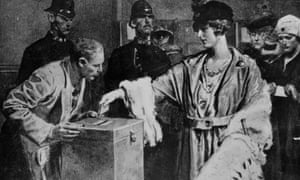
Women queuing up to cast their votes for the first time in the general election, December 1918. Photograph: Hulton Archive/Getty Images
On 14 December 1918, women, providing they were over 30 and they or their husbands were an occupier of property, were able to vote in a general election for the first time. This had been called by prime minister David Lloyd George immediately after the armistice which ended the first world war. Eight and a half million women were eligible to vote following the extension of the franchise in the Representation of the People Act 1918.
For more: theguardian.com


1571 – Spanish troops occupied Manila.
1628 – The Massachusetts colony was founded by Englishmen.
1644 – 200 members of the Peking imperial family/court committed suicide.
1687 – French explorer La Salle was murdered by his own men while searching for the mouth of the Mississippi River, in the Gulf of Mexico.
1702 – Upon the death of William III of Orange, Anne Stuart, the sister of Mary, succeeds to the throne of England, Scotland and Ireland.
1748 – The English Naturalization Act passed granting Jews right to colonize in the U.S.
1775 – Poland & Prussia signed a trade agreement.
1822 – The city of Boston, MA, was incorporated.
1831 – The first bank robbery in America was reported. The City Bank of New York City lost $245,000 in the robbery.
1865 – The Battle of Bentonville took place. The Confederates retreated from Greenville, NC.
1866 – The immigrant ship Monarch of the Seas sank in Liverpool killing 738.
1879 – Jim Currie opened fire on the actors Maurice Barrymore and Ben Porter near Marshall, TX. The shots wounded Barrymore and killed Porter.
1895 – The Los Angeles Railway was established to provide streetcar service.
1900 – U.S. President McKinley asserted that there was a need for free trade with Puerto Rico.
1900 – Archeologist Arthur John Evans began the excavation of Knossos Palace in Greece.
1903 – The U.S. Senate ratified the Cuban treaty, gaining naval bases in Guantanamo and Bahia Honda.
1905 – French explorer S. de Segonzac was taken prisoner by Moroccans.
1906 – Reports from Berlin estimated the cost of the German war in S.W. Africa at $150 million.
1908 – The state of Maryland barred Christian Scientists from practicing without medical diplomas.
1915 – Pluto was photographed for the first time. However, it was not known at the time.
1917 – The U.S. Supreme Court upheld the Adamson Act that made the eight-hour workday for railroads constitutional.
1918 – The U.S. Congress approved Daylight-Saving Time.
1918 – A German seaplane was shot down for the first time by an American pilot.
1920 – The U.S. Senate rejected the Versailles Treaty for the second time maintaining an isolation policy.
1924 – U.S. troops were rushed to Tegucigalpa as rebel forces took the Honduran capital.
1931 – The state of Nevada legalized gambling.
1940 – The French government of Daladier fell.
1942 – The Thoroughbred Racing Association was formed in Chicago.
1944 – Tippett’s oratorium “Child of Our Time,” premiered in London.
1945 – About 800 people were killed as Japanese kamikaze planes attacked the U.S. carrier Franklin off Japan.
1945 – Adolf Hitler issued his “Nero Decree” which ordered the destruction of German facilities that could fall into Allied hands as German forces were retreating.
1947 – Chiang Kai-Shek’s government forces took control of Yenan, the former headquarters of the Chinese Communist Party.
1948 – Lee Savold knocked out Gino Buonvino in 54 seconds of the first round of their prize fight at Madison Square Gardens.
1949 – The Soviet People’s Council signed the constitution of the German Democratic Republic, and declared that the North Atlantic Treaty was merely a war weapon.
1953 – The Academy Awards aired on television for the first time.
1953 – Tennessee Williams’ “Camino Real” premiered in New York City.
1954 – Viewers saw the first televised prize fight shown in color when Joey Giardello knocked out Willie Tory in round seven at Madison Square Garden in New York City.
1954 – The first rocket-driven sled that ran on rails was tested in Alamogordo, NM.
1963 – In Costa Rica, U.S. President John F. Kennedy and six Latin American presidents pledged to fight Communism.
1964 – Sean Connery began shooting his role in “Goldfinger.”
1965 – Indonesia nationalized all foreign oil companies.
1965 – Rembrandt’s “Titus” sold for $7,770,000.
1968 – Students at Howard University students seized an administration building.
1969 – British invaded Anguilla.
1972 – India and Bangladesh signed a friendship treaty.
1976 – Buckingham Palace announced the separation of Princess Margaret and her husband, the Earl of Snowdon, after 16 years of marriage.
1977 – Congo President Marien Ngouabi was killed by a suicide commando.
1977 – France performed a nuclear test at Muruora Island.
1977 – The last episode of “The Mary Tyler Moore Show” aired.
1979 – The U.S. House of Representatives began broadcasting its daily business on TV.
1981 – During a test of the space shuttle Columbia two workers were injured and one was killed.
1981 – The Buffalo Sabres set an NHL record when they scored 9 goals in one period against Toronto.
1984 – The TV show “Kate and Allie” premiered.
1984 – A Mobile oil tanker spilled 200,000 gallons into the Columbia River.
1985 – IBM announced that it was planning to stop making the PCjr consumer-oriented computer.
1985 – The U.S. Senate voted to authorize production of the MX missile.
1987 – Televangelist Jim Bakker resigned from the PTL due to a scandal involving Jessica Hahn.
1988 – Two British soldiers were killed by mourners at a funeral in Belfast, North Ireland. The soldiers were shot to death after being dragged from a car and beaten.
1990 – Latvia’s political opposition claimed victory in the republic’s first free elections in 50 years.
1990 – The first world ice hockey tournament for women was held in Ottawa.
1991 – Brett Hull, of the St. Louis Blues, became the third National Hockey League (NHL) player to score 80 goals in a season.
1994 – The largest omelet in history was made with 160,000 eggs in Yokohama, Japan.
1998 – The World Health Organization warned of tuberculosis epidemic that could kill 70 million people in next two decades.
1999 – 53 people were killed and dozens were injured when a bomb exploded in a market place in southern Russia.
2000 – Vector Data Systems conducted a simulation of the 1993 Branch Davidian siege in Waco, TX. The simulation showed that the government had not fired first.
2001 – California officials declared a power alert and ordered the first of two days of rolling blackouts.
2002 – Operation Anaconda, the largest U.S.-led ground offensive since the Gulf War, ended in eastern Afghanistan. During the operation, which began on March 2, it was reported that at least 500 Taliban and al Qaeda fighters were killed. Eleven allied troops were killed during the same operation.
2002 – Actor Ben Kingsley was knighted by Queen Elizabeth II at Buckingham Palace.
2003 – U.S. President George W. Bush announced that U.S. forces had launched a strike against “targets of military opportunity” in Iraq. The attack, using cruise missiles and precision-guided bombs, were aimed at Iraqi leaders thought to be near Baghdad.
2015 – Apple replaced AT&T in the Dow Jones Industrial Average.
on-this-day.com
 All the best,



 Be a Seed for Change
You must be logged in to post a comment.