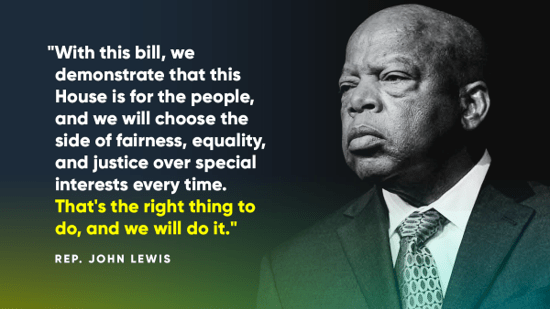
There is a serious shortage of child care supply in the United States.
A child care desert is defined as any community “with more than 50 children under age 5 that contains either no child care providers or so few that there are more than 3 times as many children as licensed child care slots.”
Cosmo … 15 things Soul Mates may understand
1. No love is perfect. It has its highs and its lows — and some of them are very high, and very low — but the lows are not a sign of weakness or that you shouldn’t be together. Rather, they’re something that brings you closer to each other.
2. Sometimes you just need to hold your partner’s hand or give them a hug, and not ask questions or give them any advice. Just knowing that you’re there is more comforting than words.
3. You can be mad at someone and still love them senseless. Getting mad at someone doesn’t forecast the end of your relationship, it just means you’re humans who have feelings and screw up from time to time.
4. Someone can come from a broken family or make it through a tough childhood, and show no trace of it. This doesn’t mean they have skeletons hiding in their closet that you’ll stumble upon one day, it just means they’re not who they grew up around.
5. Alone time together is sacred. You reach a point in your life when you’re so busy you feel like you don’t ever see each other, much less get alone time together when you’re doing something other than sleeping.
6. Just when you think you can’t love someone any more than you already do, something happens to bring you closer. It might just be a really hilarious joke that only you two would find funny or taking the next step in your relationship, like moving in or getting married, but passion doesn’t have to fade.
7. Compromises are worth it. Because at the end of the day, nothing beats being with the person you love, even if you have to do something you wouldn’t otherwise do to make the relationship work. Because their happiness makes you happy.
8. Communication solves all problems. You can’t expect anyone to read your mind, even your soul mate. And your soul mate will always be able to tell if you’re upset, so you know it’s better just to tell them why instead of leaving them guessing.
9. A whole day with nothing to do but hang out with each other is the hands-down best. This is why honeymoons are the best best BEST best.
10. Cuddling with the person you love will always make you feel better. Nothing beats crawling into the arms of the person you love. Even sometimes when you think you just want to be alone, your partner will scoop you up to comfort you and you’ll feel instantly calmed. and vice versa -Nativegrl77
11. When you really love someone, you realize you can totally lay bare your insecurities to another person. Even when they feel so personal you never expected to discuss them with another soul. And you feel more secure as a result.
12. When your partner wants to do stuff without you or needs alone time, that doesn’t mean you’re in a fight or things are bad between you two. You know that maintaining lives independently of one another’s is healthy. And chances are, when he’s off with his friends, he’s talking about how wonderful you are.
13. You don’t have to share the same friends for your relationship to work. You just have to be respectful of the people your significant other values.
14. Emotional intimacy and physical intimacy feed each other. It’s a never-ending cycle that brings you closer and closer together, and you feel like you can’t have one without the other.
15. Your soul mate will make you a better person. You’ll want to be kinder, more understanding, more supportive, and more empathetic not just to be the best significant other you can be, but because your S.O. inspires you.
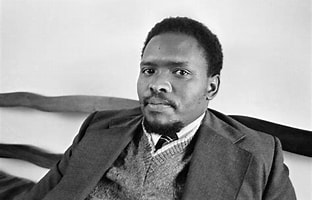
1956 Nelson Mandela & 156 others arrested for political activities in South Africa

1862 US President Abraham Lincoln orders hanging of 39 Santee Sioux Indians

Executive Mansion, Washington, December 6th. 1862. Brigadier General H.H. Sibley St. Paul Minnesota. Ordered that of the Indians and Half-breeds sentenced to be hanged by the Military Commission, composed of Colonel Crooks, Lt. Colonel Marshall, Captain Grant, Captain Bailey, and Lieutenant Olin, and lately sitting in Minnesota, you cause to be executed on Friday the nineteenth day of December, instant, the following named, towit“Te-he-hdo-ne-cha.” No. 2. by the record.“Tazoo” alias “Plan-doo-ta.” No. 4. by the record.“Wy-a-tah-to-wah” No. 5 by the record.“Hin-han-shoon-ko-yag.” No. 6 by the record.“Muz-za-bom-a-du.” No. 10. by the record.“Wah-pay-du-ta.” No. 11. by the record.“Wa-he-hud.” No. 12. by the record.“Sna-ma-ni.” No. 14. by the record.“Ta-te-mi-na.” No. 15. by the record.“Rda-in-yan-kna.” No. 19. by the record.“Do-wan-sa.” No. 22. by the record.“Ha-pan.” No. 24. by the record.“Shoon-ka-ska.” (White Dog). No. 35. by the record.“Toon-kan-e-chah-tay-mane.” No. 67. by the record.“E-tay-hoo-tay.” No. 68. by the record.“Am-da-cha.” No. 69. by the record.“Hay-pee-don—or, Wamne-omne-ho-ta.” No. 70. by the record.“Mahpe-o-ke-na-ji.” No. 96. by the record.“Henry Milord”—a Half-breed. No. 115. by the record.“Chaskay-don”—or Chaskayetay.” No. 121. by the record.“Baptiste Campbell” a Halfbreed. No. 138. by the record.“Tah-ta-kay-gay.” No. 155. by the record.“Ha-pink-pa.” No. 170 by the record.“Hypolite Ange” a Half-breed. No. 175 by the record.“Na-pay-Shue.” No. 178. by the record.“Wa-kan-tan-ka.” No. 210. by the record.“Toon-kan-ka-yag-e-na-jin.” No. 225. by the record.“Ma-kat-e-na-jin.” No. 254. by the record.“Pa-zee-koo-tay-ma-ne.” No. 264. by the record.“Ta-tay-hde-don.” No. 279. by the record.“Wa-She-choon,” or “Toon-kan-shkan-shkan-mene-hay.” No. 318. by the record.“A-e-cha-ga.” No. 327. by the record.“Ha-tan-in-koo.” No. 333. by the record.“Chay-ton-hoon-ka.” No. 342. by the record.“Chan-ka-hda.” No. 359. by the record.“Hda-hin-hday.” No. 373. by the record.“O-ya-tay-a-koo.” No. 377. by the record.“May-hoo-way-wa.” No. 382. by the record.“Wa-kin-yan-na.” No. 383 by the recordThe other condemned prisoners you will hold subject to further orders, taking care that they neither escape, nor are subjected to any unlawful violence.ABRAHAM LINCOLN,
Constitutional Amendment Process

The authority to amend the Constitution of the United States is derived from Article V of the Constitution. After Congress proposes an amendment, the Archivist of the United States, who heads the National Archives and Records Administration (NARA), is charged with responsibility for administering the ratification process under the provisions of 1 U.S.C. 106b. The Archivist has delegated many of the ministerial duties associated with this function to the Director of the Federal Register. Neither Article V of the Constitution nor section 106b describe the ratification process in detail. The Archivist and the Director of the Federal Register follow procedures and customs established by the Secretary of State, who performed these duties until 1950, and the Administrator of General Services, who served in this capacity until NARA assumed responsibility as an independent agency in 1985.
The Constitution provides that an amendment may be proposed either by the Congress with a two-thirds majority vote in both the House of Representatives and the Senate or by a constitutional convention called for by two-thirds of the State legislatures. None of the 27 amendments to the Constitution have been proposed by constitutional convention. The Congress proposes an amendment in the form of a joint resolution. Since the President does not have a constitutional role in the amendment process, the joint resolution does not go to the White House for signature or approval. The original document is forwarded directly to NARA’s Office of the Federal Register (OFR) for processing and publication. The OFR adds legislative history notes to the joint resolution and publishes it in slip law format. The OFR also assembles an information package for the States which includes formal “red-line” copies of the joint resolution, copies of the joint resolution in slip law format, and the statutory procedure for ratification under 1 U.S.C. 106b.
The Archivist submits the proposed amendment to the States for their consideration by sending a letter of notification to each Governor along with the informational material prepared by the OFR. The Governors then formally submit the amendment to their State legislatures or the state calls for a convention, depending on what Congress has specified. In the past, some State legislatures have not waited to receive official notice before taking action on a proposed amendment. When a State ratifies a proposed amendment, it sends the Archivist an original or certified copy of the State action, which is immediately conveyed to the Director of the Federal Register. The OFR examines ratification documents for facial legal sufficiency and an authenticating signature. If the documents are found to be in good order, the Director acknowledges receipt and maintains custody of them. The OFR retains these documents until an amendment is adopted or fails, and then transfers the records to the National Archives for preservation.
A proposed amendment becomes part of the Constitution as soon as it is ratified by three-fourths of the States (38 of 50 States). When the OFR verifies that it has received the required number of authenticated ratification documents, it drafts a formal proclamation for the Archivist to certify that the amendment is valid and has become part of the Constitution. This certification is published in the Federal Register and U.S. Statutes at Large and serves as official notice to the Congress and to the Nation that the amendment process has been completed.
In a few instances, States have sent official documents to NARA to record the rejection of an amendment or the rescission of a prior ratification. The Archivist does not make any substantive determinations as to the validity of State ratification actions, but it has been established that the Archivist’s certification of the facial legal sufficiency of ratification documents is final and conclusive.
In recent history, the signing of the certification has become a ceremonial function attended by various dignitaries, which may include the President. President Johnson signed the certifications for the 24th and 25th Amendments as a witness, and President Nixon similarly witnessed the certification of the 26th Amendment along with three young scholars. On May 18, 1992, the Archivist performed the duties of the certifying official for the first time to recognize the ratification of the 27th Amendment, and the Director of the Federal Register signed the certification as a witness.
source: archives.gov/federal-register

You must be logged in to post a comment.