Tag Archives: Arizona

Feminism …


by The Thinker-Writer, January 31, 2010
 The belief that women are and should be treated as potential intellectual equals and social equals to men. These people can be male or female human beings, although the ideology is commonly (and perhaps falsely) associated mainly with women. The basic idea of Feminism revolves around the principle that just because human bodies are designed to perform certain procreative functions, biological elements need not dictate intellectual and social functions, capabilities, and rights. Feminism also, by its nature, embraces the belief that all people are entitled to freedom and liberty within reason–including equal civil rights–and that discrimination should not be made based on gender, sexual orientation, skin color, ethnicity, religion, culture, or lifestyle. Feminists–and all persons interested in civil equality and intellectuality–are dedicated to fighting the ignorance that says people are controlled by and limited to their biology.
Feminism is the belief that people are entitled to the same civil rights and liberties and can be intellectual equals regardless of gender. However, you should still hold the door for a feminist; this is known as respect or politeness and need have nothing whatever to do with gender discrimination.
By The Thinker-Writer, January 31, 2010
***********************************************************

So, why did I go to the urban dictionary for a definition of Feminism?

I saw the article above and thought, nah, that wasn’t what I was taught as a young child…

Then

beaseedforchangestickersGREENI got my Cosmo in the mail and while the fashions are fun, some gaudy, others worthy of a second look or two, but most are out of my price and age range, but when I see hair and beauty products, well now, that is a whole different response entirely. As I was thumbing through one of many magazines, which is another bad habit, an article about feminism popped up and yes folks are questioning Beyoncé among others with headlines such as, “can you be Sexy and a Feminist? ” or as Cosmo asks,

“Can you be a Sexy Feminist? It was a quick read and in all honesty, I don’t spend a lot of my time dissecting labels, but I will say that being a feminist used to be defined as a woman who didn’t appreciate men, some said, they despised them.  Honestly, there was a time when Women were advised not to question the gender roles of men & women, and when that barrier fell, women realized it was time to demand equal access to education. While so-called hardcore feminists suggested being a companion, forget about being happily married, lest we acquiesce simply because we are women. I don’t subscribe to hating on men, I like men on several levels, that includes my dad, my kid’s father, my son, a couple of teachers, and a couple of bosses who happened to be male.

As a side note on a political level, current Republican men are the bane of our (women) existence in my opinion.

  So, getting back to Feminism, when it comes to being an active participant in what seemingly is the opposite side of equality and justice for everyone.  I have to admit, I have danced to fabulous music that had one or more negatives like sexual assault, and misogynistic and chauvinistic words. It’s definitely not something I ever used to think about while dancing, and as an adult, I found it upsetting when what was being said became clear; generally, this kind of talk would get a whole different response if these words were being exchanged through a conversation at work, a bar or one on one. In this 21st Century, we hear more Women with edgy lyrics and to find out that a story or two based on reality inadvertently comes to light … so, the choice to listen and buy is up to you.

   However, it does appear that the word feminism or being a feminist in this 21st century society is ever-changing and ever-evolving to bring about a belief in equality and the rights for everyone in all its forms and genders. I see the urban dictionary as a place run not only by a younger group of folks, but who use it, research it, and discuss the “stuff” they post. I admit to not referring to the urban dictionary that much, but I found the post in the process of searching out what younger folks felt about the comments on who is or can be a feminist, it caught my eye.  As you read on, Cosmo asked stars like Lady Gaga, Lana Del Rey, and Taylor Swift just to name a few, but when Pharrell was asked he stated, “I don’t think it’s possible for me to be (a feminist). I’m a man, but I do support feminists.”

Anyway, an article worth reading in Cosmo in September 2014

~~ Nativegrl77

What do you think?

Is being a feminist gender-specific?

The answer is yes, in the 1800s, as the root of feminism they used to define women, was fem, being that of the female feminine persuasion, so Pharrell among others probably used the definitions as their guide … though in this 21st Century like and while we are coming out of the nightmare that was the era of trump … The dictionary defines a Feminist as a person who believes in Equal Rights for Women. We need more 21st Century thoughts and people action.


a sport not many focus on … Golf & Women of Colour – reminder – Black History


Wethepeople

So, I’m flipping through my newest 2015 Essence from back to front because of the horoscope section and as I’m looking I see a section called “trending topics” reporting that the USTA just appointed former tennis player Katrina Adams, President, CEO and chairman of the board and the first African American to fill the role. So, more things have changed in the World of Sports in which women of colour historically have not dominated.  While flipping through my 2014 issue of Essence with various fashions it was became obvious that this is not just about fashion, though the title gave me that impression and had to share given the history. In fact, it is about a Woman named Renee Powell and some young Women who were introduced to her and who have chosen her as their mentor. Now, the surprise to most would be that these brightly fashionable women are people of colour and that the article is about golf or as they say, “One of America’s favourite pastimes.”  In fact my family lived just a few blocks away from a golf course and while golf wasn’t my choice the history of golf was well known in our house, including a couple of good along with the bad and the really ugly stories of racism. It is a sad day to know that the practice is still alive and well, though tiger woods did shatter the glass ceiling some. The art of discrimination is subtle these days, while the stories of’ the good ‘olé boys club were worse, golf is a work in progress. The article tells us about the ups and downs of Powell’s life and daily experiences as a young girl to becoming one of four African-American women qualifying for golf’s top pro-circuit … The LPGA Tour that included Althea Gibson, LaRee Pearl Sugg, Shasta Avery Hardt and Renee Powell. Their legacy on the links is gone into in depth. They list the youngest pro at 17, four others including the niece of tiger woods who also has a great story, but what is even more exciting is that after Powell retired she now owns her own golf club, is the golf pro. She also teaches and mentors a new generation of girls/women of colour who love the game and are willing to take it as far as they can. Golfing is not cheap, so, if you have an opportunity to donate to your area’s youth sports club or make time to teach train and expose kids of colour to golf … do it!

Oh and the article on Golf is in Essence and was written by Connie Aitcheson

and … it’s in  “Trending Topics”  the February issue of Essence

Carter Woodson ~ American historian


Carter G. Woodson

To commemorate and celebrate the contributions to our nation made by people of African descent, American historian Carter G. Woodson established Black History Week. The first celebration occurred on Feb. 12, 1926. For many years, the second week of February was set aside for this celebration to coincide with the birthdays of abolitionist/editor Frederick Douglass and Abraham Lincoln. In 1976, as part of the nation’s bicentennial, the week was expanded to a month. Since then, U.S. presidents have proclaimed February as National African-American History Month.


In the fall of 1870, a handful of students made their way through the northwest quadrant of the nation’s capital, and through the doors of D.C.’s “Preparatory High School for Colored Youth,” the country’s first public high school for African American children. The students and teachers who graced its hallways would be heard through the years in the halls of Congress, in the highest ranks of the United States military, at the heart of our civil rights movement, and in the upper echelons of medical and scientific study.

One such voice was that of Carter G. Woodson; a journalist, author, historian, and co-founder of the Association for the Study of Negro Life and History (ASNLH). It was through his work with the ASNLH that Woodson spearheaded the celebration of “Negro History Week” in America, which served as the precursor to Black History Month, which was officially recognized by President Gerald Ford in 1976. Woodson taught us that, “those who have no record of what their forebears have accomplished lose the inspiration which comes from the teaching of biography and history.”

Find out more about Carter G. Woodson.


Slavery, Hollywood, and Public Discourse – Black History


NMAAHC -- National Museum of African American History and Culture

Lonnie Bunch, museum director, historian, lecturer, and author, is proud to present A Page from Our American Story, a regular on-line series for Museum supporters. It will showcase individuals and events in the African American experience, placing these stories in the context of a larger story — our American story.

A Page From Our American Story

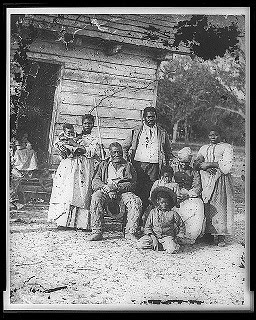
Civil War era Photo of slaves on plantation Family on Smith’s Plantation, Beaufort, South Carolina, circa 1862. Image courtesy of the Library of Congress.
Slavery: perhaps the last, great unmentionable in public discourse. It is certainly a topic that even today makes people very uncomfortable, regardless of their race.

American society has often expressed its internal problems through its art. Perhaps the most powerful medium for important discussions since the turn of the last century has been the motion picture.

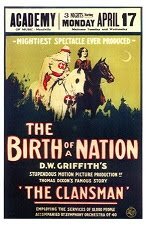
For decades Hollywood has attempted to address the issue of slavery. For the most part, films have represented the period of enslavement in a manner that reflected society’s comfort level with the issue at the time. Director D. W. Griffith’s 1915 silent drama, Birth of a Nation, for instance, depicted African Americans (white actors in black face) better off as slaves. Griffith’s movie showed the institution of slavery “civilizing” blacks. Birth even made it seem like slaves enjoyed their lives and were happy in servitude.

That wasn’t the case, of course, but it was what white society wanted to believe at the time.

Birth of a Nation movie poster

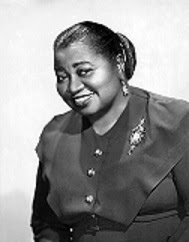
More than two decades after Birth of a Nation, the portrayal of African Americans in films had changed only a little. 1939 saw the release of one of Hollywood’s most acclaimed movies, Gone with the Wind. Producer David O. Selznick believed he was serving the black community with respect — he made sure the novel’s positive portrayal of the Ku Klux Klan was eliminated from the film, for example. But Gone with the Wind nevertheless treated the enslaved as relatively happy, loyal servants, a depiction that continued to reflect America’s segregated society. History was made, however, when Hattie McDaniel became the first African American to win an Academy Award for her role as “Mammy.” Still, her part, and the parts of the other black actors drew harsh criticism from major African American newspapers and civil rights groups.

Nearly forty years later, one of Hollywood’s most meaningful attempts to portray the period of enslavement came in 1977 with the television blockbuster mini-series, Roots. Based on Alex Haley’s 1976 best-selling book, Roots: The Saga of an American Family, the mini-series was groundbreaking on many levels. It was a dramatic series with a predominantly African American ensemble that captured a record 37 Emmy nominations — television’s highest artistic award.

Hattie McDaniel publicity photo Promotional photograph of actor Hattie McDaniel (1939).
And Roots marked the first time America witnessed slavery portrayed in detail. Along with the scenes of transporting, selling, and trading men and women, were scenes showing the brutality African Americans often suffered at the hands of slave owners. The depictions of abuse and cruelty were limited, of course, by the medium and by what American society would accept at the time. In keeping with the series’ marketing campaign, the show focused heavily on the family’s ultimate triumphs. For all of Roots’ firsts, and there were many, it was ultimately a story of resiliency.

Fast forward three-plus decades — American society is undeniably changed. African Americans are regularly featured in movies and television shows. The nation elected, then re-elected, an African American president, Barack Obama.

Drawing critical acclaim today is the movie 12 Years a Slave. 12 Years is a watershed moment in filmmaking. Not only does it feature remarkable performances, excellent cinematography, and powerful direction; it also offers the first realistic depiction of enslavement.

Unlike prior motion pictures and television shows, 12 Years does not retreat from the brutality many blacks endured. The movie is not for the faint hearted, as the violence and cruelty it portrays is not the highly stylized violence found in films like Django Unchained.  12 Years is true to the reality that for years many Americans treated fellow human beings with ruthless brutality — and that reality is harder to face.

12 Years a Slave movie poster

The film, however, is not only drawing praise from critics — it recently received nine Oscar nominations, including Best Picture — but enjoying audience appreciation, as well. With that appreciation comes an opportunity to bring the discussion of slavery to the mainstream.

This, then, is an exciting time for the Smithsonian’s National Museum of African American History and Culture. Among its many virtues, the Smithsonian is a great legitimizer with a long tradition of providing venues for Americans to examine their shared history. One of the over-arching goals of the National Museum of African American History and Culture is to create a place where issues like enslavement can be viewed through an unvarnished lens.

America today needs this discussion and I believe it is ready for it, a sentiment undergirded by a belief in the public’s ability to deal with and care about the issue. The great strength of history, and African American history, is its ability to draw inspiration from even the worst of times. No doubt people throughout the nation and around the world will find that inspiration when they visit the Museum and view our major exhibition on “Slavery and Freedom” when our doors open in late 2015.

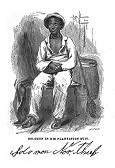
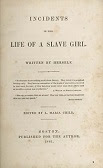
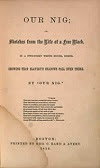
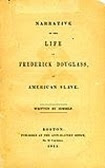
Before I close, I want to recommend four insightful narratives written by African Americans during this period of American history. The first is Solomon Northup’s book, 12 Years a Slave. Next is Incidents in the Life of a Slave Girl, by Harriet Jacobs. One of the first books to describe the sexual abuse and torment that female slaves endured, Incidents became one of the most influential works of its time. Our Nig: Sketches from the Life of a Free Black, by Harriet Wilson, is believed to be the first novel published by an African American in North America. Though fictionalized, Wilson’s book is based on her life growing up in indentured servitude in New Hampshire. Finally, Narrative of the Life of Frederick Douglass, An American Slave, remains today one of the most important autobiographical works ever written by an American.

12 Years a Slave book cover 12 Years a Slave by Solomon Northrup. 1853. Incidents book cover Incidents in the Life of a Slave Girl by Harriet Jacobs. 1861. Our Nig book cover Our Nig: Sketches from the Life of a Free Black by Harriet Wilson. 1859. Narrative of the Life of Frederick Douglass book cover Narrative of the Life of Frederick Douglas, An American Slave by Frederick Douglass. 1845.


 

 dd-enews-temp-lonnie-bunch-2.jpg All the best, Lonnie Bunch Director

P.S. We can only reach our $250 million goal with your help. I hope you will consider making a donation or becoming a Charter Member today.

Where Do Women Turn When Planned Parenthood Is Gone?


Where Do Women Turn When Planned Parenthood Is Gone?

When conservatives made the big push to defund Planned Parenthood, they swore the issue was not about denying women health care services, but about protecting taxpayer dollars from waste. Two recent reports from the front lines of the Planned Parenthood battle show otherwise.

As Kate Sheppard reports, when officials in Shelby County, Tennessee took nearly $400,000 in state funding from the local Planned Parenthood, the Obama administration had to step in and fund the clinic directly. But instead of funding Planned Parenthood, originally local leaders directed that money to a religious organization that provides some women’s health care services. Needless to say, the taxpayer dollars were not well used.

Between July 2011 and June 2012, more than $500,000 of the $1.3 million grant the county received was not used at all. Hannah Sayle reports that Christ Community Health Services was averaging just 51 Title X visits per month in early 2012, compared to Planned Parenthood’s 841 visits in August 2011.

Amazing. When an organization isn’t interested in providing family planning services, women eventually have to turn elsewhere for that care. As Sheppard reports, the number of Title X visits in the state didn’t go down, but they did in Shelby County, meaning women had to travel outside of the county to get the care they need. The demand for health care didn’t go down, it just became less accessible.

The same is true in Texas where reporter Andrea Grimes chronicled her efforts trying to find a health care provider under the state’s Women’s Health Program for a well-woman visit. Even in a major metropolitan area like Austin, Texas trying to find a clinic to provide low-income, quality reproductive health care now that the state has excluded Planned Parenthood from its funding regime is practically impossible. In one instance, Texas officials listed a colonscopy clinic as one of the places a woman could go for a pap smear. When Grimes called to try and schedule an appointment and inquire about the services, clinic workers were understandably confused.

We can expect similar stories out of states like Ohio and Arizona as more and more hard-right legislatures set their sights on family planning services. And as these case studies develop, we are learning what we already knew: making health care services inaccessible won’t make the need for those services go away. Instead, it makes women go to greater expense and hardship to simply take care of their bodies. And when it’s too much, women will simply skip visits. In the case of well-women visits, that means a missed cancer screen. For some women, well-visits are the only time they visit a doctor absent an emergency, so that means fewer checks for other chronic conditions.

The inevitable conclusion to these developments is of course an increasingly segregated and discriminatory method of delivering health care to women. The Ann Romneys of the world will always have access to the health care they want and they need. But working women will not. This isn’t hypothetical, it’s happening.

Related Stories:

Pennsylvania Joins Rush to Defund Planned Parenthood

Ohio GOP Move to Strip Planned Parenthood of Funds

Arizona Moves to Defund Planned Parenthood

Read more: http://www.care2.com/causes/when-planned-parenthood-leaves-who-provides-the-care.html#ixzz26eQAPqDX