
|
Tag Archives: Black History Month

Chase: Don’t foreclose on Helen Bailey – In Memory – Black History
| JPMorgan Chase launched a new website associating the company with Martin Luther King. But it’s planning to foreclose on Helen Bailey, a civil rights hero, in just weeks. Tell Chase to stop the foreclosure immediately. |
A new Chase website honors Dr. Martin Luther King Jr. and declares: “the values he espoused are the values that JPMorgan Chase also tries to stand for around the world.”
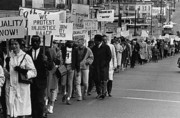
But as the bank wraps itself in the King brand, Chase planned to kick Helen Bailey (a 78-year-old grandmother who marched for civil rights and spent her life working with disabled children) out of her house on February 15th — right in the middle of Black History Month.
Occupy Nashville is fighting back. And they know that enough publicity on Chase’s hypocrisy will embarrass the bank into letting Ms. Bailey keep her home. Nearly 50,000 Change.org members have already spoken out, and Chase moved back Ms. Bailey’s foreclosure back one month in response — more people can speak out now and stop it completely.
Helen and her attorney have struggled to find any solution that would stop Chase’s drive to foreclose. When Helen asked to modify her high-interest loan, Chase refused. When Helen found another lender who’d buy the home for just $9,000 less than what Chase said the home was worth, letting her live there for free, Chase refused. When Helen found someone else who’d buy her home and let Helen rent it, Chase refused again.
This isn’t an isolated incident. A former Chase banker — James Theckston — told Nick Kristof of the New York Times that his bank repeatedly pushed dangerous subprime mortgage loans on minority borrowers, then tried to cover up the racial disparity. Now, 25% of all minority borrowers are in foreclosure or deeply behind on payments. It’s a crisis.
But it’s one of our best opportunities to fight back. You can help Occupy Nashville keep Ms. Bailey in her home, and highlight the growing movement of communities standing up to foreclosures.
Click here to sign the petition.
Thanks for being a change-maker,
Jess and the Change.org team
P.S. Ms. Bailey isn’t alone in fighting for justice in a tough economy. Can you sign these other urgent petitions from Change.org members?
- Aaron Calafato and his wife say they’re paying about $1,200 per month in student loans, almost half of which goes to Key Bank. But they say they can’t get Key Bank to discuss lowering their monthly payments. Sign Aaron’s petition to Key Bank asking to renegotiate his student loans.
- On February 24, Daniel Lopez is going to lose his job at a warehouse where he moves goods for Walmart day in and day out. The company is allegedly firing Daniel and other employees for filing a federal lawsuit for not paying minimum wage. Sign the petition to Walmart to stop its contractor’s retaliation against its employees.
- Bobby Hull is a Vietnam-era veteran who’s fighting to save his home from foreclosure this month by US Bank. Nick Espinosa, a fellow Minneapolis resident, started a petition on Change.org to keep Bobby in his home.
Share this:

WHITE ON WHITE CRIME IN WACO TEXAS MOTORCYCLE MASSACRE! (ARTICLE )


BY : LEON KWASI KUNTUO-ASARE
In another tragic case of white on white violent crime, on sunday afternoon May 17, 2015 several white supremacist motorcycle gangs got into a shot out. There were at least five gang factions involved and 9 people were murdered while 18 were injured as a result of the guns, chains, clubs and knives used in the Waco, Texas motorcycle gang melee.
When police arrived they set up a command center to interview , arrest and process the biker thugs involved in the mini massacre. Fortunately for the murderous gang members, unlike the Baltimore and Ferguson protestors, who killed no one, the national guard was not called and Waco was not occupied like Iraq, even though there were over a 100 weapons recovered .
For additional information use the link:
Share this:

In the Library … “Injustices” by Ian Millhiser

|
Injustices: The Supreme Court’s History of Comforting The Comfortable And Afflicting The Afflicted
by: ThinkProgress Justice Editor, Ian MillhiserOrder now: Amazon, Barnes and Noble, Indie Bound Dear ThinkProgress Reader: For the last five years, I’ve covered the Supreme Court for ThinkProgress. I’ve chronicled the justices’ decision to open the floodgates to corporate election spending, and I’ve reported on the rash of voter suppression laws that followed after the Court gutted the Voting Rights Act. I’ve shared your bewilderment when the Court held that a woman’s choice whether to use birth control could be given to her boss, and I’ve shared your terror at the prospect that the justices could rip health care away from millions of Americans. Yet, as I explain in Injustices: The Supreme Court’s History of Comforting the Comfortable and Afflicting the Afflicted, these cases are hardly anomalies in the Supreme Court’s history. To the contrary, the justices of the Supreme Court shaped a nation where children toiled in coal mines, where Americans could be forced into camps because of their race, and where a woman could be sterilized against her will by state officials. The Court was the midwife of Jim Crow, the right hand of union busters, and the dead hand of the Confederacy. Injustices tells the history of the Supreme Court through the eyes of the people that it has hurt the most — the young people stripped of their childhoods, the freedmen forced into peonage, the men and women who will die needlessly if the Supreme Court guts Obamacare. In my coverage of the Court over at ThinkProgress, I’ve strived to provide clarity on what the law provides and how the justices should decide their cases in accordance with that law, but I’ve also strived to reach beyond arcane legal arguments to show how the Court’s decisions shape the lives of millions of Americans. I bring that same ethic to over 150 years of Supreme Court history in Injustices. I urge you to check it out. Sincerely, |

| Get It Here: |
  |
* * *“More than just an indictment of the Supreme Court, Injustices offers a stirring defense of the role government plays in bettering people’s lives-and a heartbreaking window into the lives that are ruined when the justices place their own agenda above the law.” ~Ted Strickland, “A powerful critique of the Supreme Court, which shows that it has largely failed through American history to enforce the Constitution and to protect our rights. With great clarity and poignant human stories throughout, Ian Millhiser has written a book that all who are interested in American government and our legal system – which should be all of us – must read.” ~Erwin Chemerinsky, “Ian Millhiser’s Injustices is a powerful reminder that for most of its history, the Supreme Court has erred on the side of protecting the privilege and powers of America’s elites-and that it has so often done so by reading the Constitution upside-down. Millhiser has crafted an indictment of the Court’s treatment of workers, minorities, women, voters, and powerless groups, with a deeply researched grounding in history and the law. His dispiriting conclusion is a powerful reminder of how much the Court matters, and how much more it could be.” ~Dahlia Lithwick, |
Share this:


Black History Month …a repost
by whitehouseon Feb 9, 2012 still rings true
African American History Month honors the rich legacy of African Americans throughout our nation’s history. This year’s theme recognizes the unique contributions of African American women. February 9, 2012.

 Be a Seed for Change
You must be logged in to post a comment.