Tag Archives: Bureau of Land Management

Salazar Announced Onshore, Offshore Wind Energy Milestones


3,000 megawatt Wyoming wind energy project and Rhode Island, Massachusetts Wind Energy Area take key steps forward

07/02/2012

Contact: Adam Fetcher (DOI) 202-208-6416

Theresa Eisenman (BOEM) 202-208-5387

Serena Baker (BLM) 307-212-0197

WASHINGTON, D.C. – As part of the Obama Administration’s commitment to developing the nation’s vast renewable energy resources, Secretary of the Interior Ken Salazar today announced that two major wind energy initiatives have completed important environmental reviews, clearing the way for public comment and final review.

Onshore, Salazar announced the release of final environmental impact statements for a proposed wind power complex in Wyoming that would generate up to 3,000 megawatts of power, making it the largest wind farm facility in the U.S. and one of the largest in the world.

Offshore, Salazar announced the publication of an environmental assessment for commercial wind leases and site assessment activities on the Outer Continental Shelf (OCS) offshore Rhode Island and Massachusetts. Today’s step puts Interior in position to offer this area as one of the nation’s first offshore competitive lease sales before the end of the year.

“When it comes to wind energy, we’re making significant progress both onshore and offshore to diversify our nation’s domestic energy portfolio and stand up a clean energy economy,” Salazar said. “Today, as we take the next steps toward realizing what could be the largest wind energy project in the world and holding a competitive offshore wind lease sale, we are really at the forefront of a renewable energy revolution.”

The proposed Chokecherry and Sierra Madre Wind Farm would contain up to 1,000 turbines and generate enough power for up to 1 million American homes. The project would be built on public, private and state land in Carbon County, Wyoming. The Bureau of Land Management (BLM) is reviewing the proposed wind project, as well as a proposed amendment to the Rawlins Resource Management Plan to accommodate the facility. For more information on the proposed project, click here and for a map, click here.

“Wyoming has incredible wind resources and this proposed wind energy project has potential to generate jobs and bring a record amount of clean power to market throughout the West,” said Acting BLM Director Mike Pool. “We look forward to hearing from the public as we work to ensure that this proposal, if approved, would be built in the right way and in the right place to minimize environmental impacts.”

The proposed wind energy project is under consideration as part of Interior’s initiative to advance smart development of renewable energy on public lands. Since 2009, Interior has approved 31 utility-scale wind, solar, and geothermal projects that, if built by the companies, will provide approximately 7,200 megawatts of power to communities across the West, or enough to power nearly 2.5 million homes. These achievements build on the historic expansion of renewable energy under President Obama, with energy from sources like wind and solar doubling since the President took office.

The environmental assessment for the Rhode Island/Massachusetts Wind Energy Area will be used by the Bureau of Ocean Energy Management (BOEM) to inform future leasing decisions as part of the Administration’s “Smart from the Start” offshore wind energy initiative. The Wind Energy Area (WEA) comprises approximately 164,750 acres within the area of mutual interest identified by the two states. BOEM leadership will host public information sessions on July 16 and 17 to further engage stakeholders and consider public comments on the environmental assessment in determining whether to issue a Finding of No Significant Impact, or conduct additional analysis under NEPA in order to hold a lease sale for commercial offshore wind development. For more information, click here.

“This environmental assessment is the first of its kind in the northeast and is based on thorough scientific and technical analysis and substantial stakeholder input to identify the most suitable location for commercial wind energy activities in this area offshore Rhode Island and Massachusetts,” said BOEM Director Tommy Beaudreau. “We will continue to seek public participation in our process, including comments on this environmental assessment as we move forward with an innovative, targeted leasing approach to offshore wind.”

In November 2010, Salazar launched the “Smart from the Start” wind energy initiative for the Atlantic Outer Continental Shelf to facilitate the siting, leasing and construction of new projects. A critical piece of the strategy includes the identification of Wind Energy Areas, done in consultation with BOEM’s intergovernmental renewable energy task forces and other federal agencies, and the development of the environmental assessment to simplify the leasing process.

Salazar launched the competitive leasing process for the Rhode Island/Massachusetts Wind Energy Area with a Call for Information and Nominations in August 2011 that invited developers to identify locations within the area of mutual interest in which they seek commercial leases for wind projects.

Secretary Salazar Has the Fate of Bryce Canyon in His Hands


care2 petitionsite actionAlert

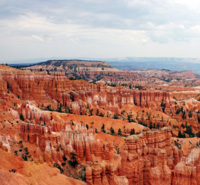
Many of us submitted our comments against building a huge coal mine right next to Bryce Canyon National Park. Now, the decision is in the hands of Secretary of the Interior Ken Salazar, and it’s up to us to make sure he understands just how many people are opposed to this plan. Don’t let Bryce Canyon National Park and southern Utah fall victim to a coal mine! »If you’ve ever been to Bryce Canyon, you know it’s sort of like being on Mars. The red rock formations interspersed with trees is like nothing else. We simply can’t lose this area to a massive, dirty coal mine.
The repercussions of this mine cannot be overstated. It could affect the health of local residents, the quality of the air in the park itself, and the tourism industry.Sign this petition to tell Secretary Salazar that you will not stand for a mine near Bryce Canyon! »

        Thanks for taking action!Emily L
Care2 and ThePetitionSite Team
Let Secretary Salazar Know That You Want Bryce Canyon Protected!
Take Action Now!

Prevent Southern Utah From Becoming a Coal Wasteland!


care2 petitionsite actionAlert

A 3,500 acre coal mine next to Utah‘s pristine Bryce Canyon National Park? Such a horrible idea.We were successful in sending tens of thousands of messages opposing the Bryce Canyon coal mine. Now, it’s up to Secretary Salazar to make the final decision, and we need to put serious pressure on him to reject this horrible plan.

Bryce Canyon is known for its delicate red rock formations and abundant flora and fauna. Don’t let Bryce Canyon National Park and southern Utah become a wasteland! »

Also as a result of the mine, the park, the state’s tourism, and the health of local residents would be put at considerable risk.

It would make much more sense for Los Angeles to make use of its Southern California sun and instead look into creating its own solar energy.

Sign this petition to show your opposition to the coal mine and to protect Bryce Canyon National Park! »

Thanks for taking action!Rachel M.
Care2 and ThePetitionSite Team
Tell Secretary Salazar to protect Bryce Canyon National Park!
Take Action Now!
Take Action!
  

Secretary Salazar Announces Decision to Withdraw Public Lands near Grand Canyon from New Mining Claims


   http://www.havasupai-nsn.gov/tourism.html

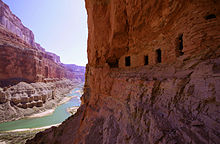
       http://www.nps.gov/features/grca/001/archeology/index.html


***************************************************************************************************************

Secretary Salazar Announces Decision to Withdraw Public Lands near Grand Canyon from New Mining Claims


Allows for monitoring to determine impact of uranium mining on vital watershed

01/09/2012

Contact: Adam Fetcher, (DOI) 202-208-6416

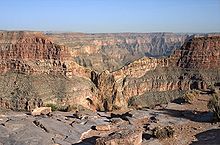
WASHINGTON – Secretary of the Interior Ken Salazar today announced his decision to protect the iconic Grand Canyon and its vital watershed from the potential adverse effects of additional uranium and other hardrock mining on over 1 million acres of federal land for the next 20 years.

Secretary Salazar’s decision will provide adequate time for monitoring to inform future land use decisions in this treasured area, while allowing currently approved mining operations to continue as well as new operations on valid existing mining claims.

“A withdrawal is the right approach for this priceless American landscape,” Salazar said. “People from all over the country and around the world come to visit the Grand Canyon. Numerous American Indian tribes regard this magnificent icon as a sacred place and millions of people in the Colorado River Basin depend on the river for drinking water, irrigation, industrial and environmental use. We have been entrusted to care for and protect our precious environmental and cultural resources, and we have chosen a responsible path that makes sense for this and future generations.”

The Public Land Order to withdraw these acres for 20 years from new mining claims and sites under the 1872 Mining Law, subject to valid existing rights, is authorized by the Federal Land Policy and Management Act. A Record of Decision was signed by the Secretary today during a ceremony held at the National Geographic Museum in Washington, D.C.

The withdrawal does not prohibit previously approved uranium mining, new projects that could be approved on claims and sites with valid existing rights. The withdrawal would allow other natural resource development in the area, including mineral leasing, geothermal leasing and mineral materials sales, to the extent consistent with the applicable land use plans. Approximately 3,200 mining claims are currently located in the withdrawal area.

“The withdrawal maintains the pace of hardrock mining, particularly uranium, near the Grand Canyon,” said Bureau of Land Management Director Bob Abbey, “but also gives the Department a chance to monitor the impacts associated with uranium mining in this area. It preserves the ability of future decision-makers to make thoughtful decisions about managing this area of national environmental and cultural significance based on the best information available.”

During the withdrawal period, the BLM projects that up to 11 uranium mines, including four that are currently approved, could still be developed based on valid pre-existing rights – meaning the jobs supported by mining in the area would increase or remain flat as compared to the current level, according to the BLM’s analysis. By comparison, during the 1980s, nine uranium mines were developed on these lands and five were mined out. Without the withdrawal, there could be 30 uranium mines in the area over the next 20 years, including the four that are currently approved, with as many as six operating at one time, the Environmental Impact Statement (EIS) estimates.

The withdrawn area includes 355,874 acres of U.S. Forest Service land on the Kaibab National Forest; 626,678 acres of Bureau of Land Management lands; and 23,993 acres of split estate – where surface lands are held by other owners while subsurface minerals are owned by the federal government. The affected lands, all in the vicinity of the Grand Canyon or Grand Canyon National Park, are located in Mohave and Coconino Counties of Northern Arizona.

“The decision made today by the Secretary will help ensure continued protection of the Grand Canyon watershed and World Heritage designated Grand Canyon National Park,” said National Park Service Director Jonathan B. Jarvis. “As stewards of our national parks, it is incumbent on all of us to continue to preserve our treasured landscapes, today and for future generations.”

Today’s decision is the culmination of more than two years of evaluation during which the BLM analyzed the proposed withdrawal in an EIS prepared in cooperation with the U.S. Forest Service, U.S. Geological Survey, U.S. Fish and Wildlife Service, and the National Park Service.

Numerous cooperating agencies, tribes, counties and stakeholders were fully engaged in this process, which included an extensive public involvement period which generated more than 350,000 comments, including input from more than 90 countries. Substantive comments, including those on the economic impact discussion, were addressed in the Final EIS, released on October 27, 2011 for a final 30-day review period.

Information on the withdrawal is at http://www.blm.gov/az/st/en/prog/mining/timeout.html or can be obtained by calling (602) 417-9504.

Don’t Put a Coal Mine in Bryce Canyon – Let’s Move to Solar!


care2 petitionsite actionAlert

Bryce Canyon National Park in Utah is home to over 100 species of birds, thousands of plant species, and numerous mammals. However, the national park is in danger of being replaced by a coal mine.The city of Los Angeles is set to sap the natural wonder of its biodiversity, but you can help save this natural wonder.»Bryce Canyon has provided a great research area for scientists and a beautiful place for families to visit. Utah tourism is at stake in addition to Bryce Canyon itself.Los Angeles does not need this power. An alternate solution has been proposed — one that wouldn’t require the destruction of a natural haven OR the use and production of dirty energy from coal. People are speaking out about the city of Los Angeles instead creating its own solar energy. Thousands of LA residents have demanded that the city eliminate coal power by 2020, and put LA’s sunny weather to good use.Sign this petition to protect Bryce Canyon National Park, and a brighter, cleaner future for Los Angeles! »

Thanks for taking action!Rachel M.
Care2 and ThePetitionSite Team
Save Bryce Canyon National Park from Big Coal!
Take Action Now!
Take Action!