Tag Archives: gay

Memorial day … in memory of


Most if not all memorial days are full of wonderful events and more often than not they all provide unforgettable programs! 

 In memory of …

my Brother, who served as a US Marine

Graves at Arlington on Memorial Day.JPG

And …  an amazing repeat  of  a show done in 2006; about Pearl Fryar;  a self- made man and Topiary Garden Artist in Bishop, SC;

his amazing gift for making shrubs into magnificent pieces of art was very moving and yes I cried; if you see the show on cable … it tells his story, the son of a share-cropper who listened to his dad and made something of himself… as Pearl says and while his neighbors, friends and some relatives wondered what was going on with this man so obsessed, so determined who truly loved but wanted to perfect his art, it became obvious that his gift…self-taught, was definitely centered from something deep and beyond.  The viewer hears the history and witnesses the progress of his story …his idea of love, peace, and goodwill in a town with racial tension he not only brought people into a town that was suffering economically but some folks from the area who normally avoided each other crossed paths just to see his artistry.

pearlfryar.com

The Garden

Since the early 1980s, Pearl Fryar has created fantastic topiary at his garden in Bishopville, South Carolina. Living sculptures, Pearl’s topiary are astounding feats of artistry and horticulture. Many of the plants in Pearl’s garden were rescued from the compost pile at local nurseries. With Pearl’s patience and skilled hands, these “throwaways” have thrived and have been transformed into wonderful abstract shapes. Pearl Fryar and his garden are now internationally recognized and have been the subject of numerous newspaper and magazine articles, television shows, and even a documentary, A Man Named Pearl. Today, the Pearl Fryar Topiary Garden draws visitors from around the globe.

Visitors to the Pearl Fryar Topiary Garden experience a place that is alternately beautiful, whimsical, educational, and inspiring. Pearl’s garden contains over 300 individual plants and few are spared from his skilled trimming. His extraordinary topiary is complemented by his “junk art” sculptures placed throughout the garden. Pearl’s garden is a living testament to one man’s firm belief in the results of positive thinking, hard work, and perseverance, and his dedication to spreading a message of “love, peace and goodwill.”

In 2006, the Garden Conservancy and the Pearl Fryar Topiary Garden, Inc. formed a partnership with Pearl Fryar. Through this partnership, they hope to preserve and maintain the Pearl Fryar Topiary Garden and to further Pearl’s message of inspiration and hope.

Please consider donating to the Pearl Fryar Topiary Garden, Inc. to help ensure that Pearl’s garden is cared for and kept open to inspire future generations.

For more information about the Garden Conservancy and its mission to protect exceptional American gardens, please visit the Garden Conservancy website.

**********

The last one is a c-span(video 2010) story that we cannot continue to ignore, deny or shove under the rug, c-span interviews the author of a book about Henrietta Lacks, Rebecca Skloot; 2010

An update needs to be included as the Lacks family, after years of litigation did gain an agreement

NIH makes privacy agreement with Henrietta Lacks’ family http://usat.ly/1esA2JK via @usatoday ~ 2013

Henrietta’s story starts in 1920 her birth and ends sometime in the early fifties, this story seems only to be coming into the light of day and while i cried again while watching this, it is sad, might be unacceptable by some, even after several children, after years of reports, publicity and whatnot the Lacks family seems to be the only one who didn’t benefit from the story of this woman whose cells were used to create a cell line for medical research but got nothing in return.   I first heard about the Lacks story in 2010 while in a coffee shop, then we all heard Oprah and some associates decided to make a movie…hopefully some of the revenue will be given to the family.   It is a story that makes you gasp, gets you upset, mad and it will make you cry and wonder how the science community got away with not paying Henrietta Lacks and or her family for her contribution.   If I understood the interviewer the Lacks family has recently gotten more PR about their Mother’s story but it’s unclear if anyone paid money for all the stories and or tv programs about her. It is a story that appears on the surface a story of unintentional theft of her cells then used by a scientist who did not tell her or her family even after it was evident that the cells were unusual, that they were used and what effect they would eventually have on science today.I understand that back then technology may not have been as advanced but it did advance and still if the reports are correct, the science community gave Henrietta nothing or her family. It happened in a time when minorities were treated very poorly and even if the reports state that standard procedure was this that and the other .. .the 70″s gave way to new ways to handle science technologies; it’s time to pay Henrietta Lacks and her family back.

Just some things to remember

… Happy Memorial Day

~ Nativegrl77

Mom’s Day


NWLCfamilyFamily-Pregnant-Mother-120

 johnOceguerafamilyshot

Mother’s Day is a special time for new moms. But it can also be a stressful time for new parents facing the responsibility of caring for a newborn or infant.
Physicians from FDA’s Pediatric and Maternal Health Staff offer five tips for new moms, including important advice on how to safely store and give medicines, and how new mothers can take care of their own health.
More Information:

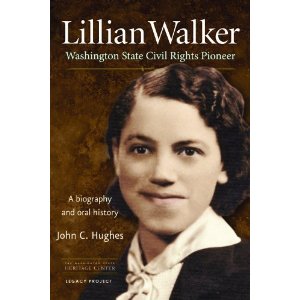
In the Library … Lillian Walker , by John C. Hughes


OLYMPIA…Bremerton civil rights heroine Lillian Walker

A book called “Lillian Walker, Washington Civil Rights Pioneer,” written by John C. Hughes, an author and interviewer with The Legacy Project, an oral history program established by the Office of Secretary of State in 2008. The book is published by the Washington State Heritage Center and printed by Gorham Printing.Joyce.

“The YWCA’s goal is to make Mrs. Walker’s inspirational story available to all school and public libraries in the nation as an example of a young person who not only had the courage to stand up for what is right, but also to continue to stay involved in her community to make it better over a 70-year time period,” Jackson said.

Click here http://www.sos.wa.gov/legacyproject/oralhistories/lillianwalker/ to read The Legacy Project’s oral history on Lillian Walker based on sit-down interviews, as well as photos and other materials.

Lillian Walker helped found the Bremerton branch of the NAACP in 1943 and went on to serve as state NAACP secretary. She was conducting sit-ins and filing civil rights lawsuits when Martin Luther King was in junior high school.

Mrs. Walker and her late husband, James, arrived in the Navy Yard city of Bremerton in 1941 together with thousands of other AfricanAmerican wartime workers who thought they had left racism behind in the South and industrialized cities of Midwest and East. But many Kitsap County businesses, including cafes, taverns, drug stores and barber shops, displayed signs saying, “We Cater to White Trade Only.” In a landmark case, the Walkers took a soda fountain owner to court and won.

Mrs. Walker is a charter member of the YWCA of Kitsap County, former chairman of the Kitsap County Regional Library Board, a 69-year member of Ebenezer African Methodist Episcopal Church, and a founder and former president of Church Women United in Bremerton.

To learn more about The Legacy Project, go to its web site at http://www.sos.wa.gov/heritage/LegacyProject/default.aspx.

The myth of race, debunked in 3 minutes


reminder of What most People Do NOT want … Why Black folks Should Be Outraged at Arizona’s Immigration Law ~ remember 5/2010 ?


If you’re black and think that state’s new immigration law has nothing to do with you, think again.
By: Joel Dreyfuss

A law that makes people suspects on the basis of their looks should outrage African Americans, even if they are worried about illegal immigration.

The immigration law passed in Arizona last week is the kind of reckless act that keeps us minorities paranoid in America. The new law compels local law enforcers to verify immigration status based on “reasonable suspicion”–whatever that is–and has created the potential for cops to stop brown people in the streets and demand to see their papers. Even the sheriff of Pima County, Ariz., (which borders Mexico) says the law is “stupid,” “racist,” and would force his officers to racially profile people. The scope of the law was narrowed after its passage in order to assure Hispanics, who make up 30 percent of the state’s population, that they would not be the victims of racial profiling.

But those assurances that people won’t be suspects because of the way they look have little credibility when the experience of black and brown people in America has been so contrary to those promises. Being stopped for Driving While Black (or Brown) is such a common phenomenon that comedians make jokes about it. And a city like New York, which operates a massive stop-and-frisk policy that probably violates a dozen constitutional principles, keeps trying to explain why black and brown citizens make up 80 to 90 percent of those questioned by police. The latest rationale: They fit the description of suspected perps when 98 percent of those stopped and questioned are innocent of any crime.

The reason people of color get worked up about such policies is America’s nasty habit of making everything racial in a panic. We have a long history of lynchings and runaway convictions that were triggered by fears that black people were getting out of hand in some fashion, whether it was interracial sex or talking back to massa. The roundup of Japanese Americans during World War II will forever stain this country’s history.

After 9/11, looking Arab or simply wearing a turban, whether you are Muslim or not, turned out to be a grave danger in some parts of the country and a constant annoyance in others. No Muslim American believes that the frequent “random” checks they endured at airports in the months after the tragedy were really a matter of chance. And last week, the front page of the Boston Herald illustrated a cover story about the crackdown on benefits for illegal immigrants with a photo of black, Hispanic and Asian models, their foreheads stamped with the following: “No Tuition, No Welfare, No Medicaid.” Ironically, the headline at above the newspaper’s logo announced a “workplace diversity job fair.”

Of course, the concept of white or blonde illegal aliens is apparently beyond the capacity of the people passing the laws or the editors at the Herald. But nearly 600,000 of those in the United States illegally were estimated to come from Europe or Canada in 2005; and while I knew many Irish, English and other Europeans who had overstayed their visas when I was growing up in New York, I never heard of a raid of an Irish bar, except when ATF or the FBI were trying to trap Irish Republican Army gun runners during the “troubles.”

Now Arizona, better known for resorts, retirees in golf carts, and college basketball teams whose players never graduate, is suddenly at the center of a debate that could shape U.S. politics for the next 10 years. The only surprise is that it took so long. All the great economies have been struggling with the immigration issue for years. Just last week, France was in tizzy about the burqa, the full-length outfit with only an eye-slit that conservative Muslim women wear. Nicolas Sarkozy’s government has considered banning the burqa on security grounds (you can’t identify the person), but the real reason behind this initiative, Arizona’s or any of the dozen being considered in other states or countries is fear of change.

No doubt, the Great Recession of the last three years has heightened American insecurity. Although the downturn has hit blue-collar workers the hardest, many people who thought they were solidly in the middle class have seen their savings, their safety net, even their homes evaporate in the financial collapse. The next step for many of them would be to step “down” into the blue-collar workforce. Suddenly, the Mexican, Salvadorian and African immigrants they hardly noticed during boom times are now potential competitors.

African Americans, who lost more than their fair share of blue-collar jobs in the downturn, have long been ambiguous about illegal immigration. As Cord Jefferson noted here a few months ago, a growing number of experts believe that blacks and Hispanic immigrants battle for unskilled jobs at the bottom of the labor pool. Black Americans have not turned out in large numbers at immigration rallies, despite the fact that many African-American politicians talk of the need for coalitions with Hispanics.

But a law that puts you in jeopardy for being has special resonance with black Americans. We already know the peril of living in a state where you are presumed guilty by the color of your skin. A law that makes a suspect of anyone who might look illegal should make us vigorously resist this encroachment.

Joel Dreyfuss is managing editor of The Root. Follow him on Twitter

first posted in 5/2010 …