Tag Archives: General Mining Act of 1872

1872!? … Elijah Zarlin, CREDO Action


Tell Congress: Update the Mining Law of 1872!

Chicago Peak is located in Western Montana‘s Cabinet Mountains Wilderness Area, and is a holy place for the Salish and Kootenai native tribes.

In other words: It’s a terrible location for a massive proposed copper and silver mine.1

But under the shockingly antiquated General Mining Law of 1872, the National Forest Service says it has no choice but to approve the mine. Even worse, this relic of a law will hand nearly $20 billion dollars worth of publicly owned minerals to Canadian company Revett Minerals, totally for free.2 We get nothing.

This mine is only one example. Overall, Congress’s failure to update our 140-year-old mining law is one of the most egregious, expensive and destructive failures in federal land management.

Tell Congress: It is long past time to update the General Mining Law of 1872!

The General Mining Law of 1872 is literally an artifact of another era. In 1872, Women could not vote in America. There were only 37 States in the Union. And our government sought to settle the vast Western territories by handing out mining rights to fortune-seeking settlers.

Yet today, this relic continues to govern hard rock mining of metals like copper, uranium, silver and gold. The result is a massive giveaway to giant mining companies that rips off taxpayers to the tune of tens of billions of dollars. Under the law:3

• Mining leases can be purchased at 1872 prices of $2.50 – $5 an acre.
• Companies can mine publicly owned mineral resources without paying any royalties. We just give it away!
Federal land managers must prioritize mining over all other land uses.
• The law contains NO environmental protections — which has led to the pollution of more than 40% of Western U.S. watershed, and left us holding the bill for an estimated more than $30 billion in mine cleanup and reclamation.

Tell Congress: Update the Mining Law of 1872!

Tell Congress: Update the Mining Law of 1872! Click here to automatically sign the petition.

 In today’s world of giant, international mining conglomerates using massive pieces of equipment and polluting huge volumes of water to rip up the earth — as opposed to Wild West times of risk-taking prospectors and their pack mules seeking fortune – this law should be a page in history books, not our actual law books!

Congress has twice tried and failed to reform the law. But it’s long past time for an updated mining law that allows land managers to protect unique public lands from mining, implements strong environmental standards for mines, collects funds for mining reclamation, and puts a fair royalty on the extraction of these publicly owned resources.4

It is crazy that our mining law pre-dates the invention of the telephone and the light bulb. Tell Congress to update this massive giveaway, the General Mining Law of 1872.

1. “Big Mine. Bigger Trouble,” Rock Creek Aliance
2. “A Sacred Peak With Rich Ore Deposits,” New York Times, April 9, 2012
3. “General Mining Law of 1872,” Earthworks
4. “1872 Mining Law Reform Requirements,” Earthworks

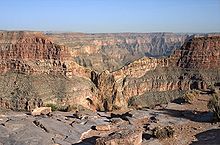
Secretary Salazar Announces Decision to Withdraw Public Lands near Grand Canyon from New Mining Claims


   http://www.havasupai-nsn.gov/tourism.html

       http://www.nps.gov/features/grca/001/archeology/index.html


***************************************************************************************************************

Secretary Salazar Announces Decision to Withdraw Public Lands near Grand Canyon from New Mining Claims


Allows for monitoring to determine impact of uranium mining on vital watershed

01/09/2012

Contact: Adam Fetcher, (DOI) 202-208-6416

WASHINGTON – Secretary of the Interior Ken Salazar today announced his decision to protect the iconic Grand Canyon and its vital watershed from the potential adverse effects of additional uranium and other hardrock mining on over 1 million acres of federal land for the next 20 years.

Secretary Salazar’s decision will provide adequate time for monitoring to inform future land use decisions in this treasured area, while allowing currently approved mining operations to continue as well as new operations on valid existing mining claims.

“A withdrawal is the right approach for this priceless American landscape,” Salazar said. “People from all over the country and around the world come to visit the Grand Canyon. Numerous American Indian tribes regard this magnificent icon as a sacred place and millions of people in the Colorado River Basin depend on the river for drinking water, irrigation, industrial and environmental use. We have been entrusted to care for and protect our precious environmental and cultural resources, and we have chosen a responsible path that makes sense for this and future generations.”

The Public Land Order to withdraw these acres for 20 years from new mining claims and sites under the 1872 Mining Law, subject to valid existing rights, is authorized by the Federal Land Policy and Management Act. A Record of Decision was signed by the Secretary today during a ceremony held at the National Geographic Museum in Washington, D.C.

The withdrawal does not prohibit previously approved uranium mining, new projects that could be approved on claims and sites with valid existing rights. The withdrawal would allow other natural resource development in the area, including mineral leasing, geothermal leasing and mineral materials sales, to the extent consistent with the applicable land use plans. Approximately 3,200 mining claims are currently located in the withdrawal area.

“The withdrawal maintains the pace of hardrock mining, particularly uranium, near the Grand Canyon,” said Bureau of Land Management Director Bob Abbey, “but also gives the Department a chance to monitor the impacts associated with uranium mining in this area. It preserves the ability of future decision-makers to make thoughtful decisions about managing this area of national environmental and cultural significance based on the best information available.”

During the withdrawal period, the BLM projects that up to 11 uranium mines, including four that are currently approved, could still be developed based on valid pre-existing rights – meaning the jobs supported by mining in the area would increase or remain flat as compared to the current level, according to the BLM’s analysis. By comparison, during the 1980s, nine uranium mines were developed on these lands and five were mined out. Without the withdrawal, there could be 30 uranium mines in the area over the next 20 years, including the four that are currently approved, with as many as six operating at one time, the Environmental Impact Statement (EIS) estimates.

The withdrawn area includes 355,874 acres of U.S. Forest Service land on the Kaibab National Forest; 626,678 acres of Bureau of Land Management lands; and 23,993 acres of split estate – where surface lands are held by other owners while subsurface minerals are owned by the federal government. The affected lands, all in the vicinity of the Grand Canyon or Grand Canyon National Park, are located in Mohave and Coconino Counties of Northern Arizona.

“The decision made today by the Secretary will help ensure continued protection of the Grand Canyon watershed and World Heritage designated Grand Canyon National Park,” said National Park Service Director Jonathan B. Jarvis. “As stewards of our national parks, it is incumbent on all of us to continue to preserve our treasured landscapes, today and for future generations.”

Today’s decision is the culmination of more than two years of evaluation during which the BLM analyzed the proposed withdrawal in an EIS prepared in cooperation with the U.S. Forest Service, U.S. Geological Survey, U.S. Fish and Wildlife Service, and the National Park Service.

Numerous cooperating agencies, tribes, counties and stakeholders were fully engaged in this process, which included an extensive public involvement period which generated more than 350,000 comments, including input from more than 90 countries. Substantive comments, including those on the economic impact discussion, were addressed in the Final EIS, released on October 27, 2011 for a final 30-day review period.

Information on the withdrawal is at http://www.blm.gov/az/st/en/prog/mining/timeout.html or can be obtained by calling (602) 417-9504.