Tag Archives: John F. Kennedy

Patricia Roberts Harris ~ In Memory


Thanks to some of our sharp-eyed readers, it has come to our attention that several lines had been dropped from our story on Patricia Roberts Harris.

As a result, the information regarding her appointment as Secretary of Health, Education, and Welfare and then Secretary of Health and Human Services was incomplete and, without the full wording, inaccurate.

Below, we present the story of Patricia Roberts Harris again, in its entirety.

Many readers also offered kind words for Our American Story, which marked its first anniversary in September. We launched this series to spur discussion and highlight important people and events in the African American story and the role they played in the larger American story. This series also provides a way for us to connect friends throughout the nation who are excited about the Smithsonian’s National Museum of African American History and Culture and are eager to get an advance look at some of the stories it will present. Thank you for your wonderful support.

Edison R. Wato, Jr.
Membership Program Manager

 
Lonnie Bunch, museum director, historian, lecturer, and author, is proud to present A Page From Our American Story, a regular on-line series for Museum supporters. It will showcase individuals and events in the African American experience, placing these stories in the context of a larger story — our American story.
A Page From Our American Story
A Higher Standard: Patricia Roberts Harris
Patricia Harris in her swearing in ceremony
to be the U.S. Ambassador to Luxembourg.
Provided by the U.S. State Department.

Dear Friends,

Black women have always served a critical role in the African American community, from the names we all know — Harriet Tubman, Sojourner Truth, and Rosa Parks — to today’s young mother fighting for educational opportunities for her children. Others have quietly broken barriers to open doors that were once closed to people of color.

Patricia Roberts Harris is one of those quiet warriors whose life stands as a testament to excellence, tenacity, and commitment to change.

She was born on May 31, 1924, the daughter of Hildren and Bert Roberts, in Mattoon, Illinois. A product of Illinois public schools, Harris attended Howard University in Washington, D.C., on scholarship and graduated summa cum laude in 1945. From early in her life as a brilliant scholar at Howard, she went on to become the first African American woman to serve as a United States ambassador and later the first African American woman to serve as a Cabinet Secretary. Harris was a powerful influence in American politics and a major figure during the Civil Rights Movement.

After graduating from Howard, she went back to the mid-west and began graduate work at the University of Chicago in 1946. But the opportunity to become actively involved in working for social justice drew her back to Washington, D.C. She continued her graduate work at American University, and, at the same time, served as assistant director for the American Council of Human Rights. She also served as the first national executive director of Delta Sigma Theta Sorority, Inc., of which she was a member.

At the encouragement of her husband, William Beasley Harris, a prominent attorney in the District, Harris enrolled in The George Washington University Law School, where she graduated in 1960, first in her class.

During this time, while still active in the fight for civil rights, Harris became increasingly involved in the Democratic Party. Her ability to organize and manage did not go unnoticed. In 1963, President John F. Kennedy selected Harris to co-chair the National Women’s Committee for Civil Rights, described as an “umbrella organization encompassing some 100 women’s groups throughout the nation.”

In October of 1965, President Lyndon Johnson appointed Harris ambassador to Luxembourg, making her the first African American woman to be chosen as a United States envoy. For Harris the historic moment was bittersweet, saying, “I feel deeply proud and grateful this President chose me to knock down this barrier, but also a little sad about being the ‘first Negro woman’ because it implies we were not considered before.”

With the change of administration in 1968, Harris’ diplomatic role ended. She returned to Washington, D.C., and became the first woman to serve as Dean of Howard University’s School of Law.

In the early 1970s, Harris’ involvement in the Democratic Party culminated in her being named chairman of the powerful credentials committee and an at-large-delegate to the Democratic National Convention.

The election of Jimmy Carter in 1976 thrust Harris into the spotlight, again for another “first.” Shortly after taking office in 1977, Carter selected Harris to become Secretary of Housing and Urban Development (HUD). Again Harris made history, this time by not only becoming the first African American woman to become a Cabinet Secretary, but also the first to be in the line of succession to the Presidency, at number 13.

During her confirmation hearing, Senator William Proxmire challenged her nomination and asked her if she felt capable of representing the interests of the poor and less fortunate in America. By this time in Harris’ life she had established herself as not only a recognized leader for civil rights, but also as a prominent corporate lawyer and businesswoman. Some, including a few black leaders, wondered if Harris had grown out of touch with the very people she was charged with serving.

Harris’ answer silenced her critics and perhaps best explains what motivated her throughout her life:

“Senator, I am one of them. You do not seem to understand who I am. I am a black woman, the daughter of a dining car waiter. …a black woman who could not buy a house eight years ago in parts of the District of Columbia. I didn’t start out as a member of a prestigious law firm, but as a woman who needed a scholarship to go to school. If you think I have forgotten that, you are wrong…if my life has any meaning at all, it is that those who start out as outcasts may end up being part of the system.”

US Postal Stamp of Patricia Roberts Harris

During her tenure as HUD Secretary, she helped reshape the focus of the department. A staunch supporter of housing rehabilitation, Harris funneled millions of dollars into upgrading deteriorating neighborhoods rather than wiping them out through slum clearance. She developed a Neighborhood Strategy Program that subsidized the renovation of apartments in deteriorated areas. In addition, she expanded the Urban Homesteading Plan and initiated Urban Development Action Grants to lure businesses into blighted areas. She poured millions of dollars into renovating deteriorating housing projects throughout the nation.

Harris was so effective at HUD that President Carter appointed her Secretary of Health, Education and Welfare (HEW) in 1979. When Congress created a separate Education Department in 1980, HEW was renamed Health and Human Services (HHS), and Carter moved quickly to name Harris its Secretary, a position she held for the remainder of his administration.

In 1982, following an unsuccessful bid to become mayor of Washington, D.C., Harris became a full-time professor at The George Washington University National Law Center. She passed away on March 23, 1985 at the age of 60.

In January, 2000, the U.S. Postal Service honored Ms. Harris with a commemorative postage stamp bearing her likeness. Dignitaries from around the nation attended the unveiling ceremony at Howard University, her alma mater, to pay tribute and recognize her contribution to the nation. In addition, Howard created the Harris Public Service Program in her honor to augment its course offerings in public policy and to encourage students to consider careers in public service.

Patricia Roberts Harris’ life is a powerful chapter in our American story. “I am one of them…,” she said at her 1977 hearing to become HUD Secretary. Those words underscored her commitment to social justice and her sense of responsibility to the African American community and to the nation. Those words serve as testament to her life and legacy: political pioneer, successful businesswoman, educator, and champion for civil and equal rights.

All the best,
Lonnie Bunch, Director

Lonnie Bunch
DirectorThe National Museum of African American History and Culture is the newest member of the Smithsonian Institution’s family of extraordinary museums.The Museum will be far more than a collection of objects.
The Museum will be a powerful, positive force in the national discussion about race and the important role African Americans have played in the American story — a museum that will make all Americans proud.

“A Man, A Plan, A Canal, Panama!”


This week, the Vice President traveled to Houston and Panama, the President honored both the legacy of John F. Kennedy and this year’s Medal of Freedom Winners and Nobel Laureates, and he attended the Wall Street Journal‘s CEO Summit.

Click here to watch this week’s West Wing Week:

West Wing Week: "A Man, A Plan, A Canal, Panama!"

Top Stories

Fatima Goss Graves, National Women’s Law Center


National Women's Law Center - Stop Discounting Women

The data are clear.
Women are still being paid less than men in almost every occupation. And fields dominated by women pay less than fields dominated by men. Here’s the part that really drives me crazy — women are even paid less in jobs that are dominated by women, such as nursing, teaching and waitressing.
Are you fired up?
Take a stand in support of equal pay by sharing this graphic today.

Infographic: Help Wanted - Women are still paid less than men in almost every occupation.

When our supporters share our graphics, it helps educate the public about the wage gap.
Here’s the problem: When women bring home smaller paychecks, families have less to pay for basic necessities. At a time when families are relying increasingly on women’s wages, addressing the wage gap is incredibly important.
But to do this, we need people to know about the wage gap. We have to reach beyond our core group of supporters — so that the broader public joins our efforts to close the wage gap once and for all. That’s why we need your help.
Please join us by sharing this graphic today. It’s one small thing you can do to help.
Thanks again!
Sincerely,
Fatima Goss Graves Fatima Goss Graves Vice President for Education and Employment National Women’s Law Center    

P.S. Want to read more? Check out NWLC’s new report outlining the barriers to achieving fair pay and practical steps to close it. Also check out our new website at mywagegap.org.

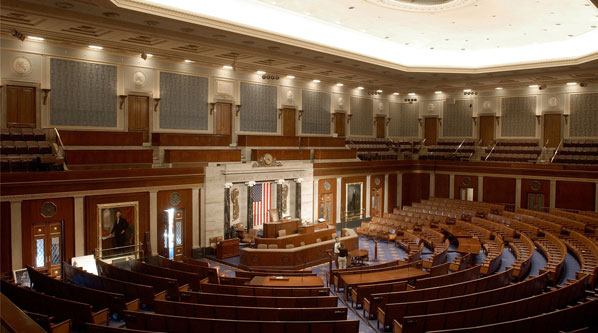
Congress … the Republican House of Representatives meets/votes today to repeal Health Care Reform( Final vote@5:30pm) -Democrats will lay out what the new Health Care law does for all Americans


 CURRENT HOUSE FLOOR PROCEEDINGS

LEGISLATIVE DAY OF JANUARY 19, 2011

112TH CONGRESS – FIRST SESSION

10:00 P.M. –

The House adjourned pursuant to a previous special order. The next meeting is scheduled for 9:00 a.m. on January 20, 2011.

On motion to adjourn Agreed to by voice vote.

Mr. Broun (GA) moved that the House do now adjourn.

6:13 P.M. –

SPECIAL ORDER SPEECHES – The House resumed Special Order speeches.

6:12 P.M. –

Mr. Dreier filed reports from the Committee on Rules, H. Res. 38 and H. Res. 43.

6:06 P.M. –

SPECIAL ORDER SPEECHES – The House has concluded all anticipated legislative business and has proceeded to Special Order speeches.

6:05 P.M. –

Mr. Bucshon requested the following general leaves to address the House on January 26: Mr. Poe of TX for 5 min and Mr. Jones for 5 min.

6:00 P.M. –

ONE MINUTE SPEECHES – The House proceeded with further one minute speeches.

5:59 P.M. –

GOVERNING BOARD, OFFICE OF CONGRESSIONAL ETHICS – Pursuant to section 4(c) of House Resolution 5, 112th Congress, and the order of the House of January 5, 2011, the Chair announces the Speaker’s nomination of the following individuals, with the concurrence of the Minority Leader: Mr. Porter J. Goss, Florida, Chairman; Mr. James M. Eagen, III, Colorado, subject to section 1(b)(6)(B); Ms. Allison R. Hayward, Virginia, subject to section 1(b)(6)(B); Mr. Bill Frenzel, Virginia, Alternate. The following individuals were nominated by the Minority Leader with the concurrence of the Speaker: Mr. David Skaggs, Colorado, Co-Chairman; Mrs. Yvonne Brathwaite Burke, California, subject to section 1(b)(6)(B); Ms. Karan English, Arizona, subject to section 1(b)(6)(B); Mr. Abner Mikva, Illinois, Alternate .

5:57 P.M. –

Ms. Ros-Lehtinen asked unanimous consent That when the House adjourns on Wednesday, January 19, 2011, it adjourn to meet at 9:00 a.m. on Thursday, January 20, 2011. Agreed to without objection.

H. Res. 42:

electing certain Members to certain standing committees of the House of Representatives

5:54 P.M. –

Motion to reconsider laid on the table Agreed to without objection.

On agreeing to the resolution Agreed to without objection.

5:53 P.M. –

Considered as privileged matter.

H.R. 2:

to repeal the job-killing health care law and health care-related provisions in the Health Care and Education Reconciliation Act of 2010

Motion to reconsider laid on the table Agreed to without objection.

On passage Passed by recorded vote: 245 – 189 (Roll no. 14).

5:45 P.M. –

On motion to recommit with instructions Failed by the Yeas and Nays: 185 – 245 (Roll no. 13).

5:23 P.M. –

The previous question on the motion to recommit with instructions was ordered without objection.

5:16 P.M. –

DEBATE – The House proceeded with 10 minutes of debate on the Andrews motion to recommit with instructions, pending reservation of a point of order. The reservation of the point of order was subsequently withdrawn. The instructions contained in the motion seek to require the bill to be reported back to the House with an amendment which requires the health care repeal shall not take effect unless a majority of Members of U.S. House of Representatives and a majority of U.S. Senators waive Federal Employees Health Benefits Program Benefits.

5:14 P.M. –

Mr. Andrews moved to recommit with instructions to Energy and Commerce, Ways and Means, and Education and the Workforce.

¢ Mr. Andrews moved to recommit the bill H.R. 2 to the Committees on Energy and Commerce, Ways and Means, and Education and the Workforce with instructions to report the same back to the House forthwith with the following amendment: ¢ Add at the end the following new section: ¢ SEC. 3. HEALTH CARE REPEAL SHALL NOT TAKE EFFECT UNLESS A MAJORITY OF MEMBERS OF U.S. HOUSE OF REPRESENTATIVES AND A MAJORITY OF U.S. SENATORS WAIVE FEHBP BENEFITS.***

5:13 P.M. –

The previous question was ordered pursuant to the rule.

10:36 A.M. –

DEBATE – The House proceeded with the remaining five hours of debate on H.R. 2.

Considered as unfinished business.

The Chair announced that pursuant to clause 1(c) of rule 19, proceedings will now resume on H.R. 2.

H. Res. 39:

electing Members to certain standing committees of the House of Representatives

10:35 A.M. –

Motion to reconsider laid on the table Agreed to without objection.

On agreeing to the resolution Agreed to without objection.

Considered as privileged matter.

10:03 A.M. –

ONE MINUTE SPEECHES – The House proceeded with one minute speeches, which by direction of the Chair would be limited to 15 per side of the aisle.

10:02 A.M. –

PLEDGE OF ALLEGIANCE – The Chair designated Mr. Heinrich to lead the Members in reciting the Pledge of Allegiance to the Flag.

The Speaker announced approval of the Journal. Pursuant to clause 1, rule I, the Journal stands approved.

10:01 A.M. –

Today’s prayer was offered by the House Chaplain, Rev. Daniel Coughlin.

10:00 A.M. –

The Speaker designated the Honorable Mike Rogers to act as Speaker pro tempore for today.

The House convened, starting a new legislative day.