Tag Archives: king of pop

Humpday wrap-up …


Today has been a long irritating, tedious and frustrating day or evening for the House and Senate members; the House is still in session the Senate just adjourned;on a motion to table extenders vote 54yeas 45nays … the debate on the 40 or more provisions continues Thursdays session

a $149Bil continues certain tax breaks and programs through December 31st

… stay tuned HR4691 includes some, all or part of the following: reauthorizes Federal Satellite Tv into law through 2014, tax extenders.  Though Republican George Lemieux of Florida tried to insert a procedural maneuver to force the bill to be paid for entirely by subsequent legislation, it was defeated 60yeas 37nays as well as a one time payment of $250.00 was defeated by the Senate in a vote of 50-47 for Seniors. More provisions for Vets/disabled using stimulus funds, Cobra, flood ins and increases Medicare payments for Doctors for 6months will be dealt with on Thursday. Apparently, the Burr amendment has yet to be voted on as well

Learn more about Health Care

Bon Jovi Takes United We Serve on Tour

Posted by Jesse Lee on March 3, 2010 at 6:03 PM EST

President Obama’s United We Serve initiative is about to go on tour alongside Bon Jovi on the band’s “The Circle World Tour.” In collaboration with the Corporation for National and Community Service, rocker Jon Bon Jovi will be the first person to engage mass audiences in the President’s call to service at concert venues. The United We Serve initiative encourages Americans to get involved in community service to help the nation move forward.


Rachel Maddow displayed this absolutely splendid chart on her show.

The first bar is the impact on the unified budget balance of the Economic Growth and Tax Relief Reconciliation Act (EGTRRA) of 2001. The second is the impact on the budget balance of the Jobs and Growth Tax Relief Reconciliation Act (JGTRRA) of 2003. The third bar is the CBO estimated impact on the deficit of the Patient Protection and Affordable Care Act proposed in the Senate on November 19, for 2010-2019.

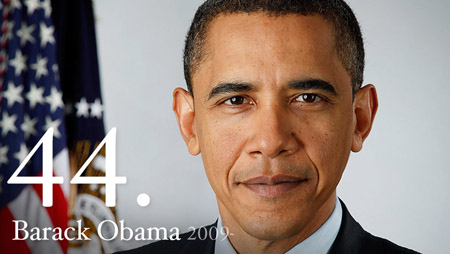
a Message from President Obama …


Last Thursday’s first-of-its-kind summit capped off a debate that has lasted nearly a year. Every idea has now been put on the table. Every argument has been made. Both parties agree that the status quo is unacceptable and gets more dire each day. Today, I want to state as clearly and forcefully as I know how: Now is the time to make a decision about the future of health care in America.

The final proposal I’ve put forward draws on the best ideas from all sides, including several put forward by Republicans at last week’s summit. It will put Americans in charge of their own health care, ensuring that neither government nor insurance company bureaucrats can ration, deny, or put out of financial reach the care our families need and deserve.

I strongly believe that Congress now owes the American people a final vote on health care reform.
Reform has already passed the House with bipartisan support and the Senate with a super-majority of sixty votes. Now it deserves the same kind of up-or-down vote that has been routinely used and has passed such landmark measures as welfare reform and both Bush tax cuts.

Earlier today, I asked leaders in both houses of Congress to finish their work and schedule a vote in the next few weeks.
From now until then, I will do everything in my power to make the case for reform. And now, I’m asking you, the members of the Organizing for America community, to raise your voice and do the same.

The final march for reform has begun, and your participation is crucial. Please commit to join with me to take reform across the finish line.

Essentially, my proposal would change three things about the current health care system:

First, it would protect all Americans from the worst practices of insurance companies. Never again will the mother with breast cancer have her coverage revoked, see her premiums arbitrarily raised, or be forced to live in fear that a pre-existing condition will bar her from future coverage.

Second, my proposal would give individuals and small businesses the same choice of private health insurance that members of Congress get for themselves. And my proposal says that if you still can’t afford the insurance in this new marketplace, we will offer you tax credits based on your income — tax credits that add up to the largest middle class tax cut for health care in history.

Finally, my proposal would bring down the cost of health care for everyone — families, businesses, and the federal government — and bring down our deficit by as much as $1 trillion over the next two decades. These savings mean businesses small and large will finally be freed up to create jobs and increase wages. With costs currently skyrocketing, reform is vital to remaining economically strong in the years and decades to come.

In the few crucial weeks ahead, you can help make sure this proposal becomes law. Please sign up to join the Organizing for America campaign in the final march for reform:

http://my.barackobama.com/commit

When I talked about change on the campaign, this is what I was talking about: coming together to solve a huge problem that has been troubling America for 100 years and standing up to the special interests to deliver a brighter, smarter future for generations to come.

I look forward to signing this historic reform into law. And when I do, it will be because your organizing played an essential role in making change possible.

Thank you,

President Barack Obama

President Obama Follows Up on Thursday’s Bipartisan Meeting on Health Reform


March 2, 2010

Dear Speaker Pelosi, Senator Reid, Senator McConnell, and Representative Boehner:

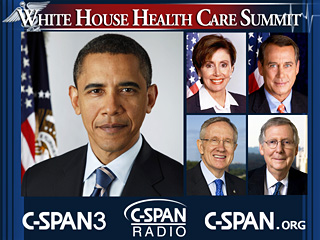
Thank you again for the time, energy, and preparation you invested in last Thursday’s bipartisan meeting on health insurance reform. I have always believed that our legislative process works best when both sides can discuss our differences and common goals openly and honestly, and I’m very pleased that our meeting at Blair House offered the American people and their elected representatives a rare opportunity to explore different health reform proposals in extraordinary depth.

The meeting was a good opportunity to move past the usual rhetoric and sound-bites that have come to characterize this debate and identify areas on which we agree and disagree. And one point on which everyone expressed agreement was that the cost of health care is a large and growing problem that, left untended, threatens families, businesses and the solvency of our government itself.

I also left convinced that the Republican and Democratic approaches to health care have more in common than most people think.

For example, we agree on the need to reform our insurance markets. We agree on the idea of allowing small businesses and individuals who lack insurance to join together to increase their purchasing power so they can enjoy greater choices and lower prices. And we agree on the dire need to wring out waste, fraud and abuse and get control of skyrocketing health care costs.

But there were also important areas of disagreement. There was a fundamental disagreement about what role the oversight of the health insurance industry should play in reform. I believe we must insist on some common-sense rules of the road to hold insurance companies accountable for the decisions they make to raise premiums and deny coverage. I don’t believe we can afford to leave life-and-death decisions about health care for America’s families to the discretion of insurance company executives alone.

No matter how we move forward, there are at least four policy priorities identified by Republican Members at the meeting that I am exploring. I said throughout this process that I’d continue to draw on the best ideas from both parties, and I’m open to these proposals in that spirit:

  1. Although the proposal I released last week included a comprehensive set of initiatives to combat fraud, waste, and abuse, Senator Coburn had an interesting suggestion that we engage medical professionals to conduct random undercover investigations of health care providers that receive reimbursements from Medicare, Medicaid, and other Federal programs.
  2. My proposal also included a provision from the Senate health reform bill that authorizes funding to states for demonstrations of alternatives to resolving medical malpractice disputes, including health courts. Last Thursday, we discussed the provision in the bills cosponsored by Senators Coburn and Burr and Representatives Ryan and Nunes (S. 1099) that provides a similar program of grants to states for demonstration projects. Senator Enzi offered a similar proposal in a health insurance reform bill he sponsored in the last Congress. As we discussed, my Administration is already moving forward in funding demonstration projects through the Department of Health and Human Services, and Secretary Sebelius will be awarding $23 million for these grants in the near future. However, in order to advance our shared interest in incentivizing states to explore what works in this arena, I am open to including an appropriation of $50 million in my proposal for additional grants. Currently there is only an authorization, which does not guarantee that the grants will be funded.
  3. At the meeting, Senator Grassley raised a concern, shared by many Democrats, that Medicaid reimbursements to doctors are inadequate in many states, and that if Medicaid is expanded to cover more people, we should consider increasing doctor reimbursement. I’m open to exploring ways to address this issue in a fiscally responsible manner.
  4. Senator Barrasso raised a suggestion that we expand Health Savings Accounts (HSAs). I know many Republicans believe that HSAs, when used in conjunction with high-deductible health plans, are a good vehicle to encourage more cost-consciousness in consumers’ use of health care services. I believe that high-deductible health plans could be offered in the exchange under my proposal, and I’m open to including language to ensure that is clear. This could help to encourage more people to take advantage of HSAs.

There are provisions that were added to the legislation that shouldn’t have been. That’s why my proposal does not include the Medicare Advantage provision, mentioned by Senator McCain at the meeting, which provided transitional extra benefits for Florida and other states. My proposal eliminates those payments, gradually reducing Medicare Advantage payments across the country relative to fee-for service Medicare in an equitable fashion (page 8). My proposal rewards high-quality and high-performing plans.

In addition, my proposal eliminates the Nebraska FMAP provision, replacing it with additional federal financing to all states for the expansion of Medicaid.

Admittedly, there are areas on which Republicans and Democrats don’t agree. While we all believe that reform must be built around our existing private health insurance system, I believe that we must hold the insurance industry to clear rules, so they can’t arbitrarily raise rates or reduce or eliminate coverage. That must be a part of any serious reform to make it work for the many Americans who have insurance coverage today, as well as those who don’t.

I also believe that piecemeal reform is not the best way to effectively reduce premiums, end the exclusion of people with pre-existing conditions or offer Americans the security of knowing that they will never lose coverage, even if they lose or change jobs.

My ideas have been informed by discussions with Republicans and Democrats, doctors and nurses, health care experts, and everyday Americans – not just last Thursday, but over the course of a yearlong dialogue. Both parties agree that the health care status quo is unsustainable. And both should agree that it’s just not an option to walk away from the millions of American families and business owners counting on reform.

After decades of trying, we’re closer than we’ve ever been to making health insurance reform a reality. I look forward to working with you to complete what would be a truly historic achievement.

Sincerely,

Thank Senate Democrats … Public Option supporters


Senators Bennet, Brown, Merkley, Gillibrand, Kerry, Leahy, Franken, Whitehouse, Burris, Sanders, Feinstein, Reed, Boxer, Udall (NM), Mikulski, Lautenberg, Schumer, Shaheen, Specter, Menendez, Inouye, Johnson, Stabenow, Levin, Durbin, Murray, Bingaman, Cardin, Klobuchar, and Casey have shown bold leadership — asking Senate Majority Leader Harry Reid to pass the public health insurance option through reconciliation, which only needs a simple majority in the Senate. Click on the picture and sign the note

Thanks