Tag Archives: politics

a sport not many focus on … Golf & Women of Colour – reminder – Black History


Wethepeople

So, I’m flipping through my newest 2015 Essence from back to front because of the horoscope section and as I’m looking I see a section called “trending topics” reporting that the USTA just appointed former tennis player Katrina Adams, President, CEO and chairman of the board and the first African American to fill the role. So, more things have changed in the World of Sports in which women of colour historically have not dominated.  While flipping through my 2014 issue of Essence with various fashions it was became obvious that this is not just about fashion, though the title gave me that impression and had to share given the history. In fact, it is about a Woman named Renee Powell and some young Women who were introduced to her and who have chosen her as their mentor. Now, the surprise to most would be that these brightly fashionable women are people of colour and that the article is about golf or as they say, “One of America’s favourite pastimes.”  In fact my family lived just a few blocks away from a golf course and while golf wasn’t my choice the history of golf was well known in our house, including a couple of good along with the bad and the really ugly stories of racism. It is a sad day to know that the practice is still alive and well, though tiger woods did shatter the glass ceiling some. The art of discrimination is subtle these days, while the stories of’ the good ‘olé boys club were worse, golf is a work in progress. The article tells us about the ups and downs of Powell’s life and daily experiences as a young girl to becoming one of four African-American women qualifying for golf’s top pro-circuit … The LPGA Tour that included Althea Gibson, LaRee Pearl Sugg, Shasta Avery Hardt and Renee Powell. Their legacy on the links is gone into in depth. They list the youngest pro at 17, four others including the niece of tiger woods who also has a great story, but what is even more exciting is that after Powell retired she now owns her own golf club, is the golf pro. She also teaches and mentors a new generation of girls/women of colour who love the game and are willing to take it as far as they can. Golfing is not cheap, so, if you have an opportunity to donate to your area’s youth sports club or make time to teach train and expose kids of colour to golf … do it!

Oh and the article on Golf is in Essence and was written by Connie Aitcheson

and … it’s in  “Trending Topics”  the February issue of Essence

Ferguson: Urgent Action – Forever Black History


a message from Congressman Hank Johnson

The following sponsored email was sent to you by AlterNet on behalf of Congressman Hank Johnson:

Urgent Petition: DontMilitarizeMainStreet.com

Dear AlterNet Reader,

I’m outraged.

The failure of the grand jury to indict Darren Wilson is a travesty of justice. And, the reaction of the police? The tear gas. The armored vehicles. The body armor. It’s the kind of action we expect from despotic governments, not the United States.

We in Congress can’t fix the grand jury’s terrible decision, but what we can do is stop the militarization of our police.

Join with me and sign my petition at DontMilitarizeMainStreet.com.

Police don’t need more armored vehicles to enforce the law. They need the trust of our citizens.

Police don’t need more grenade launchers. They need to build trust with people in our communities.

Police don’t need more assault rifles. They need more accountability.

I’m leading on this issue. I have introduced a bill in Congress to stop the militarization of our police. Both Republicans and Democrats alike are supporting this effort. Now, I need your support.

Sign the petition now. As a nation, we need to have discussions to tackle difficult questions about how officers patrol communities, prevent crime, and arrest suspects. Seeing the way a militarized police confronted protestors after the murder of an unarmed teenager makes it clear to me we have more work to do – the struggle for equal justice under the law must continue. That’s why Congress must pass our bill to stop the militarization of Main Street.

We have some incredible news. Our bill to end Main Street militarization now has 45 co-sponsors and our own petition now has hundreds of signatures. And it’s not just Democrats. Republicans have joined our effort as well. Help put us over 2,500 signatures. Together, will pressure Congress to act!

Our quest for justice continues. I hope you’ll stand with us.

For justice,

Hank Johnson

Hank

Carter Woodson ~ American historian


Carter G. Woodson

To commemorate and celebrate the contributions to our nation made by people of African descent, American historian Carter G. Woodson established Black History Week. The first celebration occurred on Feb. 12, 1926. For many years, the second week of February was set aside for this celebration to coincide with the birthdays of abolitionist/editor Frederick Douglass and Abraham Lincoln. In 1976, as part of the nation’s bicentennial, the week was expanded to a month. Since then, U.S. presidents have proclaimed February as National African-American History Month.


In the fall of 1870, a handful of students made their way through the northwest quadrant of the nation’s capital, and through the doors of D.C.’s “Preparatory High School for Colored Youth,” the country’s first public high school for African American children. The students and teachers who graced its hallways would be heard through the years in the halls of Congress, in the highest ranks of the United States military, at the heart of our civil rights movement, and in the upper echelons of medical and scientific study.

One such voice was that of Carter G. Woodson; a journalist, author, historian, and co-founder of the Association for the Study of Negro Life and History (ASNLH). It was through his work with the ASNLH that Woodson spearheaded the celebration of “Negro History Week” in America, which served as the precursor to Black History Month, which was officially recognized by President Gerald Ford in 1976. Woodson taught us that, “those who have no record of what their forebears have accomplished lose the inspiration which comes from the teaching of biography and history.”

Find out more about Carter G. Woodson.


Horace Julian Bond


NMAAHC -- National Museum of African American History and Culture

“We are better people because he walked
among us for a while.”

 
Julian Bond

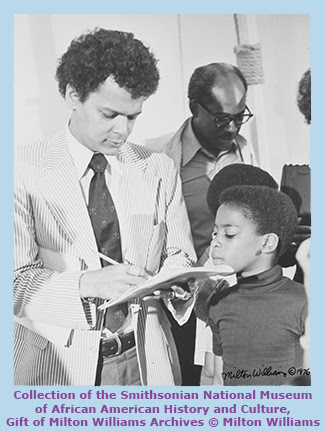
Julian Bond came of age during that critical time in this nation’s history when winning equal rights for all took a great deal: a clear head, a big heart, a razor-sharp intellect, and a way with words.

Julian Bond had it all. And he could wrap all of it up to create whatever was needed at the time – either a tool or a weapon, a poem or a sermon. He was driven by a commitment to make America better.

While a Morehouse-based member of Student Nonviolent Coordinating Committee (SNCC), helping to organize the Freedom Summer of 1964 and its massive voter registration drive in Mississippi, Julian Bond took to task the American public and President Lyndon B. Johnson.

“We have learned through bitter experience in the past three years that the judicial, legislative and executive bodies of Mississippi form a wall of absolute resistance to granting civil rights to Negroes. It is our conviction that only a massive effort by the country backed by the full power of the President can offer some hope for even minimal change in Mississippi.”

Those words came from a letter Julian Bond wrote on April 28, 1964 to one of America’s most inspiring writers, James Baldwin. He was writing to encourage Baldwin to join a “jury” to hear “testimony” about Civil Rights violations from African Americans facing discrimination in employment, housing, and voting rights in Mississippi. Under a plan designed by SNCC and other members of the Council of Federated Organizations, the testimony would be presented to the President so he would be moved to create a government-sanctioned way to protect the Freedom Summer workers.

“The President must be made to understand that this responsibility rests with him, and him alone, and that neither he nor the American people can afford to jeopardize the lives of the people who will be working in Mississippi this summer by failing to take the necessary precautions before the summer begins.”

Bond’s letter to Baldwin has entered the collections of the National Museum of African American History and Culture. It will be used alongside similar documents to show how people like Julian Bond helped design and fuel the Civil Rights Movement.

Bond was so committed to helping us tell that story well, that he became a member of the museum’s Civil Rights History Project advisory committee. In that role he helped us land interviews with some of the most important workers in the movement; he also conducted two of the more than 150 interviews for this oral history project. One was with Lawrence Guyot, the director of the 1964 Freedom Summer project in Hattiesburg, Mississippi.

Julian Bond wrote his letter to James Baldwin in 1964 at the age of 23. Less than three years later he would be awarded his seat in the Georgia House of Representatives by a unanimous decision of the U.S. Supreme Court. Four years after that, in 1971, he would become the founding president of the Southern Poverty Law Center. Nearly 30 years later, in 1998, he would take the helm of the NAACP serving as its national chairman for an astonishing 12 years.

Julian Bond has spent his life as a champion in the campaign for equality. Much of what we as a nation know about compassion and commitment, we have learned from Julian Bond, the people he emulated and the people he inspired. We are sad because he has left us. And we are deeply honored that we had him for as long as we did … to help us help America live up to her promises. We are better people because he walked among us for a while.

Thank you, Horace Julian Bond.

Lonnie_Signature.jpg
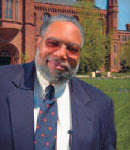
Lonnie G. Bunch
Founding Director
Smithsonian
National Museum of African American History and Culture

Slavery, Hollywood, and Public Discourse – Black History


NMAAHC -- National Museum of African American History and Culture

Lonnie Bunch, museum director, historian, lecturer, and author, is proud to present A Page from Our American Story, a regular on-line series for Museum supporters. It will showcase individuals and events in the African American experience, placing these stories in the context of a larger story — our American story.

A Page From Our American Story
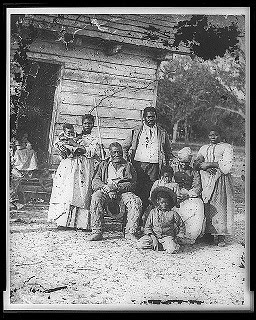
Civil War era Photo of slaves on plantation Family on Smith’s Plantation, Beaufort, South Carolina, circa 1862. Image courtesy of the Library of Congress.

Slavery: perhaps the last, great unmentionable in public discourse. It is certainly a topic that even today makes people very uncomfortable, regardless of their race.

American society has often expressed its internal problems through its art. Perhaps the most powerful medium for important discussions since the turn of the last century has been the motion picture.

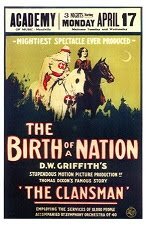
For decades Hollywood has attempted to address the issue of slavery. For the most part, films have represented the period of enslavement in a manner that reflected society’s comfort level with the issue at the time. Director D. W. Griffith’s 1915 silent drama, Birth of a Nation, for instance, depicted African Americans (white actors in black face) better off as slaves. Griffith’s movie showed the institution of slavery “civilizing” blacks. Birth even made it seem like slaves enjoyed their lives and were happy in servitude.

That wasn’t the case, of course, but it was what white society wanted to believe at the time.

Birth of a Nation movie poster

More than two decades after Birth of a Nation, the portrayal of African Americans in films had changed only a little. 1939 saw the release of one of Hollywood’s most acclaimed movies, Gone with the Wind. Producer David O. Selznick believed he was serving the black community with respect — he made sure the novel’s positive portrayal of the Ku Klux Klan was eliminated from the film, for example. But Gone with the Wind nevertheless treated the enslaved as relatively happy, loyal servants, a depiction that continued to reflect America’s segregated society. History was made, however, when Hattie McDaniel became the first African American to win an Academy Award for her role as “Mammy.” Still, her part, and the parts of the other black actors drew harsh criticism from major African American newspapers and civil rights groups.

Nearly forty years later, one of Hollywood’s most meaningful attempts to portray the period of enslavement came in 1977 with the television blockbuster mini-series, Roots. Based on Alex Haley’s 1976 best-selling book, Roots: The Saga of an American Family, the mini-series was groundbreaking on many levels. It was a dramatic series with a predominantly African American ensemble that captured a record 37 Emmy nominations — television’s highest artistic award.
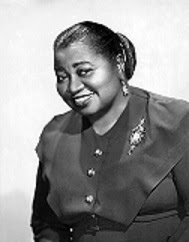
Hattie McDaniel publicity photo Promotional photograph of actor Hattie McDaniel (1939).

And Roots marked the first time America witnessed slavery portrayed in detail. Along with the scenes of transporting, selling, and trading men and women, were scenes showing the brutality African Americans often suffered at the hands of slave owners. The depictions of abuse and cruelty were limited, of course, by the medium and by what American society would accept at the time. In keeping with the series’ marketing campaign, the show focused heavily on the family’s ultimate triumphs. For all of Roots’ firsts, and there were many, it was ultimately a story of resiliency.

Fast forward three-plus decades — American society is undeniably changed. African Americans are regularly featured in movies and television shows. The nation elected, then re-elected, an African American president, Barack Obama.

Drawing critical acclaim today is the movie 12 Years a Slave. 12 Years is a watershed moment in filmmaking. Not only does it feature remarkable performances, excellent cinematography, and powerful direction; it also offers the first realistic depiction of enslavement.

Unlike prior motion pictures and television shows, 12 Years does not retreat from the brutality many blacks endured. The movie is not for the faint hearted, as the violence and cruelty it portrays is not the highly stylized violence found in films like Django Unchained.  12 Years is true to the reality that for years many Americans treated fellow human beings with ruthless brutality — and that reality is harder to face.

12 Years a Slave movie poster

The film, however, is not only drawing praise from critics — it recently received nine Oscar nominations, including Best Picture — but enjoying audience appreciation, as well. With that appreciation comes an opportunity to bring the discussion of slavery to the mainstream.

This, then, is an exciting time for the Smithsonian’s National Museum of African American History and Culture. Among its many virtues, the Smithsonian is a great legitimizer with a long tradition of providing venues for Americans to examine their shared history. One of the over-arching goals of the National Museum of African American History and Culture is to create a place where issues like enslavement can be viewed through an unvarnished lens.

America today needs this discussion and I believe it is ready for it, a sentiment undergirded by a belief in the public’s ability to deal with and care about the issue. The great strength of history, and African American history, is its ability to draw inspiration from even the worst of times. No doubt people throughout the nation and around the world will find that inspiration when they visit the Museum and view our major exhibition on “Slavery and Freedom” when our doors open in late 2015.

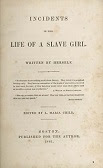
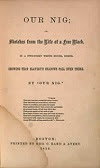
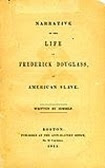
Before I close, I want to recommend four insightful narratives written by African Americans during this period of American history. The first is Solomon Northup’s book, 12 Years a Slave. Next is Incidents in the Life of a Slave Girl, by Harriet Jacobs. One of the first books to describe the sexual abuse and torment that female slaves endured, Incidents became one of the most influential works of its time. Our Nig: Sketches from the Life of a Free Black, by Harriet Wilson, is believed to be the first novel published by an African American in North America. Though fictionalized, Wilson’s book is based on her life growing up in indentured servitude in New Hampshire. Finally, Narrative of the Life of Frederick Douglass, An American Slave, remains today one of the most important autobiographical works ever written by an American.
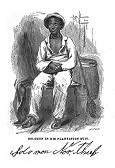
12 Years a Slave book cover 12 Years a Slave by Solomon Northrup. 1853. Incidents book cover Incidents in the Life of a Slave Girl by Harriet Jacobs. 1861. Our Nig book cover Our Nig: Sketches from the Life of a Free Black by Harriet Wilson. 1859. Narrative of the Life of Frederick Douglass book cover Narrative of the Life of Frederick Douglas, An American Slave by Frederick Douglass. 1845.


 dd-enews-temp-lonnie-bunch-2.jpg All the best, Lonnie Bunch Director

P.S. We can only reach our $250 million goal with your help. I hope you will consider making a donation or becoming a Charter Member today.