Tag Archives: Rhode Island

Your Supreme Court June Preview


By

The Supreme Court Will Decide Three Critical Cases This Month

Before the end of this month, the Supreme Court will rule on three cases that could affect the lives of millions of Americans and have a lasting impact on our Constitution. Today, the Center for American Progress hosted a panel discussion with legal experts about what’s at stake as the justices prepare to rule on critical issues like marriage equality, health care, and civil rights.

Here’s what you need to know about these three critical cases:

Healthcare—King v. Burwell: We’ve talked a lot about what’s at stake in the lawsuit against the Affordable Care Act. But as a refresher: a ruling against the ACA in King v. Burwell would strip premium tax credits away from 6.4 million people and send the health insurance market into chaos. Eliminating federal tax credits could cause more than 8 million people to become uninsured and lead to nearly 10,000 preventable deaths each year.

Marriage Equality—Obergefell v. Hodges: In this case the justices could extend marriage equality to all 50 states. This case combines challenges from four states that have laws that either ban same-sex marriage, fail to recognize same-sex marriages from other states, or both. While the Court is widely expected to rule in favor of marriage equality, the way the opinion is drafted will shape how LGBT rights continue to develop after this case is decided, which will be key given that a ruling for same-sex marriage would mean many LGBT Americans could legally be married one day and legally fired the next.

Civil Rights—Texas Department of Housing and Community Affairs v. The Inclusive Communities Project, Inc. This case challenges the decades-old principle that the Fair Housing Act of 1968 should prohibit housing policies that result in discrimination, regardless of whether they were designed to discriminate. If the court rules in favor of the plaintiffs in this case it could make it much harder to fight discrimination in housing—and potentially all civil rights cases. For a more detailed explanation of this case, check out this CAP column.

While some politicians remain divided on these issues, public opinion on these cases is pretty settled: 55 percent of Americans believing the court should not block federal health care subsidies and 61 percent of Americans supporting marriage equality.

The Supreme Court is traditionally considered to rise above the partisanship and politicking of Congress and the executive branch. But as we well know, the Roberts Court has handed down a series of ideologically-charged decisions that have advanced a distinctly conservative agenda. And as the justices prepare to issue opinions on such critical issues, it has rarely been more important to have a judiciary that protects the rights of all Americans equally.

BOTTOM LINE: This month the Supreme Court will have the opportunity to issue landmark decisions on health care, civil rights, and marriage equality. As the branch charged with upholding the rights of all Americans, the Supreme Court should apply the core tenets of our Constitution rather than reflect the ideological crusades of the conservative movement.

Google Maps ~~ Change.org


Petitioning Google, Inc, Larry Page

Remove maps to secret domestic violence shelters.

Petition by Jeremy Janice
Lafayette, Louisiana
55,520
Supporters

A Visit to the White House Kitchen Garden:


The President awards the Medal of Honor.

Parents, staff, and students tour the White House Kitchen Garden on the South Grounds of the White House after participating in a “Let’s Move!” event preparing and eating a garden harvest with the First Lady in the East Room of the White House, June 3, 2015. (Official White House Photo by Lawrence Jackson)

See more from our “Photo of the Day” gallery here.


5 Photos: The President Awards the Medal of Honor to Sergeant William Shemin and Private Henry Johnson

On Tuesday, in a ceremony at the White House, President Obama awarded the Medal of Honor posthumously to Army Sergeant William Shemin and Army Private Henry Johnson for conspicuous gallantry during World War I.

READ MORE

Our Continued Commitment to America’s Foster Youth

Last month was National Foster Care Month. It provided us an important opportunity to highlight the many ways that the Administration has worked to stem the often disproportionate, unfair, and heartbreaking challenges facing our foster youth, and to provide them the equal opportunity for success that they deserve. We want them to know they are not alone.

READ MORE

5 Facts You Should Know About the Role Trade Plays on America’s Farms and Ranches

Without the expanded trade that came with past trade agreements, the agricultural economy and the American economy as a whole would not be as strong as it is today. But new trade agreements are only possible if our negotiators can speak with one voice to negotiate free and fair trade deals. Trade Promotion Authority (TPA) — now being considered in Congress — allows them to do just that.

READ MORE


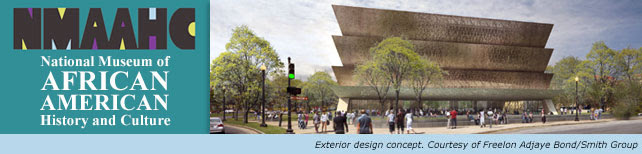
NMAAHC: Edison R. Wato, Jr., Membership Program Manager


NMAAHC -- National Museum of African American History and Culture

NMAAHC involved in the historic Slave Wrecks Project 
Iron ballast used to weigh down the ship

Objects from a slave ship that sank off the coast of Cape Town in 1794 will be on long-term loan to the Smithsonian’s National Museum of African American History and Culture (NMAAHC). The announcement, took place at a historic ceremony at Iziko Museums of South Africa. The discovery of the ship marks a milestone in the study of the trans-Atlantic slave trade and showcases the results of the Slave Wrecks Project, a unique global partnership among museums and research institutions, including the NMAAHC and six partners in the U.S. and Africa.

Objects from the shipwreck—iron ballast to weigh down the ship and its human cargo and a wooden pulley block—were retrieved this year from the wreck site of the São José-Paquete de Africa, a Portuguese slave ship that sank off the coast of Cape Town on its way to Brazil while carrying more than 400 enslaved Africans from Mozambique.

Lonnie G. Bunch III, founding director of NMAAHC, and Rooksana Omar, CEO of Iziko Museums, joined in the announcement of the shipwreck’s discovery and the artifact loan agreement.


Underwater  Archeology

Founded in 2008, Slave Wrecks Project (SWP) brings together partners who have been investigating the impact of the slave trade on world history. It spearheaded the recent discovery of the São José wreck and the ongoing documentation and retrieval of select artifacts. In addition, extensive archival research was conducted on four continents in six countries that ultimately uncovered the ship captain’s account of the wrecking in the Cape archives as well as the ship’s manifest in Portuguese archives.

SWP, established with funding from the Ford Foundation, set a new model for international collaboration among museums and research institutions. It has been combining groundbreaking slave shipwreck investigation, maritime and historical archeological training, capacity building, heritage tourism and protection, and education to build new scholarship and knowledge about the study of the global slave trade.

The São José’s voyage was one of the earliest in the trans-Atlantic slave trade from East Africa to the Americas, which continued well into the 19th century. More than 400,000 East Africans are estimated to have made the Mozambique-to-Brazil journey between 1800 and 1865. The ship’s crew and some of the more than 400 enslaved on board were rescued after the ship ran into submerged rocks about 100 meters (328 feet) from shore. Tragically, more than half of the enslaved people perished in the violent waves and those who were saved were resold into slavery in the Western Cape.

The São José wreck site is located between two reefs, a location that creates a difficult environment to work in because it is prone to strong swells creating challenging conditions for the archaeologists. To date, only a small percentage of the site has been excavated; fully exploring the site will take time.

Sincerely,
edison signature
Edison R. Wato, Jr.
Membership Program Manager

P.S. Follow any of the links below for more information on the NMAAHCs involvement in this historic project. Follow this link to watch a video about the project.

Washington Post: Humble Objects that Tell a Powerful Story
New York Times: Grim History Traced in Sunken Slave Ship Found Off South Africa
New York Times: Finding a Slave Ship, Uncovering History
CNN: Wreck of 18th Century Slave Ship Discovered
SI Press Release: NMAAHC To Display Objects from Slave Shipwreck Found Near Cape Town, South Africa

A Tale of Two Recoveries


By

Recession-Era Austerity Has Led to Weak Public Jobs Growth And Fragile Economic Recovery

Today’s job report brought positive news: the economy added 280,000 jobs and wages grew at an annual rate of 2.3 percent. This month marks six years since the end of the Great Recession, but the economy still has significant recovering to do. The graphic below shows that while the private sector is recovering, austerity remains a major drag on job growth.

JobsDay_June

(Para verlo en español clique aquí)

According to an analysis by the Center for American Progress, slow growth in public sector employment is dragging down our overall economic recovery. Washington’s self-imposed budget sequestration and strict austerity measures at the state and local level have contributed to slow public sector growth, and as a result we have fewer public school teachers, poorly maintained infrastructure, and higher tuition at public universities.

On the other hand, the private sector has enjoyed robust growth since the end of the recession. Between June 2009 and May 2015, the private sector added 11.4 million jobs, while the public sector lost some 559,000 state and local government jobs over the same period. Budget cuts have reduced the number of teachers, bus drivers, firefighters and police officers, to name just a few. At this stage in the recovery, the public sector isn’t keeping up with the needs of our growing population, and the shortfall of public sector employees not only highlights this deficit, but also slows down our recovery.

BOTTOM LINE: Reinvesting in public sector employment would create reliable, good-paying, middle-class jobs and help speed up our economic recovery. Rather than continue down the damaging path of sequestration, which reduces the federal government’s ability to respond to the struggling economy, Congress should be doing more to invest in the economy and support state and local government functions that are essential to the lives of everyday Americans.