

 |
|
This Valentine’s Day, send your heart to the Horn of Africa. While many of us are showered with affection this time of year, 1.5 million people in Kenya, Ethiopia and Somalia are surviving only because of the compassion you’ve shown them. We’ve accomplished so much already with your support. But the fight is far from over. Carmen, you can help deliver lifesaving food, clean water and vital medical supplies to families in the Horn of Africa and others in urgent need around the world. Make a donation today in honor of a loved one, and send them a special Mercy Corps Valentine eCard to commemorate your gift. In some regions, the rain has started to fall, but it has often brought more devastation instead of relief. Roads that deliver critical food and supplies are flooded and impassable, and contaminated water is fueling the spread of diseases like cholera. Although most media attention has moved on, the crisis persists — millions are still in need. Every day, children and families are still going hungry. With your support, Mercy Corps can help families recover and rebuild, by providing job training and small business grants, and helping farmers boost their crop yields through drought-resistant seeds. Together we can offer long-term solutions that will help keep families alive — and help them thrive in the future. Please send your heart to the Horn of Africa today, by making a gift in honor of your loved one. Your compassion will change lives — in the Horn of Africa and around the world. Sincerely,
Dan O’Neill Founder |
Tag Archives: Somalia


Big news in our fight against hunger … MercyCorps
|
|
|
 |
|
There’s a hero in all of us. Give now. | |
|
 |
||||
|
|
|||
At Mercy Corps, we believe there’s a hero in all of us.
That’s why we’ve joined forces with the Justice League and DC Entertainment to bring lifesaving aid and long-term solutions to hungry families in Ethiopia, Somalia and Kenya.
Your gift today to the Horn of Africa Hunger Crisis Fund will be matched dollar for dollar as part of DC Entertainment’s commitment to match 100 percent of the first $1 million in donations to the “We Can Be Heroes” campaign.
We’re partnering with the team behind Batman, Superman and the rest of the Justice League to raise awareness and money for a crisis that’s fallen out of the spotlight.
Our first priority is to support our mobile medical clinics in Ethiopia, which offer lifesaving aid to mothers and children under 5. These clinics visit the most remote, drought-stricken communities and provide malnourished infants with immunizations, antibiotics, vitamins, medicine and therapeutic food to help them gain weight.
Life remains grim throughout the Horn of Africa. Every night, 13 million people in the region go hungry. Last year’s worst drought in generations dried up drinking water sources, decimated crops and livestock and left families destitute and unable to make enough to even feed themselves.
Scattered rains brought some relief but also flooding and disease. Conflict and lasting effects of drought has left millions of families struggling to escape hunger’s grip.
One small act can make you a hero. Please join our fight against hunger in the Horn of Africa today.
Share this:

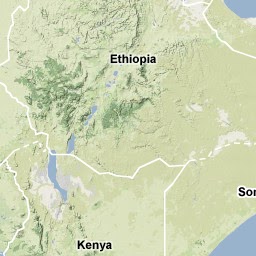
Crisis update: Water deliveries expand to Mogadishu
 Photo: Cassandra Nelson/Mercy CorpsOur efforts are reaching more than 825,000 people in Africa‘s drought-stricken Horn. Read the latest on our response › Photo: Cassandra Nelson/Mercy CorpsOur efforts are reaching more than 825,000 people in Africa‘s drought-stricken Horn. Read the latest on our response › |
The crisis in Africa’s Horn may have fallen off the front pages, but the situation “continues to deteriorate,” according to the latest UN update. Children five and younger are increasingly dying from hunger and disease. Reports of cholera, measles and malaria are on the rise, too. And famine is expected to spread across even more regions of Somalia.
Here’s the latest update on our lifesaving response:
Somalia: On Friday we made the first of daily deliveries of clean drinking water to a displacement camp in Mogadishu. It’s home to tens of thousands of people who’ve flocked to Somalia’s capital seeking refuge from the drought.
Ethiopia: Seven mobile health teams in the hard-hit Somali region continue to provide vaccinations, medical check-ups and fortified food to pregnant women and children under five. We’re also trucking water to remote communities along the Somalia border, and helping herders sell their weakened cattle for cash to meet urgent needs.
Kenya: We’re reaching nearly 200,000 with clean drinking water, trucking it to several dozen villages in drought-stricken Wajir County.
With your support, teams in all three countries are working around the clock to help families survive. Forecasters are now predicting less-than-average rainfall in October, which would only prolong the current crisis — and the recovery.
Thank you for all you’re doing to save lives in Africa’s Horn.
Sincerely,

Neal Keny-Guyer
Chief Executive Officer
Share this:


What I’ve seen in Mogadishu … Cassandra Nelson
I’ve spent the last few days with Mercy Corps‘ emergency team in Mogadishu, Somalia‘s capital, where drought, famine and disease are taking a devastating toll. In more than a decade of responding to many natural and man-made disasters with Mercy Corps, the situation in Mogadishu is truly the worst humanitarian crisis I’ve ever seen.
Because your gift is helping save lives in the Horn of Africa, I wanted to write and let you know how desperately your gift was needed: Hospitals are overcrowded. Displacement camps are filled with thousands of people. Families have walked for days to find a way to keep their malnourished children alive, and now the hospital is full of mothers sitting with their malnourished babies on scraps of cardboard because there are no beds or chairs to be found.
It’s hard to look at such scenes, but it’s important to show the world what’s happening in Somalia
What we saw in Mogadishu’s hospitals was truly heart wrenching. Seven-month-old Abdulrahman, pictured above, is getting treated for malnourishment and diarrhea but remains very weak. I appeared on last night’s CBS Evening News to share what I saw. Click here to watch .http://wfc2.wiredforchange.com/dia/track.jsp?v=2&c=V3lSY41Q9JfJhCMuDp%2BNXXFYrzBidpxn
The segment includes my footage from a hospital we visited, where I met Halima, the mother of seven-month-old Abdulrahman. Halima’s family lost all their cows and goats to the drought, and so they recently came to Mogadishu in search of food.
Little Abdulrahman is weak and much too small for his age. He’s suffering from severe acute malnutrition and watery diarrhea, a symptom of cholera. Halima and her eldest daughter have been at the hospital for several days getting treatment for the baby boy.
When I returned a day later, I found Halima still holding tight to Abdulrahman.
“He is getting better,” she told me with determination in her voice. “He will survive.”
I believe her. It may be hard to fathom that such strength can exist during famine, but I’ve seen it in countless women like Halima. They are determined to save their children.
Our staff is working hard to get aid to families in Mogadishu as quickly as possible. Because of you, I know we can help people in Somalia survive this famine. Thank you.
Sincerely,
Cassandra Nelson
Mercy Corps
Share this:


Somalia is Dying … Luis Morago – Avaaz.org
Right now, more than 2000 people are dying every day in Somalia, in a famine that threatens to starve eleven million people to death. Drought has brought this region to its knees, but the food crisis is really fueled by a complete breakdown in governance and international diplomacy, and we can put an end to it.
The famine-hit area is governed by Al-Shabaab, an Islamist regime that is linked to terrorist groups. The isolation and conflict between Al-Shabaab, other local leaders, and the international community have kept out much of the aid and trade that could end the famine. But a few key countries, including the United Arab Emirates, still trade with Al-Shabaab — they have an opportunity to broker a deal with the regime and break the stalemate that threatens the survival of millions.
We cannot let the politics of the war on terror claim any more innocent lives. It’s time for the international community and Al-Shabaab to come to an agreement to immediately get food to the suffering Somali people. The UN Security Council is meeting in a few days — let’s demand that they take immediate action to support key Arab nations in an effort to open talks with Al-Shabaab on cooperating to end the famine and seize this chance for a long-term political solution:
Somalia’s government was destroyed in 2006 by a US-backed invasion which feared Islamic extremism. But the tactic backfired. Since then, even more radical groups like Al-Shabaab took over and brutalized most of Somalia, and the international community has propped up a corrupt government whose control is limited to parts of the capital. The policies of isolation, invasion and pressure in the war on terror have not helped anyone, and now thousands of Somalis are dying every day. It’s time for a new approach.
The US has already stepped up to tackle the crisis, relaxing anti-terrorism laws that blocked aid from reaching the Somali people in Al-Shabaab’s region. Meanwhile, there are growing cracks within insurgent groups, and some leaders are willing to let aid in. But it is not enough to break the wall that surrounds those hardest hit by famine. Only bold international diplomacy can engage with all key parties to ensure that relief safely reaches the hundreds of thousands of desperate families.
One of Al-Shabaab’s largest sources of income comes from cutting down acacia trees for charcoal, which they illegally export primarily to the United Arab Emirates and other Gulf countries. These nations could now leverage their economic ties to Al-Shabaab to play a crucial diplomatic role and guarantee humanitarian access to famine-stricken areas.
We urgently need a new direction for Somalia — let’s appeal to the UN Security Council to support key Gulf countries to lead mediation efforts to ensure that Somalis dying behind Al-Shabaab’s lines are able to access life-saving food and health care for themselves and their starving children. Sign now and forward widely
Together, Avaaz members have ensured crucial aid was delivered in Burma, Haiti and Pakistan after natural disasters, saving thousands of lives. Now, as the world watches heartbreaking images of dying children in shock and horror, we can urge key countries to show the leadership the Somali people urgently need — let’s stand together now and help end the tragedy in Somalia.
With hope and determination,
Luis, Stephanie, Maria Paz, Emma, Ricken, Giulia, Iain and the whole Avaaz team
SOURCES
Somalia (New York Times)
http://topics.nytimes.com/top/news/international/countriesandterritories/somalia/index.html
Famine weakens and divides Al-Shabaab militants (France24)
http://www.france24.com/en/20110729-somalia-al-shabaab-famine-weakens-divides-qaeda-linked-militants
A famine in Somalia, and a chronic political failure on humanitarian aid (Washington Post)
http://www.washingtonpost.com/national/on-leadership/a-famine-in-somalia-and-a-chronic-political-failure-on-humanitarian-aid/2011/08/03/gIQAPaOgrI_story.html
US urges global action on Horn of Africa famine (AFP)
http://www.google.com/hostednews/afp/article/ALeqM5gWVkYmwIZGd2Jr-3vp5rKF1blTbg?docId=CNG.0dcc70d787af82f2b283aeb2af9d940e.b31
Horn of Africa: From one drought to another (The Guardian)
http://www.guardian.co.uk/commentisfree/2011/jul/07/horn-of-africa-drought
Somalia: Focus on the Charcoal Trade (SomaliaWatch.org)
http://www.somaliawatch.org/archiveoct00/001026601.htm

 Be a Seed for Change