Tag Archives: Taliban

When the past keeps coming back … no lessons learned- a repost from 2013 is needed !


So, we should be happy that the era of trump ended with voters being able to say, the jerk only had one term. The problem with that is… that it feels as if we still haven’t felt the impact of his ugly actions yet. The other thing, is, you think we would be living our 21st Century lives but the past keeps coming back …    so, here’s a repost from ThinkProgress of things we need to be aware of and hopefully get rid of all the bs by voting for the Democratic Party to end the era of trump and the wannabes ASAP!

By ThinkProgress War Room 4/25/2013 

13 Reasons To Be Glad George W. Bush Is No Longer President

With the opening of the George W. Bush presidential library in Dallas, Texas there has been some creative re-telling of history and the Bush legacy — a legacy full of terrible consequences, intended and otherwise, that we’re still having to deal with to this very day.

Here’s a reminder from our ThinkProgress colleagues why you should still be happy that those 8 long Bush years are over:

  • Authorized the use of torture

Though the US Code bans torture, Bush personally issued a memorandum six days after the September 11th attacks instructing the CIA that it could use “enhanced interrogation techniques” against suspected terrorists. The methods included waterboarding, sleep deprivation, and “stress positions.” A recently-released bipartisan committee concluded it was “indisputable” that these techniques constituted torture, and that the highest authorities in the country bore responsibility for the creation of torture programs at Guantanamo Bay and CIA “black sites” around the world

  • Politicized climate science

Bush’s “do-nothing” approach to climate change prevented the U.S. from pursuing meaningful action. Though he claimed that global warming was a serious problem that was either a natural phenomenon or caused by humans, the administration routinely edited scientific reports to downplay the threat of climate change, censored CDC testimony that climate change was a public health threat, and promoted climate-denying studies financed by ExxonMobil. At the end of the Bush presidency, a top intelligence adviser warned the incoming president that climate change was a massive destabilizing national security threat that would lead to “Dust Bowl” conditions in the Southwest.

Rather than consolidating gains after the overthrow of the Taliban in Afghanistan, Bush and his neoconservative allies pushed for removing Saddam Hussein from power, kicking off a war that led to one mistake after another. Ten years later, the war is estimated to have cost cost up to $6 trillion and resulted in the death of more than 100,000 Iraqis, 4,000 Americans and another 31,000 wounded. Meanwhile, Afghanistan saw a resurgence of the Taliban after Bush shifted resources to Iraq.

  • Botched the response to Hurricane Katrina

Bush appointed Michael Brown — a man whose only real qualifications were political connections and a sting at the International Arabian Horse Association — to head the Federal Emergency Management Agency (FEMA) in 2003 and he preceded to undo everything the Clinton Administration had done to make FEMA functional, botching the response to 2004′s Hurricane Frances so badly as to prompt calls for his firing. But Bush kept Brown on board and, as a detailed timeline of the response to Hurricane Katrina demonstrates, neither man took the storm seriously until it was too late. Bush, who famously said “Brownie, you’re doing a heck of a job” midway through the crisis, thus presided over the most deaths due to a single natural disaster in the United States since 1900.

  • Defunded stem cell research

At the turn of the century there was perhaps no greater hope for finding cures to illnesses ranging from Alzheimer’s to diabetes than ongoing stem cell research. But months after taking office, Bush eliminated all federal funding for any new research involving stem cells, citing a religious objection to the use of embryos — even though the embryos in question were byproducts from couples undergoing in vitro fertilization and would have been destroyed by IVF clinics regardless. Twice more during his presidency, Bush vetoed legislation that would have restored funding.

  • Required Muslim men to register with the government

Following the terrorist attacks of September 11, 2001, Bush’s Attorney General, John Ashcroft, instituted an anti-terrorism program to register all male immigrants between 18 and 40 years old from 20 Arab and South Asian countries. Thousands of innocent men came forward to register, only to be rounded up for minor visa violations. Roughly 1,000 men and boys in the process of applying for permanent residence were arrested and confined in standing-room-only centers, enduring invasive strip searches and beatings by guards. Many were deported, while others were held for months after their immigration cases were resolved, without a shred of evidence they had any links to terrorism.

  • Reinstated the global gag rule

On Bush’s first day in office he reinstated a rule that prevented any non-profit doing work overseas from using any of their own, private money to fund family planning services. This so-called “Global Gag Rule” posed a serious threat to international maternal health, but it also cut off funding for HIV/AIDS initiatives, child health programs, and water and sanitation efforts.

  • Supported anti-gay discrimination

In 2004, President Bush endorsed the Federal Marriage Amendment (FMA), which would have banned same-sex couples from marrying in the U.S. Constitution. The Massachusetts Supreme Court had just ruled in favor of marriage equality, and Bush hoped to block the ruling from taking effect because “a few judges and local authorities are presuming to change the most fundamental institution of civilization.” Though the FMA failed numerous times in Congress during Bush’s tenure, he exploited the issue of same-sex marriage to turn out conservative voters for the 2004 election. That year, 11 states added constitutional amendments outlawing same-sex marriage.

  • Further deregulated Wall Street

Under Bush, federal agencies eliminated regulations on predatory lending, capital requirements, and other Wall Street practices, allowing banks to engage in riskier and more destructive practices that contributed to the financial crisis that started on his watch. Bush’s Treasury Department also pushed for even further deregulation that would have given Wall Street more oversight over its own practices even after the housing collapse had begun.

  • Widened income inequality

The per-person benefits of Bush’s tax cuts accrued to the top one percent of Americans, as the rate for capital gains dropped to 15 percent. The CBO found that federal income taxes dropped far more as a percentage of the one percent’s income than for any other group after 2000.

  • Undermined worker protections

Under Bush, the Occupational Safety and Health Administration, whose mission is to protect safe working conditions, issued 86 percent fewer rules or regulations and pulled 22 items from its agenda of proposed safety and health rules. The office’s funding and staff were also consistently reduced. Meanwhile, funding for the Equal Employment Opportunity Commission, the agency charged with helping workers who claim discrimination against their employers, was similarly low and staffing fell even as the number of complaints increased, leading to a rising backlog of cases.

  • Ideological court appointments

Bush filled the federal bench with ideologues, including two-lifetime appointments to the Supreme Court. These conservatives believe that corporations should be able to buy and sell elections, ruled against equal pay for equal work, and have sought to undermine a woman’s right to choose.

  • Presided over a dysfunctional executive branch

A 2008 analysis by the Center for Public Integrity documented more than 125 executive branch failures over Bush’s two terms. These included government breakdowns on “education, energy, the environment, justice and security, the military and veterans affairs, health care, transportation, financial management, consumer and worker safety,” and others. “I think we’ll look back on this period as one of the most destructive periods in American public life . . . both in terms of policy and process,” Thomas E. Mann, a senior fellow at the nonpartisan Brookings Institution observed, noting “genuine distortion in the constitutional system, an exaggerated sense of presidential power and prerogative and acquiescence by a Republican Congress in the face of the first unified Republican government since Dwight Eisenhower.”

Miss Him Yet?

Then again, is it just me, or was the era of trump really more of the same, but it’s not just perceived scary 

it was and still is, trumpy effin  real doom and gloom?

Afghan Code Declares “Men are Fundamental, and Women are Secondary”


make a difference

In Afghanistan, the hard-won progress of women’s rights  is  in danger. President Hamid Karzai recently endorsed an oppressive “code of conduct” that will ban Afghan women from traveling without a male escort or  mingling with men in public places.Worst of all, the code states that, “Men are fundamental and women are secondary.” Tell President Karzai that women are NOT second-class citizens!»

In addition, women can still be physically assaulted by their spouse if it is for a “Shariah-compliant reason.”
Karzai is apparently willing to sacrifice the rights and independence of half his citizens in order to appease the extremist conservative forces.

Stop the disintegration of women’s rights in Afghanistan and tell President Karzai to retract his endorsement of this extremist code!»


Family’s legal error could cost student his life …Jackie Mahendra, Change.org


                ICE: Don’t deport a student who could be killed in his birth country of Pakistan.             
Sign the Petition

Balal Parveez has nine brothers and sisters, a wife, and two parents who love him — they’re all American citizens. But because of a laeyer’s error from years ago, Balal is the only person in his family who is undocumented.

Now Balal is facing deportation: He’s been held by Immigration and Customs Enforcement (ICE) for eight long months, during which time the former athlete has grown thin and depressed. This week Balal required surgery to remove growths on his chest, and ICE threw Balal back into his cell right after surgery.

Balal’s family is fighting hard to keep him in America. Balal’s sister, Nosheen Dean, went to visit him in Florida last week. She says, “I told him, ‘I promise you I’m not going to let them deport you.’” Nosheen started a petition on Change.org begging ICE to let Balal stay in America. Click here to sign Nosheen’s petition right now.

Balal embodies the idea of a model American. He was brought to the US from Pakistan when he was five. He was a good student, played on his high school football team, went to community college, and married his high school sweetheart. Balal has no criminal record whatsoever.

But Balal first came to the U.S. with his aunt, and the family lawyer mistakenly processed Balal’s immigration case with his aunt’s instead of his parents’. That’s why Balal has spent 8 months in an Immigration and Customs Enforcement (ICE) detention center in Florida, 1200 miles from his family in New York. He’s facing deportation to a country that’s foreign to him — a place where he could be killed because of his father’s outspoken opposition to the Taliban.

Balal shouldn’t be in detention in the first place. He clearly fits the new criteria laid out by President Obama that should make him an extremely low priority for deportation. ICE officials need to know that their actions are being watched, and that it is unacceptable for them to rip apart American families.

Please sign Nosheen’s petition demanding that ICE release her brother Balal from detention and allow him to stay with his wife and family in the U.S.:

http://www.change.org/petitions/release-dreamer-balal-parveez-to-his-family-and-stop-his-deportation

Thanks for being a change-maker,

– Jackie and the Change.org team

President Obama on the Way Forward in Afghanistan


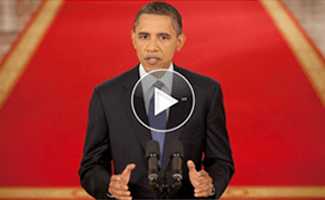
If you missed it , you should take a few minutes to watch President Obama‘s address to the nation about our policy in Afghanistan:

The President’s address marks a major turning point in a nearly decade-long conflict. He announced his plan to start withdrawing our troops from Afghanistan next month, fulfilling a promise he made a year and a half ago to begin the drawdown this summer.

  To put it simply: when this president took office, there were 180,000 troops in Iraq and Afghanistan. Now, the combat mission in Iraq has ended, Afghanistan will be fully responsible for its own security by 2014, and there will be fewer than 100,000 American troops in the two countries by the end of this year.

  As President Obama decisively concludes two long-running wars, he is refocusing our foreign policy to more effectively address the threats we face and strengthen America‘s leadership in the world as we do.

  I’m writing to you because this transformation has already begun to reshape the policy debate — foreign and domestic — in the 2012 election. As the President said last night: “It is time to focus on nation building here at home.”

 The outcome of this debate will have consequences for all of us, so it’s important that you understand the policy and help inform the conversation.

  You can read the President’s remarks below, or watch the address on the White House website here:

http://my.barackobama.com/Afghanistan

Thanks,

 Messina

  Jim Messina
Campaign Manager
Obama for America
———————-

 FULL REMARKS BY THE PRESIDENT ON THE WAY FORWARD IN AFGHANISTAN
June 22, 2011
8:01 P.M. EDT
THE PRESIDENT: Good evening. Nearly 10 years ago, America suffered the worst attack on our shores since Pearl Harbor. This mass murder was planned by Osama bin Laden and his al Qaeda network in Afghanistan, and signaled a new threat to our security — one in which the targets were no longer soldiers on a battlefield, but innocent men, women and children going about their daily lives.

In the days that followed, our nation was united as we struck at al Qaeda and routed the Taliban in Afghanistan. Then, our focus shifted. A second war was launched in Iraq, and we spent enormous blood and treasure to support a new government there. By the time I took office, the war in Afghanistan had entered its seventh year. But al Qaeda’s leaders had escaped into Pakistan and were plotting new attacks, while the Taliban had regrouped and gone on the offensive. Without a new strategy and decisive action, our military commanders warned that we could face a resurgent al Qaeda and a Taliban taking over large parts of Afghanistan.

For this reason, in one of the most difficult decisions that I’ve made as President, I ordered an additional 30,000 American troops into Afghanistan. When I announced this surge at West Point, we set clear objectives: to refocus on al Qaeda, to reverse the Taliban’s momentum, and train Afghan security forces to defend their own country. I also made it clear that our commitment would not be open-ended, and that we would begin to draw down our forces this July.

Tonight, I can tell you that we are fulfilling that commitment. Thanks to our extraordinary men and women in uniform, our civilian personnel, and our many coalition partners, we are meeting our goals. As a result, starting next month, we will be able to remove 10,000 of our troops from Afghanistan by the end of this year, and we will bring home a total of 33,000 troops by next summer, fully recovering the surge I announced at West Point. After this initial reduction, our troops will continue coming home at a steady pace as Afghan security forces move into the lead. Our mission will change from combat to support. By 2014, this process of transition will be complete, and the Afghan people will be responsible for their own security.

 We’re starting this drawdown from a position of strength. Al Qaeda is under more pressure than at any time since 9/11. Together with the Pakistanis, we have taken out more than half of al Qaeda’s leadership. And thanks to our intelligence professionals and Special Forces, we killed Osama bin Laden, the only leader that al Qaeda had ever known. This was a victory for all who have served since 9/11. One soldier summed it up well. “The message,” he said, “is we don’t forget. You will be held accountable, no matter how long it takes.”

 The information that we recovered from bin Laden’s compound shows al Qaeda under enormous strain. Bin Laden expressed concern that al Qaeda had been unable to effectively replace senior terrorists that had been killed, and that al Qaeda has failed in its effort to portray America as a nation at war with Islam — thereby draining more widespread support. Al Qaeda remains dangerous, and we must be vigilant against attacks. But we have put al Qaeda on a path to defeat, and we will not relent until the job is done.

 In Afghanistan, we’ve inflicted serious losses on the Taliban and taken a number of its strongholds. Along with our surge, our allies also increased their commitments, which helped stabilize more of the country. Afghan security forces have grown by over 100,000 troops, and in some provinces and municipalities we’ve already begun to transition responsibility for security to the Afghan people. In the face of violence and intimidation, Afghans are fighting and dying for their country, establishing local police forces, opening markets and schools, creating new opportunities for women and girls, and trying to turn the page on decades of war.

 Of course, huge challenges remain. This is the beginning — but not the end — of our effort to wind down this war. We’ll have to do the hard work of keeping the gains that we’ve made, while we draw down our forces and transition responsibility for security to the Afghan government. And next May, in Chicago, we will host a summit with our NATO allies and partners to shape the next phase of this transition.

 We do know that peace cannot come to a land that has known so much war without a political settlement. So as we strengthen the Afghan government and security forces, America will join initiatives that reconcile the Afghan people, including the Taliban. Our position on these talks is clear: They must be led by the Afghan government, and those who want to be a part of a peaceful Afghanistan must break from al Qaeda, abandon violence, and abide by the Afghan constitution. But, in part because of our military effort, we have reason to believe that progress can be made.

 The goal that we seek is achievable, and can be expressed simply: No safe haven from which al Qaeda or its affiliates can launch attacks against our homeland or our allies. We won’t try to make Afghanistan a perfect place. We will not police its streets or patrol its mountains indefinitely. That is the responsibility of the Afghan government, which must step up its ability to protect its people, and move from an economy shaped by war to one that can sustain a lasting peace. What we can do, and will do, is build a partnership with the Afghan people that endures — one that ensures that we will be able to continue targeting terrorists and supporting a sovereign Afghan government.

 Of course, our efforts must also address terrorist safe havens in Pakistan. No country is more endangered by the presence of violent extremists, which is why we will continue to press Pakistan to expand its participation in securing a more peaceful future for this war-torn region. We’ll work with the Pakistani government to root out the cancer of violent extremism, and we will insist that it keeps its commitments. For there should be no doubt that so long as I am President, the United States will never tolerate a safe haven for those who aim to kill us. They cannot elude us, nor escape the justice they deserve.

 My fellow Americans, this has been a difficult decade for our country. We’ve learned anew the profound cost of war — a cost that’s been paid by the nearly 4,500 Americans who have given their lives in Iraq, and the over 1,500 who have done so in Afghanistan — men and women who will not live to enjoy the freedom that they defended. Thousands more have been wounded. Some have lost limbs on the battlefield, and others still battle the demons that have followed them home.

 Yet tonight, we take comfort in knowing that the tide of war is receding. Fewer of our sons and daughters are serving in harm’s way. We’ve ended our combat mission in Iraq, with 100,000 American troops already out of that country. And even as there will be dark days ahead in Afghanistan, the light of a secure peace can be seen in the distance. These long wars will come to a responsible end.

 As they do, we must learn their lessons. Already this decade of war has caused many to question the nature of America’s engagement around the world. Some would have America retreat from our responsibility as an anchor of global security, and embrace an isolation that ignores the very real threats that we face. Others would have America over-extended, confronting every evil that can be found abroad.

 We must chart a more centered course. Like generations before, we must embrace America’s singular role in the course of human events. But we must be as pragmatic as we are passionate; as strategic as we are resolute. When threatened, we must respond with force — but when that force can be targeted, we need not deploy large armies overseas. When innocents are being slaughtered and global security endangered, we don’t have to choose between standing idly by or acting on our own. Instead, we must rally international action, which we’re doing in Libya, where we do not have a single soldier on the ground, but are supporting allies in protecting the Libyan people and giving them the chance to determine their own destiny.

 In all that we do, we must remember that what sets America apart is not solely our power — it is the principles upon which our union was founded. We’re a nation that brings our enemies to justice while adhering to the rule of law, and respecting the rights of all our citizens. We protect our own freedom and prosperity by extending it to others. We stand not for empire, but for self-determination. That is why we have a stake in the democratic aspirations that are now washing across the Arab world. We will support those revolutions with fidelity to our ideals, with the power of our example, and with an unwavering belief that all human beings deserve to live with freedom and dignity.

 Above all, we are a nation whose strength abroad has been anchored in opportunity for our citizens here at home. Over the last decade, we have spent a trillion dollars on war, at a time of rising debt and hard economic times. Now, we must invest in America’s greatest resource — our people. We must unleash innovation that creates new jobs and industries, while living within our means. We must rebuild our infrastructure and find new and clean sources of energy. And most of all, after a decade of passionate debate, we must recapture the common purpose that we shared at the beginning of this time of war. For our nation draws strength from our differences, and when our union is strong no hill is too steep, no horizon is beyond our reach.

 America, it is time to focus on nation building here at home.

 In this effort, we draw inspiration from our fellow Americans who have sacrificed so much on our behalf. To our troops, our veterans and their families, I speak for all Americans when I say that we will keep our sacred trust with you, and provide you with the care and benefits and opportunity that you deserve.

 I met some of these patriotic Americans at Fort Campbell. A while back, I spoke to the 101st Airborne that has fought to turn the tide in Afghanistan, and to the team that took out Osama bin Laden. Standing in front of a model of bin Laden’s compound, the Navy SEAL who led that effort paid tribute to those who had been lost — brothers and sisters in arms whose names are now written on bases where our troops stand guard overseas, and on headstones in quiet corners of our country where their memory will never be forgotten. This officer — like so many others I’ve met on bases, in Baghdad and Bagram, and at Walter Reed and Bethesda Naval Hospital — spoke with humility about how his unit worked together as one, depending on each other, and trusting one another, as a family might do in a time of peril.

 That’s a lesson worth remembering — that we are all a part of one American family. Though we have known disagreement and division, we are bound together by the creed that is written into our founding documents, and a conviction that the United States of America is a country that can achieve whatever it sets out to accomplish. Now, let us finish the work at hand. Let us responsibly end these wars, and reclaim the American Dream that is at the center of our story. With confidence in our cause, with faith in our fellow citizens, and with hope in our hearts, let us go about the work of extending the promise of America — for this generation, and the next.

 May God bless our troops. And may God bless the United States of America.

AFGHANISTAN: Grading America’s Nine-Year War


One year after announcing its Afghanistan strategy, which involved sending approximately 30,000 new U.S. troops to implement a broad counterinsurgency strategy to reverse the Taliban‘s gains, the Obama administration released a new  review Thursday noting “some real military gains, but [which] acknowledges that they remain fragile and that NATO troops will need more time to achieve their goals.” Reviewing the strategy, Center for American Progress expert Caroline Wadhams wrote in Foreign Policy, “One year later, tactical successes on the battlefield do not add up to lasting strategic progress in the war in Afghanistan. Des pite a huge infusion of money and troops, we appear to be standing in place.”  Appearing on Meet the Press on Sunday, Vice President Biden spoke about plans to begin transferring security authority to the Afghans themselves next year: ” We’re starting it in July of 2011 and we’re going to be totally out of there, come hell or high water by 2014.” The same day, a member of the NATO-led force was killed, “taking the total number of foreign troops killed in 2010 to 700, by far the deadliest year of the war since the Taliban were toppled in 2001.”

IS THE SURGE WORKING? : The administration’s review states that Taliban “momentum has been arrested in much of the country” and “reversed in some key areas.” However, analyst Josh Foust wrote that the review “gives no indication of what to expect moving forward. … While the implied threat of al Qaeda is peppered throughout the review document, there is no indication of how the large military campaign under way there now actually contributes to the national security of the United States — there are no details of which threats are being undone in Afghanistan or Pakistan.” Wadhams writes that “without shifts in the current political structures in Afghanistan, it will be sim ply futile for the United States and its NATO allies to wage continued war on behalf of a government that cannot consolidate domestic political support without indefinite massive international assistance and troops.” Meanwhile, Wired Magazine reported that “the air war over Afghanistan has reached a post-invasion high,” and “Afghan anger over air strikes is soaring as well.” Noting the problem of insurgent safe havens in neighboring Pakistan, Wired’s Spencer Ackerman characterized the strategy review this way: “One year and 30,000 new troops later, Afghanistan is peripheral to the Afghanistan war,” adding that the administration’s review makes clear that “this is a U.S. drone war in Pakistan with a big, big U.S. troop component next door.”

PAKISTAN: According to a November report by the Center American for Progress, core U.S. security interests in the region “center on reducing the risk of terrorist attacks by Al Qaeda and its affiliated networks against the United States and its allies. They also include increasing the political stability of the Pakistani state, a country of 170 million people with nuclear weapons.” The report concluded that “current U.S. efforts in Afghanistan are fundamentally out of balance, and they are not advancing U.S. interests and stability in Afghanistan, Pakistan, and the region.” A National Intelligence Estimate released earlier this month stated that “there is a limited chance of success unless Pakistan hunts down insurgents operating from h avens on its Afghan border.” Gen. David Petraeus, the top U.S. commander in Afghanistan, assured reporters that “[Pakistani military chief] General Kayani and others have been clear in recognizing that they need to do more for their security and indeed to carry out operations against those who threaten other countries’ security.” But Bruce Reidel, a former C.I.A. official  who led a White House review of Afghan strategy last year, said, “[W]e have to deal with the world we have, not the world we’d like. We can’t make Pakistan stop being naughty.”

AFTER HOLBROOKE: On December 13, Richard Holbrooke, “the Obama administration’s special representative for Afghanistan and Pakistan since 2009 and a diplomatic troubleshooter who worked for every Democratic president since the late 1960s and oversaw the negotiations that ended the war in Bosnia,” died in a Washington, D.C. hospital due to complications from a torn aorta. President Obama paid tribute to Holbrooke as “atrue giant of American foreign policy who has made America stronger, safer, and more respected.” Responding to Petraeus’ remembrance of Holbrooke as “my diplomatic wingman,” Center for American Progress Action Fund’s Matthew Yglesias wrote, &quo t;The affection and respect Petraeus expressed were doubtlessly both genuine, but the sentiment is mistaken. It reverses the proper relationship between civilian and military authorities — generals and their troops are supposed to serve political objectives outlined by civilians, not view civilians as adjuncts to military campaigns.” As CAP’s November Afghanistan report asserted, “[m]ilitary operations drive our strategy while the political and diplomatic framework essential for long-term stability in Afghanistan remains undeveloped.” Reversing this dynamic is a key challenge for the Obama administration, one that reaches beyond Afghanistan.