
Uploaded by RANVideo on Oct 28, 2010
Rainforest Action Network, Amazon Watch and the Yes Men organized a counter-campaign to call out the greenwash in Chevron‘s new “We Agree” campaign. In this video, Washington, DC-based artist César Maxit explains how Chevron reached out to him to help with its campaign, and why he refused to help the company clean up its image while it refuses to clean up its toxic oil mess in Ecuador.
To get in on the Chevron-spoofing action, visit www.ChevronThinksWereStupid.org.
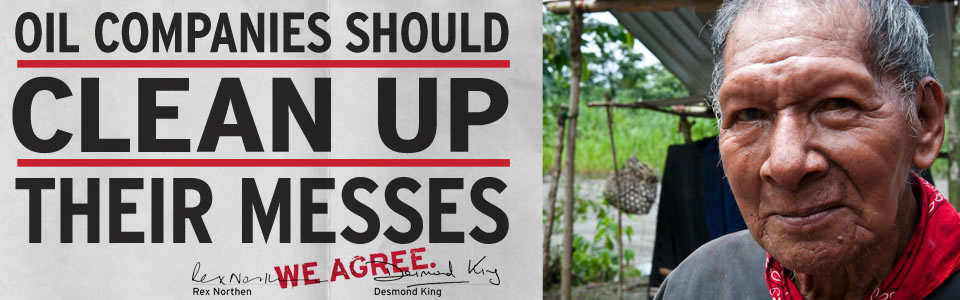
Before Chevron’s press release announcing the campaign could hit reporters’ inboxes, we sent out a press release of our own… on the company’s behalf. The company’s own press release was guaranteed to be full of greenwash. We wanted ours to be a bit more truthful. It featured quotes from real employees, but in this case they were describing a campaign we might actually be inclined to agree with:
“Chevron is making a clean break from the past by taking direct responsibility for our own actions,” said Rhonda Zygocki, Chevron vice president of Policy, Government and Public Affairs.
“Oil Companies Should Clean Up Their Messes,” reads one ad; the small print refers candidly to the damage done by oil companies around the world. “For decades, oil companies like ours have worked in disadvantaged areas, influencing policy in order to do there what we can’t do at home. It’s time this changed.”
Another ad, “Oil Companies Should Fix The Problems They Create,” is just as topical. “Extracting oil from the Earth is a risky process, and mistakes do happen. It’s easy to pass the blame or ignore the mistakes we’ve made. Instead, we need to face them head on, accept our financial and environmental responsibilities, and fund new technologies to avoid these mistakes in the future.”
Of course, before we sent out our press release, we put together a spoof website and a fake press page.
http://www.flickr.com/slideShow/index.gne?set_id=72157625076327405
View the set on Flickr: Punking Chevron’s We Agree Ad Campaign.
Some reporters got fooled by our spoof. Others managed to figure out it was a parody before they published their piece, but even still, we’d managed to derail much of the press about Chevron’s pricey new PR effort. Several pieces highlighted our spoof campaign instead of the real Chevron campaign. Here are a few examples:
- Reuters: Hoaxers target new Chevron advertising campaign
- NYT: Pranksters Lampoon Chevron Ad Campaign
- San Francisco Business Times: Protesters spoof Chevron ad campaign
A quote from a strategic communications professional in Advertising Age neatly sums up why it would have been stupid not to punk Chevron’s new ad campaign: “It’s like a thumb trap, the more the company tries to defend itself, the more it becomes part of the story and that makes it more interesting. The company being attacked can’t effectively fight back itself and that’s why these tactics are so effective.”
Our efforts to steal Chevron’s press about its new ad campaign worked better than we’d hoped. As the San Francisco Business Times put it: “You might think pesky protesters would bother a business that will have close to $200 [billion] in revenue this year like a tick fly bothers an elephant. But they seem to have found a tender spot on the big beast.”
We hit that tender spot, and we hit it hard — not just with our fake press release and website, but also with a second fake press release that we put out pretending to be Chevron responding to our first fake press release. We also created a fake AdAge article covering our own fake Chevron ad campaign. In other words, the real Chevron ad campaign never had a chance.
Meanwhile, activists were getting in on the action. So far, posters spoofing the new Chevron ads have gone up coast-to-coast, from San Francisco to LA to Washington, DC. Check out our Flickr set: Punking Chevron’s We Agree Ad Campaign.
Now it’s your turn to remix Chevron’s “We Agree” ad campaign!

 Be a Seed for Change
You must be logged in to post a comment.