September 22 marks the 150th anniversary of Abraham Lincoln’s preliminary Emancipation Proclamation, in which he declared that as of January 1, 1863, all slaves in states in rebellion against the Union “shall be then, thenceforward, and forever free.”
To commemorate the occasion, we invite you to consider some surprising facts about Lincoln’s views on slavery, and the complex process that led him to issue the document he later called “the central act of my administration, and the greatest event of the 19th century.
Depiction by Francis Bicknell Carpenter of Abraham Lincoln’s first reading of the Emancipation Proclamation, in July 1862. It hangs in the U.S. Capitol.
1. Lincoln wasn’t an abolitionist. Lincoln did believe that slavery was morally wrong, but there was one big problem: It was sanctioned by the highest law in the land, the Constitution. The nation’s founding fathers, who also struggled with how to address slavery, did not explicitly write the word “slavery” in the Constitution, but they did include key clauses protecting the institution, including a fugitive slave clause and the three-fifths clause, which allowed Southern states to count slaves for the purposes of representation in the federal government. In a three-hour speech in Peoria, Illinois, in the fall of 1854, Lincoln presented more clearly than ever his moral, legal and economic opposition to slavery—and then admitted he didn’t know exactly what should be done about it within the current political system.
Abolitionists, by contrast, knew exactly what should be done about it: Slavery should be immediately abolished, and freed slaves should be incorporated as equal members of society. They didn’t care about working within the existing political system, or under the Constitution, which they saw as unjustly protecting slavery and slave owners. Leading abolitionist William Lloyd Garrison called the Constitution “a covenant with death and an agreement with Hell,” and went so far as to burn a copy at a Massachusetts rally in 1854. Though Lincoln saw himself as working alongside the abolitionists on behalf of a common anti-slavery cause, he did not count himself among them. Only with emancipation, and with his support of the eventual 13th Amendment, would Lincoln finally win over the most committed abolitionists.
2. Lincoln didn’t believe blacks should have the same rights as whites. Though Lincoln argued that the founding fathers’ phrase “All men are created equal” applied to blacks and whites alike, this did not mean he thought they should have the same social and political rights. His views became clear during an 1858 series of debates with his opponent in the Illinois race for U.S. Senate, Stephen Douglas, who had accused him of supporting “negro equality.” In their fourth debate, at Charleston, Illinois, on September 18, 1858, Lincoln made his position clear. “I will say then that I am not, nor ever have been, in favor of bringing about in any way the social and political equality of the white and black races,” he began, going on to say that he opposed blacks having the right to vote, to serve on juries, to hold office and to intermarry with whites. What he did believe was that, like all men, blacks had the right to improve their condition in society and to enjoy the fruits of their labor. In this way they were equal to white men, and for this reason slavery was inherently unjust.
Like his views on emancipation, Lincoln’s position on social and political equality for African-Americans would evolve over the course of his presidency. In the last speech of his life, delivered on April 11, 1865, he argued for limited black suffrage, saying that any black man who had served the Union during the Civil War should have the right to vote.
3. Lincoln thought colonization could resolve the issue of slavery. For much of his career, Lincoln believed that colonization—or the idea that a majority of the African-American population should leave the United States and settle in Africa or Central America—was the best way to confront the problem of slavery. His two great political heroes, Henry Clay and Thomas Jefferson, had both favored colonization; both were slave owners who took issue with aspects of slavery but saw no way that blacks and whites could live together peaceably. Lincoln first publicly advocated for colonization in 1852, and in 1854 said that his first instinct would be “to free all the slaves, and send them to Liberia” (the African state founded by the American Colonization Society in 1821).
Nearly a decade later, even as he edited the draft of the preliminary Emancipation Proclamation in August of 1862, Lincoln hosted a delegation of freed slaves at the White House in the hopes of getting their support on a plan for colonization in Central America. Given the “differences” between the two races and the hostile attitudes of whites towards blacks, Lincoln argued, it would be “better for us both, therefore, to be separated.” Lincoln’s support of colonization provoked great anger among black leaders and abolitionists, who argued that African-Americans were as much natives of the country as whites, and thus deserved the same rights. After he issued the preliminary Emancipation Proclamation, Lincoln never again publicly mentioned colonization, and a mention of it in an earlier draft was deleted by the time the final proclamation was issued in January 1863.
4. Emancipation was a military policy. As much as he hated the institution of slavery, Lincoln didn’t see the Civil War as a struggle to free the nation’s 4 million slaves from bondage. Emancipation, when it came, would have to be gradual, and the important thing to do was to prevent the Southern rebellion from severing the Union permanently in two. But as the Civil War entered its second summer in 1862, thousands of slaves had fled Southern plantations to Union lines, and the federal government didn’t have a clear policy on how to deal with them. Emancipation, Lincoln saw, would further undermine the Confederacy while providing the Union with a new source of manpower to crush the rebellion.
In July 1862 the president presented his draft of the preliminary Emancipation Proclamation to his cabinet. Secretary of State William Seward urged him to wait until things were going better for the Union on the field of battle, or emancipation might look like the last gasp of a nation on the brink of defeat. Lincoln agreed and returned to edit the draft over the summer. On September 17 the bloody Battle of Antietam gave Lincoln the opportunity he needed. He issued the preliminary proclamation to his cabinet on September 22, and it was published the following day. As a cheering crowd gathered at the White House, Lincoln addressed them from a balcony: “I can only trust in God I have made no mistake … It is now for the country and the world to pass judgment on it.”
5. The Emancipation Proclamation didn’t actually free all of the slaves. Since Lincoln issued the Emancipation Proclamation as a military measure, it didn’t apply to border slave states like Delaware, Maryland, Kentucky and Missouri, all of which had remained loyal to the Union. Lincoln also exempted selected areas of the Confederacy that had already come under Union control in hopes of gaining the loyalty of whites in those states. In practice, then, the Emancipation Proclamation didn’t immediately free a single slave, as the only places it applied were places where the federal government had no control—the Southern states currently fighting against the Union.
Despite its limitations, Lincoln’s proclamation marked a crucial turning point in the evolution of Lincoln’s views of slavery, as well as a turning point in the Civil War itself. By war’s end, some 200,000 black men would serve in the Union Army and Navy, striking a mortal blow against the institution of slavery and paving the way for its eventual abolition by the 13th Amendment.
“Just because you think the path that’s right for you might be lonelier, longer, or less destined for traditional success than paths taken by others, don’t be afraid to take it. If you choose your means well, you will end up in the right place.”
Juneteenth is the oldest known celebration commemorating the ending of slavery in the United States.
Dating back to 1865, it was on June 19th that the Union soldiers, led by Major General Gordon Granger, landed at Galveston, Texas with news that the war had ended and that the enslaved were now free. Note that this was two and a half years afterPresident Lincoln’s Emancipation Proclamation – which had become official January 1, 1863. The Emancipation Proclamation had little impact on the Texans due to the minimal number of Union troops to enforce the new Executive Order.
However, with the surrender of General Lee in April of 1865, and the arrival of General Granger’s regiment, the forces were finally strong enough to influence and overcome the resistance.
Later attempts to explain this two and a half year delay in the receipt of this important news have yielded several versions that have been handed down through the years. Often told is the story of a messenger who was murdered on his way to Texas with the news of freedom. Another is that the news was deliberately withheld by the enslavers to maintain the labor force on the plantations.
And still, another, is that federal troops actually waited for the slave owners to reap the benefits of one last cotton harvest before going to Texas to enforce the Emancipation Proclamation. All of which or neither of these versions could be true. Certainly, for some, President Lincoln’s authority over the rebellious states was in question For whatever the reasons, conditions in Texas remained status quo well beyond what was statutory.
One of General Granger’s first orders of business was to read to the people of Texas, General Order Number 3 which began most significantly with:
“The people of Texas are informed that in accordance with a Proclamation from the Executive of the United States, all slaves are free. This involves an absolute equality of rights and rights of property between former masters and slaves, and the connection heretofore existing between them becomes that between employer and free laborer.”
The reactions to this profound news ranged from pure shock to immediate jubilation. While many lingered to learn of this new employer to employee relationship, many left before these offers were completely off the lips of their former ‘masters’ – attesting to the varying conditions on the plantations and the realization of freedom. Even with nowhere to go, many felt that leaving the plantation would be their first grasp of freedom. North was a logical destination and for many it represented true freedom, while the desire to reach family members in neighboring states drove the some into Louisiana, Arkansas and Oklahoma. Settling into these new areas as free men and women brought on new realities and the challenges of establishing a heretofore non-existent status for black people in America. Recounting the memories of that great day in June of 1865 and its festivities would serve as motivation as well as a release from the growing pressures encountered in their new territory. The celebration of June 19th was coined “Juneteenth” and grew with more participation from descendants. The Juneteenth celebration was a time for reassuring each other, for praying and for gathering remaining family members. Juneteenth continued to be highly revered in Texas decades later, with many former slaves and descendants making an annual pilgrimage back to Galveston on this date.
Juneteenth Festivities and Food
A range of activities were provided to entertain the masses, many of which continue in tradition today. Rodeos, fishing, barbecuing and baseball are just a few of the typical Juneteenth activities you may witness today. Juneteenth almost always focused on education and self improvement. Thus, often guest speakers are brought in and the elders are called upon to recount the events of the past. Prayer services were also a major part of these celebrations.
Certain foods became popular and subsequently synonymous with Juneteenth celebrations such as strawberry soda-pop. More traditional and just as popular was the barbecuing, through which Juneteenth participants could share in the spirit and aromas that their ancestors – the newly emancipated African Americans, would have experienced during their ceremonies. Hence, the barbecue pit is often established as the center of attention at Juneteenth celebrations.
Food was abundant because everyone prepared a special dish. Meats such as lamb, pork and beef which not available everyday were brought on this special occasion. A true Juneteenth celebrations left visitors well satisfied and with enough conversation to last until the next.
Dress was also an important elementin early Juneteenth customs and is often still taken seriously, particularly by the direct descendants who can make the connection to this tradition’s roots. During slavery there were laws on the books in many areas that prohibited or limited the dressing of the enslaved. During the initial days of the emancipation celebrations, there are accounts of former slaves tossing their ragged garments into the creeks and rivers to adorn clothing taken from the plantations belonging to their former ‘masters’.
Juneteenth and Society
In the early years, little interest existed outside the African American community in participation in the celebrations. In some cases, there was outwardly exhibited resistance by barring the use of public propertyfor the festivities. Most of the festivities found themselves out in rural areas around rivers and creeks that could provide for additional activities such as fishing, horseback riding and barbecues. Often the church grounds was the site for such activities. Eventually, as African Americans became land owners, land was donated and dedicated for these festivities. One of the earliest documented land purchases in the name of Juneteenth was organized by Rev. Jack Yates. This fund-raising effort yielded $1000 and the purchase of Emancipation Park in Houston, Texas. In Mexia, the local Juneteenth organization purchased Booker T. Washington Park, which had become the Juneteenth celebration site in 1898. There are accounts of Juneteenth activities being interrupted and halted by white landowners demanding that their laborers return to work. However, it seems most allowed their workers the day off and some even made donations of food and money. For decades these annual celebrations flourished, growing continuously with each passing year. In Booker T. Washington Park, as many as 20,000 African Americans once flowed through during the course of a week, making the celebration one of the state’s largest.
Juneteenth Celebrations Decline
Economic and cultural forces provided for a decline in Juneteenth activities and participants beginning in the early 1900’s. Classroom and textbook education in lieu of traditional home and family-taught practices stifled the interest of the youth due to less emphasis and detail on the activities of former slaves. Classroom text books proclaimed Lincoln’s Emancipation Proclamation of January 1, 1863 as the date signaling the ending of slavery – and little or nothing on the impact of General Granger’s arrival on June 19th.
The Depression forced many people off the farms and into the cities to find work. In these urban environments, employers were less eager to grant leaves to celebrate this date. Thus, unless June 19th fell on a weekendor holiday, there were very few participants available. July 4th was the already established Independence holiday and a rise in patriotism steered more toward this celebration.
Resurgence
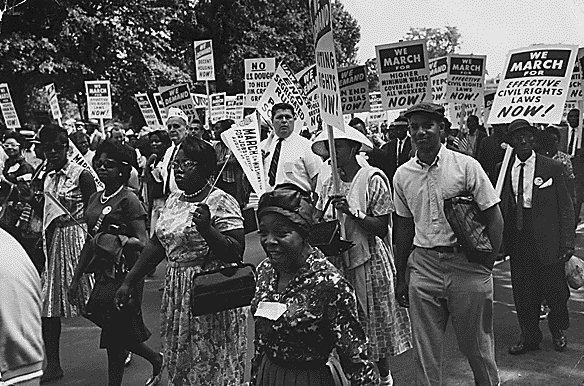
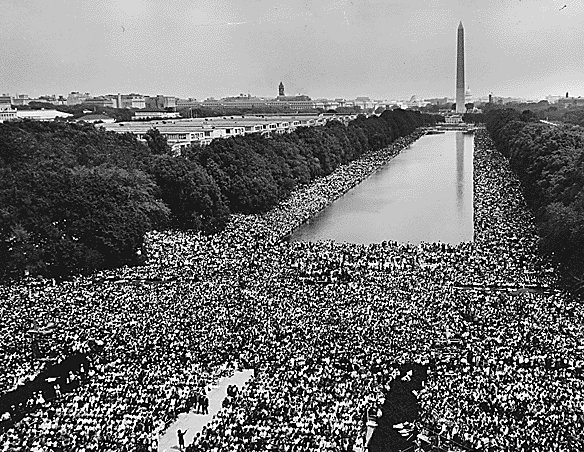
The Civil Rights movement of the 50’s and 60’s yielded both positive and negative results for the Juneteenth celebrations. While it pulled many of the African American youth away and into the struggle for racial equality, many linked these struggles to the historical struggles of their ancestors. This was evidenced by student demonstrators involved in the Atlanta civil rights campaign in the early 1960’s, whom wore Juneteenth freedom buttons. Again in 1968, Juneteenth received another strong resurgence through Poor Peoples March to Washington D.C.. Rev. Ralph Abernathy’s call for people of all races, creeds, economic levels and professions to come to Washington to show support for the poor. Many of these attendees returned home and initiated Juneteenth celebrations in areas previously absent of such activity. In fact, two of the largest Juneteenth celebrations founded after this March are now held in Milwaukee and Minneapolis.
Texas Blazes the Trail
On January 1, 1980, Juneteenth became an official state holiday through the efforts of Al Edwards, an African American state legislator. The successful passage of this bill marked Juneteenth as the first emancipation celebration granted official state recognition. Edwards has since actively sought to spread the observance of Juneteenth all across America.
Juneteenth In Modern Times
Today, Juneteenth is enjoying a phenomenal growth rate within communities and organizations throughout the country. Institutions such as the Smithsonian, the Henry Ford Museum and others have begun sponsoring Juneteenth-centered activities. In recent years, a number of local and national Juneteenth organizations have arisen to take their place along side older organizations – all with the mission to promote and cultivate knowledge and appreciation of African American history and culture.
Juneteenth today, celebrates African American freedom and achievement, while encouraging continuous self-development and respect for all cultures. As it takes on a more national, symbolic and even global perspective, the events of 1865 in Texas are not forgotten, for all of the roots tie back to this fertile soil from which a national day of pride is growing.
The future of Juneteenth looks bright as the number of cities and states creating Juneteenth committees continues to increase. Respect and appreciation for all of our differences grow out of exposure and working together. Getting involved and supporting Juneteenth celebrations creates new bonds of friendship and understanding among us. This indeed, brightens our future – and that is the Spirit of Juneteenth.
There are many ways to get involved: visit an older neighbor who lives alone, volunteer for a program that benefits seniors, support abuse prevention efforts, and more!
Seal of the United States Equal Employment Opportunity Commission. (Photo credit: Wikipedia)
EDITOR’S NOTE: The following is the text of the Equal Pay Act of 1963 (Pub. L. 88-38) (EPA), as amended, as it appears in volume 29 of the United States Code, at section 206(d). The EPA, which is part of the Fair Labor Standards Act of 1938, as amended (FLSA), and which is administered and enforced by the EEOC, prohibits sex-based wage discrimination between men and women in the same establishment who perform jobs that require substantially equal skill, effort and responsibility under similar working conditions. Cross references to the EPA as enacted appear in italics following the section heading. Additional provisions of the Equal Pay Act of 1963, as amended, are included as they appear in volume 29 of the United States Code.
(1) No employer having employees subject to any provisions of this section shall discriminate, within any establishment in which such employees are employed, between employees on the basis of sex by paying wages to employees in such establishment at a rate less than the rate at which he pays wages to employees of the opposite sex in such establishment for equal work on jobs the performance of which requires equal skill, effort, and responsibility, and which are performed under similar working conditions, except where such payment is made pursuant to (i) a seniority system; (ii) a merit system; (iii) a system which measures earnings by quantity or quality of production; or (iv) a differential based on any other factor other than sex: Provided, That an employer who is paying a wage rate differential in violation of this subsection shall not, in order to comply with the provisions of this subsection, reduce the wage rate of any employee.
(2) No labor organization, or its agents, representing employees of an employer having employees subject to any provisions of this section shall cause or attempt to cause such an employer to discriminate against an employee in violation of paragraph (1) of this subsection.
(3) For purposes of administration and enforcement, any amounts owing to any employee which have been withheld in violation of this subsection shall be deemed to be unpaid minimum wages or unpaid overtime compensation under this chapter.
(4) As used in this subsection, the term “labor organization” means any organization of any kind, or any agency or employee representation committee or plan, in which employees participate and which exists for the purpose, in whole or in part, of dealing with employers concerning grievances, labor disputes, wages, rates of pay, hours of employment, or conditions of work.
(a) The Congress hereby finds that the existence in industries engaged in commerce or in the production of goods for commerce of wage differentials based on sex-
(1) depresses wages and living standards for employees necessary for their health and efficiency;
(2) prevents the maximum utilization of the available labor
resources;
(3) tends to cause labor disputes, thereby burdening, affecting, and obstructing commerce;
(4) burdens commerce and the free flow of goods in commerce; and
(5) constitutes an unfair method of competition.
(b) It is hereby declared to be the policy of this Act, through exercise by Congress of its power to regulate commerce among the several States and with foreign nations, to correct the conditions above referred to in such industries.
[Section 3 of the Equal Pay Act of 1963 amends section 6 of the Fair Labor Standards Act by adding a new subsection (d). The amendment is incorporated in the revised text of the Fair Labor Standards Act.]
EFFECTIVE DATE
Not Reprinted in U.S. Code [Section 4]
The amendments made by this Act shall take effect upon the expiration of one year from the date of its enactment: Provided, That in the case of employees covered by a bona fide collective bargaining agreement in effect at least thirty days prior to the date of enactment of this Act entered into by a labor organization (as defined in section 6(d)(4) of the Fair Labor Standards Act of 1938, as amended) [subsection (d)(4) of this section], the amendments made by this Act shall take effect upon the termination of such collective bargaining agreement or upon the expiration of two years from the date of enactment of this Act, whichever shall first occur.
Approved June 10, 1963, 12 m.
[In the following excerpts from the Fair Labor Standards Act of 1938, as amended, authority given to the Secretary of Labor is exercised by the Equal Employment Opportunity Commission for purposes of enforcing the Equal Pay Act of 1963.]
ATTENDANCE OF WITNESSES
SEC. 209 [Section 9]
For the purpose of any hearing or investigation provided for in this chapter, the provisions of sections 49 and 50 of title 15 [Federal Trade Commission Act of September 16, 1914, as amended (U.S.C., 1934 edition)] (relating to the attendance of witnesses and the production of books, papers, and documents), are made applicable to the jurisdiction, powers, and duties of the Administrator, the Secretary of Labor, and the industry committees.
COLLECTION OF DATA
SEC. 211 [Section 11]
(a) Investigations and inspections
The Administrator or his designated representatives may investigate and gather data regarding the wages, hours, and other conditions and practices of employment in any industry subject to this chapter, and may enter and inspect such places and such records (and make such transcriptions thereof), question such employees, and investigate such facts, conditions, practices, or matters as he may deem necessary or appropriate to determine whether any person has violated any provision of this chapter, or which may aid in the enforcement of the provisions of this chapter. Except as provided in section 212 [section 12] of this title and in subsection (b) of this section, the Administrator shall utilize the bureaus and divisions of the Department of Labor for all the investigations and inspections necessary under this section. Except as provided in section 212 [section 12] of this title, the Administrator shall bring all actions under section 217 [section 17] of this title to restrain violations of this chapter.
(b) State and local agencies and employees
With the consent and cooperation of State agencies charged with the administration of State labor laws, the Administrator and the Secretary of Labor may, for the purpose of carrying out their respective functions and duties under this chapter, utilize the services of State and local agencies and their employees and, notwithstanding any other provision of law, may reimburse such State and local agencies and their employees for services rendered for such purposes.
(c) Records
Every employer subject to any provision of this chapter or of any order issued under this chapter shall make, keep, and preserve such records of the persons employed by him and of the wages, hours, and other conditions and practices of employment maintained by him, and shall preserve such records for such periods of time, and shall make such reports therefrom to the Administrator as he shall prescribe by regulation or order as necessary or appropriate for the enforcement of the provisions of this chapter or the regulations or orders thereunder. The employer of an employee who performs substitute work described in section 207(p)(3) [section 7(p)(3)] of this title may not be required under this subsection to keep a record of the hours of the substitute work.
(d) Homework regulations
The Administrator is authorized to make such regulations and orders regulating, restricting, or prohibiting industrial homework as are necessary or appropriate to prevent the circumvention or evasion of and to safeguard the minimum wage rate prescribed in this chapter, and all existing regulations or orders of the Administrator relating to industrial homework are continued in full force and effect.
EXEMPTIONS
SEC. 213 [Section 13]
(a) Minimum wage and maximum hour requirements
The provisions of sections 206 [section 6] (except subsection (d) in the case of paragraph (1) of this subsection) and section 207 [section 7] of this title shall not apply with respect to-
(1) any employee employed in a bona fide executive, administrative, or professional capacity (including any employee employed in the capacity of academic administrative personnel or teacher in elementary or secondary schools), or in the capacity of outside salesman (as such terms are defined and delimited from time to time by regulations of the Secretary, subject to the provisions of subchapter II of chapter 5 of Title 5 [theAdministrative Procedure Act], except that an employee of a retail or service establishment shall not be excluded from the definition of employee employed in a bona fide executive or administrative capacity because of the number of hours in his workweek which he devotes to activities not directly or closely related to the performance of executive or administrative activities, if less than 40 per centum of his hours worked in the workweek are devoted to such activities); or
(2) [Repealed]
[Note: Section 13(a)(2) (relating to employees employed by a retail or service establishment) was repealed by Pub. L. 101-157, section 3(c)(1), November 17, 1989.]
(3) any employee employed by an establishment which is an amusement or recreational establishment, organized camp, or religious or non-profit educational conference center, if (A) it does not operate for more than seven months in any calendar year, or (B) during the preceding calendar year, its average receipts for any six months of such year were not more than 33 1/3 per centum of its average receipts for the other six months of such year, except that the exemption from sections 206 and 207 [sections 6 and 7] of this title provided by this paragraph does not apply with respect to any employee of a private entity engaged in providing services or facilities (other than, in the case of the exemption from section 206 [section 6] of this title, a private entity engaged in providing services and facilities directly related to skiing) in a national park or a national forest, or on land in the National Wildlife Refuge System, under a contract with the Secretary of the Interior or the Secretary of Agriculture; or
(4) [Repealed]
[Note: Section 13(a)(4) (relating to employees employed by anestablishment which qualified as an exempt retail establishment) was repealed by Pub. L. 101-157, Section 3(c)(1), November 17, 1989.]
(5) any employee employed in the catching, taking, propagating, harvesting, cultivating, or farming of any kind of fish, shellfish, crustacea, sponges, seaweeds, or other aquatic forms of animal and vegetable life, or in the first processing, canning or packing such marine products at sea as an incident to, or in conjunction with, such fishing operations, including the going to and returning from work and loading and unloading when performed by any such employee; or
(6) any employee employed in agriculture (A) if such employee is employed by an employer who did not, during any calendar quarter during the preceding calendar year, use more than five hundred man-days of agricultural labor, (B) if such employee is the parent, spouse, child, or other member of his employer’s immediate family, (C) if such employee (i) is employed as a hand harvest laborer and is paid on a piece rate basis in an operation which has been, and is customarily and generally recognized as having been, paid on a piece rate basis in the region of employment, (ii) commutes daily from his permanent residence to the farm on which he is so employed, and (iii) has been employed in agriculture less than thirteen weeks during the preceding calendar year, (D) if such employee (other than an employee described in clause (C) of this subsection) (i) is sixteen years of age or under and is employed as a hand harvest laborer, is paid on a piece rate basis in an operation which has been, and is customarily and generally recognized as having been, paid on a piece rate basis in the region of employment, (ii) is employed on the same farm as his parent or person standing in the place of his parent, and (iii) is paid at the same piece rate as employees over age sixteen are paid on the same farm, or (E) if such employee is principally engaged in the range production of livestock; or
(7) any employee to the extent that such employee is exempted by regulations, order, or certificate of the Secretary issued under section 214 [section 14] of this title; or
(8) any employee employed in connection with the publication of any weekly, semiweekly, or daily newspaper with a circulation of less than four thousand the major part of which circulation is within the county where published or counties contiguous thereto; or
(9) [Repealed]
[Note: Section 13(a)(9) (relating to motion picture theater employees) was repealed by section 23 of the Fair Labor Standards Amendments of 1974. The 1974 amendments created an exemption for such employees from the overtime provisions only in section 13(b)27.]
(10) any switchboard operator employed by an independently owned public telephone company which has not more than seven hundred and fifty stations; or
(11) [Repealed]
[Note: Section 13(a)(11) (relating to telegraph agency employees) was repealed by section 10 of the Fair Labor Standards Amendments of 1974. The 1974 amendments created an exemption from the overtime provisions only in section 13(b)(23), which was repealed effective May 1, 1976.]
(12) any employee employed as a seaman on a vessel other than an American vessel; or
(13) [Repealed]
[Note: Section 13(a)(13) (relating to small logging crews) was repealed by section 23 of the Fair Labor Standards Amendments of 1974. The 1974 amendments created an exemption for such employees from the overtime provisions only in section 13(b)(28).]
(14) [Repealed]
[Note: Section 13(a)(14) (relating to employees employed in growing and harvesting of shade grown tobacco) was repealed by section 9 of the Fair Labor Standards Amendments of 1974. The 1974 amendments created an exemption for certain tobacco producing employees from the overtime provisions only in section 13(b)(22). The section 13(b)(22) exemption was repealed, effective January 1, 1978, by section 5 of the Fair Labor Standards Amendments of 1977.]
(15) any employee employed on a casual basis in domestic service employment to provide babysitting services or any employee employed in domestic service employment to provide companionship services for individuals who (because of age or infirmity) are unable to care for themselves (as such terms are defined and delimited by regulations of the Secretary); or
(16) a criminal investigator who is paid availability pay under section 5545a of Title 5 [Law Enforcement Availability Pay Act of 1994]; or
(17) any employee who is a computer systems analyst, computer programmer, software engineer, or other similarly skilled worker, whose primary duty is—
(A) the application of systems analysis techniques and procedures, including consulting with users, to determine hardware, software, or system functional specifications;
(B) the design, development, documentation, analysis, creation, testing, or modification of computer systems or programs, including prototypes, based on and related to user or system design specifications;
(C) the design, documentation, testing, creation, or modification of computer programs related to machine operating systems; or
(D) a combination of duties described in subparagraphs (A), (B), and (C) the performance of which requires the same level of skills, and
who, in the case of an employee who is compensated on an hourly basis, is compensated at a rate of not less than $27.63 an hour.
***
(g) Certain employment in retail or service establishments, agriculture
The exemption from section 206 [section 6] of this title provided by paragraph (6) of subsection (a) of this section shall not apply with respect to any employee employed by an establishment (1) which controls, is controlled by, or is under common control with, another establishment the activities of which are not related for a common business purpose to, but materially support the activities of the establishment employing such employee; and (2) whose annual gross volume of sales made or business done, when combined with the annual gross volume of sales made or business done by each establishment which controls, is controlled by, or is under common control with, the establishment employing such employee, exceeds $10,000,000 (exclusive of excise taxes at the retail level which are separately stated).
PROHIBITED ACTS
SEC. 215 [Section 15]
(a) After the expiration of one hundred and twenty days from June 25, 1938 [the date of enactment of this Act], it shall be unlawful for any person-
(1) to transport, offer for transportation, ship, deliver, or sell in commerce, or to ship, deliver, or sell with knowledge that shipment or delivery or sale thereof in commerce is intended, any goods in the production of which any employee was employed in violation of section 206 [section 6] or section 207 [section 7] of this title, or in violation of any regulation or order of the Secretary issued under section 214 [section 14] of this title, except that no provision of this chapter shall impose any liability upon any common carrier for the transportation in commerce in the regular course of its business of any goods not produced by such common carrier, and no provision of this chapter shall excuse any common carrier from its obligation to accept any goods for transportation; and except that any such transportation, offer, shipment, delivery, or sale of such goods by a purchaser who acquired them in good faith in reliance on written assurance from the producer that the goods were produced in compliance with the requirements of this chapter, and who acquired such goods for value without notice of any such violation, shall not be deemed unlawful;
(2) to violate any of the provisions of section 206 [section6] or section 207 [section 7] of this title, or any of the provisions of any regulation or order of the Secretary issued under section 214 [section 14] of this title;
(3) to discharge or in any other manner discriminate against any employee because such employee has filed any complaint or instituted or caused to be instituted any proceeding under or related to this chapter, or has testified or is about to testify in any such proceeding, or has served or is about to serve on an industry committee;
(4) to violate any of the provisions of section 212 [section12] of this title;
(5) to violate any of the provisions of section 211(c) [section 11(c)] of this title, or any regulation or order made or continued in effect under the provisions of section 211(d) [section 11(d)] of this title, or to make any statement, report, or record filed or kept pursuant to the provisions of such section or of any regulation or order thereunder, knowing such statement, report, or record to be false in a material respect.
(b) For the purposes of subsection (a)(1) of this section proof that any employee was employed in any place of employment where goods shipped or sold in commerce were produced, within ninety days prior to the removal of the goods from such place of employment, shall be prima facie evidence that such employee was engaged in the production of such goods.
PENALTIES
SEC. 216 [Section 16]
(a) Fines and imprisonment
Any person who willfully violates any of the provisions of section 215 [section 15] of this title shall upon conviction thereof be subject to a fine of not more than $10,000, or to imprisonment for not more than six months, or both. No person shall be imprisoned under this subsection except for an offense committed after the conviction of such person for a prior offense under this subsection.
(b) Damages; right of action; attorney’s fees and costs; termination of right of action
Any employer who violates the provisions of section 206 [section 6] or section 207 [section 7] of this title shall be liable to the employee or employees affected in the amount of their unpaid minimum wages, or their unpaid overtime compensation, as the case may be, and in an additional equal amount as liquidated damages. Any employer who violates the provisions of section 215(a)(3) [section 15(a)(3)] of this title shall be liable for such legal or equitable relief as may be appropriate to effectuate the purposes of section 215(a)(3) [section 15(a)(3)] of this title, including without limitation employment, reinstatement,promotion, and the payment of wages lost and an additional equal amount as liquidated damages. An action to recover the liability prescribed in either of the preceding sentences may be maintained against any employer (including a public agency) in any Federal or State court of competent jurisdiction by any one or more employees for and in behalf of himself or themselves and other employees similarly situated. No employee shall be a party plaintiff to any such action unless he gives his consent in writing to become such a party and such consent is filed in the court in which such action is brought. The court in such action shall, in addition to any judgment awarded to the plaintiff or plaintiffs, allow a reasonable attorney’s fee to be paid by the defendant, and costs of the action. The right provided by this subsection to bring an action by or on behalf of any employee, and the right of any employee to become a party plaintiff to any such action, shall terminate upon the filing of a complaint by the Secretary of Labor in an action under section 217 [section 17] of this title in which (1) restraint is sought of any further delay in the payment of unpaid minimum wages, or the amount of unpaid overtime compensation, as the case may be, owing to such employee under section 206 [section 6] or section 207 [section 7] of this title by an employer liable therefor[sic] under the provisions of this subsection or (2) legal or equitable relief is sought as a result of alleged violations of section 215(a)(3) [section 15(a)(3)] of this title.
(c) Payment of wages and compensation; waiver of claims; actions by the Secretary; limitation of actions
The Secretary is authorized to supervise the payment of the unpaid minimum wages or the unpaid overtime compensation owing to any employee or employees under section 206 [section 6] or section 207 [section7] of this title, and the agreement of any employee to accept such payment shall upon payment in full constitute a waiver by such employee of any right he may have under subsection (b) of this section to such unpaid minimum wages or unpaid overtime compensation and an additional equal amount as liquidated damages. The Secretary may bring an action in any court of competent jurisdiction to recover the amount of the unpaid minimum wages or overtime compensation and an equal amount as liquidated damages. The right provided by subsection (b) of this section to bring an action by or on behalf of any employee to recover the liability specified in the first sentence of such subsection and of any employee to become a party plaintiff to any such action shall terminate upon the filing of a complaint by the Secretary in an action under this subsection in which a recovery is sought of unpaid minimum wages or unpaid overtime compensation under sections 206 and 207 [sections 6 and 7] of this title or liquidated or other damages provided by this subsection owing to such employee by an employer liable under the provisions of subsection (b) of this section, unless such action is dismissed without prejudice on motion of the Secretary. Any sums thus recovered by the Secretary of Labor on behalf of an employee pursuant to this subsection shall be held in a special deposit account and shall be paid, on order of the Secretary of Labor, directly to the employee or employees affected. Any such sums not paid to an employee because of inability to do so within a period of three years shall be covered into the Treasury of the United States as miscellaneous receipts. In determining when an action is commenced by the Secretary of Labor under this subsection for the purposes of the statutes of limitations provided in section 255(a) of this title [section 6(a)of the Portal-to-Portal Act of 1947], it shall be considered to be commenced in the case of any individual claimant on the date when the complaint is filed if he is specifically named as a party plaintiff in the complaint, or if his name did not so appear, on the subsequent date on which his name is added as a party plaintiff in such action.
(d) Savings provisions
In any action or proceeding commenced prior to, on, or after August 8, 1956 [the date of enactment of this subsection], no employer shall be subject to any liability or punishment under this chapter or the Portal-to-Portal Act of 1947 [29 U.S.C. 251 et seq.] on account of his failure to comply with any provision or provisions of this chapter or such Act (1) with respect to work heretofore or hereafter performed in a workplace to which the exemption in section 213(f) [section 13(f)] of this title is applicable, (2) with respect to work performed in Guam, the Canal Zone or Wake Island before the effective date of this amendment of subsection (d), or (3) with respect to work performed in a possession named in section 206(a)(3) [section 6(a)(3)] of this title at any time prior to the establishment by the Secretary, as provided therein, of a minimum wage rate applicable to such work.
(e)(1)(A) Any person who violates the provisions of sections 212 or 213(c) [sections 12 or 13(c)] of this title, relating to child labor, or any regulation issued pursuant to such sections, shall be subject to a civil penalty of not to exceed—
(i) $11,000 for each employee who was the subject of such a violation; or
(ii) $50,000 with regard to each such violation that causes the death or serious injury of any employee under the age of 18 years, which penalty may be doubled where the violation is a repeated or willful violation.
(B) For purposes of subparagraph (A), the term “serious injury” means—
(i) permanent loss or substantial impairment of one of the senses (sight, hearing, taste, smell, tactile sensation);
(ii) permanent loss or substantial impairment of the function of a bodily member, organ, or mental faculty, including the loss of all or part of an arm, leg, foot, hand or other body part; or
(iii) permanent paralysis or substantial impairment that causes loss of movement or mobility of an arm, leg, foot, hand or other body part.
(2) Any person who repeatedly or willfully violates section 206 or 207 [section 6 or 7], relating to wages, shall be subject to a civil penalty not to exceed $1,100 for each such violation.
(3) In determining the amount of any penalty under this subsection, the appropriateness of such penalty to the size of the business of the person charged and the gravity of the violation shall be considered. The amount of any penalty under this subsection, when finally determined, may be-
(A) deducted from any sums owing by the United States to the person charged;
(B) recovered in a civil action brought by the Secretary in any court of competent jurisdiction, in which litigation the Secretary shall be represented by the Solicitor of Labor; or
(C) ordered by the court, in an action brought for a violation of section 215(a)(4) [section 15(a)(4)] of this title or a repeated or willful violation of section 215(a)(2) [section 15(a)(2)] of this title, to be paid to the Secretary.
(4) Any administrative determination by the Secretary of the amount of any penalty under this subsection shall be final, unless within 15 days after receipt of notice thereof by certified mail the person charged with the violation takes exception to the determination that the violations for which the penalty is imposed occurred, in which event final determination of the penalty shall be made in an administrative proceeding after opportunity for hearing in accordance with section 554 of Title 5 [Administrative Procedure Act], and regulations to be promulgated by the Secretary.
(5) Except for civil penalties collected for violations of section 212 [section 12] of this title, sums collected as penalties pursuant to this section shall be applied toward reimbursement of the costs of determining the violations and assessing and collecting such penalties, in accordance with the provision of section 9a of Title 29 [An Act to authorize the Department of Labor to make special statistical studies upon payment of the cost thereof and for other purposes]. Civil penalties collected for violations of section 212 [section 12] of this title shall be deposited in the general fund of the Treasury.
INJUNCTION PROCEEDINGS
SEC. 217 [Section 17]
The districts courts, together with the United States District Court for the District of the Canal Zone, the District Court of the Virgin Islands, and the District Court of Guam shall have jurisdiction, for cause shown, to restrain violations of section 215 [section 15] of this title, including in the case of violations of section 215(a)(2) of this title the restraint of any withholding of payment of minimum wages or overtime compensation found by the court to be due to employees under this chapter (except sums which employees are barred from recovering, at the time of the commencement of the action to restrain the violations, by virtue of the provisions of section 255 of this title [section 6 of thePortal-to-Portal Act of 1947].
RELATION TO OTHER LAWS
SEC. 218 [Section 18]
(a) No provision of this chapter or of any order thereunder shall
excuse noncompliance with any Federal or State law or municipal ordinance establishing a minimum wage higher than the minimum wage established under this chapter or a maximum work week lower than the maximum workweek established under this chapter, and no provision of this chapter relating to the employment of child labor shall justify noncompliance with any Federal or State law or municipal ordinance establishing a higher standard than the standard established under this chapter. No provision of this chapter shall justify any employer in reducing a wage paid by him which is in excess of the applicable minimum wage under this chapter, or justify any employer in increasing hours of employment maintained by him which are shorter than the maximum hours applicable under this chapter.
SEPARABILITY OF PROVISIONS
SEC. 219 [Section 19]
If any provision of this chapter or the application of such provision to any person or circumstance is held invalid, the remainder of this chapter and the application of such provision to other persons or circumstances shall not be affected thereby.
Approved June 25, 1938.
[In the following excerpts from the Portal-to-Portal Act of 1947, the authority given to the Secretary of Labor is exercised by the Equal Employment Opportunity Commission for purposes of enforcing the Equal Pay Act of 1963.]
PART IV – MISCELLANEOUS
STATUTE OF LIMITATIONS
SEC. 255 [Section 6]
Any action commenced on or after May 14, 1947 [the date of theenactment of this Act], to enforce any cause of action for unpaid minimum wages, unpaid overtime compensation, or liquidated damages, under the Fair Labor Standards Act of 1938, as amended, [29 U.S.C. 201 et seq.], the Walsh-Healey Act [41 U.S.C. 35 et seq.], or the Bacon-Davis Act [40 U.S.C. 276a et seq.]-
(a) if the cause of action accrues on or after May 14, 1947 [the date of the enactment of this Act]-may be commenced within two years after the cause of action accrued, and every such action shall be forever barred unless commenced within two years after the cause of action accrued,except that a cause of action arising out of a willful violation may be commenced within three years after the cause of action accrued;
DETERMINATION OF COMMENCEMENT OF FUTURE ACTIONS
SEC. 256 [Section 7]
In determining when an action is commenced for the purposes of section 255 [section 6] of this title, an action commenced on or after May 14, 1947 [the date of the enactment of this Act] under the Fair Labor Standards Act of 1938, as amended, [29 U.S.C. 201 et seq.], the Walsh-Healey Act [41 U.S.C. 35 et seq.], or the Bacon-Davis Act [40 U.S.C. 276a et seq.], shall be considered to be commenced on the date when the complaint is filed; except that in the case of a collective or class action instituted under the Fair Labor Standards Act of 1938, as amended, or the Bacon-Davis Act, it shall be considered to be commenced in the case of any individual claimant—
(a) on the date when the complaint is filed, if he is specifically named as a party plaintiff in the complaint and his written consent to become a party plaintiff is filed on such date in the court in which the action is brought; or
(b) if such written consent was not so filed or if his name did not so appear—on the subsequent date on which such written consent is filed in the court in which the action was commenced.
RELIANCE IN FUTURE ON ADMINISTRATIVE RULINGS, ETC.
SEC. 259 [Section 10]
(a) In any action or proceeding based on any act or omission on or after May 14, 1947 [the date of the enactment of this Act], no employer shall be subject to any liability or punishment for or on account of the failure of the employer to pay minimum wages or overtime compensation under the Fair Labor Standards Act of 1938, as amended, [29 U.S.C. 201 et seq.], the Walsh-Healey Act [41 U.S.C. 35 et seq.], or the Bacon-Davis Act [40 U.S.C. 276a et seq.], if he pleads and proves that the act or omission complained of was in good faith in conformity with and in reliance on any written administrative regulation, order, ruling, approval, or interpretation, of the agency of the United States specified in subsection (b) of this section, or any administrative practice or enforcement policy of such agency with respect to the class of employers to which he belonged. Such a defense, if established, shall be a bar to the action or proceeding, notwithstanding that after such act or omission, such administrative regulation, order, ruling, approval, interpretation, practice, or enforcement policy is modified or rescinded or is determined by judicial authority to be invalid or of no legal effect.
(b) The agency referred to in subsection (a) shall be-
(1) in the case of the Fair Labor Standards Act of 1938, as amended [29 U.S.C. 201 et seq.]- the Administrator of the Wage and Hour Division of the Department of Labor;
LIQUIDATED DAMAGES
SEC. 260 [Section 11]
In any action commenced prior to or on or after May 14, 1947 [the date of the enactment of this Act] to recover unpaid minimum wages, unpaid overtime compensation, or liquidated damages, under the Fair Labor Standards Act of 1938, as amended [29 U.S.C. 201 et seq.], if the employer shows to the satisfaction of the court that the act or omission giving rise to such action was in good faith and that he had reasonable grounds for believing that his act or omission was not a violation of the Fair Labor Standards Act of 1938, as amended [29 U.S.C. 201 et seq.],the court may, in its sound discretion, award no liquidated damages or award any amount thereof not to exceed the amount specified in section 216 [section 16] of this title.
DEFINITIONS
SEC. 262 [Section 13]
(a) When the terms “employer”, “employee”, and “wage” are used in this chapter in relation to the Fair Labor Standards Act of 1938, as amended [29 U.S.C. 201 et seq.], they shall have the same meaning as when used in such Act of 1938.
SEPARABILITY
Not Reprinted in U.S. Code [Section 14]
If any provision of this Act or the application of such provision to any person or circumstance is held invalid, the remainder of this Act and the application of such provision to other persons or circumstances shall not be affected thereby.
SHORT TITLE
Not Reprinted in U.S. Code [Section 15]
This Act may be cited as the ‘Portal-to-Portal Act of 1947.’
You must be logged in to post a comment.