Slavery at the Super Bowl


 Tell the Super Bowl Host Committee: Don’t be a bystander to child trafficking

Every year, children as young as 11 are trafficked involuntarily to Super Bowl cities. There, football fans – usually men, often inebriated – will pay traffickers to have sex with them.

The Texas Attorney General estimates these kids have a life expectancy of just seven years from the time they’re first trafficked.

This year, the Super Bowl Host Committee is charged “to engage in responsible planning . . . to ensure the readiness of North Texas to host the first Super Bowl in the Cowboys’ new stadium.”

Local anti-trafficking groups have repeatedly offered to help the Committee use its influence to educate fans and the public about the dangers of child trafficking — which could help to prevent thousands of rapes and abuses at America‘s biggest sporting event.

But the Host Committee has refused to take meaningful action. And thousands of children will pay the price.

Tell the 2011 Super Bowl Host Committee to take a stand against child trafficking.

In Dallas, a terrific local organization called Traffick911 has created the “I’m Not Buying It” campaign. They’ve offered the Host Committee free PSAs, posters, banners and informational cards to educate the public and protect children from being abused and raped.

But the Host Committee refuses to display the information.

The Committee is working hard right now to generate good publicity for North Texas and the game, so public pressure at this moment will be especially powerful.

Tell the Super Bowl Host Committee that they have a responsibility to protect the children who’ll be trafficked to Texas for the Super Bowl:

http://change.org/petitions/view/ask_the_super_bowl_host_committee_to_stand_up_and_protect_children

After you sign, please forward this email to friends and family to let them know about this crisis, and how they can help.

Thanks for taking action,

– Patrick and the Change.org team

P.S. Once you add your name, click here to share this campaign on Facebook.

Official Google blog …


A year of the new DoubleClick Ad Exchange: improving large publishers’ returns

With 2011 now underway, we thought it was the perfect time to revisit a big topic from 2010, the DoubleClick Ad Exchange, and take a fresh look at its contribution to the display advertising ecosystem. And we have some new findings to share: a recent analysis that we’ve undertaken shows just how significantly the Exchange is improving advertising revenues for major web publishers.

We unveiled the new Ad Exchange in late 2009 in North America and Europe, as an open, real-time auction marketplace for display ad space—i.e., the image-based, interactive or video ad formats you see on most sites. The Exchange brings together ad networks, agency trading desks and demand side platforms on one side, and major online publishers on the other, to buy and sell display ad space in real time, allowing advertisers to reach the right ad to the right consumer at the right time and enabling publishers to connect with the advertisers most interested in what they’re offering. Our goal was to grow the overall display advertising pie, so that publishers could benefit from higher ad revenues that fund their investments in the online content and services that we all read and use every day.

With a full year under our belt, we’re happy to see that the Ad Exchange has proven itself so useful for so many participants. As of today, there are hundreds of premium publishers making ad space available, in addition to the many niche publishers that participate in Ad Exchange through the AdSense program. The number of transactions that occur every day has tripled. And the Ad Exchange is now becoming available in new countries.

To see how what kind of effect the growth of the Exchange was having on its participants, we undertook an analysis that quantified the Exchange’s impact on participating publishers’ bottom lines. Today, we’re publishing a white paper that shows that when publishers make ad space available in the Ad Exchange, and the Exchange wins the auction, publishers generate, on average, 188% more revenue compared with indirect sales to ad networks and other third-party buyers. Over millions of impressions, this can make a huge difference to publishers’ advertising revenues, which is great for the web as a whole.

This 188% increase is a result of two key trends that we’re seeing:

Demand for publishers’ inventory is increasing as more AdWords and Google Display Network advertisers start running display campaigns, get great results and invest further. For example, display advertising spend among Google’s largest 1,000 advertisers increased 75% in the past year. Agency trading desks and new third-party technology providers are also running more display ads through the Ad Exchange. And real-time bidding—which enables advertisers to tailor their bids and ads in real time to buy the ad space they value the most—continues to be a major draw, now accounting for 56% of buyers’ spend.

We’re seeing publishers increasingly leverage the Ad Exchange’s “dynamic allocation” to sell their inventory. Via dynamic allocation, the Exchange compares—in real time—the value of the highest-paying ad in the Ad Exchange with any ads from other sources (such as ad network deals) and chooses the highest paying one. The Ad Exchange only serves ads when it can offer a higher price for ad space. Of course, publishers are in complete control of which networks they allow to bid, what ads can appear on their sites and which ad space they make available. 

Our goal is to make the Ad Exchange a complete solution for major publishers to maximize their ad revenue across thousands of buyers, networks and agencies. We also want to put publishers even more firmly in control of what types of ads appear on their site, enabling them to build and protect their brand, and find new advertising opportunities.

2010 was a huge growth year for the Ad Exchange, and the increased volume has made it a more vibrant ecosystem for buyers and sellers. We’ll continue our work to ensure that the Ad Exchange delivers ever-improving returns and controls for publishers, so that more participants can benefit from the huge growth taking place in display advertising in 2011 and beyond.

Call on President Obama to Protect and Strengthen Social Security


Women Can’t Afford Cuts to Social Security

Call on President Obama to protect and strengthen Social Security.

Next week, President Obama will make his annual State of the Union address. It’s important that he use the speech to send a clear message to those who want to put Social Security on the chopping block: Social Security should be strengthened — not cut!

President Obama has opposed cutting and privatizing Social Security before. But we need him to speak out now in support of protecting and strengthening it.

Tell President Obama: Women Are Counting on You to Fight for Social Security!

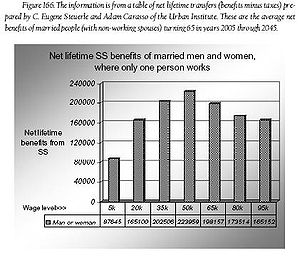
If Social Security benefits are cut, women will bear much of the burden. Women live longer, rely more on Social Security, and already have lower benefits. Average benefits for women are just $12,000 per year. But Social Security provides more than half the income of the majority of women 65 and older. For one in four older women, Social Security is virtually their only source of income.

Nearly all Americans depend on Social Security at some point in their lives. Most are retirees. But millions are disabled workers, widows and widowers, and children who have lost the support of a parent through death or disability. We need to keep the promise of Social Security alive for them — and future generations.

Social Security has not contributed a penny to the federal deficit, and it’s not in crisis. In fact, Social Security has a $2.6 trillion surplus — it can pay 100 percent of promised benefits for 25 years and over 75 percent of benefits after that. With modest adjustments, Social Security can be strengthened and improved. Yet some Members of Congress are supporting proposals that would cut Social Security benefits deeply and are trying to push them through Congress.

Tell President Obama: Women Can’t Afford Cuts to Social Security.

We need your help to protect the promise of Social Security. And please spread the word by forwarding this message to friends, family and colleagues.

Sincerely,

Joan Entmacher

Vice President, Family Economic Security

National Women’s Law Center

Bankrate.com


Here are stories published today.

**How credit card issuers collect | 2011-01-17

Don’t be scared by credit card debt collectors. Here’s what they can, and can’t, do to you.

**Sobering rate forecast on equity loans | 2011-01-17

Strategize now to avoid getting stung by rising rates on loans based on home equity.

**Using secured credit cards to build credit | 2011-01-17

Using secured credit cards to build credit is one way to fix your credit history.

AP-GfK Poll: Raw feelings ease over health law …


By RICARDO ALONSO-ZALDIVAR and JENNIFER AGIESTA, AP

WASHINGTON — As lawmakers shaken by the shooting of a colleague return to the health care debate, an Associated PressGfK poll finds raw feelings over President Barack Obama’s overhaul have subsided.

Ahead of a vote on repeal in the GOP-led House this week, strong opposition to the law stands at 30 percent, close to the lowest level registered in AP-GfK surveys dating to September 2009.

The nation is divided over the law, but the strength and intensity of the opposition appear diminished. The law expands coverage to more than 30 million uninsured, and would require, for the first time, that most people in the United States carry health insurance.

The poll finds that 40 percent of those surveyed said they support the law, while 41 percent oppose it. Just after the November congressional elections, opposition stood at 47 percent and support was 38 percent.

As for repeal, only about one in four say they want to do away with the law completely. Among Republicans support for repeal has dropped sharply, from 61 percent after the elections to 49 percent now.

Also, 43 percent say they want the law changed so it does more to re-engineer the health care system. Fewer than one in five say it should be left as it is.

“Overall, it didn’t go as far as I would have liked,” said Joshua Smith, 46, a sales consultant to manufacturers who lives in Herndon, Va. “In a perfect world, I’d like to see them change it to make it more encompassing, but judging by how hard it was to get it passed, they had to take whatever they could get.”

His extended family has benefited from the law. A sister-in-law in her early 20s, previously uninsured, was able to get on her father’s policy. “She’s starting out as a real estate agent, and there’s no health care for that,” said Smith. The law allows young adults to stay on a parent’s plan until they turn 26.

Congress stepped back last week to honor victims of the rampage in Tucson, Ariz., that left Rep. Gabrielle Giffords, D-Ariz., facing a long and uncertain recovery from a bullet through her brain.

There’s no evidence the gunman who targeted Giffords was motivated by politics, but the aftermath left many people concerned about the venom in public life. A conservative Democrat, Giffords had been harshly criticized for voting in favor of the health overhaul, and won re-election by a narrow margin.

House Republican leaders say they’re working to keep this week’s debate — and expected vote Wednesday — from degenerating into a shouting match, but it depends on the Democrats, too. Republicans want a thoughtful discussion about substantive policy differences, said Brad Dayspring, a spokesman for Rep. Eric Cantor, the No. 2 GOP leader. The AP-GfK poll was under way when the attack in Tucson took place Jan. 8.

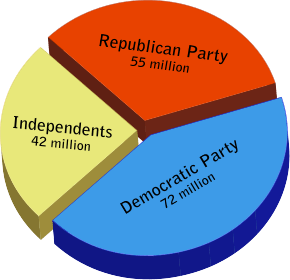
Opposition to the law remains strongest among Republicans. Seventy-one percent of them say they’re against it, as compared with 35 percent of independents and 19 percent of Democrats. Republicans won back control of the House partly on a promise to repeal what they dismissively term as “Obamacare.”

“I just think that the liberal left is more going for socialized medicine, and I don’t think that works well,” said Earl Ray Fye, 66, a farmer from Pennsylvania Furnace, Pa., and a conservative Republican. “It just costs too much. This country better get concerned about getting more conservative.”

One of the major Republican criticisms of the law found wide acceptance in the poll, suggesting a vulnerability that GOP politicians can continue to press.

Nearly six in 10 oppose the law’s requirement that people carry health insurance except in cases of financial hardship. Starting in 2014, people will have to show that they’re covered either through an employer, a government program, or under their own plan.

Rich Johnson, 34, an unemployed laborer from Caledonia, Wis., said he thinks the heart of the law is good. “The problem I have with it is mandating insurance so that you have to have it or you’ll get fines,” said Johnson, an independent. “I just don’t think people should be forced to have it. The rest of it, I have no problem with.”

The individual mandate started out as a Republican idea during an earlier health care debate in the 1990s. More recently, Massachusetts enacted such a requirement under GOP Gov. Mitt Romney and the Democratic Legislature. Nowadays, most conservatives are against it, and GOP state attorneys general are suing to have the mandate overturned as unconstitutional.

Other major provisions of the law, including a requirement that insurers accept people with pre-existing medical conditions, got support from half or more of the public in the poll.

Loralyn Conover, 42 a former music teacher with multiple sclerosis, says she hopes repeal goes nowhere. Senate Democrats say they’ll block it.

The new law “opens the door for people like me to have some kind of pay-as-you-go health insurance,” said Conover, of Albuquerque, N.M. “It’s nice to be able to have something . and not be dropped in the cracks of society.” She couldn’t get health insurance when she was first diagnosed, but is now covered by Medicare.

The AP-GfK Poll was conducted Jan. 5-10 by GfK Roper Public Affairs and Corporate Communications. It involved landline and cell phone interviews with 1,001 adults nationwide, and has a margin of sampling error of plus or minus 4.2 percentage points.

____

Associated Press writers Douglass Daniel, Bradley Klapper and Michele Salcedo contributed to this report.

____

Online:

Poll questions and results: http://www.ap-gfkpoll.com/