Progressive Breakfast: 13 Questions: About Greece, Europe, Austerity – and Us


Richard Eskow

13 Questions: About Greece, Europe, Austerity – and Us

Every day brings more headlines in the European debt drama: “Greece elects anti-austerity government.” “Greek Finance Minister says he won’t negotiate with the ‘Troika.’” “Anti-austerity movements gain ground across Europe.” What’s behind these stories? What does the future hold? What, if anything, are the implications for the United States?

Capital & Main Takes On Inequality

California news site Capital & Main launches month-long series on “how economic inequality is transforming California, and what can be done to rebuild our vanishing middle class.”

Greece v. Europe

Europe squeezes Greece. NYT:“The central bank decided that it would no longer accept Greek government bonds as collateral for loans, saying that it was not confident the country could meet its bailout requirements. The move raises the stakes for Greece, indicating that the European Central Bank, at least, is not prepared to bend its rules to accommodate the country’s newly elected government.”

Greece doesn’t budge. Bloomberg:“The government ‘remains unwavering in the goals of its social salvation program, approved by the vote of the Greek people,’ according to a Finance Ministry statement issued overnight.”

House GOP v. Senate GOP

Party split over immigration and funding Homeland Security. Politico:“What has caused the most consternation among top Republicans is a palpable fear that their party could incur a political backlash if the impasse causes a shutdown of an agency so essential to national security if no deal is reached before the Feb. 27 deadline … [But a]nything less than a full-fledged battle would spark a revolt from the right.”

“Democrats feel they have political leverage and have shown no sign of backing down,”reports The Hill.

Can Republicans even agree on a budget? WSJ:“Rep. Tom Price (R., Ga.), who heads the House Budget Committee, has promisedto offer a proposal that balances the budget in 10 years, which would require much deeper spending cuts than what many Democrats—and possibly those Republican senators who face re-election next year—will agree to…”

Trio of Republicans propose actual replacement for Obamacare. NYT:“[The bill] would halt the expansion of Medicaid and scale back subsidies for middle-income people to buy private insurance … [It would] reduce federal regulation of insurance policies [and] no longer require insurance policies to include coverage for maternity care … Their plan includes a potentially explosive proposal: Workers would have to pay federal income tax on the value of employer-provided health benefits that exceed certain annual thresholds — $12,000 for individuals and $30,000 for families.”

Nothing new from Jeb. W. Post’s Jim Tankersley:“…Jeb Bush’s speech on Wednesday before the Detroit Economic Club … was the highest-profile example to date of a Republican presidential hopeful embracing economic inequality and middle-class stagnation as problems that define America. What it was not — at least on its face — was a break with orthodox conservative thinking about the economy.”

Conservatives In States Target Workers

IL Gov. Bruce Rauner aims to weaken labor. NYT:“[Gov. Rauner] said on Wednesday that the state should ban some political contributions by public employee unions and allow local ‘right to work’ laws … reporters tried repeatedly, and unsuccessfully, to get the longtime Assembly speaker, Michael J. Madigan, to voice a firm opinion about the governor’s suggestions on right-to-work laws.”

TN legislature rebuffs GOP governor who wanted to expand Medicaid. The Hill:“[Gov. Bill] Haslam, a Republican, failed to garner enough support among members of his own party. Only three of the 10 Republicans on the [Senate] Health panel voted for the plan; the final vote was 7 to 4 against expansion.”

Help me get back home


Petitioning Kirsten Gillibrand

Ask US Customs and Border Protection to reconsider my case and let me come home to the U.S.

Petition by Angelo Cabrera
United States
4,686
Supporters

Revitalizing Appalachia


By

Appalachian Coal Communities Need Investment. Here’s a New Idea For How To Fund It.

Despite the fact that many conservatives like to argue a war on coal has been waged through clean air rules, the coal industry has been in decline for decades. In fact, several factors like mechanization, resource depletion, and competition from other energy industries — none of which include EPA rules — have contributed to the decline in Appalachian coal.

But no matter the reason, these communities that have helped power America for decades need and deserve investment. Today, the Center for American Progress issued a proposal aimed at revitalizing Appalachian coal communities. The report outlines how the federal coal-leasing program artificially props up the Western coal industry at the expense of Appalachian coal and recommends actions congress can take to correct this distortion.

The problem begins with a federal program for leasing coal on publicly owned lands which fails to ensure that mining companies pay royalties on the true market price of the coal that they extract. Because the federal coal program is fundamentally noncompetitive, the Department of the Interior is providing billions of dollars of de facto subsidies to western coal and artificially driving down prices. The distortion is particularly extreme in the Powder River Basin in Montana and Wyoming where coal sells for less than one-third the price of Appalachian coal. This price gives coal from the region a near monopoly on the U.S. coal market, according to some analysts.

This unfair system exacerbates the challenges faced by coal communities across Pennsylvania, Ohio, Kentucky and West Virginia. Here are just a few examples of the barriers facing Appalachian coal communities:

By ensuring that coal companies mining on federal lands pay their fair share, the federal government could generate millions of dollars for taxpayers that could be used to reinvigorate Appalachian communities that have been hurt by this unfair system. CAP offers two policy proposals that could correct this distortion and help Appalachia get back on its feet:

  • Option 1: Increase the long-stagnant royalty rate, minimum bid price and rental rate for federal coal sales. These standards have not changed in decades, and the royalty rate for federal coal remains out of line with royalty rates for other publicly owned resources, such as oil and gas, on the Outer Continental Shelf.
  • Option 2: Assess royalties based on the true market value of federal coal. Currently, the government assesses royalties at the first point of sale, which undervalues the coal by not taking into account the final price paid by coal consumers like coal-fired power plants. This proposal would ensure royalty payments align with the true market value of coal.

BOTTOM LINE: Appalachian coal communities are struggling in part because of an unfair and outdated federal policy that benefits the Western coal industry. Congress needs to act to fix this ineffective coal-leasing program and help Appalachia adjust to the changing energy economy.

Get to know Hale Woodruff … Webcast Feb.11


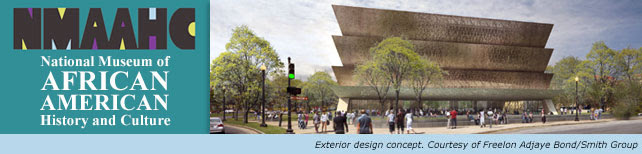
NMAAHC -- National Museum of African American History and Culture

Barry Gaither

Getting to Know Hale Woodruff
Presented by the National Museum of African American History and Culture

Wednesday, February 11, 2015, 7–9 PM EST
Warner Bros. Theater
National Museum of American History
14th and Constitution Avenue NW
Washington, DC

Admission: Free. Seating is on a first come, first serve basis. Please enter through Constitution Ave doors.

WEBCAST: Watch it HERE the evening of the event!
A panel of critics and artists will present an engrossing discussion of Hale Woodruff, renowned muralist, artist, scholar and community builder. Panelists include:

• Edmund Barry Gaither, Director and Curator, Museum of the National Center for Afro-American Artists, and Special Consultant at the Museum of Fine Arts, Boston;

• Amalia Amaki, Independent scholar and artist, Curator of the Paul R. Jones Collection at the University of Delaware

The National Museum of American History is Metro accessible via Blue, Orange, and Silver lines. Exit at the Smithsonian or Federal Triangle Metro Stations.

Participants may be filmed, photographed and recorded for the Smithsonian Institution’s educational and promotional uses

Progressive Breakfast: As You’re #StuckInTraffic, Don’t Get Stuck With A Bad Tax Deal


Isaiah J. Poole

As You’re #StuckInTraffic, Don’t Get Stuck With A Bad Tax Deal

Unless progressives intervene, a scandalous corporate tax ripoff could gain some serious momentum on Capitol Hill today when President Obama’s transportation secretary, Anthony Foxx, makes his scheduled appearance before the House Transportation and Infrastructure Committee … [His] plan would allow corporations that have stashed profits overseas to avoid federal taxes to repatriate or “bring those taxes home” at a sharply reduced 14 percent tax rate (down from a statutory rate of 35 percent), with the proceeds being used to help fund transportation projects … [Foxx] is planning to participate in a Twitter town hall afterward with [committee Chair] Rep. Bill Shuster … using the hashtag #StuckInTraffic. If you believe that the nation shouldn’t be stuck with a corporate tax giveaway to give relief to travelers who are stuck in traffic, and that there is a better way to pay for the transportation improvements we need, weigh in today using the #StuckInTraffic hashtag.

Homeland Security Shutdown Looms

With 17 days until Homeland Security shutdown, McConnell and Boehner squabble over immigration. The Hill:“Senate and House Republicans are fighting over who should move first to break the stalemate over funding the Department of Homeland Security … Senate Majority Leader Mitch McConnell (R-Ky.) said Tuesday … ‘The next move obviously is up to the House,’ … Speaker John Boehner’s (R-Ohio) office pushed back, arguing there is ‘little point in additional House action.’”

All eyes on Sen. Ted Cruz. Politico:“With the House DHS bill stalled in the Senate, Boehner has publicly called on Cruz — and [Sen. Jeff] Sessions — to lead the charge in their chamber … But Cruz told reporters Tuesday that Boehner and McConnell had ‘given away virtually all our leverage by funding almost the entirety of the federal government’ in last December’s funding package. Cruz also called on McConnell to prevent the confirmation of all presidential nominations who are not vital to national security interests — until Obama relents on immigration.”

Unions Under Assault

Senate GOP plans offensive against NLRB. The Hill:“The new Republican majority in the Senate [plans] a series of hearings and legislative attacks against policies that make it easier for workers to unionize. The hearings will put a spotlight on an agency increasingly held in disdain by Republicans, while also offering a platform for the GOP to cozy up to the business groups that have assailed the labor board as blatantly pro-union.”

Governors in both parties target public sector unions for cuts. Politico:“The most aggressive moves are coming from Illinois’ newly inaugurated Republican Gov. Bruce Rauner … But some Democrats have lately put public-employee unions in the hot seat too … Democratic New York Gov. Andrew Cuomo has spoken of removing ‘ineffective teachers’ and expanding charter schools …”

“Rauner is a hybrid of the worst traits of Mitt Romney and Wisconsin Governor Scott Walker”warns HuffPost’s Robert Creamer.

Greece, Germany In Staredown

Greece declares “no way back” in advance of European talks. AP:“‘How much of the bailout deal do we accept? Zero percent. What percentage of the (cost-cutting) measures do we accept? About 30 percent of that agreement is toxic and we reject it,’ Finance Minister Yanis Varoufakis said.”

Germany holds firm on austerity. Bloomberg:“German Finance Minister Wolfgang Schaeuble rejected Greece’s call for a new debt accord … Schaeuble damped any expectations of a positive outcome for Greece at the meeting, saying there are no plans to discuss a new accord or give the country more time. He said in Istanbul yesterday after a meeting of finance chiefs from the Group of 20 that if Greece doesn’t want the final tranche of its current aid program, ‘it’s over.’”

Breakfast Sides

Bipartisan group warns Obama that trade deals must address currency manipulation. The Hill:“Nine House and Senate members introduced legislation on Tuesday that would punish countries that alter their exchange rates to gain a global trading advantage, hurting U.S. workers and damaging competitiveness … saying they will withhold their support for trade promotion authority (TPA) and any trade agreements that don’t tackle the currency issue.”

Sen. Bernie Sanders issues report defending Social Security from GOP attack. Bloomberg:“Sanders’s report argues that it is unnecessary to cut Social Security benefits in order to shore up the program’s long-term solvency … Sanders is using his new perch as the top Democrat on the budget committee to become a self-styled defender of the Franklin Delano Roosevelt-era program…”

American Prospect’s David Dayen unloads on Obama’s housing record:“… it was within Obama’s power to remedy this one—to ensure that a foreclosure crisis now in its eighth year would actually end, with relief for homeowners to rebuild wealth, and to preserve Americans’ faith that their government will aid them in times of economic struggle.”

“New Evidence that Half of America is Broke” from Common Dreams’ Paul Buchheit:“A recent Bankrate poll found that almost two-thirds of Americans didn’t have savings available to cover a $500 repair bill or a $1,000 emergency room visit. A related Pew survey concluded that over half of U.S. households have less than one month’s income in readily available savings, and that ALL their savings — including retirement funds — amounted to only about four months of income.”