On Nov. 18,1993 – The U.S. House of Representatives joined the U.S. Senate in approving legislation aimed at protecting abortion facilities, staff and patients.


In 1993, however, Representative Barbara Boxer offered a proposal allowing such abortions in the case of rape and incest and, in the first pro-choice victory in many years in Congress, the proposal passed and in subsequent years those additional exceptions were incorporated in the Hyde Amendment. At this point, this measure has not been challenged in years.


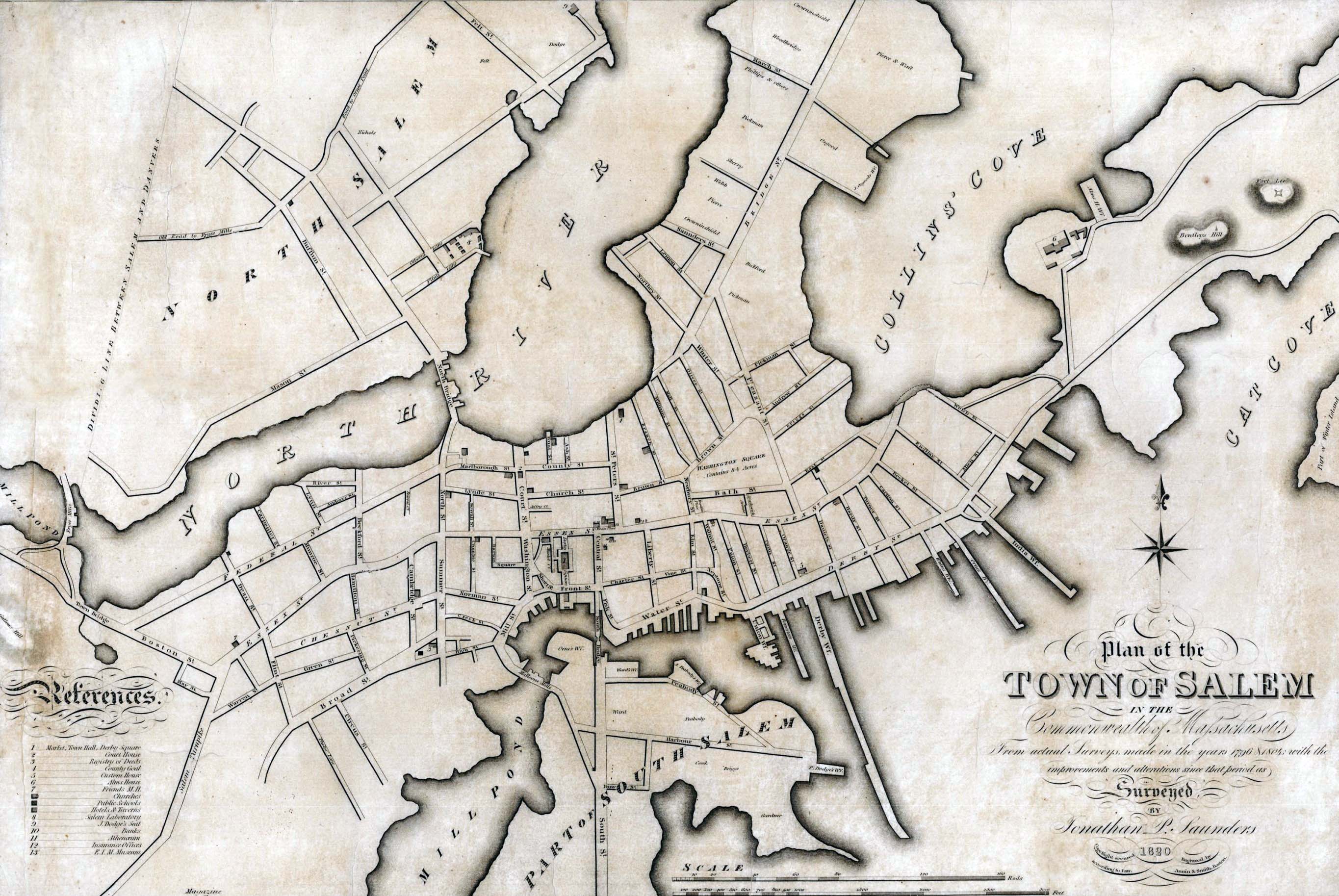
(1832) CONSTITUTION OF THE FEMALE ANTI SLAVERY SOCIETY OF SALEM


Salem, Massachusetts, 1820

We the undersigned, females of color, of the Commonwealth of Massachusetts, being duly convinced of the importance of union and morality, have associated ourselves together for our natural improvement, and to promote the welfare of our color, as far as is consistent with the means of this Society; therefore we adopt the following resolutions.

Resolved, that as we believe the Boston Liberator to be the means of enlightening the minds of many, in regard to the ungenerous scheme of African colonization, and also removing the monster prejudice from the minds of many, in regard to the free people of color, by representing things in their true light, we are determined to support it and all anti-slavery publications.

Resolved, that this Society be supported by voluntary contributions, a part to be appropriated for the purchasing of books, etc.: the other to be reserved until a significant sum be accumulated, which shall then be deposited in a bank for the relief of the needy

Resolved, that the meetings of this society shall commence with prayer and singing.  Any member who wishes to speak is allowed the privilege: when any member speaks, there shall be no interruption.

Resolved, that this Society shall be governed by a President, Vice President, Corresponding Secretary, Recording Secretary, Treasurer, and Librarian who are hereafter to be instructed in the duties of their offices.

Resolved that persons not conforming to the rules of the Society shall be expelled, by receiving a note or card bearing the names of the President and Vice President, and signed by the Corresponding Secretary.

Mary A. Battys, President

E. A. Drew, Vice President

Charlotte Bell, Corresponding Secretary

Hannah B. Fowler, Recording Secretary

Eleanor C. Harvey, Treasurer

Dorothy C. Battys, Librarian

blackfacts.com

Separation of Powers ~ Constitution


Based on their experiences, the framers shied away from giving any branch of the new government too much power.

The separation of powers provides a system of shared power known as Checks and Balances.

Three branches are created in the Constitution.

The United States Constitution is deliberately inefficient.

The Separation of Powers devised by the framers of the Constitution was designed to do one primary thing: to prevent the majority from ruling with an iron fist. Based on their experience, the framers shied away from giving any branch of the new government too much power. The separation of powers provides a system of shared power known as Checks and Balances.

Three branches are created in the Constitution. The Legislative, composed of the House and Senate, is set up in Article 1.

The Executive, composed of the President, Vice-President, and the Departments, is set up in Article 2.

The Judicial, composed of the federal courts and the Supreme Court, is set up in Article 3.

Each of these branches has certain powers, and each of these powers is limited, or checked, by another branch.

For example, the President appoints judges and departmental secretaries. But these appointments must be approved by the Senate. The Congress can pass a law, but the President can veto it. The Supreme Court can rule a law to be unconstitutional, but the Congress, with the States, can amend the Constitution.

All of these checks and balances, however, are inefficient. But that’s by design rather than by accident. By forcing the various branches to be accountable to the others, no one branch can usurp enough power to become dominant.

The following are the powers of the Executive: veto power over all bills; appointment of judges and other officials; makes treaties; ensures all laws are carried out; commander in chief of the military; pardon power. The checks can be found on the Checks and Balances Page.

The following are the powers of the Legislature: Passes all federal laws; establishes all lower federal courts; can override a Presidential veto; can impeach the President. The checks can be found on the Checks and Balances Page.

The following are the powers of the Judiciary: the power to try federal cases and interpret the laws of the nation in those cases; the power to declare any law or executive act unconstitutional. The checks can be found on the Checks and Balances Page.

Historical Examples

Historically, the concept of Separation of Powers dates back as far as ancient Greece. The concepts were refined by contemporaries of the Framers, and those refinements influenced the establishment of the three branches in the Constitution.

Aristotle favored a mixed government composed of monarchy, aristocracy, and democracy, seeing none as ideal, but a mix of the three useful by combining the best aspects of each. In his 1656 Oceana, James Harrington brought these ideas up-to-date and proposed systems based on the separation of power. John Locke, in his 1690 Civil Government, second treatise, separated the powers into an executive and a legislature. Montesquieu’s 1748 Spirit of the Laws expanded on Locke, adding a judiciary. The framers of the Constitution took all of these ideas and converted the theories into practical applications.

When discussing Separation of Power, is it helpful to contrast the American System to the governments of other nations. This list below is far from a representative sample of nations or systems. The United States, Britain, France, Canada, and Mexico are actually more similar than they are different, especially when the whole range of nations is taken into account. However, sometimes the smaller differences between similar systems can be interesting and illustrative. It is left to the reader to conduct studies of more disparate systems.

Conclusions

Is the American system superior to any of these, or to any other, system of government? That depends on where you sit. The French and the British might scoff at the fact that our head of state, the President, has no power to make laws. They might cringe at the thought that judges can render the will of the people, in the form of a duly passed law, null and void. Canadians might think that state powers ought to be enumerated; Mexicans might marvel at the longevity of some career American politicians.

Americans might look with amusement at the institution of the British monarchy, and its continued hold, if only on paper, on Canada. Americans might cringe at the British thought of majority rule with no written constitution to be used as a guide or rule book. We might worry that the French Presidency has the potential to turn tyrannical by the misuse of emergency powers. We might worry that a Mexican judiciary, without lifetime tenure or a solid stare decisis system might lead to incoherent judicial policy.

But recall that each of these nations, and the hundred others in this world, have political and social traditions that sometimes date back a thousand years. Despite what Americans might think are odd institutions and traditions in France, Britain, Canada, Mexico, and elsewhere, these are all prosperous nations. The systems work in the context of each nation, even if the details could not work in some others.

Primary sources for this topic page are Comparative Politics by Gregory Mahler (Schenkman Publishing, 1983) and Comparative Politics by Gregory Mahler (Prentice Hall, 2000). Individual pages from Wikipedia and Canada in the Making were also helpful in keeping this page up to date.

2020 Washington … State New Rules .. as 2020 wanes Did the new rules impact your life or were not applied


by Ian Smay

The turn of the decade will bring several new laws in Washington state, ranging from rules about smoking to minimum wage increases.
Four of the biggest new laws will go into effect on Jan. 1, 2020, while others will start later in the year.
The following are some of the biggest law changes coming to Washington state in 2020.
4 laws going into effect on Jan. 1

1. Minimum wage increases to $13.50 an hour
Washington voters passed Initiative 1433 in 2016, setting increases to the state’s minimum wage every year from 2017 to 2020, when it will reach $13.50 an hour.

In 2019, the minimum wage raised to $12.00 an hour from $11.50 an hour in 2018. After 2020, the Washington Department of Labor and Industries is required to make an adjustment to minimum wage based on cost-of-living figures provided by the Consumer Price Index for Urban Wage Earners and Clerical Workers, or CPI-W, for short.

Before Initiative 1433 was passed in 2016, minimum wage in Washington was $9.47 an hour, which it stood at for 2015 and 2016. The last time before 2016 that minimum wage didn’t rise each year in Washington was between 2009 and 2010, when it stayed at $8.55 an hour.

The last time the Washington minimum wage was the same the federal minimum wage was 1997, when it was $5.15 an hour.
In Washington, there are a few types of employees that employers can pay less than minimum wage.
According to Labor and Industries, these exceptions include:
Workers with Disabilities
However, beginning in July 2020, state agencies cannot pay workers with disabilities less than minimum wage
Learners
This includes people learning while on the job, but the employer must prove that certain conditions are met and that there are no experienced workers available

Student Learners
Includes students working in part-time vocational training programs or job training programs that correspond with the worker’s education
Student Workers
Includes students working part-time at a “qualified educational institutional” to help pay for school costs. This worker cannot have been hired in place of an experienced worker
Apprentices
Includes those working in jobs/vocations that require an apprenticeship

Employers must apply for certificates to pay employees they feel meet these requirements at less than minimum wage.

2. Smoking age rises to 21

The smoking and vaping age in Washington was set to rise from 18 to 21 on Jan. 1, 2020, but a new federal law recently implemented this change for all U.S. states.
Gov. Jay Inslee signed legislation into law in April making it so those who want to buy tobacco, vaping products and/or e-cigarettes have to be 21 years old. Anyone who sells to anyone under the age of 21 can be penalized under the new law.
The law only raises the age for tobacco and vaping sales, not possession.
According to the Washington Attorney General’s Office, those between the ages of 18-20 when the laws go into effect will not be grandfathered in, meaning it will again be illegal for them to buy tobacco products.
Washington joins at least eight states, including Oregon, in raising the smoking age to 21.
While smoking among youth is down, according to a statewide youth survey, the number of youth vaping has been on the rise in Washington.
The bill, which was 2017-18 House Bill 1054, was passed by the Washington State Legislature by a vote of 63-35.

3. Family leave

The rules for family leave for workers in Washington state are also changing in 2020.
Starting at the new year, a new insurance program called Paid Family Medical Leave is going into effect, and any person who worked at least 820 hours in the last 12 months and had a qualifying life event can take advantage of the policy. This equals about 20.5 weeks at 40 hours a week.

Workers can receive between 12 and 18 weeks of paid leave depending on circumstances for the following qualifying life events:

  • Birth or adoption of a child
  • Serious illness or health condition, including mental health or addiction illnesses
  • Serious illness or health condition of a qualifying family member
  • Certain military events involving family, including the return of a deployed family member

insurance premiums that cover the family leave are split between the employer (one-third) and the employees (two-thirds) for most employers, according to Washington Labor and Industries. Many Washington workers have already seen a few dollars come out of each paycheck in 2019 to fund the program.

Federal employers and employees, federally recognized tribes and the self-employed are exempt from the new state family leave rules. However, the latter two can decide to opt-in.
RELATED: Paid medical and family leave starts in Washington in January

4. Car seat rules

Changes to Washington state’s car seat laws will go into effect on Jan. 1, 2020.
According to the Washington Traffic Safety Commission, changes to the law include:
Children up to 2 years old must be in a rear-facing car seat
Children 2-4 years old must be in a car seat with a harness, front or back facing
Children 4 years old or older and under 4-foot 9-inches tall must be in a booster seat with a seat belt or in a harness seat
Children over 4-foot 9-inches tall can be seated with a properly fitted seat belt
Children up to 13 years old must ride in the back seat when possible
The penalty for breaking the new car seat rules is a traffic ticket.
This means that some kids as old as middle-school aged could be riding in a car seat.

New laws going into effect later in the year

Overtime rules
For the first time since the 1970s, Washington is overhauling its overtime rules.
The Department of Labor and Industries announced the rule changes on Dec. 11, which will go in effect on July 1, 2020.
The new rules will make an estimated 259,000 additional workers eligible for overtime pay by the time the rules are fully implemented in 2028, with another 235,000 workers having protections strengthened.
Starting on July 1, the minimum salary threshold needed for a company to not pay a worker overtime rates increases from $250 a week to $675 a week, which places the new threshold to 1.5 times Washington’s minimum wage.
The minimum salary threshold will continue to increase yearly until 2028, when it will reach a rate of about $1,603 a week, or $83,356 a year.
In the years after 2028, the threshold will increase to match minimum wage increases caused by inflation.
The new rules also change the criteria for when an employer is exempt from paying an employee overtime. The exemptions will stipulate that workers must have a fixed salary, perform a certain list of duties and make more money than the threshold.
This puts Washington’s rules more in-line with federal regulations.

New rules regarding gift card expiration dates
Have you ever received a gift certificate for a birthday or other occasion, only to forget about it and have it expire before you use it?
Well, starting July 1, 2020, this will no longer be an issue in Washington.
Thanks to House Bill 1727, businesses in Washington can no longer give out gift certificates that have an expiration date, fee or dormancy charge. This includes for gift certificates given as part of a purchase of “personal property or services.”
However, an expiration date can be issued still if it is part of a rewards or loyalty program, or if it is given to a charitable organization without being exchanged for anything.

for more … krem.com

image from the internet