1789 – The first U.S. congressional act on administering oaths became law.


ERIC - Institute of Education Sciences
The First Act of Congress: Administering Oaths for a New Kind of Government
Potter, Lee Ann
Social Education, v68 n7 p430 Nov-Dec 2004
In the spring of 1789, the first Congress faced a daunting task. Although the newly adopted Constitution provided a blueprint for the new government, Congress needed to enact legislation that would ensure a smooth transition from the Articles of Confederation and lay the groundwork for a strong national government, while simultaneously protecting individual liberties. Between March (actually April, when they reached a quorum) and late September, the first session of the first Congress met in New York City. The Congress proposed and debated numerous bills, and ultimately passed twenty-six acts. The very first act, signed into law by President George Washington on June 1, 1789, was “An Act to regulate the Time and Manner of administering certain Oaths.” The Constitution contained an oath of office only for the president. Article II, Section 1, directed the president to take the following oath before entering office: “I do solemnly swear (or affirm) that I will faithfully execute the Office of President of the United States, and will to the best of my Ability, preserve, protect and defend the Constitution of the United States.” This is the same oath that every president since George Washington has taken. In this issue’s “Teaching With Documents,” a regular feature of “Social Education,” teaching suggestions include providing students with a copy of the featured document and its transcription, asking a volunteer to read it aloud while the others follow along, and leading a class discussion with the following questions: (1) What type of document is this? (2) When was it created? (3) Who created it? and (4) What was the purpose of the document? Other suggestions include asking students what issues they think a brand new government might face.
National Science Teachers Association, 1840 Wilson Boulevard, Arlington, VA 22201-3000. Web site: http://www.nsta.org.
ERIC.ed.gov

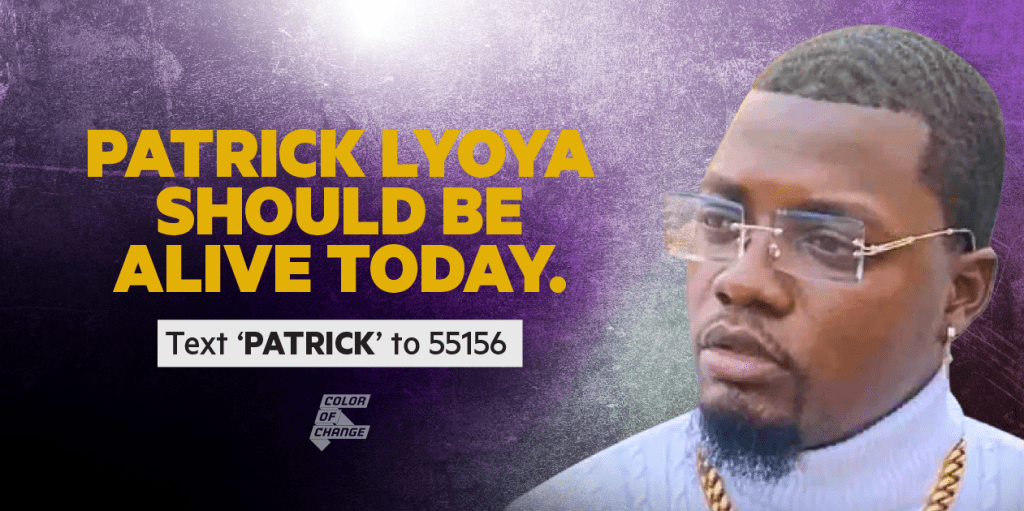
Demand Justice For Patrick Lyoya – a message from Color of Change


On April 25, the Grand Rapids police chief finally released the name of the officer who murdered Patrick Lyoya, but this is not enough. This officer is still on administrative leave and not being held accountable for Lyoya’s murder. We must continue to put pressure on the city’s officials as we demand justice for Patrick Lyoya.

—— 4/21/22 ——-

“He was more than a role model, somebody that you look up to,” Jimmy Barwan said about his cousin Patrick Lyoya, who was brutally murdered by a police officer in early April.

Here’s what we know:

On April 4, Patrick Lyoya was shot in the back of the head by a Grand Rapids, Michigan police officer, during a traffic stop. Last week, in response to community demands for transparency and accountability, officials released brutal bodycam footage showing the police officer kneeling on Patrick’s back and murdering him, execution-style. 

And while Patrick’s family and neighbors take to the streets to demand justice for their loved one, Grand Rapids officials have gone silent. The city’s police department is still withholding the name of Patrick’s murderer. In fact, the Grand Rapids Police Department (GRPD) just put the officer on paid leave. 

After murdering a community member, the police officer is on a taxpayer-funded vacation. This is despicable, inhumane, and far too common in this country.

We will not remain silent or let officials sweep this case under the rug. Add your name to demand justice for Patrick Lyoya now. 

Patrick Lyoya was a 26-year-old Congolese refugee who moved to Michigan in 2014. Patrick was also a brother, a son, a father of two young girls, and he should be alive today. But a militarized, unaccountable police force murdered him — tearing another family apart and forcing yet another community to mourn a senseless and preventable death. 

Patrick’s father said “My life has come to an end” and his mother is “deeply hurt and wounded.”

Patrick’s murder has sent shockwaves through his community as well. His loved ones and neighbors will have to carry that trauma and psychological pain for days, weeks, months, years. And unless we take action now, Patrick’s family and community will live with the fear that GRPD can murder again with impunity. 

That’s why, standing with the Grand Rapids community, we must demand action from elected officials to seek justice and accountability for Patrick Lyoya. These demands will not only seek action in response to his murder, but will also get us one step closer to the structural change we need to keep Black people safe — in Grand Rapids and across the country. 

Stand with us to demand justice for Patrick: 

1. Disclose the name of the police officer who shot and killed Patrick, and fire the officer immediately. 

2. Demand a thorough federal investigation into both Patrick’s murder and the history and culture of racist violence in the Grand Rapids Police Department.

3. Demand local and state elected officials invest in community-led alternatives to policing that would have prevented this senseless murder from happening in the first place — and take REAL action now to keep Black people safe. 

Patrick Lyoya should still be alive. Our communities deserve and demand real safety — a world where our loved ones can make it home safe and whole at the end of the day. Where no one lives in fear of police violence and brutality. It’s on us to fight for that world, and to make sure what happened to Patrick never happens again. 

colorofchange.org

1982 – South Africa unveiled a plan that would give voting rights to citizens of Asian and mixed-race descent, but not to blacks.


What was the result of the South Africa Act?

They aimed to draw up a constitution for the Union of South Africa, uniting the British possessions. The result was the South Africa Act.

Only white men were invited to consider the future of their country; women and all other racial groups were excluded. This was in some ways anomalous.

—- Honestly, the information re: the title above is slim and or nil so i included what is available… the dates of more importance in the apartheid plan happened before and after nothing on 1982 except for their grand prix… odd – Nativegrl77

If you have some information to correct the 1982 information, please comment …thanks