

** Everything Sprouts, LLC Expands Voluntary Recall to Include Robust Radish Mix Due to Potential E. Coli and Salmonella Risk. The recalled product was distributed by Everything Sprouts from August 13, 2026 to August 26, 2026 to wholesale distributors and to grocery stores located in MN and WI. This includes Robust Radish Mix, 5oz Cups, Barcode 087906000075, LOT# 223, 226, 230, & 233. We have enclosed sample product labels and bar codes to assist in locating this product. Customers with questions regarding this recall can contact Everything Sprouts at everythingsproutsmn@gmail.com.
Link to Original Press Release
Illnesses and Outbreak Details – Everything Sprouts
- Total cases: 55 reported illnesses
- By pathogen: 46 with E. coli, 7 with Salmonella, and 2 with both
Produce Grower+1
- Hospitalizations: 4 people hospitalized; no deaths reported as of August 21, 2026
Yahoo+1
- Time frame: Illnesses began between May 31 and August 8, 2026
- States affected: Florida, Indiana, Iowa, Kansas, Michigan, Minnesota, New Hampshire, New York, North Carolina, North Dakota, Pennsylvania, South Carolina, South Dakota, Washington, Wisconsin
- Epidemiology: Of 34 interviewed patients, 76% reported eating alfalfa sprouts in the week before illness
A multistate outbreak linked to certain Everything Sprouts alfalfa sprouts has resulted in 55 reported illnesses across 15 states Yahoo+1. The outbreak is tied to Shiga toxin-producing E. coli (STEC) and Salmonella contamination.
** Panorama Produce Recalls Mangoes Due to Possible Salmonella Contamination. he recalled product was distributed in the following states beginning on August 10 through August 21, 2026: CT, NY, NJ, and PA, and sold in select Walmart stores.
The recalled mangoes are packaged in a Martina-branded case. The individual mangoes can be identified by a light blue sticker with the label Agrofepac, Produce of Mexico, and a PLU number of 4584 and UPC # 07503061948050. No illnesses have been reported to date in connection with the recalled product. Consumers with questions may contact Panorama Produce by email at information@panoramaproduce.com Monday through Saturday 9am – 7pm EST.
** Northwest Naturals Voluntarily Recalls Two Raw Pet Food Products Because of Possible Salmonella & Listeria Monocytogenes Health Risk. The voluntarily recalled products were distributed to retail stores nationwide.
The affected products can be identified as follows:
- Northwest Naturals Frozen Chicken Recipe (cat food and protein topper for dogs), 2 lbs. bag (12 bags per case) — Lot B-5 — Best By 01/26/2028 — UPC 087316384956; and
- Northwest Naturals Frozen Raw Diet for Dogs Chicken Recipe, 6 lbs. bag (6 bags per case) — Lot B-19 — Best By 01/25/2028 — UPC 087316380392.
No illnesses have been reported to date in connection with this voluntary recall. Consumers who have purchased the products in these lots should stop feeding them to their pets and return the unused portion to the place of purchase for a full refund. Consumers with questions may contact Northwest Naturals at 1-866-637-1872, Monday-Thursday 8 a.m.-4 p.m. Pacific Time
** Panorama Produce Recalls Mangoes Due to Possible Salmonella Contamination. MAMARONECK, NY, AUG. 28, 2026 – Panorama Produce is recalling 302 boxes of size 9 (nine) mangoes because they may be contaminated with Salmonella, an organism which can cause serious and sometimes fatal infections in young children, frail or elderly people, and others with weakened immune systems.The recalled product was distributed in the following states beginning on August 10 through August 21, 2026: CT, NY, NJ, and PA, and sold in select Walmart stores.
The recalled mangoes are packaged in a Martina-branded case. The individual mangoes can be identified by a light blue sticker with the label Agrofepac, Produce of Mexico, and a PLU number of 4584 and UPC # 07503061948050. No illnesses have been reported to date in connection with the recalled product. Consumers with questions may contact Panorama Produce by email at information@panoramaproduce.com Monday through Saturday 9am – 7pm EST.
** Everything Sprouts, LLC Expands Voluntarily Recall to Include Robust Radish Mix Due to Potential E. Coli and Salmonella Risk. Everything Sprouts, LLC, based in Minneapolis, MN is expanding its voluntary recall of sprouts to include certain lots of Robust Radish Sprout Mix because it has the potential to be contaminated with Shiga toxin producing Escherichia coli (STEC) or Salmonella bacteria.The recalled product was distributed by Everything Sprouts from August 13, 2026 to August 26, 2026 to wholesale distributors and to grocery stores located in MN and WI. This includes Robust Radish Mix, 5oz Cups, Barcode 087906000075, LOT# 223, 226, 230, & 233. We have enclosed sample product labels and bar codes to assist in locating this product.
To date, no reports of illness have been received by federal and state agencies related to Robust Radish Sprouts Mix. The recalled product was distributed by Everything Sprouts from August 13, 2026 to August 26, 2026 to wholesale distributors and to grocery stores located in MN and WI. This includes Robust Radish Mix, 5oz Cups, Barcode 087906000075, LOT# 223, 226, 230, & 233. We have enclosed sample product labels and bar codes to assist in locating this product.
To date, no reports of illness have been received by federal and state agencies related to Robust Radish Sprouts Mix.
** Boston company recalls more than 12 tons of buffalo chicken products because of lack of inspection Shanghai Ravioli Corporation of Boston, MA, is recalling 24,900 pounds of frozen, not ready-to-eat (NRTE) buffalo chicken products that were produced without the benefit of inspection
** Pickled goat and chicken recalled because of lack of USDA inspection Indus Foods LLC, doing business as Gangothri Foods, an Austin, TX, firm, is recalling 1,626 pounds of ready-to-eat (RTE) pickled goat and chicken products that were produced
** Baxter Issues Voluntary Nationwide Recall for Two Lots of 0.9% Sodium Chloride Injection Due to Potential Presence of Particulate Matter. 8/26/2026
Baxter Issues Voluntary Nationwide Recall for One Lot of 70% Dextrose Injection Due to Potential Presence of Particulate Matter. 8/25/2026
Baxter Issues Voluntary Nationwide Recall for One Lot of Anticoagulant Sodium Citrate Solution Due to Potential Presence of Particulate Matter. 250 ML VIAFLEX Plastic Container 8/25/2026
** Everything Sprouts, LLC Recalls Alfalfa Sprouts Due to Potential E. Coli and Salmonella Risk. Everything Sprouts, LLC, based in Minneapolis, MN, is recalling certain lots of Alfalfa Sprouts because they may be contaminated with Shiga toxin-producing Escherichia coli (STEC) or Salmonella. The recalled product was distributed by Everything Sprouts from May 27, 2026 to August 21, 2026 to wholesale distributors and to grocery stores located in MN and WI.
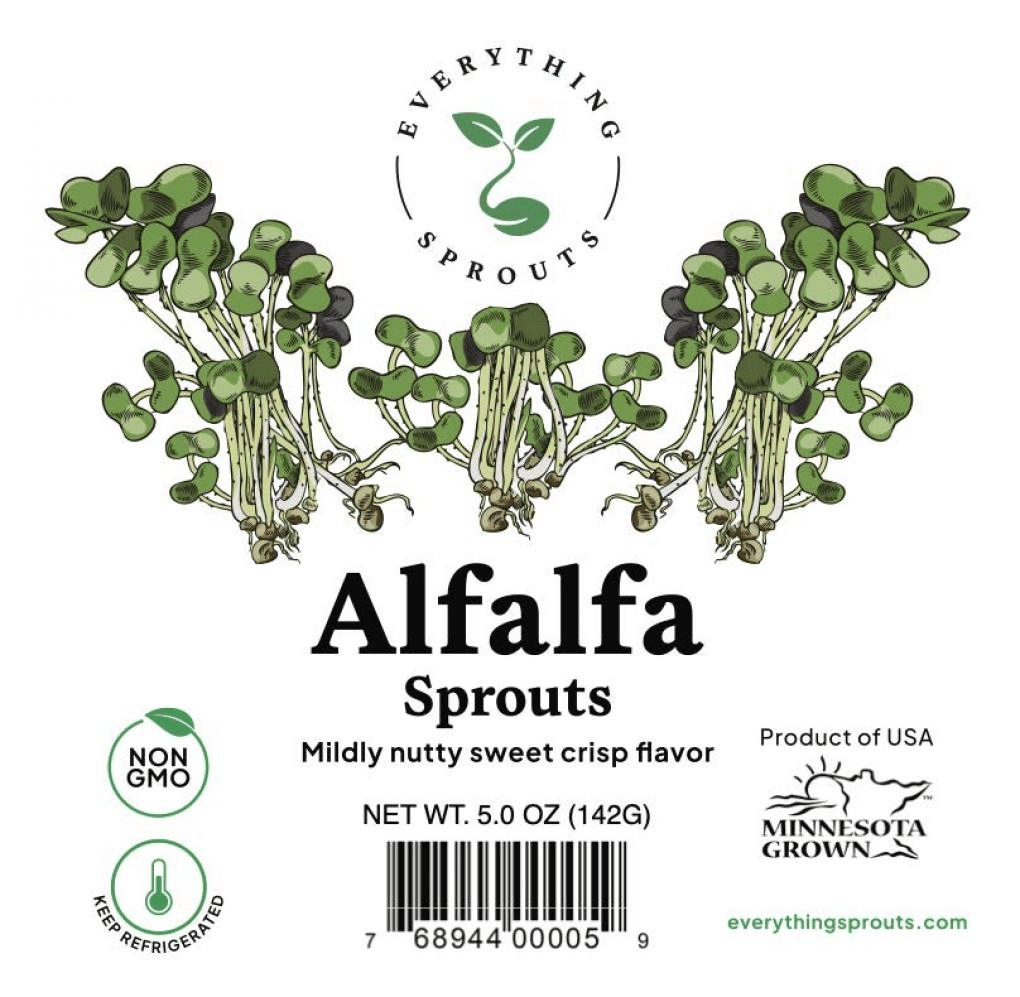
The Everything Sprouts and Calco branded Alfalfa Sprouts are packaged in individual 5oz plastic containers bearing the following bar codes: 860014523113, 860014523120 and 850079470149. The Alfalfa Sprout products subject to this recall include Alfalfa 6/5oz, Alfalfa 12/6/5oz packages with the following lot numbers: LOT #222, 223, 225, 226, 230. These same Alfalfa sprouts were also used in Everything Sprouts Crunchy Protein Sprout Mix 5oz cups, LOT# 222, 223, 226, 230 and the Zesty Garlic Mix cups, LOT# 222, 223, 225, 226, and 230. We have enclosed sample product labels with barcodes to assist in locating this product. To date, 55 reports of illnesses have been received by federal and state partners related to alfalfa sprouts.
** Fromm Family Foods Voluntarily Recalls Turkey Pâté Wet Food For Dogs and Diner Classic Milo’s Meatloaf Pâté Wet Food For Dogs Due to Potential Metal Contamination. , FROMM FAMILY FOODS of MEQUON, Wisconsin is recalling 3,852 cases of Fromm Turkey Pâté Wet canned dog food and 1,973 cases of Fromm Diner Classics Milo’s Meatloaf Pâté Wet canned dog food due to potential metal contamination.
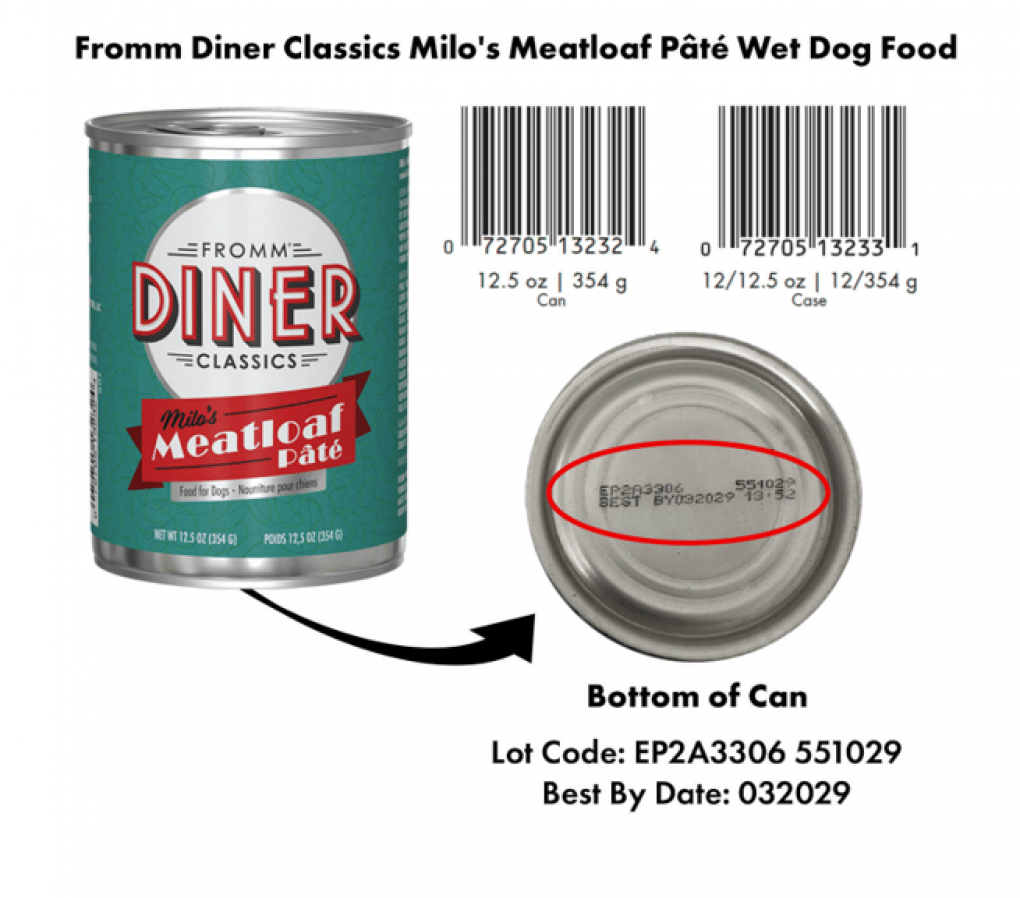
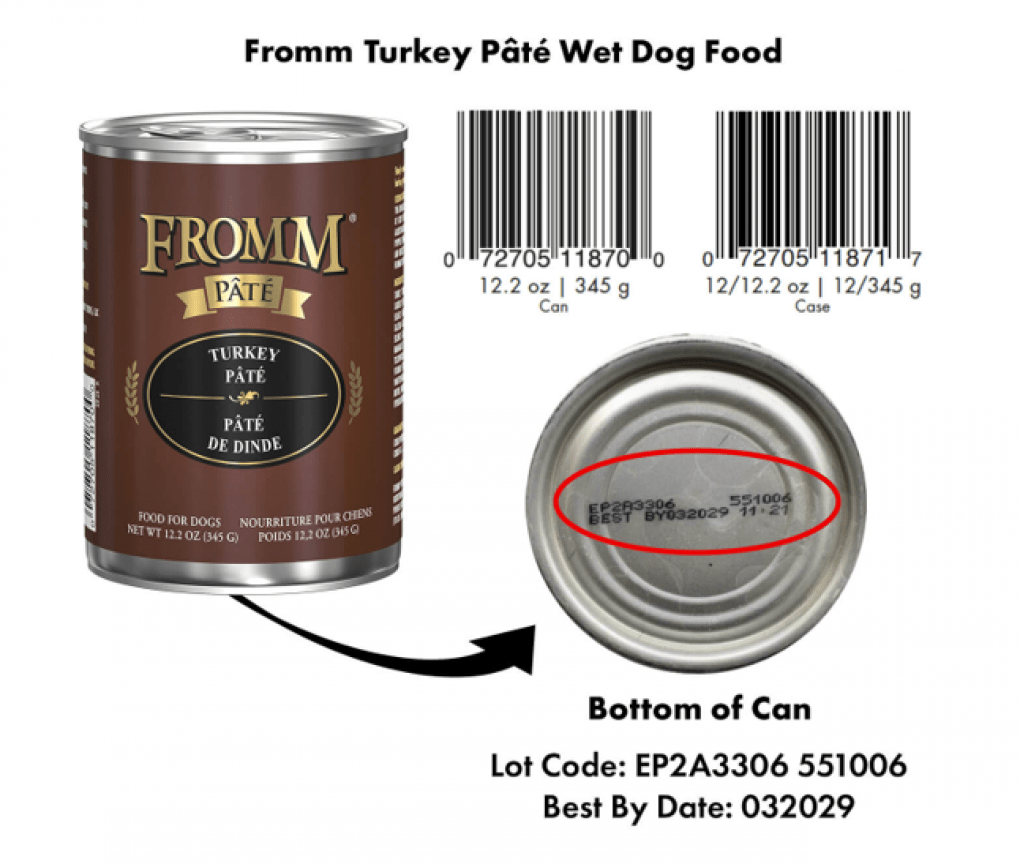
Consumers who have purchased Fromm Turkey Pâté Wet Dog Food or Fromm Diner Classics Milo’s Meatloaf Pâté Wet Dog Food Best By 032029 are urged to return the product to your retailer. Consumers with questions may contact the company at 1-800-325-6331 from Monday through Friday, 8:00 AM-4:30 PM, Central Time, or you may contact info@frommfamily.com.
** B. Braun Medical Inc. Issues Voluntary Nationwide Recall of 0.9% Sodium Chloride Injection USP, 100 mL, in a 150 mL PAB® Container Due to the Presence of Particulate Matter B. Braun Medical Inc. Issues Voluntary North American Recall of Excel® Lactated Ringers Injection, 100mL Due to the Presence of Particulate Matter. Consumers with questions regarding this recall can contact B. Braun by emailing recalls@bbraunusa.com, Monday to Friday 8:00am to 5:00pm EST.
** Updated – Dreyer’s Grand Ice Cream, Inc. Issues Voluntary Recall on Select Outshine Fruit Bars Due to Possible Foreign Matter Contamination. Products affected include Outshine Strawberry, Watermelon, Grape, Tangerine and Black Cherry 6-Count 2.5 ounce Fruit Bars and the Outshine 24-Count 2.5 ounce Variety Pack Fruit Bars. These lots were distributed to retailers nationwide. The Batch Code&Best Before
Date list is long.
No other Outshine products or varieties are impacted. ONLY the five flavors of 6 Count (2.5-oz bars) and Outshine Variety 24-Count (2.5-oz bars) Fruit Bars. Batch codes can be identified on the product packaging. Consumers with questions may contact Dreyer’s Grand Ice Cream, Inc. Customer Service at 800-392-4885, Monday thru Friday 8am to 5pm EST.
Dreyer’s Grand Ice Cream, Inc Media Contacts: dreyers@casupport.com
** UPDATED: Oma’s Pride Voluntarily Recalls One Lot of Woof Complete Canine Chicken Recipe (6 Lb Bag) Because of Possible Salmonella Health Risk. If your pet has consumed the recalled product and has these symptoms, please contact your veterinarian.
The recalled lot of Woof Complete Canine Chicken Recipe was distributed in AZ, CA, IN, KY, LA, MD, NJ, NV, NY, PA, VA to retail and wholesale accounts and directly to consumers through online, direct-to-consumer orders, shipped frozen.
The recalled product is a frozen raw dog food sold in a 6 lb gusseted stand-up pouch containing 12 individually-wrapped, 8 oz vacuum-sealed portions, identified as:
- Product: Woof Complete Canine Chicken Recipe, 6 lb bag
- Bags Impacted: 639
- Item / SKU: F-WOOFC-6
- Lot number: BB012729
- Manufacturing Date: 1/27/2026
- Expiration / Best-by: 1/27/2029
- Distribution Dates: 2/12/2026–5/15/2026
- UPC: 8 7938400145 9
No other Oma’s Pride products, sizes, or lots are affected. Oma’s Pride is proceeding with this recall to ensure the highest level of consumer safety and transparency.
**Hardie’s Fresh Foods Recalls Jalapenos Because of Possible Health Risk. The Jalapenos were distributed to the following Costco locations: Store #1487 at 12717 Network Drive, Stafford, TX
Store #0655 at 8282 Park Lane, Dallas, TX
The affected jalapeños are in clear plastic bags with labels
Lot codes being recalled are: X2741775, X2741859, X2744163, X2744706, X2746349, X2746490, X2748743. Production dates are: 26192 (07/11/26), 26196 (07/15/26), 26197 (07/16/26), 26199 (07/18/26), and 26203 (07/22/26).
These jalapenos were repacked by Hardie’s Fresh Foods. Hardies’ Fresh Foods has ceased the production and distribution of the product.
Consumers who have purchased these jalapenos are urged to return them to the place of purchase for a full refund. Consumers with questions may contact the company at 1-281-697-7067, Monday through Friday, 8 AM-5 PM CST.
** ~ Food Safety News Worst-case Listeria is easy to test for. Real-world contamination isn’t.
To prove an intervention holds, challenge studies flood product with Listeria at 10³ to 10⁵ CFU/g. It’s standard, and regulators want it. But it answers a question your line never actually faces. ~ Food Safety News continued below
8/16 Frozen fruit bars recalled after consumers find glass pieces
Dreyer’s Grand Ice Cream Inc. is recalling select flavors of Outshine Fruit Bars because of consumer complaints about contamination with glass. Products affected include Outshine Strawberry, Watermelon, Grape, Tangerine
8/16 Almond spread recalled after allergic reaction reported
L-Nutra of Culver City, CA, is recalling Prolon brand Apulian Almond & Cocoa Spread because it contains undeclared cashew, pistachio and hazelnut. People who have an allergy or severe
8/14 Lactation granola recalled because of Salmonella
The Hampton Grocers Inc. of Montauk, NY, is recalling Lacnola Lactation Granola because it has the potential to be contaminated with Salmonella. Lacnola Lactation Granola was distributed nationwide through mail
** NatureBest Precut & Produce LLC Voluntarily Recalls Products Containing Jalapenos Due to Potential Salmonella Contamination. NatureBest Precut & Produce LLC has ceased distribution of the affected products and is working in cooperation with its supplier and regulatory authorities regarding this recall. NatureBest Precut & Produce LLC, with facilities located in Missouri City, TX and Houston, TX is voluntarily recalling products containing jalapeño peppers supplied by Coast Citrus Distributors due to the potential for contamination with Salmonella. The affected products were distributed to retail customers in Texas and Louisiana between July 3, 2026, and August 5, 2026. Consumers with questions may contact NatureBest Precut & Produce LLC at (713) 278-0425, Monday through Friday from 8:00 a.m. to 5:00 p.m. CT or email sales@naturebestprecut.com.
** The Hampton Grocers, Inc . Recalls It’s 8 Ounce Packages of “Lacnola Lactation Granola” Because of Possible Health Risk. Lacnola Lactation Granola was distributed nationwide through mail orders on thehamptongrocers.comExternal Link Disclaimer, and other online retailers (Amazon) between October 21, 2025 and August 12th, 2026.
The recalled Lacnola Lactation Granola from The Hampton Grocers, Inc. is packaged in a pink 8oz stand up pouch, with UPC: 850035324554. The affected lot codes are:
- Lot HGLC-102125 with expiration date of 21OCT2026
- Lot HGLC-021326 with expiration date of 13FEB2027
Lot codes and expiration dates appear on the back of the bags on the upper left side, printed in black ink.
No illnesses have been reported to date in connection with this product.
** Recall of Jalapeno Avocado Dressing Because of Possible Health Risk. HOUSTON, TX (August 11, 2026) – Salata Dressings of Houston, TX, is recalling its Jalapeno Avocado Dressing because it had the potential to be contaminated with Salmonella, The recalled products were distributed in Texas HEB grocery stores: Jalapeno Avocado Dressing between July 13 and August 5, 2026.
The recalled Jalapeno Avocado Dressing sold at HEB comes in a 12 oz plastic (PET) bottle with a black cap, with a Best By date of 11/05/2026, 11/13/2026, 11/18/2026, or 11/25/2026. (Located on at the top of the label. The affected ingredient was received across 4 lots, produced into finished product between 07/08/2026 and 07/29/2026.)
No illnesses have been reported to date in connection with the products affected in this recall. Consumers with questions may contact us at inquiries@growfoodpacking.com. Or call us at 281-881-4785 Monday-Friday 8:00-5:00
** Central Bakery Sourdough Bread recall https://www.seattletimes.com/news/over-500-loaves-of-sourdough-bread-recalled-in-seattle-and-tacoma/
** Canine food Recall: Oma’s Pride Voluntarily Recalls One Lot of Woof Complete Canine Chicken Recipe (6 Lb Bag) Because of Possible Salmonella Health Risk
Oma’s Pride of Avon, Connecticut, is voluntarily recalling one lot of Woof Complete Canine Chicken Recipe, 6 lb bag (Lot BB012729) because it is contaminated with Salmonella.
** Kettle Cuisine Recalls Marketside Tomato Bisque Soup Kit – Sold Exclusively at Walmart Stores Because of Possible Health Risk. Kettle Cuisine LLC of Savage, MD is recalling Marketside Tomato Bisque Soup Kit – 14oz (397g) because the product has the potential to be contaminated with Listeria monocytogenes. To date, the company has received no confirmed reports of illnesses associated with this product. UPC 194346474004
The recalled product was distributed from 6/30/26 through 7/7/26 exclusively to select Walmart stores in AR, CA, CO, CT, DE, GA, IA, IL, IN, KS, KY, LA, MD, MO, MS, NC, NJ, NM, NV, NY, OH, OK, OR, PA, TX, VA, VT, WI, WV. The recall is being initiated after routine testing conducted by the company produced a presumptive positive result for Listeria monocytogenes.
** Lidl US Recalls Vitasia Asian Style Wok Spice Mix Due to Potential Salmonella Contamination. The recalled product was distributed between 07/24/2026 – 08/10/2026 to all Lidl US retail store locations in Delaware, District of Columbia, Georgia, Maryland, New Jersey, New York, North Carolina, Pennsylvania, South Carolina, and Virginia.
The recalled product can be identified as follows: Vitasia Chinese Style brand Asian Style Wok Spice Mix, Net Wt 1.58oz (45g), with UPC 4 335619 355491 with Lot # 155846 and BBD JUN 2028, which can be found on the side of the label. The recalled product is packaged in a plastic container with a purple lid.
No illnesses have been reported to date.
This recall was initiated after routine quality testing identified Salmonella present on a lab sample.
Customers should immediately discard or return the recalled product to their nearest Lidl store for a full refund (a receipt is not required for return). Customers who have questions about this recall should call the Lidl US Customer Care Hotline at (844) 747-5435, Monday – Saturday between 8 am – 8 pm ET. ARLINGTON, VA – AUGUST 11, 2026 – Lidl US is recalling one lot of Vitasia Asian Style Wok Spice Mix 1.58 oz (45g) (UPC 4335619355491) with Lot # 155846 and BBD JUN 2028 because it has the potential to be contaminated with Salmonella.
** Taylor Fresh Foods Recalls Products Made with Jalapeno Peppers Because of Possible Health Risk. Salinas, Calif., August 9, 2026 – Upon notification that Coast Citrus Distributors is voluntarily recalling fresh jalapeños due to potential Salmonella contamination, Taylor Fresh Foods is recalling finished products containing jalapeños subject to this recall. Taylor Fresh Foods is no longer sourcing products from this farmer and will be filling orders from alternative suppliers. The list of recalled products are distributed by Taylor Farms including the branded and unbranded products and corresponding images are provided below.
The recalled products were distributed to retail distribution centers in the following states: AL, AR, FL, GA, IL, IN, KS, KY, LA, MA, ME, MI, MN, MO, MS, NE, NH, NY, OH, OK, SC, TN, TX, VT, WI, WV with a “Best If Used By” date up to and including August 16, 2026.
To date, Taylor Fresh Foods is not aware of any reported illnesses linked to its products containing jalapeños. Consumers with any questions may contact our customer care team at 855-455-0098 Monday through Friday from 8am-5pm PT.
City Foods, Inc., a Chicago, Ill., establishment, is recalling approximately 3,215 pounds of ready-to-eat (RTE) pastrami and corned beef products that may be adulterated with Listeria monocytogenes (Lm), the U.S. Department of Agriculture’s Food Safety and Inspection Service (FSIS) announced today. The RTE pastrami and corned beef products were produced on July 16, 2026, and have a 60-day shelf life. The following products are subject to recall [view labels]:
Various weight 20- to 30-lb. cardboard boxes containing 2-3 pieces of “KIRSCH DELICATESSEN STYLE COOKED CORNED BEEF BRISKET” with case code “19751” printed on the box label.
10-lb. cardboard boxes containing 2- to 5-lb. pieces of “Midamar Premium Beef Pastrami” with case code “19410” printed on the box label.
Various weight 20- to 30-lb. cardboard boxes containing 2-3 pieces of “BEA’S BEST COOKED CORNED BEEF BRISKET” with case code “18919” printed on the box label.
**Whole Foods Market Announces a Recall of Select Salsas, Guacamole, Pico de Gallo, and Prepared Foods Products Because of Possible Health Risk. The FDA and CDC, in collaboration with state and local partners, are investigating illnesses in a multistate outbreak of Salmonella infections linked to fresh jalapeños supplied by Coast Citrus Distributors. A grower in Sinaloa, Mexico, that supplies to Coast Citrus Distributors was identified as the potential source in this outbreak FDA is currently investigating and can be found here: https://www.fda.gov/food/outbreaks-foodborne-illness/outbreak-investigation-salmonella-jalapeno-august-2026. The recalled products were sold online and, in the Produce and Prepared Foods departments in the following states: TX, OK, LA, AR, WI, MI, IL, IN, IA, MO, KY, and OH, with Best Before/By dates of 8/7/2026 – 8/16/2026. The product list is very long. No illnesses have been reported to date in connection with these products. Customers who purchased any of the products listed should not consume them.
Please discard the product or bring a valid receipt to any Whole Foods Market store for a full refund. Consumers with additional questions can call 1-844-936-8255 between the hours of 7:00 a.m. and 10:00 p.m. CST, Monday through Friday, or 8:00 a.m. and 6:00 p.m. Saturday through Sunday.
** Lexunder Inc Recalls Food to Live Brand Green Powder Products Because of Possible Health Risk, The recalled Food to Live branded products were sold in resealable stand-up pouches and bulk cases, weighing 33, 44, and 55 pounds. The products were sold nationwide. They were sold online to consumers and businesses through foodtolive.com, foodinbulk.com, and other online marketplaces.
Affected lots include SO-72558 through SO-79374, or codes: VFD/ORG/MORP/B/25, C25051312, OSP251001. No other products or lot codes are affected. Consumers with questions may contact Lexunder Inc at (718) 717-1029, Monday through Friday, 9:00 a.m. to 5:00 p.m. Eastern Time, or at recall@foodtolive.com.
** Medline Industries, LP Issues Nationwide Recall of Hudson RCI Neonatal/Infant Heated Wire Breathing Circuits.

Medline Industries, LP initiated a nationwide recall of Hudson RCI Neonatal/Infant Heated Wire Breathing Circuits. Medline received reports of sporadic failures involving the electrical connector of certain neonatal and infant heated wire breathing circuits. In affected circuits, the heated wire connector (pigtail) at the Neptune humidifier may exhibit discoloration, melting, smoke, burning odor, or other signs of localized thermal damage. To date, reported events have occurred infrequently relative to the number of devices distributed. All product manufactured on or after July 9, 2026 are not under scope of the recall and may continue to be used. Consumers with questions regarding this recall can contact Medline by phone at 866-359-1704 Monday through Friday between the hours of 8am and 5pm CST or recalls@medline.com.
** Fresenius Kabi Issues Voluntary Nationwide Recall of One Lot of Morphine Sulfate Injection, USP in a Simplist® Prefilled Syringe Due to Labeling Mix-up.

Consumers with questions regarding this recall can

contact Fresenius Kabi USA Quality Assurance at 1-866-716-2459, Monday through Friday, during the hours of 8:00 a.m. to 5:00 p.m. Central Standard Time. Patients should contact their physician or health care provider if they have experienced any problems that may be related to receiving this drug product. productcomplaint.USA@fresenius-kabi.com or adverse.events.USA@fresenius-kabi.com.Adverse reactions or quality problems experienced with the use of this product may be reported to Fresenius Kabi Medical Affairs or Vigilance departments at 1-800-551-7176,For return kits and 222 forms please contact Inmar Rx Solutions at 1-855-860-7311
** 2026 Recalls of Food Products Associated with Powdered Milk from California Dairies Inc. Due to a Potential Salmonella Risk. On April 20, 2026, California Dairies Inc., recalled bulk powdered milk and buttermilk distributed to multiple wholesale distributors and manufacturers. FDA is working with downstream consignees to determine if additional downstream customer recalls are necessary.
** American Regent, Inc. Animal Health Issues Nationwide Recall of Two Lots of Adequan® Canine and Two Lots of Adequan® I.M. Due to Visible Glass Fiber Material in the Product. uly 31, 2026 – Shirley, NY, American Regent, Inc. Animal Health is conducting a nationwide recall of two lots (25011 and 3369) of Adequan® Canine Injection (for dogs), 100 mg/mL 5mL multi-dose vials and two lots (24416 and 25265P) of Adequan® i.m. Injection (for horses), 500mg/5 mL single-dose 5mL vials to the consumer level. The products are being recalled due to the presence of glass fibers found during testing of internally retained samples. To date, American Regent, Inc. has not received any reports of adverse events related to the recalled lots. Adequan Canine Lot #’s 3369 and 25011 were distributed nationwide to online pharmacies, distributors/ wholesalers and veterinarians in the United States on 05/22/2024 and 04/14/2025 respectively and Adequan i.m. Lot #’s 24416 and 25265P were distributed nationwide to online pharmacies, distributors/ wholesalers and veterinarians in the United States on 05/08/2025 and 01/22/2026, respectively.Customer Service cs@americanregent.com
** Boticelli Foods Recalls Bettergoods Pistachio Nut Butter Because of Possible Health Risk. Boticelli Foods of Melville NY, is recalling 1 lot of Better Goods Pistachio Nut Butter, NET WT 6.7oz (190g), UPC 194346207961, Lot LB028ACP04, because it has the potential to be contaminated with Salmonella, Product was manufactured by Gustibus Alimentari Srl of Assoro, Italy, imported by Botticelli, and distributed exclusively by Walmart Inc. of Bentonville, Arkansas. The product was distributed to Walmart retail stores in the following 19 states: Alabama, Alaska, Arizona, Colorado, Florida, Georgia, Idaho, Kansas, Mississippi, Missouri, Montana, Nebraska, Nevada, New Mexico, Oregon, South Dakota, Tennessee, Washington, and Wyoming. The recalled product comes in a 6.7oz (190g) glass jar bearing UPC 194346207961 and is identified by Lot Code LB028ACP04, with an expiration date of January 28, 2027 printed on the jar. No other lots of BetterGoods Pistachio Nut Butter are subject to this recall. No illnesses or injuries have been reported in connection with this product that we are aware of to date. For any questions associated with this recall, please e-mail quality@botticellifoods.com or call 631-543-7000, extension 203 between the hours of 9am and 5pm EDT.
** Liebel-Flarsheim Company, LLC Issues Recall of OPTIRAY Imaging Bulk Package – 350, 500mL, Vial, Nationwide and Mexico Due to Presence of Particulate Matter. (Ioversol Injection 74% 350 mg iodine/ml) for intra-arterial or intra-venous use to the user level (hospitals, imaging centers, healthcare facilities and clinics, and other potential users of the product) due to the presence of particulate matter comprising polyethylene and other plastic materials, stainless steel, and glass. rxrecalls@inmar.com 1-855-670-3976 -Liebel-Flarsheim Company, LLC, adverse event report –pvreporting@guerbet.com
Product: OPTIRAY Imaging Bulk
Package (IBP) 350,
500mL in vial, (Ioversol
Injection 74% 350 mg
iodine/ml) Multiple -Dose
Container. Packaged in
cases of 6 vials –
NDC-0019-1333-65, LOT 25ZF3670,
Expiration – May 31, 2027
** Ukrop’s Homestyle Foods Announces a Voluntary Recall Due to Possible Foreign Object. a small sliver of aluminum was discovered in the baking pan used to prepare six of its products. A similar metal fragment was also identified in a Chicken Cobbler product yesterday. Consumers with questions should contact Ukrop’s Homestyle Foods at 804-340-3050, Monday-Friday, 8 a.m. to 5 p.m. EST. www.ukropshomestylefoods.com
| Product Name | UPC | NET WT | Shelf- Life Days | Best By Date | State/Retailer |
|---|---|---|---|---|---|
| Baked Spaghetti | 72251528211 | NET WT 14.8 OZ (420g) | 7 | 7/8/26 – 8/5/26 | Food Lion -VA, NC Harris Teeter-Wmsbg.VA Kroger-VA, WVA Libbie Market-VA Military RS-VA Publix-VA 25th Street Market_VA Ukrop’s Market Hall Wegmans-Short Pump/Fredericksburg/ Midlothian, VA |
| Baked Spaghetti – Bulk | 72251529211 | NET WT 62.4 OZ (3.9lb/1.79kg) | 7 | 7/8/26 – 8/5/26 | Food Lion- NC Kroger-VA-WVA Libbie Market-VA Ukrop’s Market Hall |
| Chicken Cobbler | 72251528457 | NET WT 11.6 OZ (329g) | 7 | 7/8/26 – 8/5/26 | Food Lion-VA, NC Harris Teeter-Wmsbg, VA Kroger, VA-WV Libbie Market-VA Military RS-VA Publix-VA 25th Street Market-VA Wegmans-Short Pump/Fredericksburg/Midlothian/VA |
| Chicken Cobbler – Bulk | 72251529457 | NET WT 48 OZ (3lb/1.36kg) | 7 | 7/8/26 – 8/5/26 | Food Lion-NC Kroger-VA WVA |
| Bread Pudding with Vanilla Sauce | 72251528044 | NET WT 13.8 OZ (391g) | 5 | 7/6/26 – 8/3/26 | Food Lion-VA, NC Harris Teeter-Wmsbg, VA Kroger- VA, WV, KY Military Retail – VA Publix-VA 25th Street Market – VA Ukrop’s Market Hall |
| Bread Pudding with Vanilla Sauce – KIT | 72251591732 | NET WT 4 LB (1.81kg) | 5 | 7/6/26 – 8/3/26 | Kroger- VA, WV |






You must be logged in to post a comment.