Daisy Gatson Bates Day,Civil Rights activist ~ Arkansas ~


Daisy Gatson Bates Day in the United States

Daisy Gatson Bates Day honors the life of Daisy Gatson Bates, a civil rights activist who played a key role in an integration crisis at Little Rock Central High School in 1957. Daisy Gatson Bates Day is a state holiday in Arkansas, the United States, on the third Monday of February, together with Washington’s Birthday.

Daisy Gatson Bates played an important role promoting civil rights, fairness and justice in American society, a concept depicted in the photo above.
©iStockphoto.com/Stefan Klein

What Do People Do?

Many people in the United States, including in Little Rock, Arkansas, take the time to remember the life and achievements of Daisy Gatson Bates on the third Monday of February. Educational institutions may incorporate classroom activities for students to learn about the importance of civil rights and leaders such as Bates around this time of the year. Local events may also take place to honor of Bates and her achievements on the day.

Quick Facts

Daisy Gatson Bates Day is a state holiday in Arkansas, the United States, on the third Monday of February. It coincides with Washington’s Birthday

Public Life

Daisy Gatson Bates Day coincides with Washington’s Birthday and is a public holiday in Arkansas. Schools, government offices and many businesses are closed on this day.

Background

Daisy Lee Gatson Bates was born in Huttig, Arkansas, in 1913 or 1914. She was a foster child who attended the city’s segregated public schools. She married LC Bates in 1942 and lived in Little Rock. Her husband started a newspaper, known as the Arkansas State Press, which stressed the need to improve conditions for African Americans. This resulted in many businesses withdrawing their advertisements.

She and her husband were actively involved in the National Association for the Advancement of Colored People (NAACP). Bates’ popularity as a civil rights advocate heightened in 1956 during the pre-trial proceedings of the federal court case, Aaron v Cooper, which set the stage for Little Rock Central High School’s desegregation in 1957.

Bates led a protest against the Little Rock schools system’s slow plan for racial integration within schools. She personally guided and advised African American students enroll into Little Rock Central High School on September 25, 1957, with National Guard units and about 1000 paratroopers to help enforce integration. She remained active in the civil rights programs throughout her life. Bates died of a heart attack at the Baptist Medical Center in Little Rock on November 4, 1999.

A state holiday was named in her honor on February 19, 2001. The third Monday in February of every year (the same day as President’s Day, officially known as Washington’s Birthday) will now also be Daisy Gatson Bates day in Arkansas.

Symbols

Many tributes were made in memory of Daisy Gatson Bates. For example, a street running parallel to Little Rock Central High School was renamed in her honor. Daisy Bates Elementary School in Little Rock is also named after her. Daisy Bates’ memoir, The Long Shadow of Little Rock, won a 1988 National Book Award in the United States.

resource: timeanddate.com

on this day … 3/15


44 BC – Roman Emperor Julius Caesar was assassinated by high ranking Roman Senators. The day is known as the “Ides of March.”

1341 – During the Hundred Years War, an alliance was signed between Roman Emperor Louis IV and France’s Philip VI.

1493 – Christopher Columbus returned to Spain after his first New World voyage.

1778 – In command of two frigates, the Frenchman la Perouse sailed east from Botany Bay for the last lap of his voyage around the world.

1781 – During the American Revolution, the Battle of Guilford Courthouse took place in North Carolina. British General Cornwallis’ 1,900 soldiers defeated an American force of 4,400.

1820 – Maine was admitted as the 23rd state of the Union.

1862 – General John Hunt Morgan began four days of raids near the city of Gallatin, TN.

1864 – Red River Campaign began as the Union forces reach Alexandria, LA.

1875 – The Roman Catholic Archbishop of New York, John McCloskey, was named the first American cardinal.

1877 – The first cricket test between Australia and England was played in Melbourne. Australia won by 45 runs.

1892 – New York State unveiled the new automatic ballot voting machine.

1892 – Jesse W. Reno patented the Reno Inclined Elevator. It was the first escalator.

1900 – In Paris, Sarah Bernhardt starred in the premiere of Edmond Rostand’s “L’Aiglon.”

1901 – German Chancellor von Bulow declared that an agreement between Russia and China over Manchuria would violate the Anglo-German accord of October 1900.

1902 – In Boston, MA, 10,000 freight handlers went back to work after a weeklong strike.

1903 – The British conquest of Nigeria was completed. 500,000 square miles were now controlled by the U.K.

1904 – Three hundred Russians were killed as the Japanese shelled Port Arthur in Korea.

1907 – In Finland, woman won their first seats in the Finnish Parliament. They took their seats on May 23.

1909 – Italy proposed a European conference on the Balkans.

1910 – Otto Kahn offered $500,000 for a family portrait by Dutch artist Frans Hals. Kahn had outbid J.P. Morgan for the work.

1913 – U.S. President Woodrow Wilson held the first open presidential news conference.

1916 – U.S. President Woodrow Wilson sent 12,000 troops, under General Pershing, over the border of Mexico to pursue bandit Pancho Villa. The mission failed.

1917 – Russian Czar Nicholas II abdicated himself and his son. His brother Grand Duke succeeded as czar.

1919 – The American Legion was founded in Paris.

1922 – Fuad I assumed the title of king of Egypt after the country gained nominal independence from Britain.

1934 – Henry Ford restored the $5 a day wage.

1935 – Joseph Goebbels, German Minister of Propaganda banned four Berlin newspapers.

1937 – In Chicago, IL, the first blood bank to preserve blood for transfusion by refrigeration was established at the Cook County Hospital.

1938 – Oil was discovered in Saudi Arabia.

1939 – German forces occupied Bohemia and Moravia, and part of Czechoslovakia.

1944 – Cassino, Italy, was destroyed by Allied bombing.

1946 – British Premier Attlee offered India full independence after agreement on a constitution.

1948 – Sir Laurence Olivier was on the cover of “LIFE” magazine for his starring role in Shakespeare’s “Hamlet.”

1949 – Clothes rationing in Great Britain ended nearly four years after the end of World War II.

1951 – General de Lattre demanded that Paris send him more troops for the fight in Vietnam.

1951 – The Persian parliament voted to nationalize the oil industry.

1954 – CBS television debuted its “Morning Show.”

1955 – The U.S. Air Force unveiled a self-guided missile.

1956 – The musical “My Fair Lady” opened on Broadway.

1960 – Ten nations met in Geneva to discuss disarmament.

1960 – The first underwater park was established as Key Largo Coral Reef Preserve.

1964 – In Montreal, Richard Burton and Elizabeth Taylor were married.

1968 – The U.S. mint halted the practice of buying and selling gold.

1970 – The musical “Purlie” opened on Broadway in New York City.

1971 – CBS television announced it was going to drop “The Ed Sullivan Show.”

1977 – The first episode of “Eight is Enough” was aired on ABC-TV.

1977 – The U.S. House of Representatives began a 90-day test to determine the feasibility of showing its sessions on television.

1979 – Pope John Paul II published his first encyclical “Redemptor Hominis.” In the work he warned of the growing gap between the rich and poor.

1982 – Nicaragua’s ruling junta proclaimed a month-long state of siege and suspended the nation’s constitution for one day. This came a day after anti-government rebels destroyed two bridges near the Honduran border.

1985 – In Brazil, two decades of military rule came to an end with the installation of a civilian government.

1989 – The U.S. Food and Drug administration decided to impound all fruit imported from Chili after two cyanide-tainted grapes were found in Philadelphia, PA.

1989 – The U.S. Department of Veteran’s Affairs became the 14th Department in the President’s Cabinet.

1990 – In Iraq, British journalist Farzad Bazoft was hanged for spying.

1990 – Mikhail Gorbachev was elected the first executive president of the Soviet Union.

1990 – The Ford Explorer was introduced to the public.

1990 – The Soviet parliament ruled that Lithuania’s declaration of independence was invalid and that Soviet law was still in force in the Baltic republic.

1991 – Four Los Angeles police officers were indicted in the beating of Rodney King on March 3, 1991. (California)

1991 – Yugoslav President Borisav Jovic resigned after about a week of anit-communist protests.

1994 – U.S. President Clinton extended the moratorium on nuclear testing until September of 1995.

1996 – The aviation firm Fokker NV collapsed.

1998 – More than 15,000 ethnic Albanians marched in Yugoslavia to demand independence for Kosovo.

1998 – CBS’ “60 Minutes” aired an interview with former White House employee Kathleen Willey. Wiley said U.S. President Clinton made unwelcome sexual advances toward her in the Oval Office in 1993.

2002 – Libyan Abdel Baset Ali Mohmed Al-Megrahi began his life sentence in a Scottish jail for his role in the bombing of Pan Am Flight 103 on December 21, 1988.

2002 – In the U.S., Burger King began selling a veggie burger. The event was billed as the first veggie burger to be sold nationally by a fast food chain.

2002 – In Texas, Andrea Yates received a life sentence for drowning her five children on June 20, 2001.

2002 – U.S. Secretary of State Colin Powell told the Associated Press that the U.S. would stand by a 24-year pledge not to use nuclear arms against states that don’t have them.

2004 – Clive Woodall’s novel “One for Sorrow: Two for Joy” was published. Two days later Woodall sold the film rights to Walt Disney Co. for $1 million.
Disney movies, music and books

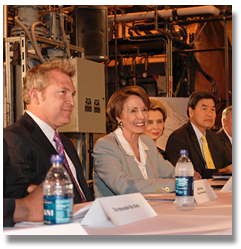
1974 – Nancy Pelosi becomes first female Speaker of the House


On January 4, 2007, John Boehner handed the speaker of the House gavel over to Nancy Pelosi, a Democratic Representative from California. With the passing of the gavel, she became the first woman to hold the Speaker of the House position, as well as the only woman to get that …read more

“Well, first let me just say,” Pelosi responded, “that that picture of my pointing to the president in that way, I’m saying to him: ‘With you, Mr. President, all roads lead to Putin.’ It’s directly related to our previous conversation.”

(Photo by Shealah Craighead/The White House via Getty Images)

(Photo by Shealah Craighead/The White House via Getty Images)

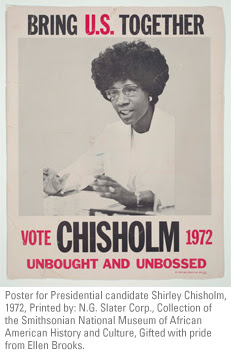
U.S. Rep. Shirley Chisholm – Women’s History Month


Shirley Chisholm

U.S. Rep. Shirley Chisholm, was the first black woman elected to the U.S. Congress and the first major-party African American candidate for president. Born to immigrant parents from Guyana and Barbados on November 30, 1924, she distinguished herself early as a dedicated student and skilled debater. She graduated from Brooklyn College in 1946 and later earned a master’s degree in elementary education from Columbia University. After working as an educator, Chisholm launched her political career, winning a seat in the New York State Assembly in 1965. In 1968, she was elected to Congress, where she served seven terms. In 1972, she waged her historic campaign for the Democratic presidential nomination, a quest chronicled in the award-winning 2005 documentary Shirley Chisholm ’72: Unbought and Unbossed, directed and produced by African-American filmmaker Shola Lynch. Chisholm died on January 1, 2005.

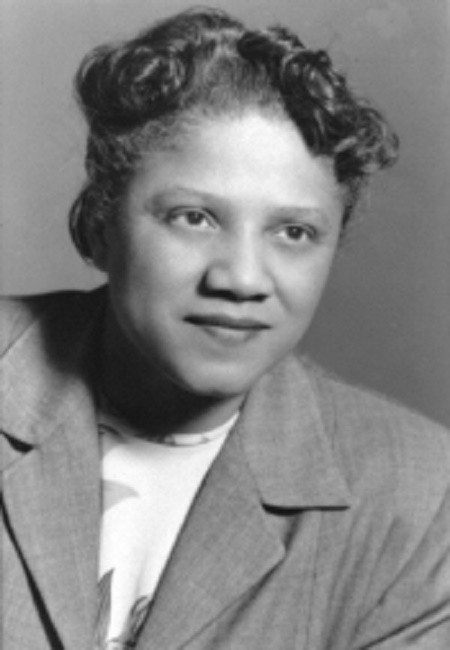
E. June Smith – Women’s History Month


JUNE SMITH: INFLUENTIAL CIVIL RIGHTS MOVEMENT LEADER IN SEATTLE
POSTED BY JAE JONES – MARCH 14, 2022 – BLACK WOMENHISTORYLATEST POSTS

Smith was born was born in Cairo, Illinois in 1900 and worked as a secretary in St. Louis. She arrived in Seattle with her husband Roscoe O. Smith, a railroad porter, in 1941.

After her arrival in the city, Smith found work as an insurance agent. In 1948, she co-founded the Beta Kappa Chapter of Iota Phi Lambda Sorority, a business and professional organization.

Smith became deeply involved in civil rights activities along with Philip Burton, a local attorney who initiated suits against discriminatory practices in the city. By the late 1950s, Smith was serving as a member on the executive committee of the Seattle chapter of the National Association for the Advancement of Colored People (NAACP) and became eventually became its president in 1963, a position she held for five years.

While serving as president of the NAACP Seattle chapter, Smith aroused the consciousness of the city through direct action campaigns. Partnering with the Seattle branch of the Congress of Racial Equality (CORE) and CACRC in 1965, Smith organized and led to the King County Courthouse steps a protest march that attracted an interracial group of approximately 600 people.

During her second term as head of the Seattle NAACP in 1966, Smith directly challenged the Seattle School Board by launching a bold plan to persuade parents and their children to boycott Seattle schools in protest of the slow pace of the School Board’s inaction on school desegregation.

Smith called on parents to keep their children out of school on March 31 and April 1 to drive attention to the board’s continued segregation of black students. Uncertain of how many parents would participate in the march, Smith signed up parents to register their children as they arrived for regular school. Smith also helped found the NAACP credit union. Smith died on February 9, 1982, in Seattle. She was 82.

source:

E. June Smith (1900-1982)