Solutions Don’t Start with Hurting Kids


House Republicans just introduced a plan to address the debt ceiling — and it starts with cutting funding for child programs. 

The consequences? Less child care availability, nutrition support, access to mental health services and foreign humanitarian assistance.  

And millions more children in need. 

Send a message: We can’t cut support for kids and families.  

I was extremely disappointed when House Republicans announced their plan to raise the debt limit, and as a constituent, I’m asking you to oppose it. The proposed cuts to child programs would be devastating for kids and families — across the nation and around the world.

The consequences speak for themselves: Less child care availability, nutrition support, access to mental health services and foreign humanitarian aid. And millions more children in need.

Parents in the U.S. are already struggling to find affordable, high-quality care. This plan would exacerbate the shortage by eliminating 275,000 slots in child care and Head Start programs.

We’ve seen a higher demand for food assistance since SNAP emergency funding ended — yet this proposal would limit access to benefits, making the hunger crisis even worse.

Reverting to FY22 spending levels would drastically decrease the availability of lifesaving interventions, such as mental health services — especially in rural America.

Finally, the proposed cuts to foreign aid for humanitarian response and development would undoubtedly cost lives.

The solution to reducing the deficit can’t start with hurting kids. As an advocate for children, I urge you to vote against this unacceptable plan.

Source

savethechildrenactionnetwork.org

1832 – Hot Springs National Park


by Timothy Oleson

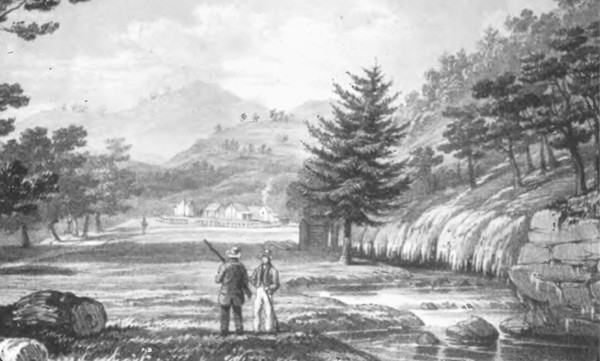
Published in the second volume of George William Featherstonhaugh’s “Excursion Through the Slave States” in 1844, this lithograph depicts Hot Springs in the mid-1830s. Lining Hot Springs Creek are a few small cabins in the center of the image and, at right, natural formations of calcium carbonate called tufa. Credit: National Park Service, Hot Springs National Park Collection.

Published in the second volume of George William Featherstonhaugh’s “Excursion Through the Slave States” in 1844, this lithograph depicts Hot Springs in the mid-1830s. Lining Hot Springs Creek are a few small cabins in the center of the image and, at right, natural formations of calcium carbonate called tufa. Credit: National Park Service, Hot Springs National Park Collection.

In March 1872, not long after William Henry Jackson’s photographs from the famed Hayden Geological Survey first introduced the U.S. populace to the rugged majesty of northwestern Wyoming, President Ulysses S. Grant designated Yellowstone as the country’s first official national park. Some 40 years earlier, however, a comparatively small plot of land in Arkansas had garnered a similar designation, albeit in different terminology, from then-President Andrew Jackson.

In the early 1800s, the mineral-rich, geothermally heated and ostensibly curative waters bubbling up at the base of Hot Springs Mountain, about 80 kilometers southwest of Little Rock, Ark., had been attracting European settlers for more than 200 years and Native Americans long before that. Amid its growing popularity and at the behest of the Arkansas Territorial Legislature, Jackson claimed a 10-square-kilometer area around the springs as a “federal reservation” in 1832, thus setting it aside for public use and nominally prohibiting private ownership of the land.

After that designation, both the park and the city of Hot Springs, Ark., which grew up intertwined with the park, underwent many transitions. For patients and visitors seeking a regimen of soothing natural baths, it remained one of the foremost destinations in the United States — along with others such as Saratoga Springs, N.Y., and White Sulphur Springs, W.Va. — until the practice of taking curative baths began to wane in the mid-20th century. But Hot Springs National Park — as it was officially designated in 1921 — is still popular with tourists looking to immerse themselves in its architecture, its history, and, thanks to the area’s distinctive geology, its inviting waters.