
1957 September 25
Monthly Archives: September 2023

OFCCP 58th Anniversary Celebration … 9/25 in memory of EO 11246

Over the past 58 years, OFCCP has helped define and defend equal employment opportunity in the American workplace.
The origins of the agency can be traced back to President Franklin D. Roosevelt’s signing of Executive Order 8802 on June 25, 1941.
Executive Order 8802 was issued to prohibit federal contractors within the defense industry from discriminating on the basis of race or ethnicity.
On September 24, 1965, President Lyndon B. Johnson greatly expanded the federal government’s enforcement of equal employment opportunity by issuing Executive Order 11246, and soon thereafter, the Secretary of Labor established the Office of Federal Contract Compliance. Executive Order 11246, enforced by OFCCP, became a key landmark in a series of federal actions aimed at eradicating discrimination.
President Lyndon Johnson signed Executive Order 11246, granting supervision of federal contract compliance to the Secretary of Labor, and creating the department’s first Office of Federal Contract Compliance. The EO ordered federal departments and agencies to impose non–non-discrimination and affirmative action rules in all federal contracts and federally–assisted construction projects. Later, on October 5, 1978, President Jimmy Carter consolidated all affirmative action enforcement actions into DOL by signing into law Executive Order 12086.
History of Executive Order 11246
Learn more about the history of OFCCP and stay informed about planned celebratory activities across the country in honor of this significant milestone.
In a June 1965 commencement address at Washington, DC’s Howard University, President Lyndon Johnson shared his strong belief in civil rights and nondiscriminatory practices when he said: “Thus it is not enough just to open the gates of opportunity. All our citizens must have the ability to walk through those gates. This is the next and the more profound stage of the battle for civil rights. We seek not just freedom but opportunity. We seek not just legal equity but human ability, not just equality as a right and a theory but equality as a fact and equality as a result.”
Share this:

1789 – The U.S. Congress passed the First Judiciary Act. The act provided for an Attorney General and a lower federal courts. a repost
Judiciary Act of 1789
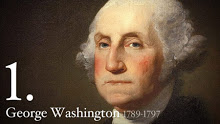
The Judiciary Act of 1789, officially titled “An Act to Establish the Judicial Courts of the United States,” was signed into law by President George Washington on September 24, 1789. Article III of the Constitution established a Supreme Court, but left to Congress the authority to create lower federal courts as needed. Principally authored by Senator Oliver Ellsworth of Connecticut, the Judiciary Act of 1789 established the structure and jurisdiction of the federal court system and created the position of attorney general. Although amended throughout the years by Congress, the basic outline of the federal court system established by the First Congress remains largely intact today.

Oliver Ellsworth, 1745-1807.
1 print: etching [no date recorded]
Prints & Photographs Division.
Reproduction Number:
LC-USZ62-54670
Library of Congress Web Site | External Web Sites | Selected Bibliography
Share this:

On this day in 1789~new SCOTUS
Congress passes the Judiciary Act of 1789, establishing a strong federal court system with the powers it needs to ensure the supremacy of the Constitution and federal law. The new Supreme Court will have a chief justice and five associate justices.
Share this:

AUTUMNAL EQUINOX, 2023: THE FIRST DAY OF FALL
Facts, Folklore, and Everything You Need to Know About the Fall Equinox

What Is the Autumnal Equinox?
The autumnal equinox is an astronomical event that marks the start of autumn (or “fall”). In the Northern Hemisphere, the autumnal equinox occurs in September; in the Southern Hemisphere, it occurs in March.
What Is an Equinox?
During an equinox, the Sun crosses what we call the “celestial equator”—an imaginary extension of Earth’s equator line into space. The equinox occurs precisely when the Sun’s center passes through this line.
For those in the Northern Hemisphere, when the Sun crosses the equator going from north to south, this marks the autumnal equinox; when it crosses from south to north, this marks the vernal equinox. In the Southern Hemisphere, it’s the reverse.
After the autumnal equinox, days become shorter than nights as the Sun continues to rise later and nightfall arrives earlier. This ends with the winter solstice, after which days start to grow longer once again.
The word “equinox” comes from Latin aequus, meaning “equal,” and nox, ”night.” On the equinox, day and night are roughly equal in length.
**********
Autumn has caught us in our summer wear.
–Philip Larkin, British poet (1922–86)
Autumn days come quickly, like the running of a hound on the moor.
–Irish proverb
Fall Weather
It is the summer’s great last heat,
It is the fall’s first chill: They meet.
–Sarah Morgan Bryan Piatt
Another definition of fall is “nights of below-freezing temperatures combined with days of temperatures below 70 degrees Fahrenheit (21°C)”. From here on out, the temperatures begin to drop.
→ Find 12 months of long-range weather predictions in the latest edition of The Old Farmer’s Almanac!
For the complete article: almanac.com

 Be a Seed for Change
You must be logged in to post a comment.