
Trayvon Martin – In Memory and Black History, a reminder


Now She’s On Trial.

Trayvon Martin, an African-American teenager, was shot dead by a “neighborhood watch” member as Trayvon was walking home from a convenience store. Trayvon was armed with nothing but a bottle of iced tea and a bag of Skittles. A few days ago, Alan Grayson was invited on national TV to discuss the tragedy. This is what he said:

ED SCHULTZ: Welcome back to THE ED SHOW. Breaking news in the Trayvon Martin case tonight: ABC News has obtained video of George Zimmerman being brought into the Police Department on the night he shot and killed Trayvon Martin.


I am joined by Alan Grayson, former Florida Congressman, who is from the Orlando area. Congressman, good to have you with us tonight. You have been at these rallies for Trayvon all week, and have been paying close attention to the case.

What are your impressions of this police house videotape that was obtained tonight?

ALAN GRAYSON: Well, I think it blows apart the Zimmerman argument that he was acting out of fear rather than out of hatred. But I’ll tell you, I sometimes wonder why people think that’s some kind of good defense. I don’t believe it in his case. I think if you call someone an “F’ing coon,” then you’re animated by nothing but hatred.

But still he seems to be operating under the illusion that if he simply says that he feared, then somehow that excuses the death of a young boy. It doesn’t. It just doesn’t. The boy is dead. If you do the crime, you’re going to have to do the time.

SCHULTZ: Do you believe that this videotape is inconsistent with the police report?

GRAYSON: Yes, I’ve read the police report. I saw the tape. And I think there is an inconsistency.

SCHULTZ: And what would you be thinking right now if you were representing the Martin family in this case?

GRAYSON: I think that this tape proves their point. Zimmerman should, under no circumstances, be allowed to have a gun. It should have been taken from him a long time ago. And he should have been arrested a long time ago.

He should be tried. And it looks to me like he’ll be convicted.

SCHULTZ: Alan, what do you make of the police report and the listing of the deceased as a John Doe? The timing of the report, when it was put together and then released? There are many more questions here than answers, are there not?

GRAYSON: I think so. But, honestly, I don’t find much fault in what the police did, except for the fact that [Zimmerman] hasn’t been arrested yet. Zimmerman should have been arrested. That’s the main fly in the ointment at this point. Nobody who does anything like that should be allowed to walk the streets.

SCHULTZ: Are you bothered by the casualness of this videotape and how one of the officers seems to be searching the pockets of George Zimmerman?

GRAYSON: It bothers me to see Zimmerman acting as if nothing had happened. He killed a 17-year-old boy. He stalked and killed a 17-year-old boy. And it’s appalling to me to see the kind of casualness that that video displays.

SCHULTZ: Do you know the state’s attorney, Wolfinger, who recommended that they not press charges and told the lead investigator at the time not to go down that road?

GRAYSON: No. It’s a terrible mistake. And the law really does not give them the excuse to do that. They’re referring to what’s known as the “Hold Your Ground” or “Stand Your Ground” law, which I often refer to as the “Shoot To Kill” law. That’s a law that led to a tripling – a tripling – in so-called “justifiable homicides” in Florida from the year that it was enacted all the way to the present.

It’s a bad law, but it does not apply to this situation. It does not apply to chasing after someone and shooting him in the chest.

SCHULTZ: Would that be hard to prove with the Stand Your Ground law as maybe something the Zimmerman team would use as a defense?

GRAYSON: Listen, juries figure out that sort of thing, and things way more complicated than that sort of thing, all the time. There’s no way that Zimmerman can possibly argue that he was simply standing his ground. That law was meant to apply to people who are in their homes, maybe people in their cars, not people who are literally chasing someone around the neighborhood and then killing him.

SCHULTZ: And what do you make of the right-wing smear campaign that has been fostered by some on the right that, you know, this kid was suspended from school and he was somewhat troublesome, in defense of the actions of George Zimmerman?

GRAYSON: I think it shows that many on the right wing have a taste of blood in their mouths. They kind of like the idea of vigilantism, and this is perfect case for them.

SCHULTZ: And the Stand Your Ground law, it went into effect in 2005. There have been 93 cases, 65 deaths. Do you sense that this is a turning point in this country that maybe these kinds of laws will be repealed? Or do you see more of them coming? Because we all know that ALEC, it’s well-reported that ALEC and also the NRA have been pushing these laws on legislative sessions around this country.

GRAYSON: I think it’s a turning point that’s far more profound than that. I think we have to stop hating each other. And we have to start cherishing our differences.

The very notion that you would feel fear or hatred towards a boy who you never met in your entire life simply because he’s black is appalling. I thought that we had moved past that. It was almost 50 years ago that Martin Luther King said that he hoped his children would be judged [by the content of their character], not by the color of their skin. And we’re still waiting for that time to come.

SCHULTZ: Alan Grayson, thank you for your time tonight here on THE ED SHOW. I appreciate it.

To sign our petition, go to http://www.GraysonOnTrayvon.com.

Black teens forced to confess to murder …Rashad Robinson, ColorOfChange.org – Black History- called them the Dixmoor 5, they were innocent !!!!!!!


DNA results prove the innocence of ten Chicago-area men arrested as teens, some imprisoned for nearly 20 years.
Please tell the State’s Attorney to correct these injustices:


Recent DNA testing has proven the innocence of 10 Black men who were were only children when they were forced by Illinois police to confess to murders they didn’t commit.

Some of them have been imprisoned for nearly 20 years, but despite the overwhelming evidence, which has even linked the crimes to the real killers, the state of Illinois refuses to recognize their innocence.

If enough of us speak out, we can expose these injustices and force the state of Illinois to do right by these men. Please join us in demanding that State Attorney Anita Alvarez immediately agree to overturn their convictions. It takes just a moment:

http://act.colorofchange.org/sign/Cook_County/

The Dixmoor Five

In the first case, which occurred in October 1992, five Black teenagers, later called the Dixmoor Five, were arrested in Cook County, IL for the sexual assault and murder of 14-year-old Cateresa Matthews. Three of the five boys confessed to the crime in exchange for lighter sentences and testified against the others. They’ve since recanted their testimony, with one man claiming that he was tricked into signing a confession by local police.1

A few months ago, DNA samples taken from the victim were tested using modern techniques. The DNA didn’t belong to any of the men accused of her rape and murder — instead it was linked to a convicted rapist and armed robber who was 32 years old at the time.2

In the face of this overwhelming evidence, the State’s Attorney’s office stubbornly downplayed the significance of the DNA evidence and opposed the release of the men.

The Englewood Five

Two-and-a-half years later, five more Black Cook County teenagers, known as the Englewood Five, were taken into custody for the sexual assault and murder of a 30-year-old woman named Nina Glover. In this case, five juvenile confessions resulted in the convictions of four teenagers (aged 14-18 at the time). While one teenager wasn’t convicted, the other four received lengthy prison sentences. Recently, DNA extracted from the victim was matched to a now deceased serial rapist and murderer — a man who has a history of preying on women and strangling them.3

The State has argued that any DNA match in this case would be inconclusive due to the lifestyle of the victim, who was known to engage in prostitution. However, the semen found in the strangled body of Ms. Glover is from a man that the Cook County State’s Attorney‘s office has long believed was responsible for two strangulation-murders of prostitutes and violent assaults of at least five others.4

The Common Thread

The thread that connects both these cases? The teenagers were incarcerated as a result of confessions we now know were forced by police. Eight of the 10 teenagers confessed to police during intense and coercive interrogations, and six of the now grown men are still in custody.

Coerced confessions play a part in almost a quarter of all wrongful convictions nationwide.5 Even the U.S. Supreme Court has recognized that teenagers are particularly susceptible to falsely incriminating themselves during questioning from police and should not be subjected to harsh interrogation tactics.6

Coercive interrogation practices must come to an end. Ensuring the release of these men wouldn’t just help correct a gross injustice — it would send a message to law enforcement that they can’t get away with forcing teenagers to confess to crimes they didn’t commit, and that this practice compromises the entire public’s safety.

Please join us in demanding that Cook County State’s Attorney Anita Alvarez agree to vacate the convictions of these young Black men, and when you do, ask your friends and family to do the same:

http://act.colorofchange.org/sign/Cook_County/

Thanks and Peace,

— Rashad, James, Gabriel, William, Dani, Matt, Natasha and the rest of the ColorOfChange.org team
    August 9th, 2011

Help support our work. ColorOfChange.org is powered by YOU–your energy and dollars. We take no money from lobbyists or large corporations that don’t share our values, and our tiny staff ensures your contributions go a long way. You can contribute here:

http://www.colorofchange.org/donate

References:

1. “DNA evidence links man to 1991 murder, may clear 5 convicted in case,” Chicago Tibune, 04-15-11
http://act.colorofchange.org/go/929?akid=2097.1174326.j7cO5x&t=7

2. “State’s response to petition for relief from judgement,” Circuit Court of Cook County, 04-29-11
http://act.colorofchange.org/go/931?akid=2097.1174326.j7cO5x&t=9

3. “Man convicted in 1994 rape, murder pins hopes on advanced DNA test,” Chicago Tribune, 03-25-11
http://act.colorofchange.org/go/930?akid=2097.1174326.j7cO5x&t=11

4. “State’s motion to dismiss request for post-conviction DNA testing,” Circuit Court of Cook County, 01-19-2011
http://act.colorofchange.org/go/932?akid=2097.1174326.j7cO5x&t=13

5. “Understand the Causes,” Innocence Project
 http://act.colorofchange.org/go/934?akid=2097.1174326.j7cO5x&t=15

6. “Supreme Court case J.D.B. v. North Carolina,” Supreme Court opinion, October, 2010
“http://act.colorofchange.org/go/928?akid=2097.1174326.j7cO5x&t=17

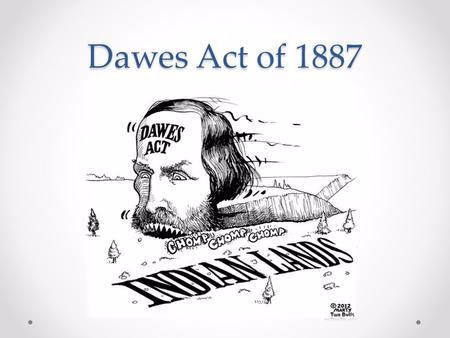
1887 – Cleveland signs the Dawes Severalty Act1887 –


In a well-meaning but ultimately flawed attempt to assimilate Native Americans, President Grover Cleveland signs an act to end tribal control of reservations and divide their land into individual holdings. Named for its chief author, Senator Henry Laurens Dawes from …read more

the awful image above is from a WP site

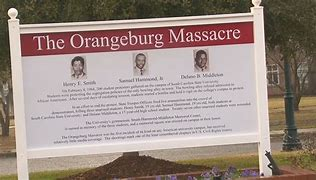
1968 – Three protestors die in the Orangeburg Massacre


On the night of February 8, 1968, police officers in Orangeburg, South Carolina open fire on a crowd of young people during a protest against racial segregation, killing three and wounding around 30 others. The killing of three young African Americans by state officials, four years after racial discrimination had been outlawed by federal law, has gone down in history as the Orangeburg Massacre.

After decades of protests across the country, segregation was abolished in the United States by the Civil Rights Act of 1964.

While its passage was a major victory, many white Americans throughout the South simply refused to obey it, knowing local police would not care to enforce it.

In early February of 1968, a group of activists in Orangeburg tried to convince one such man, Harry Floyd, to desegregate his bowling alley, but he refused. Several days of expanding protests followed, during which protesters damaged a window of the bowling alley, police responded with arrests and beatings, and unrest spread to the nearby campus of South Carolina State University, a historically Black college.

Source: history.com

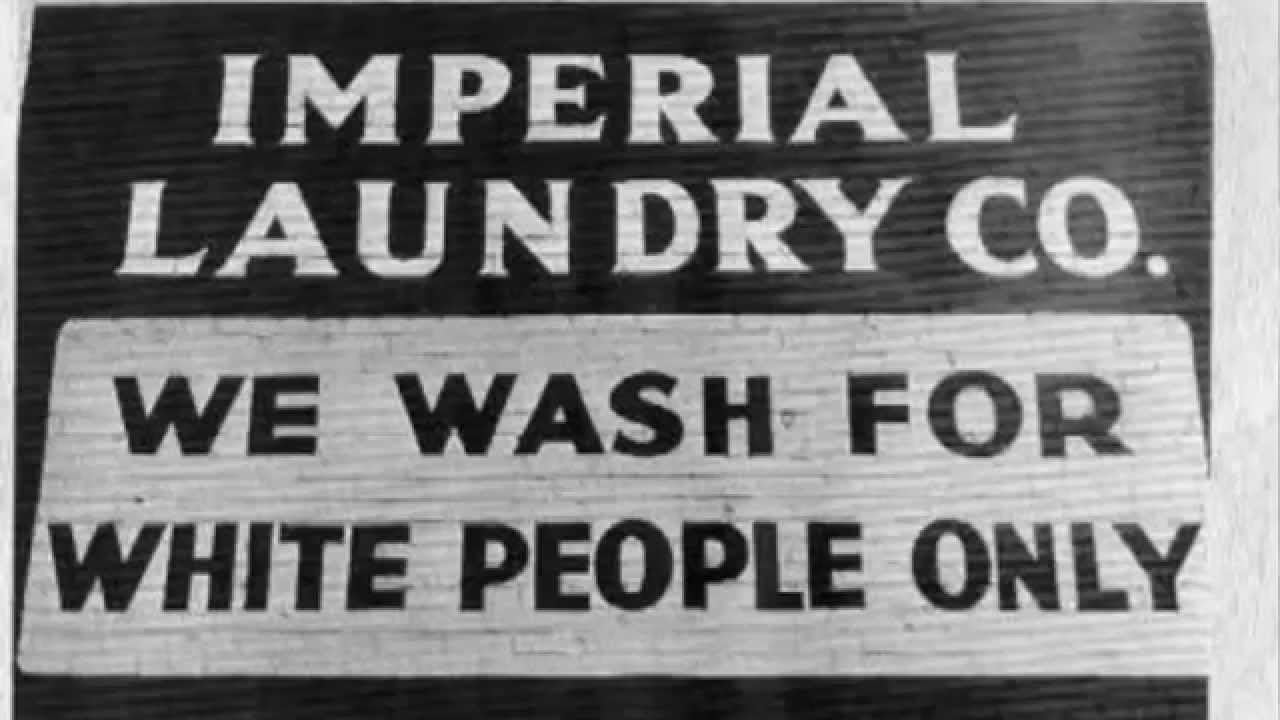
Jim crow… did you know?


Jim Crow Era

After the Civil War, there was a period from about 1865 to 1877 where federal laws offered observable protection of civil rights for former slaves and free blacks; it wasn’t entirely awful to be an African American, even in the South. However, starting in the 1870s, as the Southern economy continued its decline, Democrats took over power in Southern legislatures and used intimidation tactics to suppress black voters. Tactics included violence against blacks and those tactics continued well into the 1900s. Lynchings were a common form of terrorism practiced against blacks to intimidate them. It is important to remember that the Democrats and Republicans of the late 1800s were very different parties from their current iterations. Republicans in the time of the Civil War and directly after were literally the party of Lincoln and anathema to the South. As white, Southern Democrats took over legislatures in the former Confederate states, they began passing more restrictive voter registration and electoral laws, as well as passing legislation to segregate blacks and whites.

It wasn’t enough just to separate out blacks – segregation was never about “separate but equal.” While the Supreme Court naively speculated in Plessy v. Ferguson that somehow mankind wouldn’t show its worst nature and that segregation could occur without one side being significantly disadvantaged despite all evidence to the contrary, we can look back in hindsight and see that the Court was either foolishly optimistic or suffering from the same racism that gripped the other arms of the government at the time. In practice, the services and facilities for blacks were consistently inferior, underfunded, and more inconvenient as compared to those offered to whites – or the services and facilities did not exist at all for blacks. While segregation was literal law in the South, it was also practiced in the northern United States via housing patterns enforced by private covenants, bank lending practices, and job discrimination, including discriminatory labor union practices.

This kind of de facto segregation has lasted well into our own time.

The era of Jim Crow laws saw a dramatic reduction in the number of blacks registered to vote within the South. This time period brought about the Great Migration of blacks to northern and western cities like New York City, Chicago, and Los Angeles. In the 1920s, the Ku Klux Klan experienced a resurgence and spread all over the country, finding a significant popularity that has lingered to this day in the Midwest. It was claimed at the height of the second incarnation of the KKK that its membership exceeded 4 million people nationwide. The Klan didn’t shy away from using burning crosses and other intimidation tools to strike fear into their opponents, who included not just blacks, but also Catholics, Jews, and anyone who wasn’t a white Protestant.

This time period was not without its triumphs for blacks, even if they came at a cost or if they were smaller than one would have preferred. The NAACP was founded in 1909, in response to the continued practice of lynching and race riots in Springfield, Ill. From the 1920s through the 1930s in Harlem, New York, a cultural, social, and artistic movement took place that was later coined the Harlem Renaissance. Musicians like Duke Ellington and Jelly Roll Morton, writers such as Zora Neale Hurston and Langston Hughes, it-girls like Josephine Baker, and philosophers like W.E.B. Du Bois all had a hand in the Harlem Renaissance and American culture as a whole is richer and better for it. 

Notable Supreme Court Cases:

  • The Slaughter-House Cases, 83 U.S. 36 (1873) – this series of three cases, which were consolidated into one issue, offered the first opinion from the Supreme Court on the 14th Amendment. The court chose to interpret the rights protected by the 14th Amendment as very narrow and this precedent would be followed for many years to come.
  • Civil Rights Cases, 109 U.S. 3 (1883) – in this set of five cases that were consolidated into one issue, a majority of the court held the Civil Rights Act of 1875 unconstitutional against the lone famous dissent of Justice Harlan. The majority argued that Congress lacked authority to regulate private affairs under the 14th Amendment and that the 13th Amendment “merely abolishe[d] slavery”. Segregation in public accommodations would not be declared illegal after these cases until the Civil Rights Act of 1964.
  • Plessy v. Ferguson, 163 U.S. 537 (1896) – this is the case which gave us the phrase “separate but equal” and upheld state racial segregation laws for public facilities. Justice Harlan again offered a lone dissent. These laws would remain in play until 1954.

Selected Library Resources:

Additional Resources:

library.law.howard.edu