
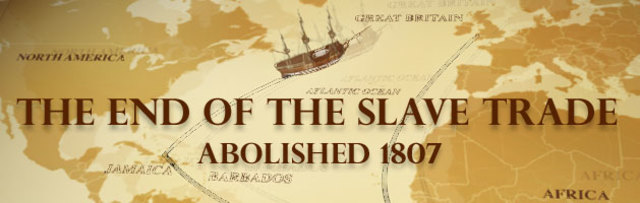

Excerpt from “Act to Prohibit the Importation of Slaves”
Passed on March 2, 1807
Published in Documents of American History, edited by
Henry S. Commager, 1943
After the American Revolution ended in 1783, the matter of slavery grew more and more controversial among the states. The slave population was growing rapidly, because slave families were having children and plantation owners were importing even more slaves from Africa. The largest concentration of slaves was in the South, where large farms of tobacco, rice, and cotton required many laborers. The Northern states did not need large numbers of slaves, and some of them began to pass legislation to end slavery. In 1777, Vermont had become the first state to prohibit slavery. By 1783, other Northern states had chosen to end slavery and were gradually phasing it out.
Slavery was such a controversial issue in the 1780s that the Framers of the U.S. Constitution avoided the subject as much as possible during the Constitutional Convention in the summer of 1787. The convention began in May, but the topic of slavery did not come up until July. The convention delegates did not want to risk conflict over slavery between Northern and Southern states. They feared it might cause states to withdraw from the convention. They realized that the issue of slavery had to be handled very carefully or it could destroy the convention.
In early July, the delegates voted that the number of representatives in the lower house (House of Representatives) would be determined by each state’s population—one representative elected for every forty thousand residents. The population was to be determined by a census taken every ten years beginning in 1790. The delegates next had to determine which persons should be counted in the census.
Northern delegates did not think slaves should be counted at all; they argued that slaves were not citizens and could not vote and therefore should not have representation in Congress. The Northern states took this position because they had very few slaves and did not want the Southern states to gain representatives by counting their large slave population. To increase their representation, Southern states wanted everyone counted, including slaves. Slaves made up about 44 percent of the population in South Carolina, 41 percent in Virginia, and about one-third of the other Southern states’ populations. On July 16, the delegates agreed to the Three-Fifths Compromise. Under this plan, each slave would be counted as three-fifths of a person. Or, to put it another way, every five slaves would count as three free inhabitants.
The convention delegates adjourned between July 26 and August 6. When they returned, refreshed from their break, they confronted more-difficult matters that had earlier been set aside in a catchall category labeled “postponed matter.” Included in these issues was the question of whether the United States should continue to participate in the international slave trade. The Northern states wanted to halt the importation of slaves, and the Southern states did not. The resulting compromise, which is contained in Article 1, Section 9, of the Constitution, prevented Congress from outlawing the importation of slaves until 1808. Both sides felt they had achieved a victory. Those opposed to slavery saw a time in the future when Congress could halt the importation of slaves. Those in favor of keeping slavery assumed they would prevail in any future debates. The terms “slave” and “slavery” were not used anywhere in the Constitution. Instead, those drafting the document used “such Persons” and “other Persons” to refer to slaves (Article 1, Section 9, Clause 1 and Article 1, Section 2, Clause 3).
The importation of slaves from Africa continued through the 1790s and into the next decade. Meanwhile, the Southern states began planting different crops. Farmers in Maryland and northern Virginia planted less tobacco and more wheat, a crop that required fewer field-workers. The more southerly states greatly expanded their cotton and sugarcane crops, both of which required many laborers. Maryland and northern Virginia farmers sold their excess slaves to the more southerly states.
The ban on congressional action to stop slave importation was in effect until 1808. As that year approached, President Thomas Jefferson (1743–1826; served 1801–9) began encouraging the nation to prohibit slave importation permanently. In December 1806, in his Sixth Annual Message (a written version of what is now the spoken State of the Union address), Jefferson wrote, “I congratulate you, fellow-citizens, on the approach of the period at which you may interpose [use] your authority constitutionally to withdraw the citizens of the United States from all further participation in those violations of human rights which have been so long continued on the unoffending inhabitants of Africa.” By March 1807, legislation was moving through Congress to prohibit slave importation. The legislation, titled the “Act to Prohibit the Importation of Slaves,” follows. It passed through Congress easily, partly because there was a surplus of slaves in Maryland and Virginia at the time, and the surplus was filling the needs of the lower South. The prohibition took effect on January 1, 1808.
Things to remember while reading excerpts from “Act to Prohibit the Importation of Slaves”:
- The act prohibited slave importation into the United States. It did not prohibit slavery or slave trade within the United States.
- Congress was careful to cover all bases with this legislation. The act prohibited bringing persons into the United States for the purposes of slavery, but it did not stop there. It also stated that any ship outfitted for slave trade would be seized. Also, under the same legislation, people would be fined for taking on board their ships individuals intended to be sold into slavery in the United States. The act also made it illegal for anyone to purchase or sell a slave that the person knew had been imported from another country after the act took effect.
- Section 7 allowed the U.S. president to use the nation’s military ships to patrol any coastal waters where illegal slave importation was taking place. The military ships could seize any slave ships they found and bring them into U.S. ports.
- The act successfully ended the importation of slaves into the United States.
Excerpt from “Act to Prohibit the Importation of Slaves”
An Act to prohibit the importation of Slaves into any port or place within the jurisdiction of the United States, from and after the first day of January, in the year of our Lord, one thousand eight hundred and eight.
Be it enacted, That from and after the first day of January, one thousand eight hundred and eight, it shall not be lawful to import or bring into the United States or the territories thereof from any foreign kingdom, place, or country, any negro,mulatto, or person of colour as a slave, or to be held to service or labour.
Sec. 2. That no citizen or citizens of the United States, or any other person, shall, from and after the first day of January, in the year of our Lord one thousand eight hundred and eight, for himself, or themselves, or any other person whatsoever … build, fit, equip, load or otherwise prepare any ship or vessel, in any port or place within the jurisdiction of the United States, nor shall cause any ship or vessel to sail from any port or place within the same, for the purpose of procuring any negro, mulatto, or person of colour, from any foreign kingdom, place, or country, to be transported to any port or place whatsoever, within the jurisdiction of the United States, to be held, sold, or disposed of as slaves, or to be held to service or labour: and if any ship or vessel shall be so fitted out for the purpose aforesaid, or shall be caused to sail so as aforesaid, every such ship or vessel, her tackle, apparel, and furniture, shall be forfeited to the United States, and shall be liable to be seized, prosecuted, and condemned in any of the circuit courts or district courts for the district where the said ship or vessel may be found or seized. …
Sec. 4. If any citizen or citizens of the United States, or any person resident within the jurisdiction of the same, shall, from and after the first day of January, one thousand eight hundred and eight, take on board, receive or transport from any of the coasts or kingdoms of Africa, or from any other foreign kingdom, place, or country, any negro, mulatto, or person of colour, in any ship or vessel, for the purpose of selling them in any port or place within the jurisdiction of the United States as slaves, or to be held to service or labour, or shall be in any ways aiding or abetting therein, such citizen or citizens, or person, shall severally forfeit and pay five thousand dollars. …
Sec. 6. That if any person or persons whatsoever, shall, from and after the first day of January, one thousand eight hundred and eight, purchase or sell any negro, mulatto, or person of colour, for a slave, or to be held to service or labour, who shall have been imported, or brought from any foreign kingdom, place, or country, or from the dominions of any foreign state, immediately adjoining to the United States, into any port or place within the jurisdiction of the United States, after the last day of December, one thousand eight hundred and seven, knowing at the time of such purchase or sale, such negro, mulatto, or person of colour, was so brought within the jurisdiction of the United States, as aforesaid, such purchaser and seller shall severally forfeit and pay for every negro, mulatto, or person of colour, so purchased or sold as aforesaid, eight hundred dollars. …
Sec. 7. That if any ship or vessel shall be found, from and after the first day of January, one thousand eight hundred and eight, in any river, port, bay, or harbor, or on the high seas, within the jurisdictional limits of the United States, or hovering on the coast thereof, having on board any negro, mulatto, or person of colour, for the purpose of selling them as slaves, or with intent to land the same, in any port or place within the jurisdiction of the United States, contrary to the prohibition of this act, every such ship or vessel, together with her tackle, apparel, and furniture, and the goods or effects which shall be found on board the same, shall be forfeited to the use of the United States, and may be seized, prosecuted, and condemned, in any court of the United States, having jurisdiction thereof. And it shall be lawful for the President of the United States, and he is hereby authorized, should he deem it expedient, to cause any of the armed vessels of the United States to be manned and employed to cruise on any part of the coast of the United States, or territories thereof, where he may judge attempts will be made to violate the provisions of this act, and to instruct and direct the commanders of armed vessels of the United States, to seize, take, and bring into any port of the United States all such ships or vessels, and moreover to seize, take, or bring into any port of the U.S. all ships or vessel of the U.S., wheresoever found on the high seas,contravening the provisions of this act. …
What happened next …
Though slaves could no longer be legally imported into the United States, the slave population continued to grow rapidly through natural population growth. By 1810, there were approximately 1.2 million slaves in the United States, up from nine hundred thousand in 1800; by 1820, the slave population had reached 1.5 million. In 1810, 40 percent of slaves still lived in Maryland and Virginia, but the shift of the slave population to areas farther south continued. Further, two states situated on the western frontier, Kentucky and Tennessee, had roughly seventy-five thousand slaves by 1810. Most had been moved from Maryland and Virginia. The purchase of Louisiana from France in 1803, which was already a slavery area under Spain’s control, resulted in increased slavery for the United States in the lower Mississippi River. As new Western territories sought statehood through the 1820s, slavery would become a major social and political issue in America, eventually leading to the bloody Civil War (1861–65).






 Be a Seed for Change
You must be logged in to post a comment.