

1776 – The amended Declaration of Independence, prepared by Thomas Jefferson, was approved and signed by John Hancock, the President of the Continental Congress in America.
1802 – The U.S. Military Academy officially opened at West Point, NY.
1803 – The Louisiana Purchase was announced in newspapers. The property was purchased, by the U.S. from France, was for $15 million (or 3 cents an acre). The “Corps of Discovery,” led by Meriwether Lewis and William Clark, began the exploration of the territory on May 14, 1804.
1817 – Construction began on the Erie Canal, to connect Lake Erie and the Hudson River.
1845 – American writer Henry David Thoreau began his two-year experiment in simple living at Walden Pond, near Concord, MA.
1848 – In Washington, DC, the cornerstone for the Washington Monument was laid.
1855 – The first edition of “Leaves of Grass,” by Walt Whitman, was published in Brooklyn, NY.
1863 – The Confederate town of Vicksburg, MS, surrendered to General Ulysses S. Grant.
1881 – Tuskegee Institute opened in Alabama.
1884 – Bullfighting was introduced in the U.S. in Dodge City, KS.
1886 – The first rodeo in America was held at Prescott, AZ.
1892 – The first double-decked street car service was inaugurated in San Diego, CA.
1894 – After seizing power, Judge Stanford B. Dole declared Hawaii a republic.
1901 – William H. Taft became the American governor of the Philippines.
1910 – Race riots broke out all over the United States after African-American Jack Johnson knocked out Jim Jeffries in a heavyweight boxing match.
1934 – Boxer Joe Louis won his first professional fight.
1934 – At Mount Rushmore, George Washington’s face was dedicated.
1939 – Lou Gehrig retired from major league baseball.
1946 – The Philippines achieved full independence for the first time in over four hundred years.
1957 – The U.S. Postal Service issued the 4¢ Flag stamp.
1959 – The 49-star U.S. flag became official.
1960 – The 50-star U.S. flag made its debut in Philadelphia, PA.
1966 – U.S. President Johnson signed the Freedom of Information Act, which went into effect the following year.
1976 – The U.S. celebrated its Bicentennial.
1982 – The Soviets performed a nuclear test at Eastern Kazakhl Semipalitinsk.
1987 – Klaus Barbie, the former Gestapo chief known as the “Butcher of Lyon,” was convicted by a French court of crimes against humanity and sentenced to life in prison.
1997 – The Mars Pathfinder, an unmanned spacecraft, landed on Mars. A rover named Sojourner was deployed to gather data about the surface of the planet.
1997 – Ferry service between Manhattan and Staten Island was made free of charge. Previously, the charge had ranged from 5 cents to 50 cents.
2004 – In New York, the cornerstone of the Freedom Tower (One World Trade Center) was laid on the former World Trade Center site.
2005 – NASA’s Deep Impact spacecraft took pictures as a space probe smashed into the Tempel 1 comet. The mission was aimed at learning more about comets that formed from the leftover buidling blocks of the solar system. The Deep Impact mission launched on January 12, 2005.
2009 – North Korea launched seven ballistic missiles into waters off its east coast that defied U.N. resolutions.
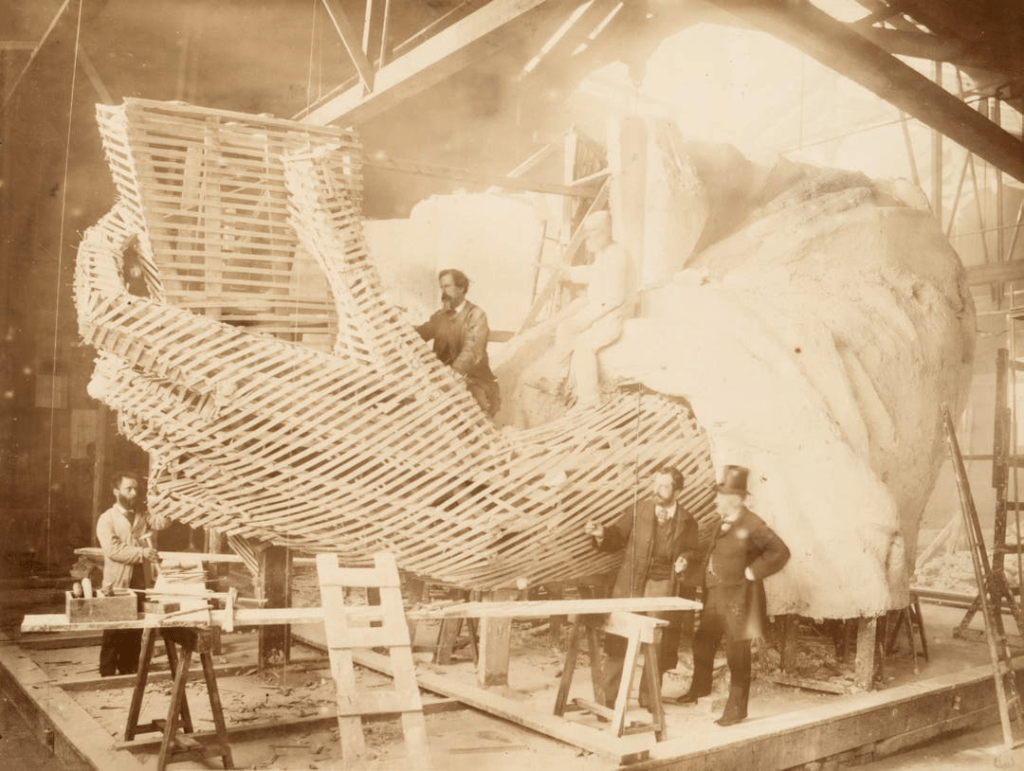
2009 – The Statue of Liberty’s crown reopened to visitors. It had been closed to the public since 2001.



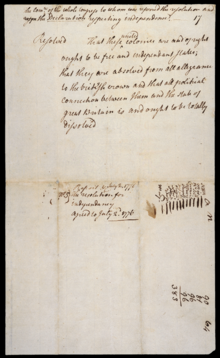 “The Resolution for Independence agreed to July 2, 1776”. The marks at the bottom right indicate the 12 colonies that voted for independence. The
 Be a Seed for Change
You must be logged in to post a comment.