

on this day 8/13


1521 – Present day Mexico City was captured by Spanish conqueror Hernando Cortez from the Aztec Indians.

1704 – The Battle of Blenheim was fought during the War of the Spanish Succession, resulting in a victory for English and Austrian forces.

1792 – French revolutionaries took the entire French royal family and imprisoned them.

1784 – The United States Legislature met for the final time in Annapolis, MD

1846 – The American Flag was raised for the first time in Los Angeles, CA. 

1876 – The Reciprocity Treaty between the U.S. and Hawaii was ratified. 

1889 – A patent for a coin-operated telephone was issued to William Gray.

1912 – The first experimental radio license was issued to St. Joseph’s College in Philadelphia, PA.

1931 – The first community hospital in the U.S. was dedicated in Elk City, OK.

1932 – Adolf Hitler refused to take the post of vice-chancellor of Germany. He said he was going to hold out “for all or nothing.”

1934 – Al Capp’s comic strip “L’il Abner” made its debut in newspapers.

1942 – Henry Ford unveiled his “Soybean Car.” It was a plastic-bodied car that weighed about 1000 lbs. less than a steel car.

1942 – Walt Disney’s “Bambi” opened at Radio City Music Hall in New York City, NY.
Disney movies, music and books

1959 – In New York, ground was broken on the $320 million Verrazano Narrows Bridge.

1960 – “Echo I,” a balloon satellite, allowed the first two-way telephone conversation by satellite to take place.

1961 – Berlin was divided by a barbed wire fence to halt the flight of refugees. Two days later work on the Berlin Wall began.

1979 – Lou Brock (St. Louis Cardinals) got his 3,000th career hit.

1986 – United States Football League standout Herschel Walker signed to play with the Dallas Cowboys of the National Football League.

1990 – Iraq transferred $3-4 billion in bullion, currency, and other goods seized from Kuwait to Baghdad.

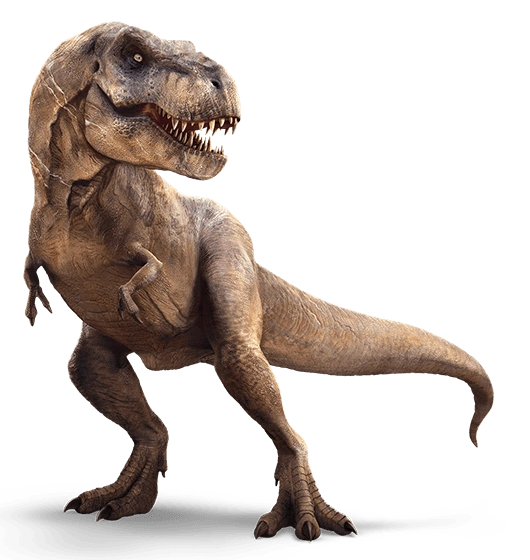
Skeleton of Tyrannosaurus rex discovered


See the source image

On August 12, 1990, fossil hunter Susan Hendrickson discovers three huge bones jutting out of a cliff near Faith, South Dakota. They turn out to be part of the largest-ever Tyrannosaurus rex skeleton ever discovered, a 65 million-year-old specimen dubbed Sue, after its discoverer.

Amazingly, Sue’s skeleton was over 90 percent complete, and the bones were extremely well-preserved. Hendrickson’s employer, the Black Hills Institute of Geological Research, paid $5,000 to the land owner, Maurice Williams, for the right to excavate the dinosaur skeleton, which was cleaned and transported to the company headquarters in Hill City. The institute’s president, Peter Larson, announced plans to build a non-profit museum to display Sue along with other fossils of the Cretaceous period.

Source:

history.com

Citation Information

Article Title

Skeleton of Tyrannosaurus rex discovered

AuthorHistory.com Editors

Website Name

HISTORY

URL

https://www.history.com/this-day-in-history/skeleton-of-tyrannosaurus-rex-discovered

Access Date

August 11, 2021

Publisher

A&E Television Networks

Last Updated

August 10, 2021

Original Published Date

November 24, 2009

1993 – Ruth Bader Ginsburg Sworn in as Supreme Court Justice


On August 10, 1993, Ruth Bader Ginsburg becomes the second woman—and first Jewish woman—to serve on the Supreme Court. Already a champion for women’s rights, Ginsburg becomes a pop culture icon during her 27 years on the court.

The Moment Ruth Bader Ginsburg Sworn in as Associate Supreme Court Justice in 1993
Bloomberg Quicktake


Source: history.com , Bloombert Quicktake


11

London learns of American Independence


*************************************

HISTORY.com Editors

On August 10, 1776, news reaches London that the Americans had drafted the Declaration of Independence.

Until the Declaration of Independence formally transformed the 13 British colonies into states, both Americans and the British saw the conflict centered in Massachusetts as a local uprising within the British empire.

To King George III, it was a colonial rebellion, and to the Americans, it was a struggle for their rights as British citizens. However, when Parliament continued to oppose any reform and remained unwilling to negotiate with the American rebels and instead hired Hessians, German mercenaries, to help the British army crush the rebellion, the Continental Congress began to pass measures abolishing British authority in the colonies.

Source: history.com for the complete article