

Monthly Archives: October 2025

Slavery is abolished in Costa Rica
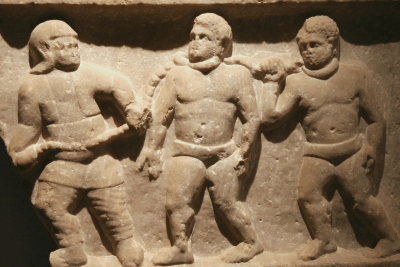
Slavery and enslavement are both the state and the condition of being a slave, who is someone forbidden to quit their service for an enslaver, and who is treated by the enslaver as their property. Slavery typically involves the enslaved person being made to perform some form of work while also having their location dictated by the enslaver. Historically, when people were enslaved, it was often because they were indebted, broke the law, or suffered a military defeat: The duration of their enslavement might be for life, or for a fixed period of time after which their freedom was granted. Individuals, then, usually became slaves involuntarily, due to force or coercion, although there was also voluntary slavery to pay a debt or obtain money for some purpose. In the course of human history, slavery was a typical feature of civilization, and legal in most societies, but it is now outlawed in all countries of the world, except as punishment for crime.In chattel slavery, the enslaved person is legally rendered the personal property (chattel) of the slave owner. In economics, the term de facto slavery describes the conditions of unfree labour and forced labour that most slaves endure.In 2019, approximately 40 million people, of whom 26 percent were children, were enslaved throughout the world despite its being illegal. In the modern world, more than 50 percent of enslaved people provide forced labour, usually in the factories and sweatshops of the private sector of a country’s economy. In industrialised countries, human trafficking is a modern variety of slavery; in non-industrialised countries, enslavement by debt bondage is a common form of enslaving a person, such as captive domestic servants, forced marriage, and child soldiers.
Source: calendarz.com for the complete article
Share this:

Happy National Hispanic Heritage Month!
 |
¡Feliz mes nacional de la herencia hispana!
¡Durante este mes nacional de la herencia hispana, USDA también celebra los 12 años de MiPlato! Los materiales de MiPlato y MyPlate ayudan a promover salud y nutrición en español e inglés.
El tema del mes nacional de la herencia hispana de este año es, Todos Somos, Somos Uno: We Are All, We Are One, ¡y para celebrarlo invitamos a todos a compartir el mensaje de una alimentación saludable … en español y en inglés con estos recursos!
- Recursos para profesionales sobre las guías alimentarias en español | inglés
- Materiales de WIC para celebrar el mes nacional del legado hispano en español |inglés
- Materiales en español para los operadores de SNAP-Ed en inglés
- Materiales de Team Nutrition sobre MiPlato en español | inglés
- La caja de recetas de nutrición infantil en español | inglés
¡Regístrese para recibir boletines en español del USDA, Food and Nutrition Service!
Share this:

Hawaii adopts its first constitution

On October 8, 1840, the Kingdom of Hawaii (Native spelling: Hawai‘i) adopts its first constitution, creating a formal government and granting all citizens of the independent nation equal rights, stating that “chiefs and people may enjoy protection under one and the same law.”
Passed during the rule of King Kamehameha III, the new system established a governmental structure in which, for the first time, citizens could vote to elect a house of representatives that would hold joint law-making power with the council of chiefs—giving commoners their first-ever voice in the government. The constitution also created a public school system and Hawaii’s first-ever Supreme Court.
Source: history.com for the complete article
Share this:

On this day … 10/7
 1571 1571 |
In the last great clash of galleys, the Ottoman navy is defeated at Lepanto, Greece, by a Christian naval coalition under the overall command of Spain’s Don Juan de Austria. | |
| 1765 | Delegates from nine of the American colonies meet in New York to discuss the Stamp Act Crisis and colonial response to it. | |
| 1870 | French Minister of the Interior Leon Gambetta escapes besieged Paris by balloon, reaching the French provisional government in Tours. | |
| 1913 | In attempting to find ways to lower the cost of the automobile and make it more affordable to ordinary Americans, Henry Ford took note of the work of efficiency experts like Frederick Taylor, the “father of scientific management.” The result was the assembly line that reduced the time it took to manufacture a car, from 12 hours to 93 minutes. | |
| 1944 | Prisoner uprising at Birkenau concentration camp. | |
| 1949 | Iva Toguri D’Aquino, better known as Tokyo Rose, is sentenced to 10 years in prison for treason. | |
| 1949 | East Germany, the German Democratic Republic, is formed. | |
| 1957 | A fire in the Windscale plutonium production reactor (later called Sellafield) north of Liverpool, England, spreads radioactive iodine and polonium through the countryside and into the Irish Sea. Livestock in the immediate area were destroyed, along with 500,000 gallons of milk. At least 30, and possibly as many as 1,000, cancer deaths were subsequently linked to the accident. | |
| 1976 | Hua Guofeng, premier of the People’s Republic of China, succeeds the late Mao Zedong as chairman of the Communist Party of China. | |
| 1985 | Four Palestinian Liberation Organization (PLO) hijackers seize the Italian cruise ship Achille Lauro and demand the release of 50 Palestinians held by Israel. | |
| 1993 | The Great Flood of 1993 on the Mississippi and Missouri rivers ends, the worst US flood since 1927. | |
| 1996 | Fox News Channel begins broadcasting. | |
| 2001 | US invasion of Afghanistan in reaction to the terrorist attacks of 9/11 begins; it will become the longest war in US history. | |
| 2003 | California voters remove Democratic governor Gray Davis from office in the state’s first successful recall of a sitting governor (only the second successful recall of a governor in US history); a Republican candidate, bodybuilder/actor Arnold Schwarzenegger wins the election to replace Davis 17 days later. | |
| Born on October 7 | ||
| 1746 | William Billings, composer. | |
| 1849 | James Whitcomb Riley, poet. | |
| 1885 | Nils Bohr, physicist whose model of atomic structure helped establish quantum theory. | |
| 1900 | Heinrich Himmler, Nazi leader. | |
| 1907 | Helen MacInnes, writer. | |
| 1931 | Desmond Tutu, South African religious leader. | |
| 1934 | Leroi Jones (Imamu Amiri Baraka), playwright. | |
| 1935 | Thomas Keneally, novelist, author of Schindler’s Ark, the basis for the film Schindler’s List. | |
| 1952 | Vladimir Putin, former prime minister and current (2013) president of Russia. | |

 Be a Seed for Change
You must be logged in to post a comment.