Tag Archives: Ethnicity

At least 4,000 were lynched – a repost … reminder


A group documenting lynchings is trying to erect markers at the sites, but expects local opposition.

Nearly 4,000 African Americans were victims of “racial terror lynchings” in the South between 1877 and 1950, according to a new report by the Equal Justice Initiative.

The report, released today, is the result of some five years of research by the organization. It has found that racial terror lynching was much more prevalent than previously reported. The researchers documented several hundred more lynchings than had been identified in the past. They did so by reviewing local newspapers, historical archives and court records. They also conducted interviews with local historians, and the families and descendants of the victims.

In all, EJI documented 3,959 lynchings of black people in twelve Southern states, which is at least 700 more lynchings in these states than previously reported. More than half of the lynching victims were killed under accusation of committing murder or rape against white victims. The EJI says that racial hostility fed suspicion that the perpetrators of the crimes were black and the accusations were seldom scrutinized. “Of the hundreds of black people lynched under accusation of rape and murder, nearly all were killed without being legally convicted,” says the report.

Some states and regions were particularly terrifying for African Americans, with dramatically higher rates of lynchings compared to the rest of the South. These areas included Florida, Mississippi, Arkansas and Louisiana. Counties that were particularly terrifying were Hernando, Taylor, Lafayette, and Citrus counties in Florida; Early and Oconee counties in Georgia; Fulton County, Kentucky; and Moore County, Tennessee, which had the highest rates of lynchings. Phillips County, Arkansas, and Lafourche and Tensas parishes in Louisiana were regions of mass killings of African Americans that make them historically notorious. Georgia and Mississippi had the highest number of lynchings of all the Southern states.

In conversations with survivors of those that had been lynched, EJI found that lynching played an integral role in the migration of millions of African Americans away from Southern states.

EJI also found that there was an astonishing lack of effort to acknowledge, discuss or address lynching in Southern states and communities. According to the report, many of these communities tried to veil this violent past by erecting monuments memorializing the Confederacy and the Civil War instead, while hiding the violence and terror used against African Americans.

The report says that there are currently few memorials that address the legacy of lynching, and that most communities do not actively  recognize how their race relations were shaped by terror lynching.

Bryan Stevenson of EJI told the New York Times that his group wants to force people to reckon with the country’s violent and racist past by erecting the memorials. He said the EJI hopes to select some of the lynching sites and erect markers there. This will involve a significant amount of fundraising by the non-profit group. EJI is also bracing for controversies and objections as it tries to erect these markers.

“Lynching and the terror era shaped the geography, politics, economics and social characteristics of being black in America during the 20th century,” said Stevenson.

The report by EJI is part of a larger project that also involves the recognition of slave markets in the South and the erection of markers on those sites, particularly in Montgomery, AL. Stevenson said that  regional and state governments have not been receptive to such markers although there are plenty of Civil War memorials in Montgomery, as well as some Civil Rights movement markers.

A Picture Worth a Thousand More …Lonnie G. Bunch at The NMAAHC- Black History


a repost … 2011

Lonnie Bunch, museum director, historian, lecturer, and author, is proud to present A Page from Our American Story, a regular on-line series for Museum supporters. It will showcase individuals and events in the African American experience, placing these stories in the context of a larger story — our American story

Few things date history as readily as fashion. The caveat “that was the fashion of the times” can be applied to everything from bustles and corsets to micro-mini skirts and polyester pants suits — fashions at the turn of the twentieth century and styles created during the 1960s-’70s.

While designs have changed over the years, one thing remained the same: from department store catalogs to high-end fashion magazines, the models dressed in the latest fashions were white.

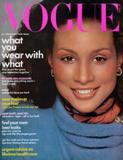
So it was a major event when Katiti Kironde appeared in the August 1968 issue of Glamour College, the first African American to appear on a American fashion magazine’s cover. Six years later, in August 1974, Beverly Johnson became the first African American woman featured on the cover of Vogue magazine — the industry’s supreme publication. It was another landmark.

Like virtually everything else on the path to equal opportunity for African Americans, progress was slow and came in steps, not leaps. So when an African American woman first appeared in one of the fashion industry’s premier magazines, it was not on a cover or with a huge, multi-page layout.

Instead, seven years before Kironde’s Glamour cover, a coed at the University of California at Los Angeles (UCLA), Willette Murphy, quietly appeared on the pages of the August 1961 issue of another hugely popular magazine, Mademoiselle.

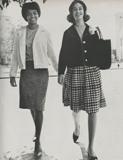
Murphy, now Willette Klausner, was pictured wearing a simple skirt, top and jacket, and walking on the UCLA campus. Initially, she viewed the moment as “just another thing I’d done.”

Far from it: Willette Murphy’s appearance in the magazine was not merely “just another thing.” Her Mademoiselle photograph was groundbreaking. Yet, Murphy was unaware of her place in history, until a New York Times’ reporter contacted her family. “I guess my sister found out when the New York Times called my parents,” Klausner said in a published interview.

Her family was used to Willette achieving things African Americans rarely experienced at that time — she was UCLA’s first black senior class president, for example — but the call from the Times made the family realize that their daughter had made history.

For decades, in high powered fashion magazines like Vogue, Glamour and Mademoiselle, to the Sears and Roebuck and other mail order catalogs, to models walking runways in Paris and New York, the face of fashion had been white.

Images of African Americans were scarce even in popular, mainstream American magazines. Many white Americans were shocked when Dorothy Dandridge became the first African American female to appear on the cover of LIFE in November, 1954. It would be nearly four years later before another black American, boxer Sugar Ray Robinson, would find his way onto that magazine’s front page. Another African American female celebrity would not grace LIFE’s cover again until the December 8, 1967 issue which featured Pearl Bailey.

Imagine growing up black and female and seeing dress after dress, swimsuit after swimsuit, shoe after shoe — all pictured only on white women. Along with every other message sent to African Americans, this underscored the sense that African Americans were, to a great degree, nonexistent — even when it came to buying clothes.

Today fashion marketers, like marketers from every other industry, recognize that the face of America is as diverse as its people. They also recognize that African Americans’ buying power was estimated at $913 billion in 2009. A University of Georgia economics study projects that figure will rise to $1.2 trillion in 2013 — nearly 9% of the country’s estimated purchasing strength.

Today the power of the African American pocketbook is reflected on the covers of countless magazines — fashion, entertainment, and political publications which routinely feature black models, entertainers, authors, politicians and more.

Willette Murphy Klausner
Photo Courtesy of Ms. Klausner

Today, it is no longer shocking to walk into a supermarket and find an African American on a magazine cover. In March 2009, First Lady Michelle Obama appeared on the cover of Vogue, only the second first lady to do so. In recent years Vogue has seen a number of black women grace its cover.

Sometimes history is made in giant leaps. More often, however, it is made in smaller, sometimes unexpected steps. Willette Murphy Klausner would become the first black merchandising executive at Bloomingdale’s, later the first female corporate vice president at MCA Universal Studios and, together with Julia Child and Robert Mondavi, the co-founder of the American Institute of Wine and Food in 1981. Today, she is a successful theater producer.

It is her photo in Mademoiselle that we celebrate today. A picture that would launch thousands more.

Lonnie Bunch, Director

All the best,
Lonnie Bunch
Director
P.S. We can only reach our $250 million goal with your help. I hope you will consider making a donation or becoming a Charter Member today.

Get Set for a Healthy Winter Season


While contagious viruses are active year-round, fall and winter are when we’re most vulnerable to them. This is due in large part to people spending more time indoors with others when the weather gets cold.

Most respiratory bugs come and go within a few days, with no lasting effects. However, some cause serious health problems. People who use tobacco or who are exposed to secondhand smoke are more prone to respiratory illnesses and more severe complications than nonsmokers.

Colds usually cause stuffy or runny nose and sneezing. Other symptoms include coughing, a scratchy throat, and watery eyes. There is no vaccine against colds, which come on gradually and often spread through contact with infected mucus.

Flu comes on suddenly and lasts longer than colds. Flu symptoms include fever, headache, chills, dry cough, body aches, fatigue, and general misery. Like colds, flu can cause a stuffy or runny nose, sneezing, and watery eyes. Young children may also experience nausea and vomiting with the flu. Flu viruses spread mainly by droplets made when people with flu cough, sneeze or talk. A person might also get flu by touching a surface or object that has flu virus on it.

Flu season in the United States may begin as early as October and can last as late as May, and generally peaks between December and February. According to the Centers for Disease Control and Prevention (CDC):

  • More than 200,000 people in the United States are hospitalized from flu-related complications each year, including 20,000 children younger than age 5.
  • Between 1976 and 2006, the estimated number of flu-related deaths every year ranged from about 3,000 to about 49,000.
  • In the 2013 – 2014 season, there were in the U.S. 35.4 million influenza-associated illnesses, 14.6 medically attended flu illnesses, and 314,000 flu hospitalizations.
  • Prevention Tips

Get vaccinated against flu.

With rare exceptions, everyone 6 months of age and older should be vaccinated against flu. Flu vaccination, available as a shot or a nasal spray, can reduce flu illnesses, doctors’ visits, missed work and school, and prevent flu-related hospitalizations and deaths.

It’s ideal to be vaccinated by October, although vaccination into January and beyond can still offer protection. Annual vaccination is needed because flu viruses are constantly changing, flu vaccines may need to be updated, and because a person’s immune protection from the vaccine declines over time. Annual vaccination is especially important for people at high risk for developing serious complications from flu. These people include:

  • young children under 5 years, but especially those younger than 2.
  • pregnant women
  • people with certain chronic health conditions (like asthma, diabetes, or heart and lung disease)
  • people age 65 years and older

Vaccination also is especially important for health care workers, and others who live with or care for people at high risk for serious flu-related complications. Since babies under 6 months of age are too young to get a flu vaccine, their mother should get a flu shot during her pregnancy to protect them throughout pregnancy and up to 6 months after birth. Additionally, all of the baby’s caregivers and close contacts should be vaccinated as well.

Wash your hands often. Teach children to do the same. Both colds and flu can be passed through contaminated surfaces, including the hands. FDA says that while soap and water are best for hand hygiene, alcohol-based hand rubs may also be used. However, dirt or blood on hands can render the hand rubs unable to kill bacteria.

Try to limit exposure to infected people. Keep infants away from crowds for the first few months of life.

Practice healthy habits.

  • Eat a balanced diet.
  • Get enough sleep.
  • Exercise.
  • Do your best to keep stress in check.

Already Sick?

Usually, colds have to run their course. Gargling with salt water may relieve a sore throat. And a cool-mist humidifier may help relieve stuffy noses.

Here are other steps to consider:

  • Call your health care professional. Start the treatment early.
  • Limit your exposure to other people. Cover your mouth with a tissue when you cough or sneeze.
  • Stay hydrated and rested. Avoid alcohol and caffeinated products which may dehydrate you.
  • Talk to your health care professional to find out what will work best for you.

In addition to over-the-counter (OTC) medicines, there are FDA-approved prescription medications for treating flu. Cold and flu complications may include bacterial infections (e.g., bronchitis, sinusitis, ear infections, and pneumonia) that could require antibiotics.

Taking OTC Products

Read medicine labels carefully and follow the directions. People with certain health conditions, such as high blood pressure, should check with a health care professional or pharmacist before taking a new cough and cold medicine.

Choose OTC medicines appropriate for your symptoms. To unclog a stuffy nose, use nasal decongestants. Cough suppressants quiet coughs; expectorants loosen mucus; antihistamines help stop a runny nose and sneezing; and pain relievers can ease fever, headaches, and minor aches.

Check the medicine’s side effects. Medications can cause drowsiness and interact with food, alcohol, dietary supplements, and each other. It’s best to tell your health care professional and pharmacist about every medical product and supplement you are taking.

Check with a health care professional before giving medicine to children.

See a health care professional if you aren’t getting any better. With children, be alert for high fevers and for abnormal behavior such as unusual drowsiness, refusal to eat, crying a lot, holding the ears or stomach, and wheezing.

Signs of trouble for all people can include

  • a cough that disrupts sleep
  • a fever that won’t respond to treatment
  • increased shortness of breath
  • face pain caused by a sinus infection
  • high fever, chest pain, or a difference in the mucus you’re producing, after feeling better for a short time.

This article appears on FDA’s Consumer Updates page, which features the latest on all FDA-regulated products.

Feminism …


by The Thinker-Writer, January 31, 2010
 The belief that women are and should be treated as potential intellectual equals and social equals to men. These people can be male or female human beings, although the ideology is commonly (and perhaps falsely) associated mainly with women. The basic idea of Feminism revolves around the principle that just because human bodies are designed to perform certain procreative functions, biological elements need not dictate intellectual and social functions, capabilities, and rights. Feminism also, by its nature, embraces the belief that all people are entitled to freedom and liberty within reason–including equal civil rights–and that discrimination should not be made based on gender, sexual orientation, skin color, ethnicity, religion, culture, or lifestyle. Feminists–and all persons interested in civil equality and intellectuality–are dedicated to fighting the ignorance that says people are controlled by and limited to their biology.
Feminism is the belief that people are entitled to the same civil rights and liberties and can be intellectual equals regardless of gender. However, you should still hold the door for a feminist; this is known as respect or politeness and need have nothing whatever to do with gender discrimination.
By The Thinker-Writer, January 31, 2010
***********************************************************

So, why did I go to the urban dictionary for a definition of Feminism?

I saw the article above and thought, nah, that wasn’t what I was taught as a young child…

Then

beaseedforchangestickersGREENI got my Cosmo in the mail and while the fashions are fun, some gaudy, others worthy of a second look or two, but most are out of my price and age range, but when I see hair and beauty products, well now, that is a whole different response entirely. As I was thumbing through one of many magazines, which is another bad habit, an article about feminism popped up and yes folks are questioning Beyoncé among others with headlines such as, “can you be Sexy and a Feminist? ” or as Cosmo asks,

“Can you be a Sexy Feminist? It was a quick read and in all honesty, I don’t spend a lot of my time dissecting labels, but I will say that being a feminist used to be defined as a woman who didn’t appreciate men, some said, they despised them.  Honestly, there was a time when Women were advised not to question the gender roles of men & women, and when that barrier fell, women realized it was time to demand equal access to education. While so-called hardcore feminists suggested being a companion, forget about being happily married, lest we acquiesce simply because we are women. I don’t subscribe to hating on men, I like men on several levels, that includes my dad, my kid’s father, my son, a couple of teachers, and a couple of bosses who happened to be male.

As a side note on a political level, current Republican men are the bane of our (women) existence in my opinion.

  So, getting back to Feminism, when it comes to being an active participant in what seemingly is the opposite side of equality and justice for everyone.  I have to admit, I have danced to fabulous music that had one or more negatives like sexual assault, and misogynistic and chauvinistic words. It’s definitely not something I ever used to think about while dancing, and as an adult, I found it upsetting when what was being said became clear; generally, this kind of talk would get a whole different response if these words were being exchanged through a conversation at work, a bar or one on one. In this 21st Century, we hear more Women with edgy lyrics and to find out that a story or two based on reality inadvertently comes to light … so, the choice to listen and buy is up to you.

   However, it does appear that the word feminism or being a feminist in this 21st century society is ever-changing and ever-evolving to bring about a belief in equality and the rights for everyone in all its forms and genders. I see the urban dictionary as a place run not only by a younger group of folks, but who use it, research it, and discuss the “stuff” they post. I admit to not referring to the urban dictionary that much, but I found the post in the process of searching out what younger folks felt about the comments on who is or can be a feminist, it caught my eye.  As you read on, Cosmo asked stars like Lady Gaga, Lana Del Rey, and Taylor Swift just to name a few, but when Pharrell was asked he stated, “I don’t think it’s possible for me to be (a feminist). I’m a man, but I do support feminists.”

Anyway, an article worth reading in Cosmo in September 2014

~~ Nativegrl77

What do you think?

Is being a feminist gender-specific?

The answer is yes, in the 1800s, as the root of feminism they used to define women, was fem, being that of the female feminine persuasion, so Pharrell among others probably used the definitions as their guide … though in this 21st Century like and while we are coming out of the nightmare that was the era of trump … The dictionary defines a Feminist as a person who believes in Equal Rights for Women. We need more 21st Century thoughts and people action.