
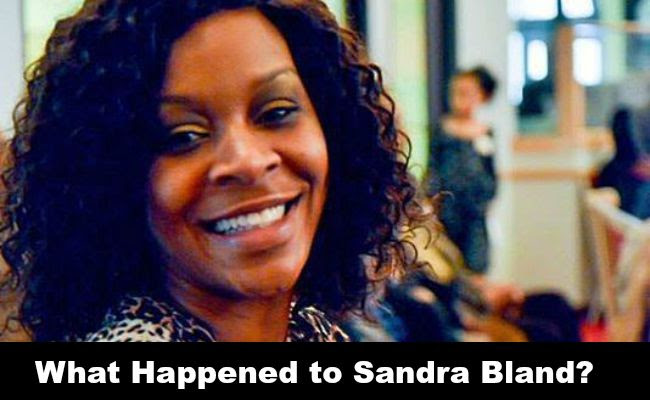
“You just slammed my head to the ground. Do you not even care about that?”
These were some of the last words of 28-year-old Sandra Bland. On Friday, Texas State troopers pulled Sandra over as she was driving to her new job for allegedly not using the turn signals during a lane change.1 What happened next was all too familiar and terrifying.
An eye-witness says police ripped Sandra out of the car, violently slammed her on the ground, and arrested her as she screamed for help. Just 72 two hours later, she was dead.2 Police are claiming Sandra took her own life, but her family and friends don’t believe it. Local District Attorney Elton Mathis has already said he has no reason to expect foul play and handed over the investigation to the same police agency that arrested Sandra.
DA Mathis said there was no reason for concern, despite the fact that an allegedly routine traffic stopped turned into a violent arrest is itself a cause for concern.3 Sandra’s family says that Sandra would never kill herself and that police seem to be covering up her death.4 We must demand that local officials release all video, information and photographs relating to Sandra’s unjust arrest, imprisonment and death.
The local police department and prosecutor’s office have a long history of racism and corruption. Last year, DA Mathis threatened a local Reverend who spoke out about racist prosecutions, saying he would release his “hounds” on the Reverend.5 Waller County Sheriff Glenn Smith was fired from the police department in Hempstead, Texas for documented cases of racism.5
According to her loved ones, Sandra Bland was a loving, compassionate woman, with a bright future ahead.6 Today would have been the first day at her new job working student outreach at her alma mater, Prairie View A&M University. Loved ones described her as bright, spirited, and having a thirst for life. She was also a vocal advocate against police brutality and often spoke about ending racism and police violence. Our hearts and minds are with her friends and family as they move through this unimaginably hard time.
But in a world where Black people are stereotyped as “violent” and police exist to enforce the boundaries of a deeply divided and racist society, who Sandy was or the life she was creating, did not matter. What mattered was that she was Black, and therefore, in the eyes of the law, didn’t deserve respect, didn’t deserve her civil rights, her freedom or her life. To be Black in America, is to be safe nowhere. Black women are 3 to 4 times more likely to be targeted by police and incarcerated than white women.7
The Department of Justice and Attorney General Lynch have the power and responsibility to address the systemic police violence targeting Black communities. The reality is, racism, corruption and a deep-seated culture of secrecy prevents local and state police from holding themselves accountable. Without independent oversight, police will continue to kill and prosecutors will continue to do nothing. We should not have to demand justice, every time a Black person is murdered, but we will continue to do so until the justice system respects Black lives.
Thanks and peace,
— Rashad, Arisha, Shani, Lyla and the rest of the ColorOfChange.org team
July 16th, 2015
1. “Sandra Bland Drove to Texas to Start a New Job, so How Did She End Up Dead in Jail?”, 07-16-15
http://act.colorofchange.org/go/5001?t=5&akid=4541.1174326.9WpvtL?
2. “Family says woman found dead in jail cell would not kill herself; Texas Rangers investigating”, 07-16-15
http://act.colorofchange.org/go/5002?t=7&akid=4541.1174326.9WpvtL
3. See reference 2.
4. See reference 2.
5. “Pastor says Waller DA threatened him”, 06-03-14
http://act.colorofchange.org/go/5003?t=9&akid=4541.1174326.9WpvtL
6. “The Texas Sheriff Where Sandra Bland Died Was Previously Suspended for Racism”, 07-16-15
http://act.colorofchange.org/go/5004?t=11&akid=4541.1174326.9WpvtL
7. “Incarcerated Women”, The Sentencing Project 08-2015
http://act.colorofchange.org/go/5005?t=13&akid=4541.1174326.9WpvtL


You must be logged in to post a comment.