

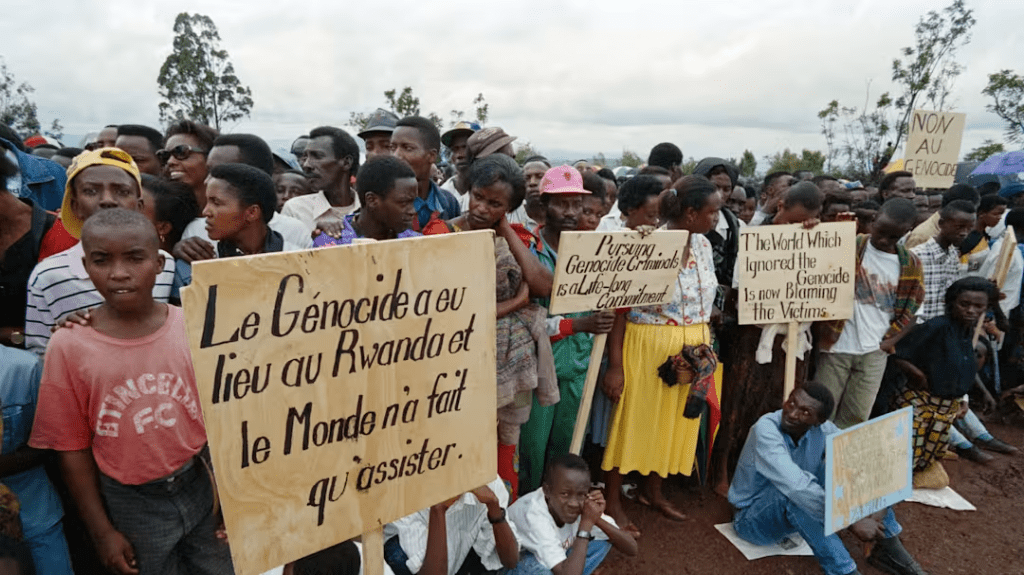
On April 7, 1994, violence fuels the launch of what would become the worst episode of genocide since World War II: the massacre of an estimated 500,000 to 1 million innocent civilian Tutsis and moderate Hutus. Following the first wave of massacres, Rwandan forces manage to discourage international intervention with the murder of 10 Belgian peacekeeping officers. The Tutsis, a minority group that made up about 10 percent of Rwanda’s population, received no assistance from the international community, although the United Nations later conceded that a mere 5,000 soldiers deployed at the outset would have stopped the wholesale slaughter.
The immediate roots of the 1994 genocide dated back to the early 1990s, when President Juvenal Habyarimana, a Hutu, began using anti-Tutsi rhetoric to consolidate his power among the Hutus. Beginning in October 1990, there were several massacres of hundreds of Tutsis. Although the two ethnic groups were very similar, sharing the same language and culture for centuries, the law required registration based on ethnicity. The government and army began to assemble the Interahamwe (meaning “those who attack together”) and prepared for the elimination of the Tutsis by arming Hutus with guns and machetes. In January 1994, the United Nations forces in Rwanda warned that larger massacres were imminent.
For the complete article… use the link below
Source: history.com
Citation Information
Article Title
Violence erupts in Rwanda, foreshadowing genocide AuthorHistory.com Editors
Website Name
HISTORY URL
https://www.history.com/this-day-in-history/civil-war-erupts-in-rwanda
Date April 7, 2023 Publisher A&E Television Networks Last Updated
April 7, 2022
Original Published Date
November 24, 2009





You must be logged in to post a comment.