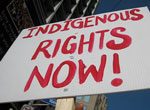
So, while some celebrated Indigenous People’s Day alongside of CC … it is definitely a moment of confusion to include CC., for many, it’s tough to move on.
History, if read, told, and heard in its entirety … you might get a different sense of what happened, a different awareness of the Americas
Less than a year before Richard M. Nixon’s resignation as president of the United States, Spiro Agnew became one of the first U.S. vice presidents to resign in disgrace.
The same day, he pleaded no contest to a charge of federal income tax evasion in exchange for the dropping of charges of political corruption. He was subsequently fined $10,000, sentenced to three years probation, and disbarred by the Maryland court of appeals.
Agnew, a Republican, was elected chief executive of Baltimore County in 1961. In 1967, he became governor of Maryland, an office he held until his nomination as the Republican vice presidential candidate in 1968. During Nixon’s successful campaign, Agnew ran on a tough law-and-order platform, and as vice president, he frequently attacked opponents of the Vietnam War and liberals as being disloyal and un-American. Reelected with Nixon in 1972, Agnew resigned on October 10, 1973, after the U.S. Justice Department uncovered widespread evidence of his political corruption, including allegations that his practice of accepting bribes had continued into his tenure as U.S. vice president. He died at the age of 77 on September 17, 1996.
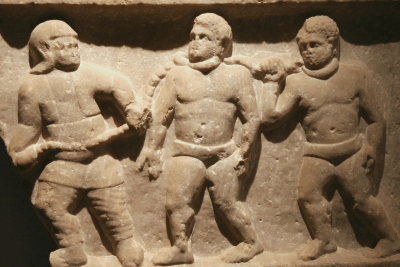
Slavery and enslavement are both the state and the condition of being a slave, who is someone forbidden to quit their service for an enslaver, and who is treated by the enslaver as their property. Slavery typically involves the enslaved person being made to perform some form of work while also having their location dictated by the enslaver. Historically, when people were enslaved, it was often because they were indebted, broke the law, or suffered a military defeat: The duration of their enslavement might be for life, or for a fixed period of time after which their freedom was granted. Individuals, then, usually became slaves involuntarily, due to force or coercion, although there was also voluntary slavery to pay a debt or obtain money for some purpose. In the course of human history, slavery was a typical feature of civilization, and legal in most societies, but it is now outlawed in all countries of the world, except as punishment for crime.In chattel slavery, the enslaved person is legally rendered the personal property (chattel) of the slave owner. In economics, the term de facto slavery describes the conditions of unfree labour and forced labour that most slaves endure.In 2019, approximately 40 million people, of whom 26 percent were children, were enslaved throughout the world despite its being illegal. In the modern world, more than 50 percent of enslaved people provide forced labour, usually in the factories and sweatshops of the private sector of a country’s economy. In industrialised countries, human trafficking is a modern variety of slavery; in non-industrialised countries, enslavement by debt bondage is a common form of enslaving a person, such as captive domestic servants, forced marriage, and child soldiers.
¡Durante este mes nacional de la herencia hispana, USDA también celebra los 12 años de MiPlato! Los materiales de MiPlato y MyPlate ayudan a promover salud y nutrición en español e inglés.
El tema del mes nacional de la herencia hispana de este año es, Todos Somos, Somos Uno: We Are All, We Are One, ¡y para celebrarlo invitamos a todos a compartir el mensaje de una alimentación saludable … en español y en inglés con estos recursos!








 Be a Seed for Change
You must be logged in to post a comment.