Category Archives: Black History

Pioneers, Activists, Black People, Black History

Black Segregation ~Civil Rights Timeline Facts ~ Black History


Black Segregation Timeline for kids
This article contain brief, fast facts in a history timeline format of Black Segregation History in the United States of America. The Black Segregation Timeline covers important dates and events in the years before the Civil War up to the Civil Rights Movement in the late 1900’s.

The history of the slavery in America lasted for 157 years under the British Colonial rule and a further 89 years under the rule of the United States Government.

Slavery was eventually abolished by the 13th Amendment in 1865 ending a total of 246 years of slavery. But racial discrimination and segregation continued in America for over another hundred years. Learn about the important dates and events of this turbulent era in the History of the United States with the Black Segregation Timeline.

The history of Racial Segregation in America is told in a factual timeline sequence consisting of a series of interesting, short facts and dates providing a simple method of relating the history of the Segregation for kids, schools and homework projects.

Black Segregation Timeline Fact 1: 1857: The Dred Scott Court Decision that stated that slaves were not citizens but the property of their owners
Black Segregation Timeline Fact 2: 1861-1865: Black soldiers were segregated during the Civil War

Black Segregation Timeline Fact 3: 1862: The Homestead Act was passed giving away free farming land.
Black Segregation Timeline Fact 4: 1865: The 13th Amendment ended slavery
Black Segregation Timeline Fact 5: 1865 – 1866: The series of laws called the Black Codes were passed to restrict the ex-slaves new found freedom.
Black Segregation Timeline Fact 6: 1865: The Freedmen’s Bureau Bill was passed establishing a temporary government agency to help and protect emancipated slaves in the South
Black Segregation Timeline Fact 7: 1865: The Sharecropping system resulted in constant debt and poverty.
Black Segregation Timeline Fact 8: 1866: The Southern Homestead Act was passed to establish the freed slaves as landowners in the South. It completely failed due to segregation and discrimination and was repealed in 1879
Black Segregation Timeline Fact 9: 1866: The Civil Rights Act of 1866 was passed to protect ex-slaves from legislation such as the Black Codes
Black Segregation Timeline Fact 10: 1866: The Ku Klux Klan (KKK) was founded by White Supremacists who used terror tactics and acts of violence to maintain racial segregation in the South.

Cross burning by the Segregation

Black Segregation Timeline Fact 11: 1868: The 14th Amendment dealt with Civil Rights and asserted that there were equal protection rights nullifying part of the Dred Scott decision and prohibiting state laws that denied citizens equal protection under the law
Black Segregation Timeline Fact 12: 1870: The Enforcement Acts (including the Ku Klux Klan Act) were passed.
Black Segregation Timeline Fact 13: 1870: The 15th Amendment prohibiting racial discrimination in voting
Black Segregation Timeline Fact 14: 1874: The White League white paramilitary group was established in Louisiana to prevent freedmen from voting
Black Segregation Timeline Fact 15: 1875: The Red Shirts, a white paramilitary group was established in Mississippi
Black Segregation Timeline Fact 16: 1875: The Civil Rights Act of 1875 was a law to protect all citizens in their civil and legal rights but it was not enforced, and the Supreme Court declared it unconstitutional in 1883
Black Segregation Timeline Fact 17: 1879: The Exodusters. A mass migration of thousands of African Americans to Kansas was organized by Benjamin “Pap” Singleton.
Black Segregation Timeline Fact 18: 1880: The Jim Crow Laws of the South legalized segregation. The number of Lynchings began to escalate. Black Americans were deprived of the right to vote by imposing a poll tax of $2 and a literacy test in order to be eligible to vote
Black Segregation Timeline Fact 19: 1886: Black farmers formed the Colored Farmers’ National Alliance and Cooperative Union which strongly supported Black Populism.

Black Segregation Timeline Fact 20: 1896: The Federal government Sanctions Racial Segregation as a result of the Plessy vs. Ferguson Case
Black Segregation Timeline Fact 21: 1900’s: The years surrounding WW1 saw the emergence of race riots against black communities and the Resurgence of the 1920’s Ku Klux Klan.
Black Segregation Timeline Fact 22: 1913: The federal government imposed racial segregation in government offices in Washington, D.C. It was eventually reversed in the administration of Franklin D. Roosevelt in the 1930s.
Black Segregation Timeline Fact 23: 1939 – 1945: During World War II Black Americans were initially assigned to non-combat units
Black Segregation Timeline Fact 24: 1948: President Harry S. Truman issued an executive order de-segregating the armed forces.

Civil Rights

Civil Rights Timeline Fact 25: 1954: The African-American Civil Rights Movement began
Civil Rights Timeline Fact 26: 1954: The Brown vs. Board of Education case – the Supreme Court banned the practice of school segregation
Civil Rights Timeline Fact 27: 1955: Rosa Parks refuses to give up her seat is ejected from a racially segregated bus
Civil Rights Timeline Fact 28: 1955: Dr. Martin Luther King become the president of the Montgomery Improvement Association and the Montgomery Bus Boycott begins
Civil Rights Timeline Fact 29: 1957: The Civil Rights Act of 1957 was passed to ensure that all African Americans could exercise their right to vote. Dr. Martin Luther King becomes president of the Southern Christian Leadership Conference (SCLC)
Civil Rights Timeline Fact 30: 1957: President Eisenhower sent in the National Guard to enforce integration of Little Rock’s Central High School – refer to the Little Rock Nine
Civil Rights Timeline Fact 31: 1960: The Student Nonviolent Coordinating Committee (SNCC) was founded and organized ‘Sit-ins’ and Freedom Rides throughout the South

1960 – The U.S. Senate passed the Civil Rights Bill.
Civil Rights Timeline Fact 32: 1963: Dr. Martin Luther King organizes a massive peace protest in the heavily segregated city of Birmingham, Alabama which ends in violence. MLK is arrested and writes the Letter from Birmingham Jail
Civil Rights Timeline Fact 33: 1963: Dr. Martin Luther King meets with President Kennedy who fully endorses the civil rights movement.
Civil Rights Timeline Fact 34: 1963: Dr. King then delivers his famous “I Have a Dream” at the end of the March on Washington
Civil Rights Timeline Fact 35: 1964: The Civil Rights Act of 1964 bans segregation and discrimination based on race, nationality, or gender
Civil Rights Timeline Fact 36: 1964: The 24th Amendment was passed making it illegal to make anyone pay a tax to have the right to vote.
Civil Rights Timeline Fact 37: 1964: The Freedom Summer campaign was organized by SNCC activists

american-historama.org

In Memory of Julian Bond ~ speaks 8/2013


FallleavesinDCThousands are in Washington, D.C. to re-create something so powerful and so vivid that it still plays on loop in my mind. They’re here for the 50th anniversary of the 1963 civil rights March on Washington.

We are returning amidst a newly reinvigorated fight for civil rights that has grown rapidly to include lesbian, gay, bisexual, and transgender Americans.

After all, LGBT rights are civil rights.

No parallel between movements is exact. But like race, our sexuality and gender identity aren’t preferences. They are immutable, unchangeable – and the constitution protects us all against discrimination based on immutable differences.

Today, we are fighting for jobs, for economic opportunity, for a level playing field free of inequality and of discrimination. It’s the same fight our LGBT brothers and sisters are waging – and together we have formed a national constituency for civil rights.

And while we haven’t fully secured Dr. Martin Luther King, Jr.‘s most remarkable dream, we are getting closer every single day.

Julian Bond Then and Now Julian Bond with Dr. Martin Luther King, Jr., and more recently at an HRC event.

In August 1963, I was the Communications Director for the Student Nonviolent Coordinating Committee (SNCC), led at the time by John Lewis, the march’s youngest speaker that day.

A gay black man by the name of Bayard Rustin was one of the chief organizers – an early embodiment of the unity and commonality that bonded the movement for LGBT equality with the fight for equal treatment of African-Americans.

In his honor, HRC will help lead a commemoration of Bayard’s incredible contributions to the civil rights movement on Monday. And it was recently announced that President Obama will posthumously award Rustin the Presidential Medal of Freedom – the highest civilian award in the United States.

Fifty years later, I can still feel the power of that noble, August day. Its weight is what drove me for years – from founding the Southern Poverty Law Center, to overseeing the NAACP as Chairman, not to mention the ten terms I served as a member of the Georgia legislature. And later, that exact same commitment to achieving equal rights is what convinced me to stand with the Human Rights Campaign in endorsing marriage equality.

Together we have marched millions of miles to land on the right side of history, and today we stand firmly planted, hoping only that more will join us, one by one, until everyone in this nation is truly free and equal. I know you are with the marchers today – in spirit and in solidarity – and I hope you’ll follow the news coverage of today’s powerful events.

Thank you for being part of the historic struggle for civil rights.

Sincerely,

Julian Bond Chairman Emeritus, NAACP

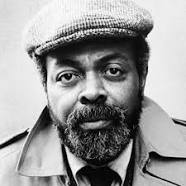
Activist author Amiri Baraka


Amiri Baraka

1934–2014

Image of Amiri Baraka

~ Poet, writer, teacher, and political activist Amiri Baraka was born Everett LeRoi Jones in 1934 in Newark, New Jersey. He attended Rutgers University and Howard University, spent three years in the U.S. Air Force, and returned to New York City to attend Columbia University and the New School for Social Research. Baraka was well known for his strident social criticism, often writing in an incendiary style that made it difficult for some audiences and critics to respond with objectivity to his works. Throughout most of his career his method in poetry, drama, fiction, and essays was confrontational, calculated to shock and awaken audiences to the political concerns of black Americans. For decades, Baraka was one of the most prominent voices in the world of American literature.

Baraka’s own political stance changed several times, thus dividing his oeuvre into periods: as a member of the avant-garde during the 1950s, Baraka—writing as Leroi Jones—was associated with Beat poets like Allen Ginsberg and Jack Kerouac; in the ‘60s, he moved to Harlem and became a Black Nationalist; in the ‘70s, he was involved in third-world liberation movements and identified as a Marxist. More recently, Baraka was accused of anti-Semitism for his poem “Somebody Blew up America,” written in response to the September 11 attacks.

Baraka incited controversy throughout his career. He was praised for speaking out against oppression as well as accused of fostering hate. Critical opinion has been sharply divided between those who agree, with Dissent contributor Stanley Kaufman, that Baraka’s race and political moment have created his celebrity, and those who feel that Baraka stands among the most important writers of the twentieth century. In the American Book Review, Arnold Rampersad counted Baraka with Phyllis Wheatley, Frederick Douglass, Paul Laurence DunbarLangston Hughes, Zora Neale Hurston, Richard Wright, and Ralph Ellison “as one of the eight figures . . . who have significantly affected the course of African-American literary culture.”

Baraka did not always identify with radical politics, nor did his writing always court controversy. During the 1950s Baraka lived in Greenwich Village, befriending Beat poets Allen Ginsberg, Frank O’Hara, and Gilbert Sorrentino. The white avant-garde—primarily Ginsberg, O’Hara, and leader of the Black Mountain poets Charles Olson—and Baraka believed in poetry as a process of discovery rather than an exercise in fulfilling traditional expectations. Baraka, like the projectivist poets, believed that a poem’s form should follow the shape determined by the poet’s own breath and intensity of feeling. In 1958 Baraka founded Yugen magazine and Totem Press, important forums for new verse. He was married to his co-editor, Hettie Cohen, from 1960 to 1965. His first play, A Good Girl Is Hard to Find, was produced at Sterington House in Montclair, New Jersey, that same year. Preface to a Twenty Volume Suicide Note,Baraka’s first published collection of poems appeared in 1961. M.L. Rosenthal wrote in The New Poets: American and British Poetry since World War II that these poems show Baraka’s “natural gift for quick, vivid imagery and spontaneous humor.” Rosenthal also praised the “sardonic or sensuous or slangily knowledgeable passages” that fill the early poems. While the cadence of blues and many allusions to black culture are found in the poems, the subject of blackness does not predominate. Throughout, rather, the poet shows his integrated, Bohemian social roots. The book’s last line is “You are / as any other sad man here / american.”

With the rise of the civil rights movement Baraka’s works took on a more militant tone. His trip to Cuba in 1959 marked an important turning point in his life. His view of his role as a writer, the purpose of art, and the degree to which ethnic awareness deserved to be his subject changed dramatically. In Cuba he met writers and artists from third world countries whose political concerns included the fight against poverty, famine, and oppressive governments. In Home: Social Essays (1966), Baraka explains how he tried to defend himself against their accusations of self-indulgence, and was further challenged by Jaime Shelley, a Mexican poet, who said, “‘In that ugliness you live in, you want to cultivate your soul? Well, we’ve got millions of starving people to feed, and that moves me enough to make poems out of.’” Soon Baraka began to identify with third world writers and to write poems and plays with strong political messages.

Dutchman, a play of entrapment in which a white woman and a middle-class black man both express their murderous hatred on a subway, was first performed Off-Broadway in 1964. While other dramatists of the time were wedded to naturalism, Baraka used symbolism and other experimental techniques to enhance the play’s emotional impact. The play established Baraka’s reputation as a playwright and has been often anthologized and performed. It won the Village Voice Obie Award in 1964 and was later made into a film. The plays and poems following Dutchman expressed Baraka’s increasing disappointment with white America and his growing need to separate from it. Critics observed that as Baraka’s poems became more politically intense, they left behind some of the flawless technique of the earlier poems. Richard Howard wrote of The Dead Lecturer (1964) in the Nation: “These are the agonized poems of a man writing to save his skin, or at least to settle in it, and so urgent is their purpose that not one of them can trouble to be perfect.”

To make a clean break with the Beat influence, Baraka turned to writing fiction in the mid-1960s, penning The System of Dante’s Hell (1965), a novel, and Tales (1967), a collection of short stories. The stories are “‘fugitive narratives’ that describe the harried flight of an intensely self-conscious Afro-American artist/intellectual from neo-slavery of blinding, neutralizing whiteness, where the area of struggle is basically within the mind,” Robert Elliot Fox wrote in Conscientious Sorcerers: The Black Postmodernist Fiction of LeRoi Jones/Baraka, Ishmael Reed, and Samuel R. Delany. The role of violent action in achieving political change is more prominent in these stories, as is the role of music in black life.

In addition to his poems, novels and politically-charged essays, Baraka is a noted writer of music criticism. His classic history Blues People: Negro Music in White America (1963) traces black music from slavery to contemporary jazz. Finding indigenous black art forms was important to Baraka in the ‘60s, as he was searching for a more authentic voice for his own poetry. Baraka became known as an articulate jazz critic and a perceptive observer of social change. As Clyde Taylor stated in Amiri Baraka: The Kaleidoscopic Torch, “The connection he nailed down between the many faces of black music, the sociological sets that nurtured them, and their symbolic evolutions through socio-economic changes, in Blues People, is his most durable conception, as well as probably the one most indispensable thing said about black music.” Baraka also published the important studies Black Music (1968) and The Music: Reflections on Jazz and Blues (1987). Lloyd W. Brown commented in Amiri Baraka that Baraka’s essays on music are flawless: “As historian, musicological analyst, or as a journalist covering a particular performance Baraka always commands attention because of his obvious knowledge of the subject and because of a style that is engaging and persuasive even when the sentiments are questionable and controversial.”

After Black Muslim leader Malcolm X was killed in 1965, Baraka moved to Harlem and founded the Black Arts Repertory Theatre/School. The Black Arts Movement helped develop a new aesthetic for black art and Baraka was its primary theorist. Black American artists should follow “black,” not “white” standards of beauty and value, he maintained, and should stop looking to white culture for validation. The black artist’s role, he wrote in Home: Social Essays (1966), is to “aid in the destruction of America as he knows it.” Foremost in this endeavor was the imperative to portray society and its ills faithfully so that the portrayal would move people to take necessary corrective action. He married his second wife, Amina, in 1967. In that same year, Baraka published the poetry collection Black Magicwhich chronicles his separation from white culture and values while displaying his mastery of poetic technique. There was no doubt that Baraka’s political concerns superseded his just claims to literary excellence, and critics struggled to respond to the political content of the works. Some felt the best art must be apolitical and dismissed Baraka’s newer work as “a loss to literature.” Kenneth Rexroth wrote in With Eye and Ear that Baraka “has succumbed to the temptation to become a professional Race Man of the most irresponsible sort. . . . His loss to literature is more serious than any literary casualty of the Second War.” In 1966 Bakara moved back to Newark, New Jersey, and a year later changed his name to the Bantuized Muslim appellation Imamu (“spiritual leader,” later dropped) Ameer (later Amiri, “prince”) Baraka (“blessing”).

By the early 1970s Baraka was recognized as an influential African-American writer. Randall noted in Black World that younger black poets Nikki Giovanniand Don L. Lee (later Haki R. Madhubuti) were “learning from LeRoi Jones, a man versed in German philosophy, conscious of literary tradition . . . who uses the structure of Dante’s Divine Comedy in his System of Dante’s Hell and the punctuation, spelling and line divisions of sophisticated contemporary poets.” More importantly, Arnold Rampersad wrote in the American Book Review,“More than any other black poet . . . he taught younger black poets of the generation past how to respond poetically to their lived experience, rather than to depend as artists on embalmed reputations and outmoded rhetorical strategies derived from a culture often substantially different from their own.”

After coming to see Black Nationalism as a destructive form of racism, Baraka denounced it in 1974 and became a third world socialist. He produced a number of Marxist poetry collections and plays in the 1970s that reflected his newly adopted political goals. Critics contended that works like the essays collected in Daggers and Javelins (1984) lack the emotional power of the works from his Black Nationalist period. However, Joe Weixlmann, in Amiri Baraka: The Kaleidoscopic Torch, argued against the tendency to categorize the radical Baraka instead of analyze him: “At the very least, dismissing someone with a label does not make for very satisfactory scholarship. Initially, Baraka’s reputation as a writer and thinker derived from a recognition of the talents with which he is so obviously endowed. The subsequent assaults on that reputation have, too frequently, derived from concerns which should be extrinsic to informed criticism.”

In more recent years, recognition of Baraka’s impact on late 20th century American culture has resulted in the publication of several anthologies of his literary oeuvre. The LeRoi Jones/Amiri Baraka Reader (1999) presents a thorough overview of the writer’s development, covering the period from 1957 to 1983. The volume presents Baraka’s work from four different periods and emphasizes lesser-known works rather than the author’s most famous writings. Transbluency: The Selected Poems of Amiri Baraka/LeRoi Jones (1961-1995),published in 1995, was hailed by Daniel L. Guillory in Library Journal as “critically important.” And Donna Seaman, writing in Booklist, commended the “lyric boldness of this passionate collection.” Kamau Brathwaite described Baraka’s 2004 collection, Somebody Blew up America & Other Poems, as “one more mark in modern Black radical and revolutionary cultural reconstruction.” The book contains Baraka’s controversial poem of the same name, which he wrote as New Jersey’s poet laureate. After the poem’s publication, public outcry became so great that the governor of New Jersey took action to abolish the position. Baraka sued, though the United States Court of Appeals eventually ruled that state officials were immune from such charges.

Baraka’s legacy as a major poet of the second half of the 20th century remains matched by his importance as a cultural and political leader. His influence on younger writers has been significant and widespread, and as a leader of the Black Arts movement of the 1960s Baraka did much to define and support black literature’s mission into the next century. His experimental fiction of the 1960s is considered some of the most significant African-American fiction since that of Jean Toomer. Writers from other ethnic groups have credited Baraka with opening “tightly guarded doors” in the white publishing establishment, noted Maurice Kenney in Amiri Baraka: The Kaleidoscopic Torch, who added: “We’d all still be waiting the invitation from the New Yorker without him. He taught us how to claim it and take it.”

Baraka was recognized for his work through a PEN/Faulkner Award, a Rockefeller Foundation Award for Drama, and the Langston Hughes Award from City College of New York. He was awarded fellowships from the Guggenheim Foundation and the National Endowment for the Arts. He died in 2014.

resource: poetryfoundation.org 22

kstreet607's avatarThe Fifth Column

Salon

Formerly LeRoi Jones, the civil rights leader inspired a generation of slam poets, playwrights and musicians

Amiri Baraka, the militant man of letters and tireless agitator whose blues-based, fist-shaking poems, plays and criticism made him a provocative and groundbreaking force in American culture, has died. He was 79.

His booking agent, Celeste Bateman, told The Associated Press that Baraka, who had been hospitalized since last month, died Thursday at Newark Beth Israel Medical Center.

Perhaps no writer of the 1960s and ’70s was more radical or polarizing than the former LeRoi Jones, and no one did more to extend the political debates of the civil rights era to the world of the arts. He inspired at least one generation of poets, playwrights and musicians, and his immersion in spoken word traditions and raw street language anticipated rap, hip-hop and slam poetry. The FBI feared him to the point of…

View original post 276 more words

The first African American is appointed to the Supreme Court in 1967 ~~ In memory of


U.S. circuit judges Robert Katzmann, Damon Kei...
U.S. circuit judges Robert Katzmann, Damon Keith, and Sonia Sotomayor at a 2004 exhibit on the Fourteenth Amendment, Thurgood Marshall, and Brown v. Board of Education. (Photo credit: Wikipedia)

On this day in 1967, Thurgood Marshall becomes the first African American to be confirmed as a Supreme Court justice. He would remain on the Supreme Court for 24 years before retiring for health reasons, leaving a legacy of upholding the rights of the individual as guaranteed by the U.S. Constitution… read more »

Born on July 2, 1908, in Baltimore, Maryland, Thurgood Marshall studied law at Howard University. As counsel to the NAACP, he utilized the judiciary to champion equality for African Americans.

In 1954, he won the Brown v. Board of Education case, in which the Supreme Court ended racial segregation in public schools.

Marshall was appointed to the Supreme Court in 1967, and served for 24 years.

He died in Maryland on January 24, 1993.

Quotes

“Our whole constitutional heritage rebels at the thought of giving government the power to control men’s minds.”

– Thurgood Marshall
******************************

“In recognizing the humanity of our fellow beings, we pay ourselves the highest tribute.”

– Thurgood Marshall
*******************************

“Equal means getting the same thing, at the same time and in the same place.”

– Thurgood Marshall
******************************

“None of us got where we are solely by pulling ourselves up by our bootstraps. We got here because somebody—a parent, a teacher, an Ivy League crony or a few nuns—bent down and helped us pick up our boots.”

– Thurgood Marshall
*****************************

“The measure of a country’s greatness is its ability to retain compassion in times of crisis.”

– Thurgood Marshall
******************************

Early Life

Thurgood Marshall was born on July 2, 1908, in Baltimore, Maryland. His father, William Marshall, the grandson of a slave, worked as a steward at an exclusive club. His mother, Norma, was a kindergarten teacher. One of William Marshall’s favorite pastimes was to listen to cases at the local courthouse before returning home to rehash the lawyers’ arguments with his sons. Thurgood Marshall later recalled, “Now you want to know how I got involved in law? I don’t know. The nearest I can get is that my dad, my brother, and I had the most violent arguments you ever heard about anything. I guess we argued five out of seven nights at the dinner table.”

Marshall attended Baltimore’s Colored High and Training School (later renamed Frederick Douglass High School), where he was an above-average student and put his finely honed skills of argument to use as a star member of the debate team. The teenaged Marshall was also something of a mischievous troublemaker. His greatest high school accomplishment, memorizing the entire United States Constitution, was actually a teacher’s punishment for misbehaving in class.

After graduating from high school in 1926, Marshall attended Lincoln University, a historically black college in Pennsylvania. There, he joined a remarkably distinguished student body that included Kwame Nkrumah, the future president of Ghana; Langston Hughes, the great poet; and Cab Calloway, the famous jazz singer.

After graduating from Lincoln with honors in 1930, Marshall applied to the University of Maryland Law School. Despite being overqualified academically, Marshall was rejected because of his race. This firsthand experience with discrimination in education made a lasting impression on Marshall and helped determine the future course of his career. Instead of Maryland, Marshall attended law school in Washington, D.C. at Howard University, another historically black school. The dean of Howard Law School at the time was the pioneering civil rights lawyer Charles Houston. Marshall quickly fell under the tutelage of Houston, a notorious disciplinarian and extraordinarily demanding professor. Marshall recalled of Houston, “He would not be satisfied until he went to a dance on the campus and found all of his students sitting around the wall reading law books instead of partying.” Marshall graduated magna cum laude from Howard in 1933.

Murray v. Pearson

After graduating from law school, Marshall briefly attempted to establish his own practice in Baltimore, but without experience he failed to land any significant cases.