Category Archives: ~ pop culture

June Solstice 11 things to know …June: 20,21,22


June 21, 2018, is the longest day of the year in most time zones in the Northern Hemisphere. Here are 11 facts you might not know about the June solstice.
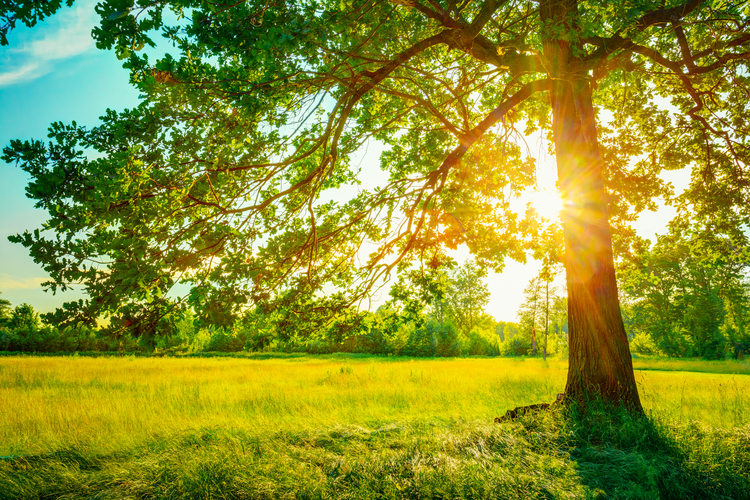
Summer Sun peeking from a tree.

June solstice is also called summer solstice.

©bigstockphoto.com/Grisha Bruev

1. Summer & Winter Solstice

In the Northern Hemisphere, where it is the longest day of the year in terms of daylight, the June solstice is also called the summer solstice. In the Southern Hemisphere, on the other hand, it is the shortest day of the year and is known as the winter solstice.

2. First Solstice of the Year

Solstices happen twice a year – in June and December. The June solstice happens around June 21, when the Sun is directly overhead the Tropic of Cancer. The December solstice takes place around December 21. On this day, the Sun is precisely over the Tropic of Capricorn.

3. When the Sun Seems to Stand Still
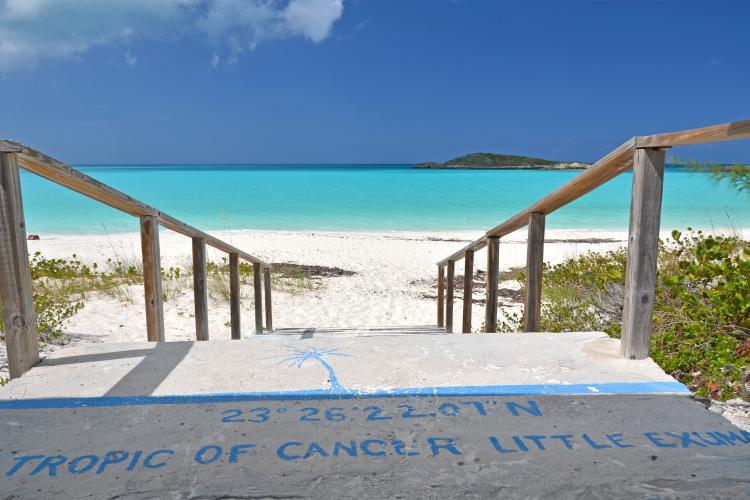
Tropic of Cancer mark at Little Exuma, Bahamas.
©bigstockphoto.com/HappyAlex

Solstice comes from the Latin words sol, meaning Sun and sistere, meaning to come to a stop or stand still. On the day of the June solstice, the Sun reaches its northernmost position, as seen from the Earth. At that moment, its zenith does not move north or south as during most other days of the year, but it stands still at the Tropic of Cancer. It then reverses its direction and starts moving south again.

The opposite happens during the December solstice. Then, the Sun reaches its southernmost position in the sky – Tropic of Capricorn – stands still, and then reverses its direction towards the north.

4. It Occurs at the Same Time…

…all over the world. Technically, the June solstice is the exact instant of time when the Sun is directly overhead the Tropic of Cancer. In 2018, this will happen on June 21 at 11:07 UTC.

5. It Can be on June 20, 21, or 22

Even though most people consider June 21 as the date of the June solstice, it can happen anytime between June 20 and June 22. June 22 solstices are rare – the last June 22 solstice in UTC time took place in 1975 and there won’t be another one until 2203.

6. It’s the First Day of Summer…

Men setting up the Maypole for Midsummer celebrations in Torstuna, Sweden.
The Maypole is a symbol of Midsummer celebrations in Sweden.
©bigstockphoto.com/contas

…depending on who you ask. Astronomers and scientists use the date of the June solstice to mark the beginning of summer in the Northern Hemisphere and winter in the Southern Hemisphere. For meteorologists, on the other hand, summer began almost three weeks ago, on June 1.

In many Northern Hemisphere cultures, the day is traditionally considered to be the mid-point of the summer season. Midsummer celebrations on or around the Northern summer solstice are common in many European countries.

7. The Earth is Farthest from the Sun

One might think that since it is summer in the Northern Hemisphere, the Earth is closest to the Sun during the June solstice. But it’s the opposite. The Earth is actually farthest from the Sun during this time of the year. In fact, the Earth will be on its Aphelion a few weeks after the June solstice.
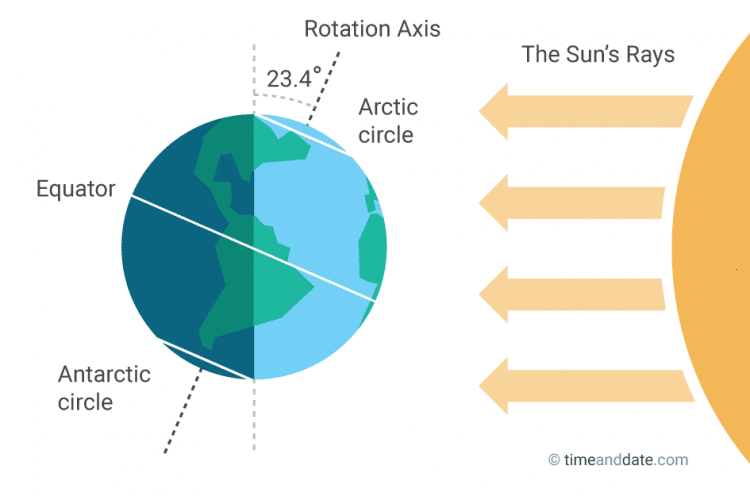
Illustration image
June solstice (Ill. not to scale).

The Earth’s distance from the Sun has very little effect over the Seasons on Earth. Instead, it the tilt of Earth’s rotational axis, which is angled at around 23.4 degrees, that creates seasons.

The direction of Earth’s tilt does not change as the Earth orbits the Sun – the two hemispheres point towards the same direction in space at all times. What changes as the Earth orbits around the Sun is the position of the hemispheres in relation to the Sun – the Northern Hemisphere faces towards the Sun during the June solstice, thus experiencing summer. The Southern Hemisphere tilts away from the Sun and therefore enjoys winter during this time.

8. The Earliest Sunrise of the Year Doesn’t Happen on This Day

Picturesque landscape of a ranch at sunrise.
The earliest sunrise takes place days before the June solstice.
©bigstockphoto.com/Geribody

Even though the June solstice is the longest day of the year in the Northern Hemisphere, most places do not see the earliest sunrise of the year on this day. The earliest sunrise happens a few days before, and the latest sunset takes place a few days after, the June solstice.

In the Southern Hemisphere, where this day marks the winter solstice, the earliest sunset happens a few days before the solstice, and the latest sunrise occurs a few days after it.

This happens because of the imbalance between time measured using clocks and time measured by a sundial. Read more

9. Not Usually the Hottest Day of the Year

In fact, the hottest day of the year in the Northern Hemisphere usually comes a few weeks or sometimes months after the solstice. This is because it takes time for the oceans and landmasses to warm up, which again allows for higher air temperatures. This phenomenon is called the delay or lag of the seasons.

10. The Arctic Circle has 24 Hours of Daylight
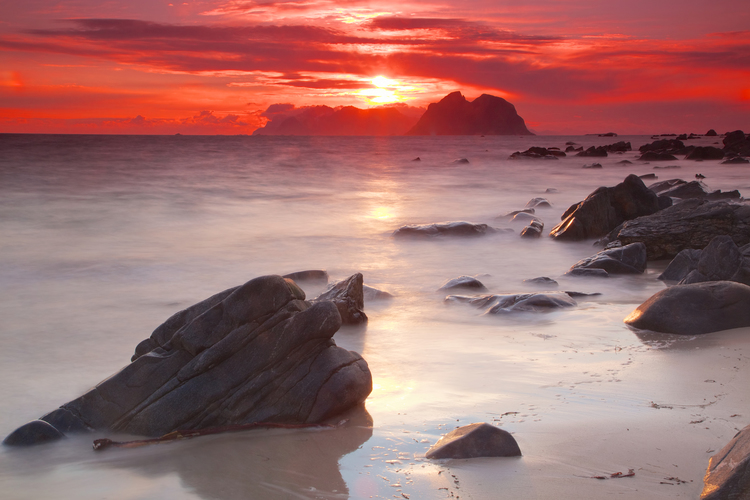
Midnight sun by the sea on island of Vaeroy, Norway.
Midnight sun by the sea on the Island of Vaeroy, Norway.
©bigstockphoto.com/harvepino

The June solstice is the only day of the year when all locations inside the Arctic Circle experience a continuous period of daylight for 24 hours. Due to atmospheric refraction, however, the midnight sun is visible for a few days before and on the June solstice from areas as far as 60 miles (97 kilometers) south of the Arctic Circle. As one moves further north of the Arctic Circle, the number of days with the Midnight Sun increase.

On the Antarctic Circle, there are 24 hours of nighttime on the June solstice. Just as with the Northern Hemisphere, any location south of the Antarctic Circle has Polar Night several days before the June solstice.

11. It’s Celebrated Around the World

The June solstice holds a special place of celebration in many cultures. People around the world celebrate the day with feasts, picnics, dance, and music.

Topics: AstronomySunSeasonsDecemberSolstice

source: timeanddate.com

Superb Kenya Food Dishes around Kenya


Posted on: December 5th, 2013 by hujamboafrica

a reblog … http://wp.me/p3KT1t-iD

Kenya-food-dishIII

Although Kenya has a high influence and is highly recognized worldwide as a great African Safari destination the country is also immersed with superb and delicious, Kenya food dishes that would leave anyone craving for some more. Most of these Kenya food dishes have been adopted from different Kenya communities around the country.

By far, the locals have further sharpened their culinary skills astonishingly in order to produce the most finger-licking dishes from the former, Kenya food cuisines. Below is a short summary of the most top Kenya food dishes that worth a trial while in Kenya, either on Holiday or vacation.

Ugali and Fish – This is a superb dish that’s loved by many people across Kenya Its preparation is rather easy and takes just a few minutes to be served. Ugali is prepared from a mixture of maize flour and water, simply mix the flour in boiled water until it hardens, the end result should be like form of a cake when it’s fully ready. The fish is simply fried fish in Kenya is commonly found in Nyanza because it’s near Lake Victoria and at the Coast because it’s near the Indian Ocean. Likewise, this Kenya food dish should be served when hot also some kachumbari is usually served alongside this dish in order to, further nourish the dish’s taste.

Githeri – This Kenya food dish comprises of a mixture of both maize and beans, and it’s a superb delicious meal especially when added some meat or avocado. This usually makes the dish tender and also makes its taste a craving one, nevertheless. Also worth knowing, this is a popular dish among the Kikuyu people mostly found in Central Province, in Kenya.

Mukimo – This dish is somehow similar to Githeri Kenya food dish, though the dish is usually mashed all together. It comprises of maize and beans mashed together with either, potatoes or crooked bananas. Because this dish can alleviate hunger to a wide range of people it’s found fit to be served in many occasions like weddings and party’s, around Kenya. Rice and meat soup are most of the time added onto the dish in order to tenderize the dish and further nourish, its taste.

Kenya-food-dish

Mursik – This is a Kenya food drink which is normally prepared from a cow’s milk fermented in ash-treated gourds. Blood, on the other hand, may be added to fresh milk before fermentation or after the milk has already been fermented. Afterwards, the milk is heated to boiling point then cooled to a moderate temperature level. At this stage, the milk should be allowed to undergo spontaneous fermentation for a period of about 3-5 days before it’s ready, for consumption. Also worth knowing, this Kenya food drink is a popular food among the Kalenjins African culture people found, in Kenya.

Ingoho (Chicken) – Ingoho is a cultural Luhya name for chicken, in a great way the Luhya people from Western Kenya is deemed to love this dish, immensely. Likewise, if you happen to visit the place from either abroad or as a high prominent guest like a government official, the Luhya people will look forward to preparing you a superb Ingoho, of a kind.

Wali – Wali is a cultural Swahili name for rice it’s  the most popular Kenya food dish, among the Swahili people at the coast. For this particular dish to, further nourish its taste it’s normally added and cooked together with some coconut milk. Sure, the coconut milk works like magic and by far gives this dish an irresistible delicious, taste. Coconuts are also abundant at the Kenya’s coast, so the Swahili people can easily find them.

Kachumbari – This is another superb Kenya food dish loved by many people across the country. The dish comprises of a mixture of chopped tomatoes, onions, pepper, parsley and sometimes some avocado. Indeed, it’s quite a finger licking delicious dish that’s mostly served with Nyamachoma.

Nyama Choma – This is a superb Kenya food dish that’s widely consumed by a great mass of people in Kenya it’s, simply roast meat, which can be of different variety like Beef, chicken or fish. Beef, on the other hand, is widely available in many parts of the country and is also cheap compared to other types of animal meat around Kenya. More likely you’ll find this dish heavily consumed at parties, bars and restaurant – You ought to try some while in, Kenya.

Chapati – Chapati is another superb Kenya food dish loved by many people in Kenya, especially the teens and youths. The dish is made from wheat flour, which is shaped into small pieces of dough, rolled out into round flat discs and eventually, spread and fried on a pan. The dish is hugely delicious, and most times it’s served with meat stew in order to make it tender. Also worth knowing, you’ll find this dish prepared in many great occasions in Kenya, like family get together parties, weddings and much more.


Above are some of the superb and most consumed Kenya food dishes you’ll most likely find in Kenya, sure they’re immensely and fragrantly delicious, you’ll definitely crave more for another plate. More likely, if you’re a foodie junkie, you should really try some of these great dishes while in Kenya. Happy Travel!

Barbecue – History of Barbecue


Image result for Ellsworth B. A. Zwoyer of Pennsylvania patented a design for charcoal briquettes in 189 To barbecue means to slow-cook meat at a low temperature.

Zwoyer’s Design Patent #D27483 – charcoal briquette.


To barbecue means to slow-cook meat at a low temperature for a long time over wood or charcoal. In America, barbecue (or BBQ) originated in the late 1800’s during Western cattle drives. The cowboys were fed the less than perfect cuts of meat, often brisket, a tough and stringy piece of meat that required five to seven hours of cooking to tenderize. Other barbecue meats used were pork butt, pork ribs, beef ribs, venison and goat.

However, barbecue was not invented in America and no one knows who invented the barbecue. The word ‘Barbecue’ might come from the Taino Indian word ‘barbacoa’ meaning meat-smoking apparatus. ‘Barbecue’ could have also originated from the French word “Barbe a queue” which means “whiskers-to-tail.”

No one is sure of the correct origins of the word.

Who Invented the Charcoal Briquette?

Ellsworth B. A. Zwoyer of Pennsylvania patented a design for charcoal briquettes in 1897. (See the image to the right) After World War One, the Zwoyer Fuel Company built charcoal briquette manufacturing plants in the United States with plants in Buffalo, NY and Fall River, MA.

There are stories circulating that Henry Ford invented the very first briquette in 1920 with the help of Thomas Edison. However, the 1897 patent obviously predates this and Ford and Edison both knew Zwoyer.

Ford is the man who popularized the gas-powered car in America and invented the assembly line for automobile manufacturing. Ford created a briquette from the wood scraps and sawdust from his car factory.

E.G. Kingsford bought Ford’s briquette and placed it into commercial production.

Shopping while Black … it’s not a crime – a repost


Shopping while Black is not a crime.Barneys NYJoin us in demanding that the NYPD immediately conduct a full investigation into the arrests made outside of Barneys.

Join Us

For months, Trayon Christian — a 19-year-old Black college student from Queens — set aside money from a part-time job to buy a $349 designer belt from Barneys New York.1 But in April, as he exited the luxury department store with both the belt and his receipt he was swarmed by undercover cops, peppered with questions, handcuffed and locked in a jail cell.2 While providing several forms of identification to match his debit card, police taunted Trayon with questions like “How could you afford a belt like this?” “Where did you get this money from?”3

Barneys issued a vague statement, disclaiming responsibility for Trayon’s arrest, but more than 47 arrests have been made outside of the Madison Ave. store — hinting at the possibility of a dedicated NYPD task force.4 The public has a right to know the racial breakdown of the suspects arrested, how many were actually charged with a crime, and what role the luxury department store played in these arrests.

Join us in demanding that the NYPD immediately conduct a full investigation of the arrests made outside of Barneys. We’ll also send this message to senior executives at Barneys to remind them that the practice of profiling Black customers is unacceptable. It only takes a moment.

Clearly Trayon isn’t the only Black person who has been stopped by NYPD after an expensive purchase at this particular store. Just a day after Trayon filed his complaint, 21-year-old Kayla Phillips has come forward and claims that she too was surrounded by undercover cops just blocks from the Manhattan store who pushed her up against the wall after she purchased a designer handbag with her debit card.5

Unfortunately Black folks are too often subjected to this brand of deeply offensive and humiliating treatment by security guards and police officers at the businesses we patronize.  And in recent years, the NYPD has become notorious  for targeting Black and Latino residents — subjecting our communities to thousands of illegal stops, searches, and frisks each day that lead to unlawful arrests, constant harassment, and in some cases, serious injury or death.6,7

Enough is enough. In order to end the culture of police misconduct and racial profiling we must demand accountability for these discriminatory practices. Will you sign this petition today and forward it to your family and friends?

Thanks and Peace,

–Rashad, Arisha, Matt, Aimée, William, Hannah and the rest of the ColorOfChange team.    October 25th, 2013

Help support our work. ColorOfChange.org is powered by YOU—your energy and dollars. We take no money from lobbyists or large corporations that don’t share our values, and our tiny staff ensures your contributions go a long way.

References

1. “Barneys accused teen of using fake debit card for $349 belt because he’s a ‘young black American male’:lawsuit,” New York Daily News, 10-22-13 http://act.colorofchange.org/go/3044?t=7&akid=3175.1689899.3LyxQO

2. “Trayon Christian Complaint,” New York City Clerk, 10-21-13 http://act.colorofchange.org/go/3045?t=9&akid=3175.1689899.3LyxQO

3.See Reference 1

4. “Another black Barneys shopper accused of credit card fraud after buying $2,500 purse: claim,” New York Daily News, 08-10-13 http://act.colorofchange.org/go/3046?t=12&akid=3175.1689899.3LyxQO

5.See Reference 4

6. “Judge approves class action lawsuit over NYPD’s stop-and-frisk searches,” The Raw Story, 05-16-12 http://act.colorofchange.org/go/1636?t=14&akid=3175.1689899.3LyxQO

7. “After Detective’s Firing, Tensions Linger in Sean Bell Case,” New York Times, 03-25-12 http://act.colorofchange.org/go/3047?t=16&akid=3175.1689899.3LyxQO