
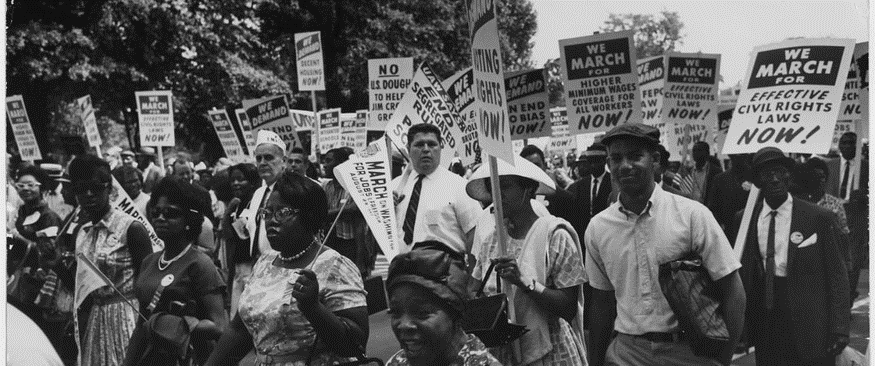
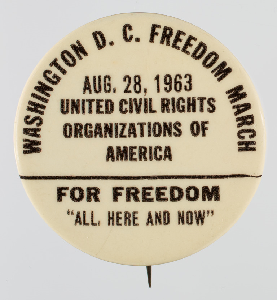
Sixty-two years ago on August 28, 1963, Rev. Dr. Martin Luther King Jr. delivered his speech that is popularly known as the “I Have a Dream” speech to civil rights marchers gathered at the Lincoln Memorial in Washington, DC. The March on Washington for Jobs and Freedom featured civil rights leaders, along with tens of thousands of marchers from around the country who gathered to press the United States government for equality.
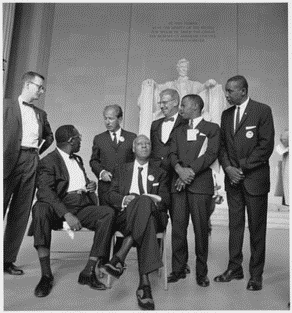
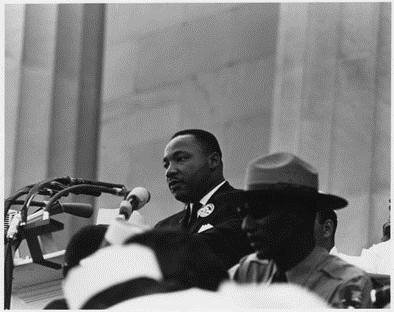
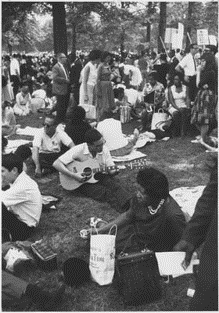
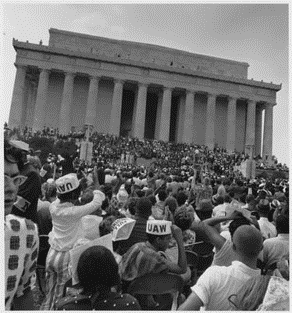
Clockwise from top left: Civil Rights March on Washington, D.C. [Leaders of the march], August 28, 1963, National Archives Identifier 542056; Civil Rights March on Washington, D.C. [Dr. Martin Luther King, Jr. speaking.], August 28, 1963, National Archives Identifier 542068; Civil Rights March on Washington, D.C. [Marchers at the Lincoln Memorial.], August 28, 1963, National Archives Identifier 542054; Civil Rights March on Washington, D.C. [Marchers relaxing.], August 28, 1963, National Archives Identifier 542044
One of the marchers was 12 year old Edith Lee-Payne who came to Washington, DC with her mother. Photographer Rowland Scherman captured a photograph of young Edith that day, but Ms. Lee-Payne did not learn about the photograph until 2008. With the help of a librarian and an archivist, she was able to locate the photograph of herself at the march in the National Archives.

| In 2011, Ms. Lee-Payne wrote about the March and how she learned a photograph was taken of her on this day. With the permission of the author, below is an excerpt from the Pieces of History post Finding the girl in the photograph. |
| Washington, DC, was home for my mother before settling in Detroit, Michigan. After Dr. King led a march in Detroit on June 23, 1963, my mother scheduled our vacation to attend the March on Washington on August 28, 1963, which also happened to be my twelfth birthday. I lived the dream Dr. King spoke of. My neighborhood was integrated. We attended the same schools and sometimes shared worship experiences. We dined at restaurants with lunch counters without incident and drank from water fountains without signs distinguishing “color.” My mother never learned to drive, so buses and cabs were our primary mode of transportation, also without incident. At the age of 12 years, it was inconceivable to know that people who looked like me, separated by a few hundred miles, suffered such horrific experiences and limitations in their daily lives, including death. What I had learned in school about the Constitution, Emancipation Proclamation, freedom, and opportunities caused me to question the validity of these documents and concepts. There were no exceptions in these documents or caveats allowing these dreadful differences to happen, yet they did. In late October 2008, my cousin Marsha phoned saying she saw a picture of me on the cover of a 2009 Black History Calendar. She said I was holding a banner that read something about a march. I immediately recalled the March on Washington in August 28, 1963. She went on to say the picture was in a museum. From there my search to find the picture’s origin began. […] It is very humbling and gratifying to have been captured in photos viewed and used around the globe, by an unknown photographer that I have great respect, gratitude, and appreciation for. At that moment, the photographer captured my indescribable and unbelievable feelings as I listened and felt and saw, simultaneously, despair and hope on the faces of people around me, including my mother. It’s also humbling that my image identifies me as a civil rights demonstrator, associated with Dr. Martin Luther King, Jr., and the historic March on Washington that will be seen throughout history. |
Source: nara.gov



 1609 – Delaware Bay was discovered by Henry Hudson.



 Be a Seed for Change
You must be logged in to post a comment.