Category Archives: ~ politics petitions pollution and pop culture

on this day … 6/26 1998 – The U.S. Supreme Court ruled that employers are always potentially liable for supervisor’s sexual misconduct toward an employee.


1096 – Peter the Hermit’s crusaders forced their way across Sava, Hungary.

1243 – The Seljuk Turkish army in Asia Minor was wiped out by the Mongols.

1483 – Richard III usurped himself to the English throne.

1794 – The French defeated an Austrian army at the Battle of Fleurus.

1804 – The Lewis and Clark Expedition reached the mouth of the Kansas River after completing a westward trek of nearly 400 river miles.

1819 – The bicycle was patented by W.K. Clarkson, Jr.

1844 – John Tyler took Julia Gardiner as his bride, thus becoming the first U.S. President to marry while in office.

1870 – The first section of the boardwalk in Atlantic City, NJ, was opened to the public.

1894 – The American Railway Union called a general strike in sympathy with Pullman workers.

1900 – The United States announced that it would send troops to fight against the Boxer rebellion in China.

1900 – A commission that included Dr. Walter Reed began the fight against the deadly disease yellow fever.

1907 – Russia’s nobility demanded drastic measures to be taken against revolutionaries.

1908 – Shah Muhammad Ali’s forces squelched the reform elements of Parliament in Persia.

1917 – General John “Black Jack” Pershing arrived in France with the American Expeditionary Force.

1925 – Charlie Chaplin’s comedy “The Gold Rush” premiered in Hollywood.

1926 – A memorial to the first U.S. troops in France was unveiled at St. Nazaire.

1924 – After eight years of occupation, American troops left the Dominican Republic.

1927 – The Coney Island Cyclone roller coaster opened in New York.

1936 – The Focke-Wulf Fw 61 made its first flight. It is often considered the first practical helicopter.

1942 – The Grumman F6F Hellcat fighter was flown for the first time.

1945 – The U.N. Charter was signed by 50 nations in San Francisco, CA.

1948 – The Berlin Airlift began as the U.S., Britain and France started ferrying supplies to the isolated western sector of Berlin.

1951 – The Soviet Union proposed a cease-fire in the Korean War.

1959 – CBS journalist Edward R. Murrow interviewed Lee Remick. It was his 500th and final guest on “Person to Person.”

1959 – U.S. President Eisenhower joined Britain’s Queen Elizabeth II in ceremonies officially opening the St. Lawrence Seaway.

1961 – A Kuwaiti vote opposed Iraq’s annexation plans.

1963 – U.S. President John Kennedy announced “Ich bin ein Berliner” (I am a Berliner) at the Berlin Wall.

1971 – The U.S. Justice Department issued a warrant for Daniel Ellsberg, accusing him of giving away the Pentagon Papers.

1974 – In Troy, Ohio, a Marsh supermarket installed the first bar code scanning equipment, made by IBM, and a product with a bar code was scanned for the first time. The product was Juicy Fruit gum.

1975 – Indian Prime Minister Indira Gandhi declared a state of emergency due to “deep and widespread conspiracy.”

1976 – In Toronto, Canada, the CN Tower opened to the public. The official opening date is listed as October 1, 1976. It was the world’s tallest free-standing stucture and the world’s tallest tower until 2010.

1979 – Muhammad Ali, at 37 years old, announced that he was retiring as world heavyweight boxing champion.

1985 – Wilbur Snapp was ejected after playing “Three Blind Mice” during a baseball game. The incident followed a call made by umpire Keith O’Connor.

1987 – The movie “Dragnet” opened in the U.S.

1996 – The U.S. Supreme Court ordered the Virginia Military Institute to admit women or forgo state support.

1997 – The U.S. Supreme Court struck down the Communications Decency Act of 1996 that made it illegal to distribute indecent material on the Internet.

1997 – J.K. Rowlings book “Harry Potter and the Philosopher’s Stone” was published in the U.K. The book was later released in the U.S. under the name “Harry Potter and the Sorcerer’s Stone.” This was the first book in the Harry Potter series.

1997 – The U.S. Supreme Court upheld state laws that allow for a ban on doctor-assisted suicides.

1998 – The U.S. and Peru open school to train commandos to patrol Peru’s rivers for drug traffickers.

1998 – The U.S. Supreme Court ruled that employers are always potentially liable for supervisor’s sexual misconduct toward an employee.

2000 – The Human Genome Project and Celera Genomics Corp. jointly announced that they had created a working draft of the human genome.

2000 – Indonesia’s President Abdurrahman Wahid declared a state of emergency in the Moluccas due to the escalation of fighting between Christians and Muslims.

2001 – Ray Bourque (Colorado Avalanche) announced his retirement just 17 days after winning his first Stanley Cup. Bouque retired after 22 years and held the NHL record for highest-scoring defenseman and playing in 19 consecutive All-Star games.

2002 – WorldCom Inc. filed for Chapter 11 bankruptcy protection.

on this day 6/25 1998 – The U.S. Supreme Court rejected the line-item veto thereby striking down presidential power to cancel specific items in tax and spending legislation.


0841 – Charles the Bald and Louis the German defeated Lothar at Fontenay.

1080 – At Brixen, a council of bishops declared Pope Gregory to be deposed and Archbishop Guibert as antipope Clement III.

1580 – The Book of Concord was first published. The book is a collection of doctrinal standards of the Lutheran Church.

1658 – Aurangzeb proclaimed himself emperor of the Moghuls in India.

1767 – Mexican Indians rioted as Jesuit priests were ordered home.

1788 – Virginia ratified the U.S. Constitution and became the 10th state of the United States.
1864 – Union troops surrounding Petersburg, VA, began building a mine tunnel underneath the Confederate lines.

1867 – Lucien B. Smith patented the first barbed wire.


1868 – Florida, Alabama, Louisiana, Georgia, North Carolina and South Carolina were readmitted to the Union.

1870 – In Spain, Queen Isabella abdicated in favor of Alfonso XII.

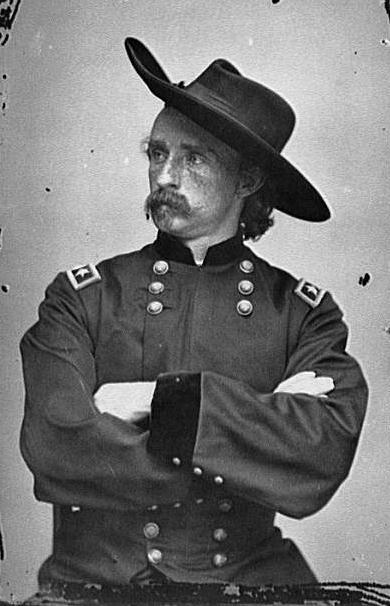
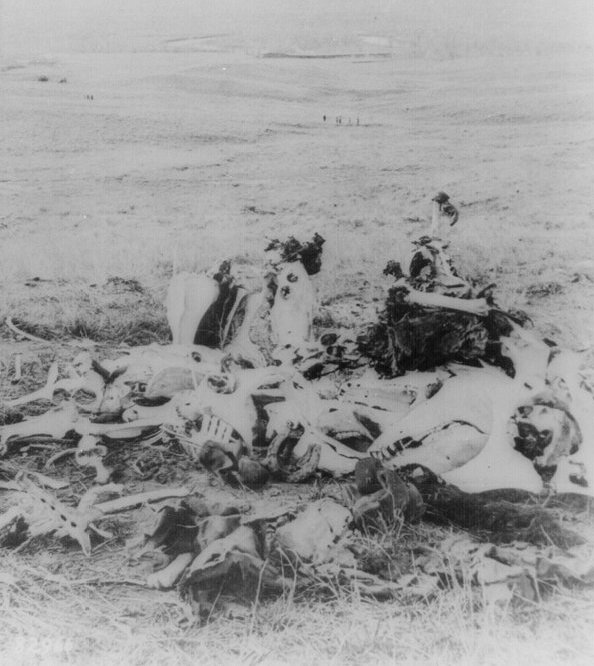
1876 – Lt. Col. Custer and the 210 men of U.S. 7th Cavalry were killed by Sioux and Cheyenne Indians at Little Big Horn in Montana. The event is known as “Custer’s Last Stand.”

1876 – In Philadelphia, PA, Alexander Graham Bell demonstrated the telephone for Sir William Thomson (Baron Kelvin) and Emperor Pedro II of Brazil at the Centennial Exhibition.

1910 – The U.S. Congress authorized the use of postal savings stamps.

1917 – The first American fighting troops landed in France.

1920 – The Greeks took 8,000 Turkish prisoners in Smyrna.

1921 – Samuel Gompers was elected head of the AFL for the 40th time.

1938 – Gaelic scholar Douglas Hyde was inaugurated as the first president of the Irish Republic.

1941 – Finland declared war on the Soviet Union.

1946 – Ho Chi Minh traveled to France for talks on Vietnamese independence.

1948 – The Soviet Union tightened its blockade of Berlin by intercepting river barges heading for the city.

1950 – North Korea invaded South Korea initiating the Korean War.

1951 – In New York, the first regular commercial color TV transmissions were presented on CBS using the FCC-approved CBS Color System. The public did not own color TV’s at the time.

1959 – The Cuban government seized 2.35 million acres under a new agrarian reform law.

1959 – Eamon De Valera became president of Ireland at the age of 76.

1962 – The U.S. Supreme Court ruled that the use of unofficial non-denominational prayer in public schools was unconstitutional.

1964 – U.S. President Lyndon Johnson ordered 200 naval personnel to Mississippi to assist in finding three missing civil rights workers.

1968 – Bobby Bonds (San Francisco Giants) hit a grand-slam home run in his first game with the Giants. He was the first player to debut with a grand-slam.

1970 – The U.S. Federal Communications Commission handed down a ruling (35 FR 7732), making it illegal for radio stations to put telephone calls on the air without the permission of the person being called.

1973 – Erskine Childers Jr. became president of Ireland after the retirement of Eamon De Valera.

1973 – White House Counsel John Dean admitted that U.S. President Nixon took part in the Watergate cover-up.

1975 – Mozambique became independent. Samora Machel was sworn in as president after 477 years of Portuguese rule.

1981 – The U.S. Supreme Court decided that male-only draft registration was constitutional.

1985 – New York Yankees officials enacted the rule that mandated that the team’s bat boys were to wear protective helmets during all games.

1986 – The U.S. Congress approved $100 million in aid to the Contras fighting in Nicaragua.

1987 – Austrian President Kurt Waldheim visited Pope John Paul II at the Vatican. The meeting was controversial due to allegations that Waldheim had hidden his Nazi past.

1990 – The U.S. Supreme Court upheld the right of an individual, whose wishes are clearly made, to refuse life-sustaining medical treatment. “The right to die” decision was made in the Curzan vs. Missouri case.

1991 – The last Soviet troops left Czechoslovakia 23 years after the Warsaw Pact invasion.

1991 – The Yugoslav republics of Slovenia and Croatia declared their independence from Yugoslavia.

1993 – Kim Campbell took office as Canada’s first woman prime minister. She assumed power upon the resignation of Brian Mulroney.

1997 – The Russian space station Mir was hit by an unmanned cargo vessel. Much of the power supply was knocked out and the station’s Spektr module was severely damaged.

1997 – U.S. air pollution standards were significantly tightened by U.S. President Clinton.

1998 – The U.S. Supreme Court rejected the line-item veto thereby striking down presidential power to cancel specific items in tax and spending legislation.

1998 – The U.S. Supreme Court ruled that those infected with HIV are protected by the Americans With Disabilities Act.

1998 – Microsoft’s “Windows 98” was released to the public.

1999 – Germany’s parliament approved a national Holocaust memorial to be built in Berlin.

2000 – U.S. and British researchers announced that they had completed a rough draft of a map of the genetic makeup of human beings. The project was 10 years old at the time of the announcement.

2000 – A Florida judge approved a class-action lawsuit to be filed against American Online (AOL) on behalf of hourly subscribers who were forced to view “pop-up” advertisements.

June 25, 1876 – after fighting to keep their Nation


Battle of the Little Bighorn

June 25, 1876 – General George A. Custer, leading 250 men, attacked an encampment of Sioux Indians near Little Bighorn River in Montana.

Custer and his men were then attacked by 2000-4000 Indian braves. Only one scout and a single horse survived ‘Custer’s Last Stand’ on the Little Bighorn Battlefield.

News of the humiliating defeat infuriated Americans and led to all-out war. Within a year, the Sioux Indians were a broken and defeated nation.

Citation Information

Article Title Battle of the Little Bighorn

Author History.com Editors

Website Name HISTORY

URL https://www.history.com/this-day-in-history/battle-of-little-bighorn

Date Accessed June 24, 2023

Publisher A&E Television Networks

Last Updated July 1, 2022 Original Published Date November 24, 2009

Citation Information

Article Title What Really Happened at the Battle of the Little Bighorn?

Background to the Battle of the Little Bighorn 

The U.S. Army dispatched three columns of soldiers, including Custer and his 7th Cavalry, to round up Indigenous people and return them to their reservations.

The plan was for Custer’s cavalry and Brigadier General Alfred Terry’s infantry to rendezvous with troops under the command of Colonel John Gibbon and Brigadier General George Crook. They’d then find the Native Americans, surround them and force their surrender.

Crook was delayed but Terry, Custer and Gibbon met-up in mid-June and after a scouting party found a trail headed toward Little Big Horn Valley, they decided Custer should move in, surround the tribes and await reinforcements.

Custer forged ahead but things didn’t go as planned. Around midday on June 25, his scouts located Sitting Bull’s camp. Instead of waiting for reinforcements, however, Custer planned a surprise attack for the next day. He moved it up when he thought the Native American forces had discovered his position.

Author Annette McDermottWebsite Name HISTORY

URL https://www.history.com/news/little-bighorn-battle-facts-causes

Date Accessed June 24, 2023

Publisher A&E Television Networks

Last updated June 20, 2023

Original Published Date February 27, 2018

On this day …6/25


On-This-Day.com1788 – Virginia ratified the U.S. Constitution and became the 10th state of the United States.
1868 – The U.S. Congress enacted legislation granting an eight-hour day to workers employed by the Federal government.

1868 – Florida, Alabama, Louisiana, Georgia, North Carolina and South Carolina were readmitted to the Union

1910 – The U.S. Congress authorized the use of postal savings stamps.

1917 – The first American fighting troops landed in France.

1920 – The Greeks took 8,000 Turkish prisoners in Smyrna.

1962 – The U.S. Supreme Court ruled that the use of unofficial non-denominational prayer in public schools was unconstitutional.

1964 – U.S. President Lyndon Johnson ordered 200 naval personnel to Mississippi to assist in finding three missing civil rights workers.

1968 – Bobby Bonds (San Francisco Giants) hit a grand-slam home run in his first game with the Giants. He was the first player to debut with a grand-slam.
1970 – The U.S. Federal Communications Commission handed down a ruling (35 FR 7732), making it illegal for radio stations to put telephone calls on the air without the permission of the person being called.

1981 – The U.S. Supreme Court decided that male-only draft registration was constitutional.

1986 – The U.S. Congress approved $100 million in aid to the Contras fighting in Nicaragua.
1990 – The U.S. Supreme Court upheld the right of an individual, whose wishes are clearly made, to refuse life-sustaining medical treatment. “The right to die” decision was made in the Curzan vs. Missouri case.
1997 – U.S. air pollution standards were significantly tightened by U.S. President Clinton.

1998 – The U.S. Supreme Court rejected the line-item veto thereby striking down presidential power to cancel specific items in tax and spending legislation.

1998 – The U.S. Supreme Court ruled that those infected with HIV are protected by the Americans With Disabilities Act.


1610 – First Nations First Baptism – the Membertou


Micmac chief Membertou and 20 of his family are the first people of the First Nations to be baptized by Christian missionaries in Port-Royal, New France [1]

 First Nations Chief:

Nationality: Micmac

Biography: Membertou was a influential and formidable Micmac chief (saqamaw) who interacted with and helped protect the French settlement of Port Royal, in modern Nova Scotia.

In 1610 he and 20 members of his family were the first, First Nations people to be baptized by the French. He was given the names Henri and while there is no indication he renounced his traditional beliefs he agreed to be buried on Christian ground in 1611.

As he claimed to have met the explorer Jacques Cartier in 1534 as a grown man, he was likely aged about 100 when he died.

Birthplace: , Mi’kmaq nation

Died: September 181611

Source: onthisday.com