Category Archives: ~ politics petitions pollution and pop culture

Our homes


Mortgage lenders are recklessly foreclosing on homes. Some are even breaking the law.

Help protect your home, or your friends’ and family’s, with this simple tool:

Click here

Dear Barbara,

The big banks are at it again. First they targeted minority communities with subprime loans and other predatory lending schemes, helping to make Black Americans and Latinos 70% more likely than Whites to be in foreclosure.1

Now we’re learning that the very same banks and mortgage lenders have been foreclosing on homes around the nation without verifying that they have the right to do so.2

The stories are horrifying: in Ohio, a bank foreclosed on a man after insisting for months that it didn’t hold his loan and refusing to accept his payments.3 In Florida, Bank of America tried to take a house away from a man who never even had a mortgage.4 The more we learn, the worse it gets.

If you’re a homeowner, one possible way to protect yourself from the banks’ bad behavior is to demand your note and make them prove they own your mortgage. A new online tool makes it easy. Check it out and please share this information with your friends and family. It could help to save your home or that of someone you love:

http://www.wheresthenote.com/colorofchange

The banks have been trying to write off their failure to properly verify ownership as a mere technicality. But it’s much more serious than that, and Attorneys General in all 50 states have banded together to investigate the illegal foreclosures, and several elected leaders have called for criminal charges to be filed against the banks.5,6

You would think that it would be easy to produce the documents needed for the banks to verify ownership. But during the real estate boom, banks cut corners with paperwork in order to make as many loans as possible, and then sold the loans to other lenders in complicated financial maneuvers designed to maximize the banks’ profits.

Now it has come to light that banks have been paying “foreclosure mills” to take homes away as quickly as possible, before homeowners even realize that anything might be amiss. And it appears that these foreclosure mills are operating without actually following the law — foreclosing without the proper legal documentation.7 In some cases, notaries responsible for verifying the documents aren’t even reading them.8 And in other cases, the documents are just being fabricated — made up to cover the banks’ tracks.9 This is foreclosure fraud. It’s not legal, and it’s not right.

Given their role in creating the foreclosure crisis through predatory practices and deception, banks should be doing what they can to avoid foreclosures and keep people in their homes. This could be done by lowering interest rates, or better yet — reducing the principal to reflect the crash in housing prices. Foreclosures are only further devastating communities already hard hit by record unemployment.

But the banks seem uninterested. It appears that they would rather commit mortgage fraud to protect their bottom line. That’s why it’s up to us to make sure that they’re following the law to the letter. And if enough of us do so, we’ll help to create a new financial environment where banks are held more accountable to homeowners and the legal system. If you have a mortgage, protect yourself and your family by demanding your note, and please share this information with your friends and family. It takes just a moment:

http://www.wheresthenote.com/colorofchange

Thanks and Peace,

— James, Gabriel, William, Dani, Natasha, and the rest of the ColorOfChange.org team
November 17th, 2010

Help support our work. ColorOfChange.org is powered by YOU — your energy and dollars. We take no money from lobbyists or large corporations that don’t share our values, and our tiny staff ensures your contributions go a long way. You can contribute here:

https://secure.colorofchange.org/contribute/

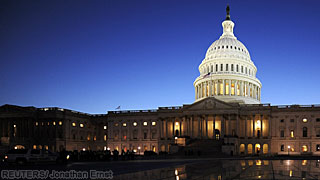
Congress is in Sesson … read what happened -updates when needed


The Senate Convenes Today at 9:30amET

Following any Leader remarks, there will be a period of morning business until 11:00am with the time equally divided and controlled between the two Leaders or their designees. Of the majorities time, Senator Harkin will control 15 minutes, Senator Dodd will control 15 minutes, and Senator Mikulski will control 5 minutes.

As a reminder, on Wednesday, September 29, Senator Reid filed cloture on the motion to proceed to the following bills:
S.3815, the Promoting National Gas and Electric Vehicles Act of 2010;
S.3772, The Paycheck Fairness Act; and
S.510, The FDA Food Safety and Modernization Act.

The first vote of the week will be on the motion to invoke cloture on the motion to proceed to S.3815, the Promoting National Gas and Electric Vehicles Act of 2010.

At 11:00am, the Senate will proceed to vote on the motion to invoke cloture on the motion to proceed to S.3772, Paycheck Fairness Act.

If cloture is not invoked, the Senate would proceed immediately to a cloture vote on the motion to proceed to S.510, the Food Safety bill.

If cloture is invoked on either of the motions to proceed, there would be up to 30 hours for debate on the motion.

Senators should expect up to 2 roll call votes to begin at 11:00am.

The Senate will recess from 12:30 until 2:15pm to allow for the Democratic caucus meeting.


Votes:
249: Motion to invoke cloture on the motion to proceed to S.3772, Paycheck Fairness Act;
Not Invoked: 58-41

250: Motion to invoke cloture on the motion to proceed to S.510, FDA Food Satefy;
Invoked: 74-25

Unanimous Consent:
Passed S.1421, Asian Carp Prevention and Control Act

Adopted S.Res.681, a resolution designating the week of November 15 through 19, 2010, as “Global Entrepreneurship Week/USA

))))))))))))))))))))))))))))))))))))))))))))))))))))))))))))))))))))))))))))))))))

CURRENT HOUSE FLOOR PROCEEDINGS
LEGISLATIVE DAY OF NOVEMBER 17, 2010
111TH CONGRESS – SECOND SESSION

7:20 P.M. –
SPECIAL ORDER SPEECHES – The House has concluded all anticipated legislative business and has proceeded to Special Order speeches.  

7:19 P.M. –
Mr. Burton of IN requested that Mr. Thompson of PA be allowed to address the House for 5 minutes on November 18.  

S. 3774:

to extend the deadline for Social Services Block Grant expenditures of supplemental funds appropriated following disasters occurring in 2008 


7:18 P.M. –
At the conclusion of debate, the Yeas and Nays were demanded and ordered. Pursuant to the provisions of clause 8, rule XX, the Chair announced that further proceedings on the motion would be postponed.  

7:04 P.M. –
DEBATE – The House proceeded with forty minutes of debate on S. 3774. Considered under suspension of the rules.  

Mr. McDermott moved to suspend the rules and pass the bill.

H. Res. 1648:

supporting the goals and ideals of National Adoption Day and National Adoption Month by promoting national awareness of adoption and the children in foster care awaiting families, celebrating children and families involved in adoption, recognizing current programs and efforts designed to promote adoption, and encouraging people in the United States to seek improved safety, permanency, and well-being for all children 


7:03 P.M. –
Motion to reconsider laid on the table Agreed to without objection. On motion to suspend the rules and agree to the resolution Agreed to by voice vote.  

6:43 P.M. –
DEBATE – The House proceeded with forty minutes of debate on H. Res. 1648. Considered under suspension of the rules.  

Mr. McDermott moved to suspend the rules and agree to the resolution.

H. Con. Res. 327:

to recognize and support the efforts of the USA Bid Committee to bring the 2018 or 2022 Federation Internationale de Football Association (FIFA) World Cup competition to the United States 


6:42 P.M. –
The title of the measure was amended. Agreed to without objection. Motion to reconsider laid on the table Agreed to without objection.  

On motion to suspend the rules and agree to the resolution, as amended Agreed to by voice vote.

6:36 P.M. –
DEBATE – The House proceeded with forty minutes of debate on H. Con. Res. 327. Considered under suspension of the rules.  

Ms. Watson moved to suspend the rules and agree to the resolution, as amended.

H. Con. Res. 259:

recognizing the 500th anniversary of the birth of Italian architect Andrea Palladio 


6:35 P.M. –
Motion to reconsider laid on the table Agreed to without objection. On motion to suspend the rules and agree to the resolution Agreed to by voice vote.  

6:25 P.M. –
DEBATE – The House proceeded with forty minutes of debate on H. Con. Res. 259. Considered under suspension of the rules.  

Ms. Watson moved to suspend the rules and agree to the resolution.

H. Res. 1672:

commemorating the Persian Gulf War and reaffirming the commitment of the United States towards Persian Gulf War veterans 


6:24 P.M. –
Motion to reconsider laid on the table Agreed to without objection. On motion to suspend the rules and agree to the resolution, as amended Agreed to by voice vote.  

6:23 P.M. –
DEBATE – The House concluded debate on H. Res. 1672. Mr. Arcuri filed a report from the Committee on Rules on H. Res. 1721.  

H. Res. 1672:

commemorating the Persian Gulf War and reaffirming the commitment of the United States towards Persian Gulf War veterans 


6:02 P.M. –
DEBATE – The House proceeded with forty minutes of debate on H. Res. 1672. Considered under suspension of the rules.  

Ms. Watson moved to suspend the rules and agree to the resolution, as amended.

H. Res. 1677:

condemning the Burmese regime’s undemocratic upcoming elections on November 7, 2010 


6:00 P.M. –
At the conclusion of debate, the Yeas and Nays were demanded and ordered. Pursuant to the provisions of clause 8, rule XX, the Chair announced that further proceedings on the motion would be postponed.


H. Res. 1677:

condemning the Burmese regime’s undemocratic upcoming elections on November 7, 2010

5:48 P.M. –

DEBATE – The House proceeded with forty minutes of debate on H. Res. 1677.

Considered under suspension of the rules.

Ms. Watson moved to suspend the rules and agree to the resolution, as amended.

5:47 P.M. –

The Speaker announced that votes on suspensions, if ordered, will be postponed until a time to be announced.

. H. Res. 1715:

congratulating Joe Paterno on his 400th win as Penn State Nittany Lions football head coach

5:45 P.M. –

Motion to reconsider laid on the table Agreed to without objection.

On motion to suspend the rules and agree to the resolution Agreed to by the Yeas and Nays (2/3 required): (Roll No. 575).

5:37 P.M. –

Considered as unfinished business.

H.R. 5758:

to designate the facility of the United States Postal Service located at 2 Government Center in Fall River, Massachusetts, as the “Sergeant Robert Barrett Post Office Building”

Motion to reconsider laid on the table Agreed to without objection.

On motion to suspend the rules and pass the bill Agreed to by the Yeas and Nays (2/3 required): (Roll No. 574).

5:30 P.M. –

Considered as unfinished business.

H.R. 3808:

to require any Federal or State court to recognize any notarization made by a notary public licensed by a State other than the State where the court is located when such notarization occurs in or affects interstate commerce

5:24 P.M. –

On motion to refer the bill and the accompanying veto message to the Committee on the Judiciary. Agreed to without objection.

On passage, the objections of the President to the contrary notwithstanding Failed by the Yeas and Nays (2/3 required): (Roll No. 573).

Motion to refer the bill and accompanying veto message to the Committee on Judiciary.

5:14 P.M. –

UNFINISHED BUSINESS – The Chair announced that the unfinished business was the question of passage of H.R. 3808 on reconsideration, the objections of the President to the contrary notwithstanding, and on motions to suspend the rules which had been debated earlier and on which further proceedings had been postponed.

H. Con. Res. 332:

The title of this measure is not available

4:45 P.M. –

On agreeing to the resolution Roll Call 572 – Yea and Nay vote pending.

4:42 P.M. –

Considered as privileged matter.

H.R. 3808:

to require any Federal or State court to recognize any notarization made by a notary public licensed by a State other than the State where the court is located when such notarization occurs in or affects interstate commerce

4:41 P.M. –

POSTPONED PROCEEDINGS – At the conclusion of the allotted debate time, the Chair announced that under the Constitution, the yeas and nays were ordered on the question of passage upon reconsideration, the objection of the President to the contrary notwithstanding. The Chair further announced that further proceedings on that question would be postponed until a time to be announced.

4:33 P.M. –

DEBATE – Pursuant to a previous order of the House, the House proceeded with 10 minutes of debate on the veto message from the President on H.R. 3808.

4:32 P.M. –

The Chair announced that the unfinished business was the veto message from the President on H.R. 3808.

4:31 P.M. –

The House convened, returning from a recess continuing the legislative day of November 17

.

10:28 A.M. –

The Speaker announced that the House do now recess. The next meeting is subject to the call of the Chair.

H. Res. 1720:

Providing for the printing of a revised edition of the Rules and Manual of the House of Representatives for the One Hundred Twelfth Congress

10:27 A.M. –

Motion to reconsider laid on the table Agreed to without objection.

On agreeing to the resolution Agreed to without objection.

Mr. Ellison asked unanimous consent to take from the Speaker’s table and consider.

Considered by unanimous consent.

S.J. Res. 40:

appointing the day for the convening of the first session of the One Hundred Twelfth Congress

Motion to reconsider laid on the table Agreed to without objection.

On passage Passed without objection.

10:26 A.M. –

Mr. Ellison asked unanimous consent to take from the Speaker’s table and consider.

Considered by unanimous consent.

DEBATE TIME LIMITATION – Mr. Ellison asked unanimous consent that debate on passing H.R. 3808, the objections of the President to the contrary notwithstanding, be limited to 10 minutes equally divided and controlled by the chair and ranking minority member of the Committee on the Judiciary. Agreed to without objection.

10:03 A.M. –

ONE MINUTE SPEECHES – The House proceeded with one minute speeches, which by direction of the Chair would be limited to 15 per side of the aisle.

PLEDGE OF ALLEGIANCE – The Chair designated Mr. Quigley to lead the Members in reciting the Pledge of Allegiance to the Flag.

10:02 A.M. –

The Speaker announced approval of the Journal. Pursuant to clause 1, rule I, the Journal stands approved.

Today’s prayer was offered by the House Chaplain, Rev. Daniel Coughlin.

10:01 A.M. –

The Speaker designated the Honorable Ed Pastor to act as Speaker pro tempore for today.

10:00 A.M. –

The House convened, starting a new legislative day

Angry?


Are you angry over the recent election? Good. You should be.

In 2011 we’re fighting back. We are not going to allow tea party radicals to dictate policy in Congress or the Statehouse. We are going to rebuild in all 50 states and focus on electing Democrats who will bring the bold change that our country needs.

But there are no silver bullets. No simple change of messaging or different White House strategy will be enough. We have to do the hard work of building up an army of skilled and trained organizers across the country with the goal of electing a real progressive majority.

Still angry? Good. Here’s what you can do right now.

Our National Field Organizers are working with grassroots activists like you right now to organize dozens of weekend campaign trainings in 2011. And you have the power to bring one of these great trainings to your city.

Apply to host a DFA Campaign Academy in 2011.

Since 2004, DFA has been building the progressive movement by training thousands of progressive activists and candidates every year. We’ve brought our training program to over 100 cities across the country and trained over 12,000 progressive activists.

A DFA Campaign Academy is more than just a series of interesting lectures. They are gatherings of like-minded and passionate progressives where we assess what’s worked before, learn cutting edge campaign skills and make plans for the future.  We bring the best political talent in the country to your city to fire up the local progressive movement.

Want one of these trainings in your community in 2011? Then it’s time to get started now.

Apply to host a DFA Campaign Academy in 2011.

As we begin our 8th year of providing this great resource to progressive communities the demand is very high. We’re determining where in the country these trainings can have the biggest impact and we have to hear from you.

These elections were a disappointment to be sure. But I’m still here and still fighting. So is DFA and so are you. And we’re not going to be stopped because of one election.

-Matt

Matt Blizek, Field Director
Democracy for America

P.S. We’re scheduling our 2011 Campaign Academies right now and if you want one in your community you need to act fast.

Forward this email on to 5 of your local progressive friends and see if they want to help bring one of these great trainings to your community.

CONGRESS: A Bloated Lame Duck


Congress returned yesterday for a jam-packed lame duck session, facing a mountain of bills that congressional Democrats, hobbled by Republican obstructionism, were unable to address during the normal session. Some pieces of this unfinished business are basic necessities that Congress must pass, such as a continuing resolution to fund the government into early next year, while other measures are key progressive agenda items, like the DREAM Act. Both parties have said they want to address extending the Bush-era tax cuts, which are set to expire on December 31, and “[t]he battle over the tax cuts could provide the most fascinating example of high-stakes endgame negotiations in memory .” Meanwhile, federal unemployment benefits are set to expire for some recipients on Dec. 1, but “Senate Republicans might not make it easy to pass another extension” — Sen. Jim Bunning (R-KY), and then the entire GOP caucus, infamously blocked an extension this spring. Democrats are also hoping to complete a defense authorization bill that would repeal the military’s discriminatory Don’t Ask, Don’t Tell policy, “but the path forward remains unclear,” as Sen. John McCain (R-AZ), a key player in negotiations, has indicated that he will not abide by his commitments on the issue. The White House has identified the New START nuclear arms treaty with Russia as a “top priority” for the lame duck, while Democratic leadership in both chambers wants a measure that would send $250 checks to Social Security recipients, in lieu of a Cost of Living Adjustment. Meanwhile, the House may take up a major child nutrition bill, and yesterday, the Senate moved to pass a much-needed food safety measure. For their part, Senate Republicans are hoping to pass a year-long moratorium on earmarks by attaching it to the first available bill. In order words, as Senate Majority Leader Harry Reid (D-NV) said, “We have a long list of things to get done and not a lot of time to do them. … The question is, how much, if any, are [Republicans] willing to work with us?” In fact, this “long list” of items is a result of Republican obstructionism over the past two years, and judging by their pledges of “no compromise” for the upcoming Congress, it seems unlikely that congressional GOPers are in any mood to cooperate now.

LAME DUCK HISTORY: Lame duck sessions have become commonplace in Washington in recent years, but this was not always the case. The possibility of a lame duck session only began in 1935 with the ratification of the 20th Amendment, which established that new Congress convenes in regular session starting on Jan. 3. Since then, there have been only 18 lame duck sessions, or about one for every two congressional sessions. Many of these have been pro forma, “in which no business is conducted,” but Congress convenes to satisfy a constitutional obligation to meet periodically. Most other lame ducks have convened in order to make necessary, but banal, appropriations. Others have focused on a single issue , such as the censure of former Sen. Joseph McCarthy in 1954 or the buildup to World War II. However, since 1994, after Republicans swept to victory, lame ducks have been held during all but one congressional session. And as congressional scholar Norman Ornstein wrote of the current session, “The looming lame-duck session will be among the most interesting of the 17 since 1940,” with its plethora of legislative goals. Congress allowed President Bush to accomplish a lot during his first lame duck session in 2002 — the Department of Homeland Security was created and the Senate confirmed 20 Bush judges , including controversial ones — but it’s unclear whether the same will be true for Obama’s.

GOP OBSTRUCTION: The enormous backlog of critical legislation left for the lame duck is a result of congressional Republicans, mostly in the Senate, abusing the chamber’s procedural rules — which “are based on tradition, not the Constitution” — to slow down, block, or stop the Democratic majority’s agenda. While the Senate was always intended to be more deliberative than the House, this Congress’s batch of Senate Republicans made a calculation early on that the best move for them politically would be to cripple progressive policy, and hollow out the federal government by refusing to confirm President Obama’s nominees in a timely manner. For example, while it is now taken for granted than any major piece of legislation needs 60 votes to pass the Senate, this has not always been the case. Use of the filibuster — the minority’s tactic to halt action on a bill through endless debate — has skyrocketed in the past two decades, creating a de facto need for 60 votes to get anything done. And as the Center for American Progress’ Ian Millhiser has explained, much Senate business in effect requires all 100 senators to agree to move forward. “Unless the senators unanimously consent to holding a vote immediately, dissenting senators may demand up to 30 hours of post-cloture debate before a vote can actually take place, and they can prevent the Senate from considering any other business during these hours of delay.” Exploiting the 30-hour rule for every vote, the minority can subvert Senate business to point that there simply isn’t enough time on the legislative calender to get much done. As Millhiser points out, at 30 hours of debate, it “adds up to over 1,200 days and nights required to confirm all of a president’s nominees over minority objection — more Senate work days than there are in two entire presidential terms.”

NEEDED REFORM: Recognizing the absurdity of Senate rules, a number of junior Senate Democrats have committed to reshaping the broken way the upper chamber does business, including reforming the filibuster. Sen. Mark Udall (D-CO), his cousin Sen. Tom Udall (D- NM), and Sheldon Whitehouse (D-RI) “are expected to wage a fresh campaign to change Senate operating procedures” when the new Senate convenes in January with a slimmer Democratic majority. A “top goal” for these junior Democrats “is to change Senate rules that allow a single member of the minority party to prevent legislation from advancing” — the filibuster. Both Udalls, along with Sen. Tom Harkin (D-IA), who has his own proposal to reform the filibuster, told The Hill this week they are not backing down from their effort, despite Republican gains in the chamber. Tom Udall told the Hill that “he will force a motion on the first day of the next Congress to have Vice President Joe Biden adopt new rules for the two-year session. Then, Udall said, he will seek consensus among senators from both parties to lower the 60-vote threshold for procedural motions. Only a simple majority of 51 votes would be necessary for such a move, and Udall said he expects support from some Republicans.” Meanwhile, Mark Udall and Ornstein have proposed a milder plan that would “restrict the use of the filibuster by the minority party, while limiting the majority’s control over minority amendments.” For his part, Harkin has said he will push his own plan next year, which calls for a “gradual decrease in the voting threshold for procedural motions — a plan he first proposed in 1995, when Democrats were the minority party.” “At a time when split control of Congress will necessitate compromise, this is an ideal moment to bring about needed rule changes in the Senate that would protect minority rights to debate and deliberation, while ensuring majority rule in the Senate,” Harkin said. They may even get some help from new Republicans. Sen.-elect Dan Coats (R-IN), who has previously served in the Senate, embraced reforming the Senate rules in a recent interview with NPR, saying, “I would support removing” the filibuster.