Category Archives: ~ politics petitions pollution and pop culture

Is it illegal to lock a member of Congress in the Chambers?


~ Grok, answers

Locking a member of Congress in the chambers would likely be considered illegal under several U.S. laws, depending on the context and intent. While there’s no specific statute explicitly addressing “locking a member of Congress in the chambers,” such an act could fall under broader laws related to kidnapping, false imprisonment, or interfering with official duties. Here’s a breakdown of potential legal implications:

  1. False Imprisonment: This is the unlawful restraint of a person’s freedom of movement without their consent. Locking someone in a room against their will could meet this definition under state or federal law. For example, in the District of Columbia (where Congress is located), false imprisonment is a crime under common law and could lead to civil or criminal penalties.
  2. Kidnapping or Unlawful Detention: If the act involves force or intent to harm, it could escalate to kidnapping, a federal offense under 18 U.S.C. § 1201. Kidnapping carries severe penalties, including up to seven years in prison or more if aggravating factors are present.
  3. Interference with Official Duties: Members of Congress are federal officials, and obstructing their ability to perform their duties could violate 18 U.S.C. § 351, which protects members of Congress from assault, kidnapping, or threats. Interfering with their legislative responsibilities might also be construed as a violation of federal law protecting government functions.
  4. Capitol Security Laws: The U.S. Capitol is a highly secure federal building governed by specific regulations. Actions disrupting the safety or movement of members within the Capitol could violate laws enforced by the U.S. Capitol Police, such as those under 2 U.S.C. § 1961, which governs Capitol security.
  5. Civil Rights Violations: If the act targets a member based on protected characteristics (e.g., race, gender, or political affiliation), it could trigger additional federal civil rights violations under laws like 42 U.S.C. § 1983 or 18 U.S.C. § 241.

Intent, context, and jurisdiction matter significantly. For example, a prank might be treated less severely than an act with malicious intent, but both could still be illegal. Penalties could range from fines to imprisonment, depending on the severity and applicable laws.If you’re referring to a specific incident or hypothetical scenario, please provide more details, and I can tailor the response further. Additionally, I can search for any recent legal cases or news related to Capitol security if needed.

Disclaimer: Grok is not a lawyer; please consult one. Don’t share information that can identify you.

Explain false imprisonment

Capitol security measures

Source: Grok

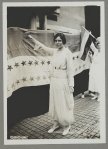
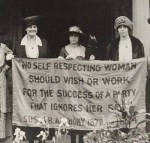
8/18 1920 – Tennessee ratified the 19th Amendment to the U.S. Constitution. The Amendment guaranteed the right of all American women to vote. 


on this day … 8/18


1227 – The Mongol conqueror Ghengis Khan died.

1587 – Virginia Dare became the first child to be born on American soil of English parents. The colony that is now Roanoke Island, NC, mysteriously vanished.

1735 – The “Evening Post” of Boston, MA, was published for the first time.

1840 – The American Society of Dental Surgeons was founded in New York City, NY.

1846 – Gen. Stephen W. Kearney and his U.S. forces captured Santa Fe, NM.

1894 – The Bureau of Immigration was established by the U.S. Congress.

1914 – The “Proclamation of Neutrality” was issued by U.S. President Woodrow Wilson. It was aimed at keeping the U.S.out of World War I.

1916 – Abraham Lincoln’s birthplace was made into a national shrine.

1919 – The “Anti-Cigarette League of America” was formed in Chicago IL.

1920 – Tennessee ratified the 19th Amendment to the U.S. Constitution. The Amendment guaranteed the right of all American women to vote. 

1937 – The first FM radio construction permit was issued in Boston, MA. The station went on the air two years later.

1938 – The Thousand Islands Bridge was dedicated by U.S. President Franklin D. Roosevelt. The bridge connects the U.S.and Canada.

1940 – Canada and the U.S. established a joint defense plan against the possible enemy attacks during World War II. 

1958 – Vladimir Nabokov’s novel “Lolita” was published.

1963 – James Meredith graduated from the University of Mississippi. He was the first black man to accomplish this feat. 

1966 – The first pictures of earth taken from moon orbit were sent back to the U.S. 

1982 – The volume on the New York Stock Exchange topped the 100-million level for the first time at 132.69 million shares traded.

1987 – Earl Campbell announced his retirement from the National Football League (NFL).

1990 – The first shots were fired by the U.S. in the Persian Gulf Crisis when a U.S. frigate fired rounds across the bow of an Iraqi oil tanker.

1991 – An unsuccessful coup was attempted in against President Mikhail S. Gorbachev. The Soviet hard-liners were responsible. Gorbechev and his family were effectively imprisoned for three days while vacationing in Crimea.

1997 – Beth Ann Hogan became the first coed in the Virginia Military Institute’s 158-year history.

1982 – The U.S. Senate approved an immigration bill that granted permanent resident status to illegal aliens who had arrived in the United States before 1977.


As a reminder, it was President Reagan who was the first to use the phrase, “we can make America great again.” Says Ronald Reagan said immigrants “brought with them courage and the values of family, work, and freedom. Let us pledge to each other that we can make America great again.”.
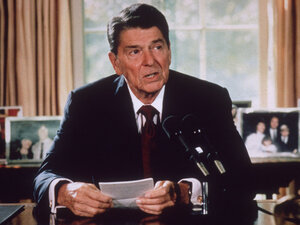
Why Immigrants Were Given Legal Status by Ronald Reagan. The Immigration Reform and Control Act of 1986 was signed into law by Ronald Reagan and allowed illegal immigrants who entered the U.S. before 1982 to be legalized.

As the nation’s attention turns back to the fractured debate over immigration, it might be helpful to remember that in 1986, Ronald Reagan signed a sweeping immigration reform bill into law. It was sold as a crackdown: There would be tighter security at the Mexican border, and employers would face strict penalties for hiring undocumented workers.

But the bill also made any immigrant who’d entered the country before 1982 eligible for amnesty — a word not usually associated with the father of modern conservatism.

In his renewed push for an immigration overhaul this week, President Obama called for Republican support for a bill to address the growing population of illegal immigrants in the country. This time, however, Republicans know better than to tread near the politically toxic A-word.

Part of this aversion is due to what is widely seen as the failure of Reagan’s 1986 Immigration Reform and Control Act. However, one of the lead authors of the bill says that unlike most immigration reform efforts of the past 20 years, amnesty wasn’t the pitfall.

“We used the word ‘legalization,’ ” former Wyoming Sen. Alan K. Simpson tells NPR’s Guy Raz. “And everybody fell asleep lightly for a while, and we were able to do legalization.”

for the complete article npr.com

~  NPR

“I believe in the idea of amnesty for those who have put down roots and lived here, even though sometime back they may have entered illegally,” Ronald Reagan said in 1984.

Hulton Archive/Getty Images