

March 1
1781 – Formal ratification of the Articles of Confederation was announced by Congress. Under the Articles, Congress was the sole governing body of the new American national government, consisting of the 13 original states. The Articles remained in effect through the Revolutionary War until 1789, when the current U.S. Constitution was adopted.
March 30
1855 – About 5,000 “Border Ruffians” from western Missouri invaded the territory of Kansas and forced the election of a pro-slavery legislature. It was the first election in Kansas.
1958 – The Alvin Ailey American Dance Theater gave its initial performance.
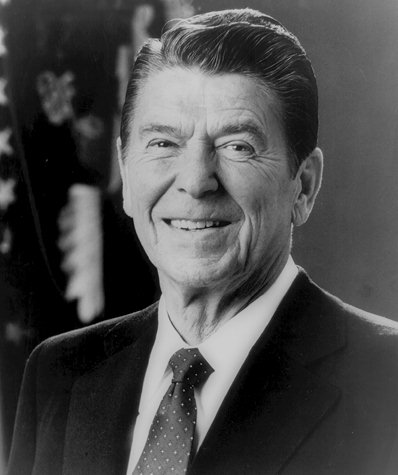
1981 – Newly elected President Ronald Reagan was shot in the chest while walking toward his limousine in Washington, D.C., following a speech inside a hotel. The president was then rushed into surgery to remove a 22-caliber bullet from his left lung. “I should have ducked,” Reagan joked. Three others were also hit including Reagan’s Press Secretary, James Brady, who was shot in the forehead but survived. The president soon recovered from the surgery and returned to his duties.
1909 – In Oklahoma, Seminole Indians revolted against meager pay for government jobs.
1939 – The comic book “Detective Comics #27” appeared on newstands. This comic introduced Batman.
1981 – U.S. President Ronald Reagan was shot and wounded in Washington, DC, by John W. Hinckley Jr. Two police officers and Press Secretary James Brady were also wounded.
Birthday – Vincent Van Gogh (1853-1890) was born in Groot Zundert, Holland. He was a Postimpressionist painter, generally considered the greatest Dutch painter after Rembrandt. During his short (10-year) painting career he produced over 800 oil paintings and 700 drawings, but sold only one during his lifetime. In 1987, the sale of his painting Irises brought $53.9 million, the highest price ever paid for a work of art up to that time. During his life, Van Gogh suffered from despair and bouts of mental illness, at one point cutting off part of his own left ear. He committed suicide in 1890 by gunshot.
March 31
1945 – “The Glass Menagerie” by Tennessee Williams opened on Broadway.
1776 – Abigail Adams wrote to her husband John that women were “determined to foment a rebellion” if the new Declaration of Independence failed to guarantee their rights.
1933 – The Civilian Conservation Corps, the CCC, was founded. Unemployed men and youths were organized into quasi-military formations and worked outdoors in national parks and forests.
1968 – President Lyndon Johnson made a surprise announcement that he would not seek re-election as a result of the Vietnam conflict.
1885 – Binney & Smith Company was founded in New York City. The company later became Crayola, LLC.
1889 – In Paris, the Eiffel Tower officially opened.
1870 – In Perth Amboy, NJ, Thomas Munday Peterson became the first black to vote in the U.S.
1902 – In Tennessee, 22 coal miners were killed by an explosion.
1904 – In India, hundreds of Tibetans were slaughtered by the British.
1908 – 250,000 coal miners in Indianapolis, IN, went on strike to await a wage adjustment.
1900 – In France, the National Assembly passed a law reducing the workday for women and children to 11 hours.
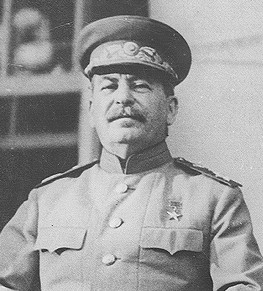
1991 – The Soviet Republic of Georgia, birthplace of Josef Stalin, voted to declare its independence from Soviet Russia, after similar votes by Lithuania, Estonia and Latvia. Following the vote in Georgia, Russian troops were dispatched from Moscow under a state of emergency.
Birthday – Boxing champion Jack Johnson (1878-1946) was born in Galveston, Texas. He was the first African American to win the heavyweight boxing title.
(Photo and picture credits: Library of Congress and U.S. National Archives)



 1533 – Henry VIII divorced his first wife, Catherine of Aragon.


You must be logged in to post a comment.